
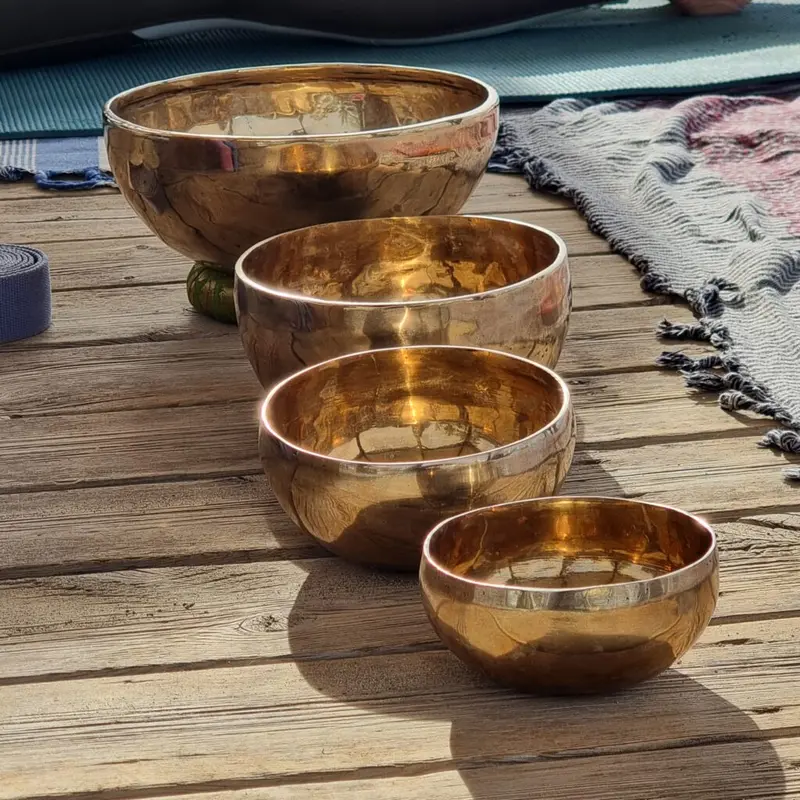
How to Maintain Singing Bowls That Bring Peace of Mind?
As the culture of meditation and healing spreads, interest in singing bowls is increasing. However, most users do not know the proper maintenance methods.
Keeping singing bowls clean is an important process that helps maintain the unique sound of each singing bowl consistently and allows users to enjoy the same effects continuously.
We explored the maintenance methods for singing bowls as advised by overseas manufacturers, including proper cleaning and storage methods.
Why is Singing Bowl Maintenance Important?
Recently, there has been a surge in people interested in meditation and mindfulness, naturally increasing the number of those seeking singing bowls. However, after purchasing, many find themselves wondering, “How should I maintain it?”
Especially for first-time users of singing bowls, it is common to be unsure of how to handle stains or rust. If metal singing bowls made of brass or bronze are not properly maintained, their tone can change, making it crucial to know the correct maintenance methods.
Reasons for Stains on Singing Bowls
Stains on singing bowls are actually a natural phenomenon. Singing bowls are made by mixing various metals, which can lead to a phenomenon called galvanic corrosion.
In simple terms, it is an electrochemical reaction that occurs when different metal components inside the singing bowl come into contact. Like a small battery forming, over time, the copper content on the surface increases, resulting in reddish-brown stains.
Situations Where Stains Form More Easily
When hands are sweaty or come into contact with salt
When using alcohol disinfectants frequently
When used or stored near the sea
When in contact with acidic substances like vinegar, lemon, or carbonated drinks
Overseas, some singing bowl brands offer permanent coating services. This ultra-thin transparent coating can suppress oxidation, fingerprints, and discoloration for several years, making it recommended for users who frequently use singing bowls in medical institutions or educational settings.

Three Core Principles of Singing Bowl Maintenance
1. Always Keep Singing Bowls Dry
This is the most important aspect of singing bowl maintenance. Tap water contains mineral components that can easily lead to water stains.
If moisture remains, that is the start of all problems. Even a single droplet left can begin corrosion from that point, so after playing, it is essential to wipe thoroughly and store the singing bowl in a dry place. If doing water singing, it is advisable to wipe carefully to ensure no moisture remains after playing.
2. Check for Coating Before Choosing a Cleaner
First, check if your singing bowl is coated. If it is coated, only neutral detergents or solvent-free cleaners should be used, and polishing or solvents should never be used.
If it is not coated, maintain it dry most of the time, and only use a very small amount of non-abrasive polish specifically for brass or bronze when stains occur.
3. Store in a Suitable Environment
Both excessively high and low humidity are not good. A humidity level of about 40-55% is appropriate, and places with direct sunlight or significant temperature changes should be avoided. Placing silica gel inside the singing bowl storage case can also help control humidity.
Singing Bowl Maintenance Methods and Precautions
1. To keep the singing bowl shiny and like new, it is recommended to use a polishing cloth. These cloths are designed specifically for metal surfaces and help remove stains or discoloration.
2. Remove residues or fingerprints while gently wiping the bowl's surface. Dampen a soft cloth with warm water and gently rub the bowl's surface in a circular motion to remove dirt or dust.
3. Rinse the bowl completely with clean water to remove all dirt or dust.
4. If there are stubborn stains or discoloration on the singing bowl, a specialized cleaner designed for metal surfaces can be used. Before using the cleaner, carefully read the instructions and test it on a small, inconspicuous area first.
5. Gently wipe the surface of the singing bowl with a dry, soft cloth. Any moisture left on the surface can create mold stains on the bowl. Do not use rough or abrasive cloths that can scratch the surface. One of the most important points is that singing bowls should not be dried in direct sunlight. Sunlight can cause the metal to expand and contract rapidly, leading to warping or cracking over time. This can affect sound quality and the overall tone of the singing bowl. It is best to air dry in a cool, dry place away from direct sunlight.
6. Properly Store the Bowl
After cleaning and polishing the singing bowl, store it in a cool, dry place or at room temperature. Do not place it in direct sunlight or near hot flames. This can damage the bowl. Using a soft cloth or a dedicated singing bowl storage bag can help prevent dust and scratches.
7: Be Careful of Deformation from Impact
Finally, be careful not to drop or bump the singing bowl, as this can cause dents or cracks, resulting in poor sound during play and altering the sound waves.
Absolute Prohibitions During Storage
It is advisable not to store singing bowls stacked on top of each other. They can collide and get scratched or, in severe cases, become deformed. It is best to place each one separately on a dedicated cushion or ring, and if possible, wrap them individually in a soft cloth for storage.
Discoloration and Patina Management
Over time, singing bowls naturally develop discoloration. This is called ‘patina,’ and some users wish to preserve it, believing it adds character and history to the singing bowl.
If you want to preserve the patina, focus on dry maintenance and only remove contaminated areas locally. Conversely, if you want to maintain a shiny appearance like when you first bought it, you can manage it with a very small amount of non-abrasive polish specifically for brass or bronze.
For reference, in Nepal, there is a traditional method of polishing using a mixture of rice bran or straw with mustard oil, but it is not recommended for modern products, especially coated ones, due to its slight acidity or abrasiveness.
Rust or Verdigris Treatment
If rust or verdigris (battledore green) occurs, do not panic; handle it step by step.
First, gently clean with neutral detergent and lukewarm water. Most issues can be resolved this way. If it still does not come off, use a small amount of non-abrasive polish on a cotton swab and gently wipe the affected area.
However, if rust is widespread or deeply embedded, it is best to leave it to a professional restorer rather than trying to fix it yourself, as you might inadvertently cause more damage.
Will it affect the tone?
This is a concern for many users, but regular cleaning has little effect on tone. Of course, excessive polishing over 20-30 years may cause very slight changes, but at the level of everyday maintenance, there is almost no noticeable change.
In fact, failing to maintain properly, leading to corrosion or foreign substances sticking, can be worse for the tone. Just adhere to the principle of ‘locally, minimally, and with non-abrasive products.’
Basic Maintenance Tools
Microfiber cloth (lint-free)
Nitrile gloves
Soft non-abrasive polish specifically for brass (for uncoated products)
Silica gel (recommended product that changes color when it absorbs moisture)
Cleaning Frequency Guide
The cleaning frequency varies depending on usage frequency and purpose.
If you want to maintain a golden shine, lightly clean it about once every two months.
If you want to preserve the patina, focus on dry maintenance and only treat contaminated areas locally.
If using singing bowls in therapeutic or educational settings, regular cleaning and disinfection are recommended.
Absolute Prohibitions
Allowing moisture to air dry naturally (causes water stains and corrosion)
Using rough sponges or steel wool
Using strong acids, strong alkalis, or solvents like acetone
Using polish or solvents on coated products
Storing multiple singing bowls stacked on top of each other
Especially the last point is very important. If singing bowls collide, they can get scratched or deformed, and in severe cases, the tone can change.
After playing the singing bowl, invest just 3-5 minutes to wipe it with microfiber, treat any fingerprints or contamination locally, and store them separately on cushions after completely drying. Just by doing this, the singing bowls will continue to deliver beautiful sounds and vibrations for a long time.
Written by/ Publisher of Healing News, Hyesun Oh Ji-hyun