

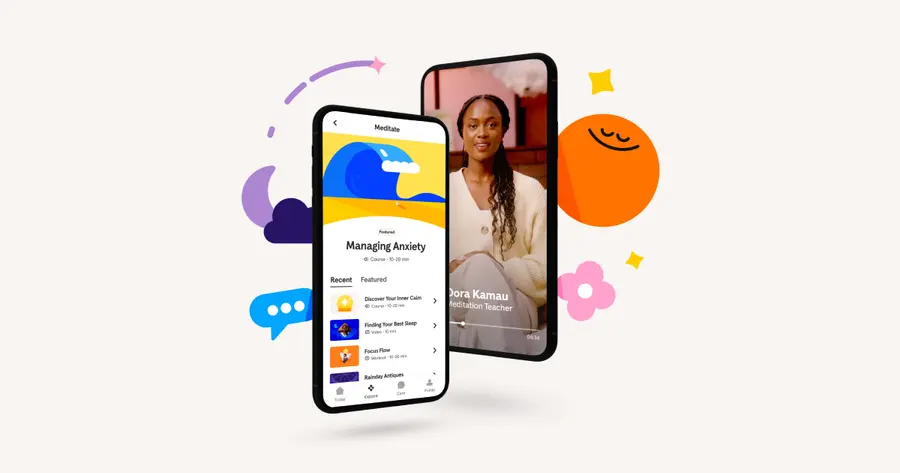
On September 16, it was announced that Headspace, one of the world’s best-known meditation apps, would be acquired by AI health care company Sword Health. The deal closed on October 1. As a company that helped put meditation in the palm of people’s hands, Headspace’s news has sent significant ripples through the meditation community.
Considered alongside the moves of Calm, which has long been mentioned in the same breath as Headspace, the news gives us a clearer picture of where the meditation app market is headed.
Once valued at $3 billion, the company reportedly sold for $300 million
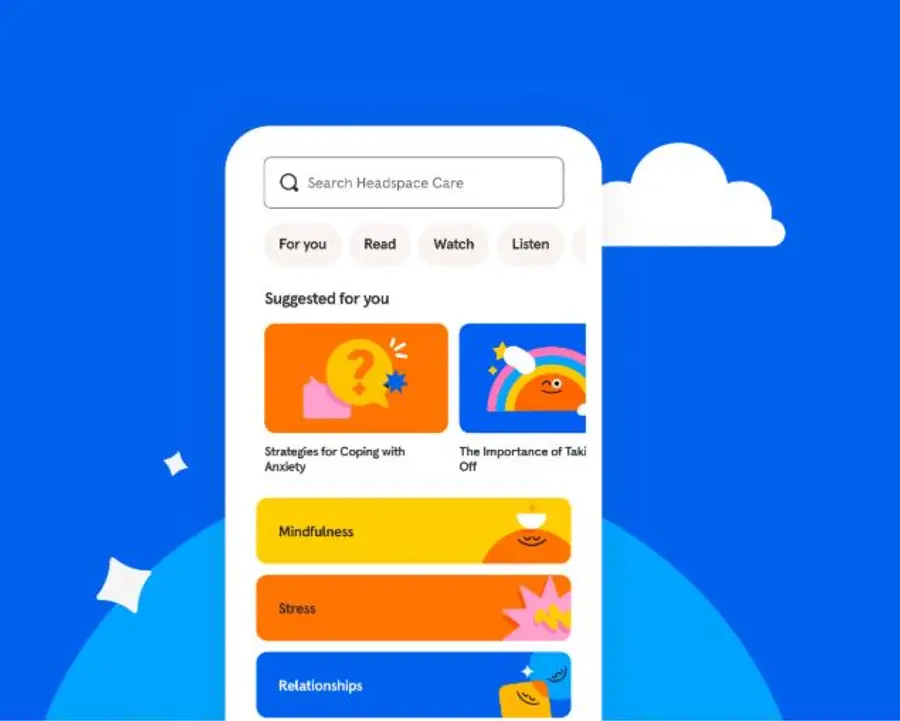
Sword Health did not disclose the purchase price when it officially announced the acquisition agreement. Bloomberg reported the sale price at about $300 million. Headspace was valued at about $3 billion when it merged with Ginger in 2021. If the reports are accurate, its valuation fell to one-tenth of that figure in five years.
Layoffs also began after the acquisition. Behavioral Health Business, a U.S. publication specializing in behavioral health, reported on October 16 that Headspace had made cuts, but the scale was not disclosed.
The numbers alone may make this look like a collapse. But there is much to consider in this news.
A meditation course launched by a former monk becomes part of an AI company that began in physical therapy
Headspace began in 2010, when co-founder Andy Puddicombe, who had practiced as a Buddhist monk, started offering meditation classes in London. Sword Health, which acquired the company, began in physical therapy and expanded into mental health; it is an AI health care company.
Meditation, which began in the language of spiritual practice, has entered the language of health care and management. This signals a shift in how meditation is valued.
Calm has turned to insurance, not a sale: Calm Health now available to 13 million people
Calm’s situation is different. No sale or merger involving Calm has been confirmed to date. In 2022, Calm launched Calm Health for employers and insurance members. UnitedHealthcare, one of the largest health insurers in the U.S., said Calm Health is available to more than 13 million commercial members and their families. Massachusetts also switched the Calm app offered as an employee benefit to Calm Health in September.
One company was taken under the wing of a health care company; the other knocked on the doors of insurers and employers on its own. Their paths differed, but they arrived at a similar place. The customers for meditation apps are shifting from individuals seeking to care for their minds to employers and insurers looking to manage the health costs of employees and members.
How should we view this trend? Meditation’s entry into insurance and employee benefits also means it is being recognized as evidence-based mental health care. It is a welcome change in that more people can encounter meditation for the first time without having to pay for it.
Many on the layoff list were people who created meditation content
There are questions that remain alongside the optimism. In 2023, U.S. health care publication Becker’s reported that many of those affected when Headspace cut staff were people who created meditation content. With key staff responsible for producing meditation content being laid off in a service judged by efficiency and metrics, it is worth asking what steps Headspace has in place to prevent this from leading to a decline in the quality of its content.
Meditation cannot be explained by a single function, such as reducing anxiety. It is about staying in the present moment, observing oneself and asking what direction to take in life. If the language of health care and insurance replaces this essence, might meditation be reduced to a tool for managing symptoms? There is also concern that its nature could be distorted, since meditation is not fundamentally about alleviating illness.
Will AI replace meditation instructors?
AI will become increasingly good at reading users’ states and recommending what to do next. Still, some things cannot be replaced by an app: the experience of moving the body and breathing together; an instructor who notices my energy and meets my eyes and responds when I feel stuck; and the intimacy, satisfaction and sense of fulfillment that arise from relationships with fellow practitioners sitting in the same room.
In an age of information overload, telling modern people to begin with seated meditation facing a wall can seem like a high barrier. That is why movement-based meditation, such as walking, yoga and breathing practices, should serve as an entry point. An app can be a good first step. When that step leads to a practice that suits the individual and a trusted instructor, meditation can finally take root in everyday life.
The challenge facing Korea’s meditation community: How will it earn trust?
The acquisition of one of the world’s largest meditation apps and the news of partnerships with insurance and health care point to several things.
A growing variety of meditation content will emerge, and more partnerships with health care will take shape. But because meditation’s effects are difficult to track numerically, I believe there will be more partnerships with customer service-based companies than with the medical field, which relies on clinical evidence and data.
It is extremely difficult to pursue profits like a conventional business through meditation services alone. Still, it is true that there are many areas worth exploring, especially if entrepreneurs who are committed to meditation approach the field with a deep understanding of it.
The bigger challenge, however, lies with individual meditation instructors. It is difficult to charge individuals a lot for meditation instruction, so life as a meditation instructor is far from easy. The domestic meditation market is so small that it is also difficult to operate as a profit-seeking company. That is the reality of Korea’s meditation market today.
In Korea, meditation classes, retreats and festivals are growing in number each year. So how will we earn trust?
The global meditation market is moving toward health care and AI, but Korea’s diverse meditation practices, which engage both body and mind, could give them a clear place in the global market. That path could also become a way for the world to encounter K-meditation. As AI advances, the growing popularity of in-person businesses that bring people together is also a positive sign for the meditation market. That is one reason Healing News introduces the many forms of meditation practiced across the country. It is also why Healing News was founded: to discover meditation instructors who share Korea’s practices accurately and promote them around the world.
There is no doubt that meditation is now finding its way into the lives of many more people. But many growing pains can be expected before it becomes firmly rooted in everyday life. This is a time to stay calm and keep a clear eye on the future, like the eye of a storm.
Oh Hye-sun, Publisher of Healing News
For article inquiries: fare3041@naver.com