

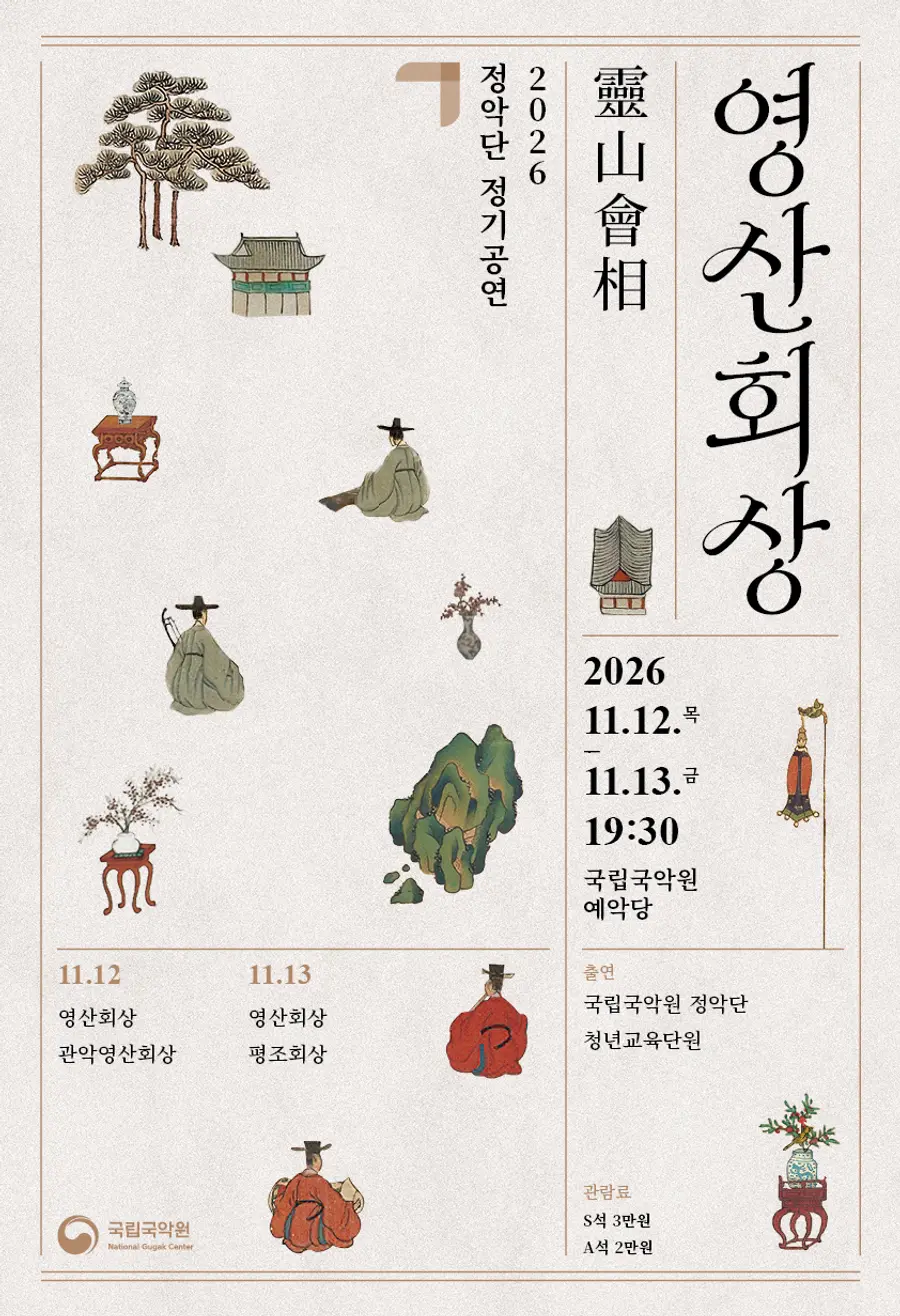
The National Gugak Center’s Court Music Orchestra will perform Yeongsanhoesang, part of its regular concert series, on November 12 and 13 at Yeakdang Hall at the National Gugak Center in Seocho-gu, Seoul. Both performances begin at 7:30 p.m. and run for 110 minutes, including a 15-minute intermission. One feature drawing attention is a related program, “Meditation Before Yeongsanhoesang,” scheduled ahead of the concert. Time to quiet the mind before listening to the music has been made part of the event.
One hour before the performance with meditation practitioner Lee Jung-eun; 60 participants a day
The program will be held from 6 to 7 p.m. on each performance day on the first floor of Yeinmaru at the National Gugak Center. It will be led by meditation practitioner Lee Jung-eun. Audience members who select the meditation package when booking their tickets may take part. The program is limited to 60 participants a day, for a total of 120 over the two days. Light refreshments will be served afterward. The National Gugak Center said the meditation package is eligible for discounted booking by paid members but cannot be used with complimentary tickets.
The National Gugak Center describes the program as a chance to settle the mind through meditation before the performance and listen closely to the deep resonance of Yeongsanhoesang. For audience members heading straight to the concert hall after work, it can be a chance to leave behind the pace of the outside world and prepare to welcome the music.
Yeongsanhoesang’s nine pieces grow progressively faster; three versions performed across two days
Yeongsanhoesang originated in the early Joseon period and developed into instrumental music in the mid-17th century in the gathering rooms where literati enjoyed music. Today, it is passed down in three versions, distinguished by their instrumentation and scales: Yeongsanhoesang, Gwanak Yeongsanhoesang and Pyeongjohoesang. This concert will present all three. On November 12, the program features Yeongsanhoesang and Gwanak Yeongsanhoesang; on November 13, it features Yeongsanhoesang and Pyeongjohoesang.
Yeongsanhoesang comprises nine pieces, from Sangyeongsan to Gunak, and gradually quickens, beginning with Sangyeongsan. The instruments, none of them especially loud, blend to create music that is refined and tranquil. Gwanak Yeongsanhoesang consists of eight pieces that were used to accompany dance at court and local government-office banquets in the late Joseon period, with the unhurried breath of wind instruments such as the piri and daegeum at its center. Pyeongjohoesang is a large-scale ensemble performance of Yeongsanhoesang transposed down a perfect fourth. Its layered instrumentation gives it the grandeur of court music.
An ensemble that listens to one another’s breath, without a conductor
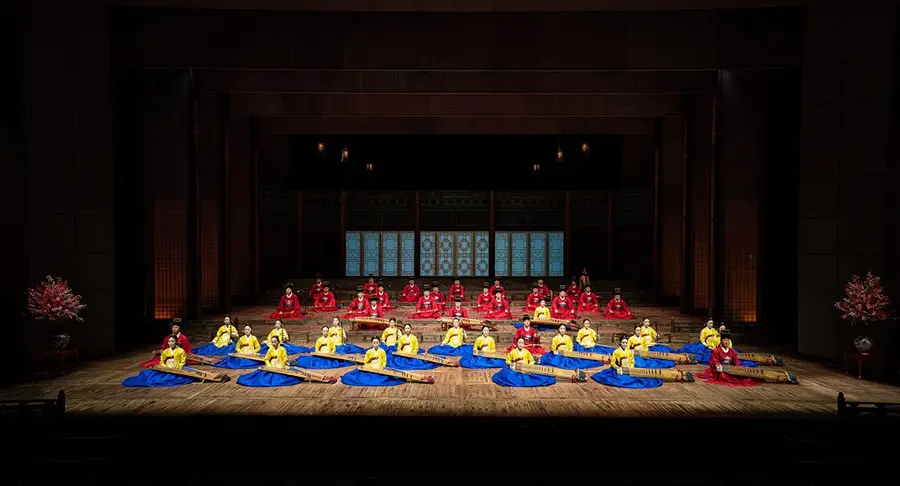
Jeongak ensembles have no conductor. The musicians follow the music together by listening to one another’s sound and breathing. Listening closely to each note and following the flow is much like meditation that focuses attention on sound. After centering the breath through meditation before the performance, listeners may be able to follow even the subtle resonances they might normally miss.
The performers are the National Gugak Center’s Court Music Orchestra and its young artist trainees. Kim Chang-gon, acting artistic director of the Court Music Orchestra, serves as artistic director.
Music offers an entry point for those who find it hard to sit still
If quietly sitting and letting go of your thoughts feels daunting, you can start by simply listening to the music. Holding your attention on the sound naturally brings your mind back to the present. This program brings together Korean music handed down since the early Joseon period and meditation, showing how traditional Korean arts can open a door to meditation.
Tickets are 30,000 won for S seats and 20,000 won for A seats. The performance is open to ages 7 and older. Tickets are available through the National Gugak Center website and by phone at 02-580-3300.
Press inquiries: fare3041@naver.com