

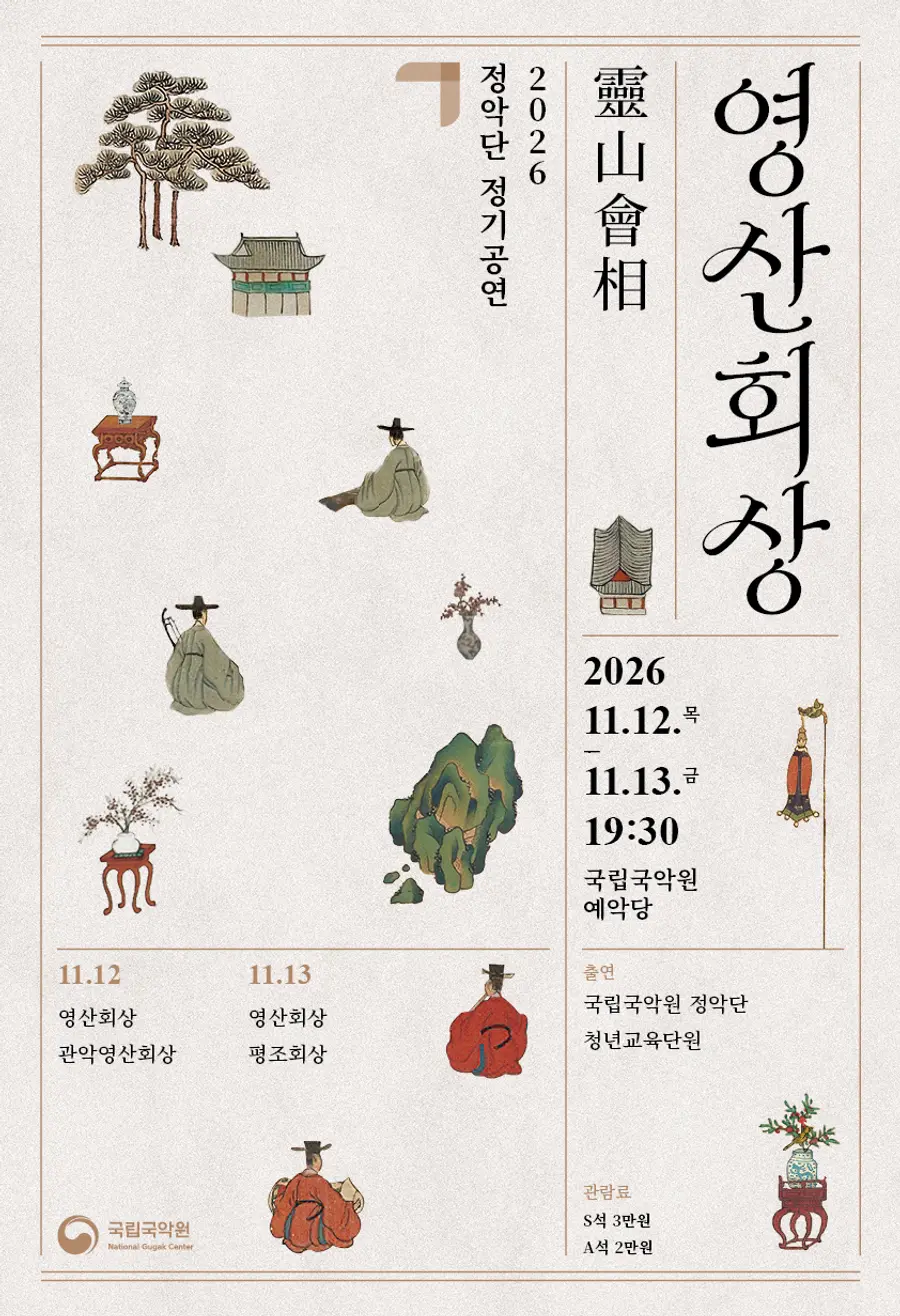
The National Gugak Center’s Jeongak Ensemble will perform Yeongsanhoesang, its regular concert, at Yeakdang, the Center’s performance hall in Seocho-gu, Seoul, on 12 and 13 November. Both performances begin at 7.30pm and run for 110 minutes, including a 15-minute interval. One feature likely to catch the eye is the associated experience, Yeongsanhoesang Opens with Meditation, offered before the performance. Time to settle the mind before listening to the music has been made part of the concert.
One hour before the performance with meditation practitioner Lee Jeong-eun; 60 places a day
The associated experience will take place from 6pm to 7pm on each performance day on the first floor of Yein Maru at the National Gugak Center. It will be led by meditation practitioner Lee Jeong-eun. Audience members who select the meditation package when booking their tickets may take part. Places are limited to 60 a day, with 120 available across the two days. Light refreshments will be served afterwards. The National Gugak Center said the meditation package is eligible for discounted booking by members, but cannot be used with an invitation ticket.
The Center describes the experience as a chance to prepare for the performance through meditation and listen closely to the deep resonance of Yeongsanhoesang. For those coming straight from work to the concert hall, it can offer time to leave the pace of the outside world behind and prepare to welcome the music.
Nine increasingly brisk movements: three versions of Yeongsanhoesang performed over two days
Yeongsanhoesang originated in the early Joseon period and developed into instrumental music in the gathering rooms where literati enjoyed music in the mid-17th century. Today, it is passed down in three forms, distinguished by instrumentation and musical mode: Yeongsanhoesang, Gwanak Yeongsanhoesang and Pyeongjohoesang. This performance will feature all three. On 12 November, the programme comprises Yeongsanhoesang and Gwanak Yeongsanhoesang; on 13 November, Yeongsanhoesang and Pyeongjohoesang.
Yeongsanhoesang consists of nine movements, from Sangnyeongsan to Gunak, and gradually quickens from the opening Sangnyeongsan. Its relatively quiet instruments come together to create elegant, gentle music. Gwanak Yeongsanhoesang comprises eight movements that were used to accompany dance at banquets in the royal court and local government offices in the late Joseon period, with the measured breathing of wind instruments such as the piri and daegeum at its heart. Pyeongjohoesang is a large ensemble performance of Yeongsanhoesang transposed down by a perfect fourth. The layering of many instruments gives it the grandeur of court music.
An ensemble that listens to one another’s breathing, without a conductor
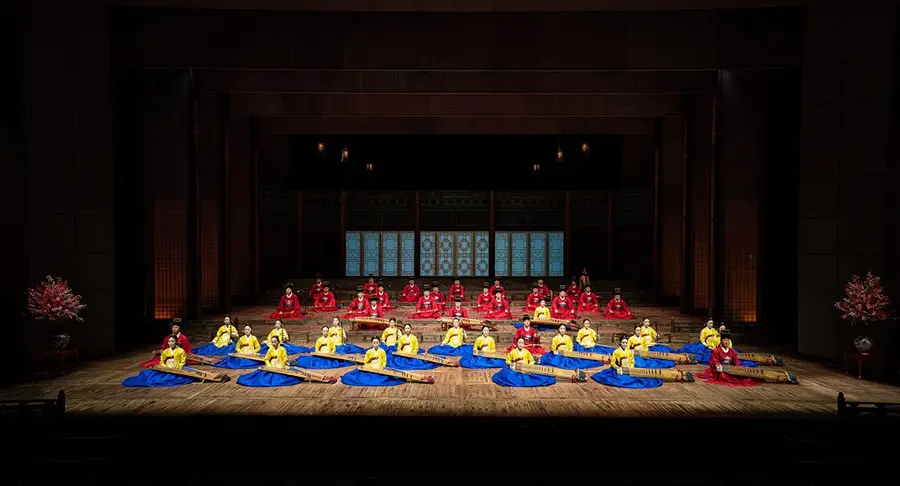
Jeongak ensembles have no conductor. The performers coordinate the music by listening to one another’s sound and breathing. Listening closely to each note and following the music’s flow resembles meditation, which focuses attention on sound. After steadying the breath with meditation before the performance, listeners may find themselves following even the subtle resonances they might usually miss.
The performers are the National Gugak Center’s Jeongak Ensemble and young trainee artists. The artistic director is Kim Chang-gon, acting artistic director of the Jeongak Ensemble.
Music as a way in for those who find it hard to sit still
If sitting quietly and letting go of thoughts feels daunting, listening closely to music can be a place to start. Holding on to the sound naturally brings the mind back to the present. This initiative, bringing together Korean music passed down since the early Joseon period and meditation, shows how Korea’s traditional arts can open a door to meditation.
Tickets cost 30,000 won for S seats and 20,000 won for A seats. Suitable for ages seven and over. Tickets are available through the National Gugak Center website and by phone on 02-580-3300.
Press enquiries: fare3041@naver.com