

The Korea Buddhist Cultural Corps is offering its Happy Double Temple Stay program from November 1 to 30, with one-night, two-day stays at 100 temples nationwide for 30,000 won per person. The event is being held in conjunction with the Ministry of Culture, Sports and Tourism and the Korea Tourism Organization’s second-half 2026 Travel Month campaign. It is open to Korean nationals, with benefits available to the first 7,800 people. After the first round of reservations opened in mid-October, 43 temples opened additional reservations at 1 p.m. on the 26th.
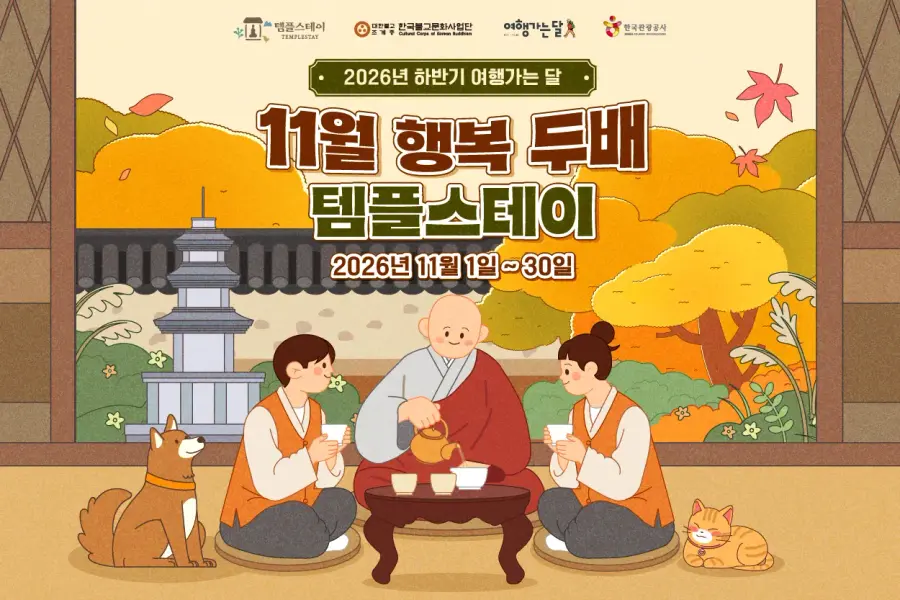
Limited to 7,800 people; one booking per person, card payment only
Reservations are accepted only through the Temple Stay booking website (www.templestay.com). Applicants must register as members, and each person may participate only once. A single booking can be made for up to four people, including the person making the reservation; the mobile phone numbers of accompanying participants must also be entered.
Payment is accepted only by online debit or credit card. Bank transfers and on-site payments are not accepted, and Temple Stay vouchers cannot be used. The event is offered only as a one-night, two-day stay; no day programs are available. Foreign nationals are not eligible to apply.
After applying, the booking is initially placed on hold. Because the temple must assign rooms, it takes three to four days, excluding holidays, for a reservation to be confirmed after card payment. Minors may need to be accompanied by a guardian or provide a guardian’s consent form; requirements vary by temple.
43 temples added on the 26th, including Ssanggyesa in Hadong and Donghwasa in Daegu
The first round of reservations opened on October 14 for Seoul, Gyeonggi, Incheon, Chungcheong and Sejong, followed on the 15th by Gangwon, Jeolla, Gyeongsang, Daegu and Busan, and on the 16th by all regions. Event reservations were temporarily closed from the 23rd until 1 p.m. on the 26th, when additional bookings became available.
A total of 43 temples are accepting additional reservations. In Seoul and Gyeonggi, they include Suguksa, Yeonjuam, Myojeoksa, Beopryunsa, Sujinsa, Yongjusa and Yukjijangsa. In Gangwon, the list includes Naksansa, Samhwasa, Seoraksan Sinheungsa and Yongyeonsa. Also included are Magoksa and Sudeoksa in South Chungcheong, Geumsansa in North Jeolla, Daeheungsa and Bulgapsa in South Jeolla, Donghwasa in Daegu, and Ssanggyesa in Hadong, South Gyeongsang. Golgulsa in North Gyeongsang, Mireuk Daeheungsa in North Chungcheong, Bodeok Gwaneumsa in Gyeonggi, Heungguksa in Goyang, and Munsuam in South Gyeongsang are also on the expanded list. Participating temples may change depending on circumstances.
The first-round availability notice shows that Jogyesa, Bongeunsa and Hwagyesa in central Seoul are also taking reservations on select dates in November. Since city temples have fewer available dates, it is best to check the booking page for remaining spots first.
47 temples begin stays on Wednesdays, 17 on Sundays; the date changes the options
The availability notice, updated by the Cultural Corps on October 13, shows that the number of temples accepting guests varies significantly by day of the week. The busiest date is Wednesday, November 18, when 47 temples begin stays. On Wednesdays, November 11 and 25, 43 and 45 temples, respectively, are accepting guests.
Weekend options are more limited than you might expect. Between 34 and 40 temples begin stays on Saturdays, compared with just 17 to 20 on Sundays. Only 17 temples are taking reservations for Sunday, November 1, and just eight for Monday, November 30, the final day of the month. If you can take a weekday off, you will have far more temples to choose from.
In November, daylight hours grow shorter in the mountains. Winter operating hours may vary by temple, so check the arrival time and transportation options for your return trip in advance.
The same 30,000 won, but a different overnight experience at every temple
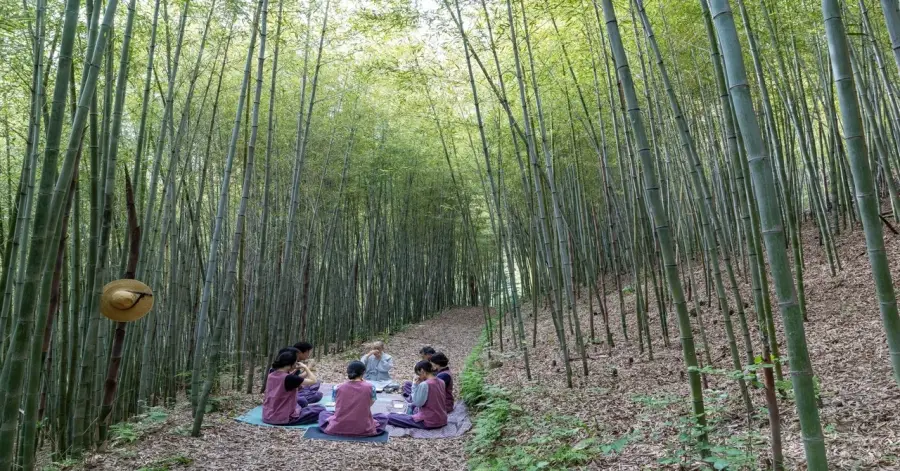
The price is the same, but each temple offers a different kind of overnight stay. Some fill the day with dawn services and seated meditation, while others focus on relaxing with a forest walk and tea with a monk. Schedules for each temple are available in the attached files in the booking website’s notices and on the individual temple booking pages.
In an age of constant information, it can be hard to sit still and meditate for long right from the start. For those people, a night at a mountain temple can be a good place to begin. Simply putting down your phone, walking a mountain trail, eating a communal meal slowly and going to bed early can change the pace of your body. If sitting for long periods feels daunting, choose a temple that emphasizes walks and tea gatherings. If you want to experience the rhythm of Buddhist practice, choose one with a schedule of services and meditation. Neither is the right answer for everyone; the best way to choose a temple is to first ask what your body and mind need right now.
Temple Stay in Korea has become a signature program introducing K-meditation to international travelers. This November event is for Korean nationals only. This fall, you can experience a night at a mountain temple—somewhere close by that you may never have gotten around to visiting—for 30,000 won.
Media inquiries: fare3041@naver.com