

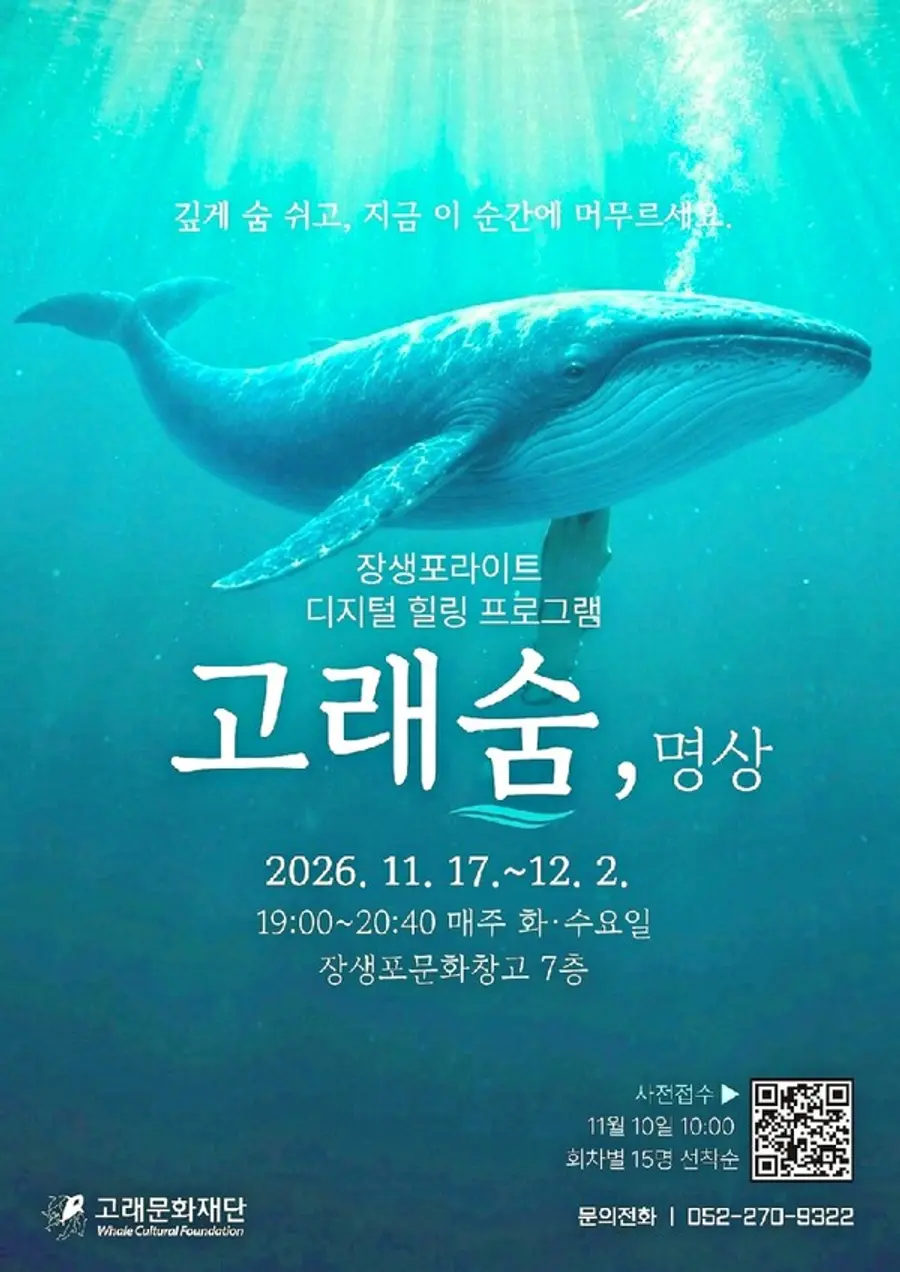
Whale Breath Meditation, a nighttime meditation program set against the seaside nightscape and media art of Jangsaengpo in Ulsan, is back for Season 2. The Whale Cultural Foundation will hold the sessions on the seventh floor of the Jangsaengpo Culture Warehouse from 7 p.m. to 8:40 p.m. every Tuesday and Wednesday, November 17 through December 2. There will be six sessions, with 15 participants at each.
What makes meditation with a view of the sea at night different?
Whale Breath Meditation is a digital wellness program held in conjunction with Jangsaengpo Light. Media art videos from Jangsaengpo Light, featuring whales and the sea, provide the backdrop for meditation. The sessions weave together the visuals, sounds of nature and singing bowl tones to gradually awaken the senses of sight and hearing.
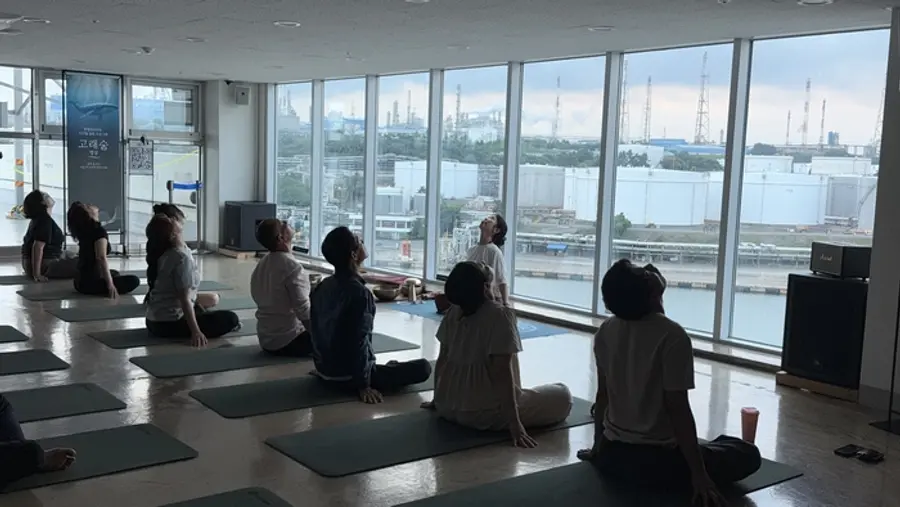
The setting also plays a big part. The seventh floor of the Jangsaengpo Culture Warehouse offers sweeping views of the sea and Ulsan’s nighttime skyline. As participants gaze at the sea darkening beyond the wide windows and follow the singing bowl’s lingering tones, they can feel the thoughts accumulated over the day gradually settle.
A cup of tea is new to Season 2
The biggest change this season is the addition of a tea ceremony. Participants will brew and drink tea, reflect on their state of mind, and write down their thoughts before sharing their impressions with others in a mindful journaling session. If sound and video open the senses, holding a teacup and slowly sipping its contents helps draw those awakened senses inward.
Meditation and tea have long gone hand in hand. Focusing on the warmth and aroma of tea and the sensation of swallowing it can itself be a form of meditation. For those new to meditation, a cup of tea can also be an easy way in.
Every session sold out in a day after the first season launched in summer
The first season of Whale Breath Meditation ran every Tuesday evening from June 16 to July 21. Each session offered 15 free spots on a first-come, first-served basis, and all spots were taken within a day of registration opening. Participants ranged in age from their 20s to their 60s and older.
One participant at the time said the combination of meditation and video using light was fresh and offered a novel experience. Others said they were able to focus entirely on themselves amid their busy daily lives; some also said they wanted to come with their children or hoped a meditation program for teenagers would be offered.
Season 2 also filled up early as soon as advance registration opened on November 10. A foundation representative said it had prepared a more enriching second season, thanks to the interest and support from the public during Season 1. The representative added that the foundation would continue to reflect public demand and wellness trends, working to establish Jangsaengpo Light as a nighttime cultural venue where people can enjoy rest and culture in their daily lives.
Why a tourist destination’s nighttime hours are becoming a space for meditation
Jangsaengpo was once a port known for whaling. Today, it welcomes tourists as a designated whale culture district. It is worth noting that the area’s nighttime hours are now being used for people to meditate. Simply making meditation available in the evening, after work, at a public cultural venue close to home can greatly lower the barrier to trying it.
In an era when screens and notifications take up much of the day, the idea of using media art as a tool for meditation is also intriguing. Light that strains the eyes is instead being used to calm the mind. Whale Breath Meditation shows how local governments and cultural foundations can help more people make meditation part of their everyday lives by bringing it together with their venues and programming.
A meditation to try at home while waiting for the next season
Registration for this season is closed, but Whale Breath Meditation’s approach is easy to try at home. In the evening, dim the lights, look out the window or at a favorite landscape photo, and slowly count your breaths. If you don’t have a singing bowl, play a quiet recording of a natural sound, such as waves or rain, and follow it. To finish, brew a cup of warm tea, focus on its aroma and warmth as you drink, then write a few words that come to mind in a notebook. In about 10 minutes, you can create your own evening meditation to wind down the day.
Updates on Whale Breath Meditation are available on the Jangsaengpo Culture Warehouse website and social media channels. For program inquiries, contact the Whale Cultural Foundation at 052-270-9322.
Article inquiries: fare3041@naver.com