

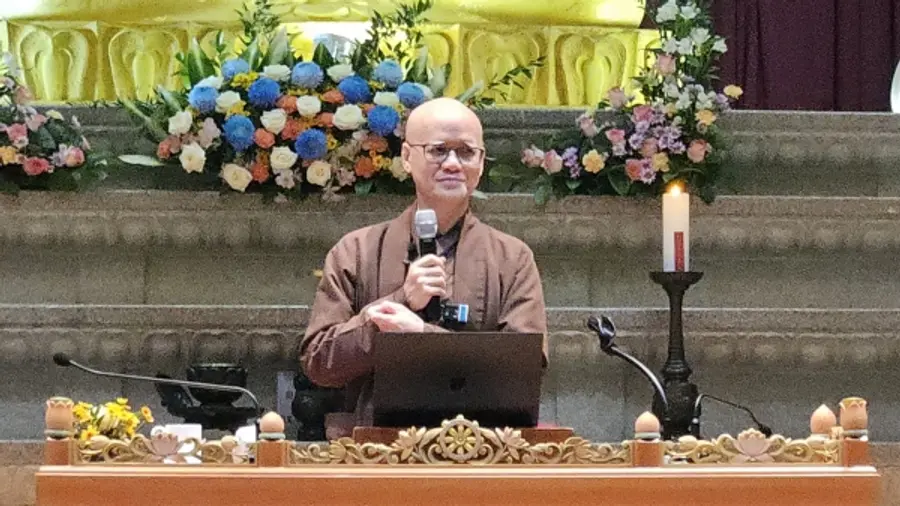
Venerable Phap Kham, a disciple of Thich Nhat Hanh, visited Bulkwangsa Temple in Seoul to lead a breathing gatha meditation that pairs the breath with short phrases. Bulkwangsa Temple and the Bulkwang Dharma Assembly said they held a Mindfulness: Be Still and Heal program at a practice session that followed the November 15 Sunday Dharma assembly. Venerable Phap Kham oversees the Plum Village community in Asia.
What happened at the mindfulness practice attended by 220 people?
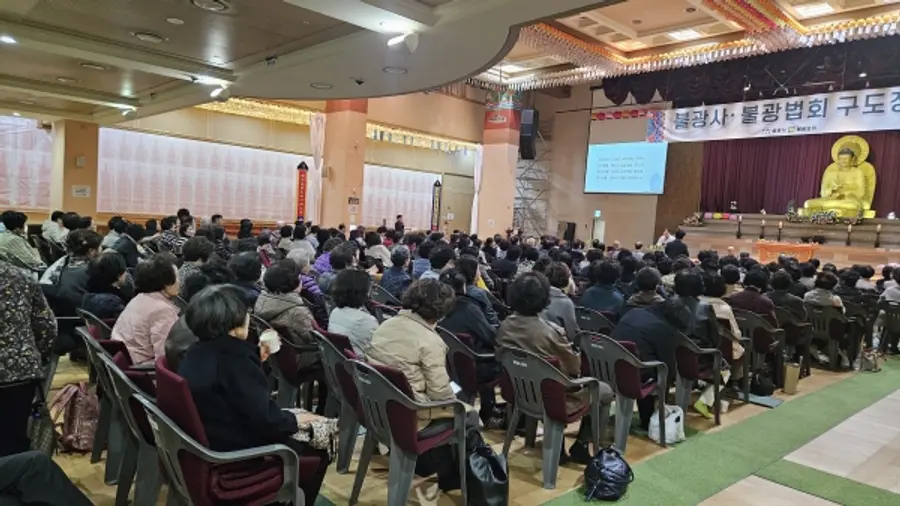
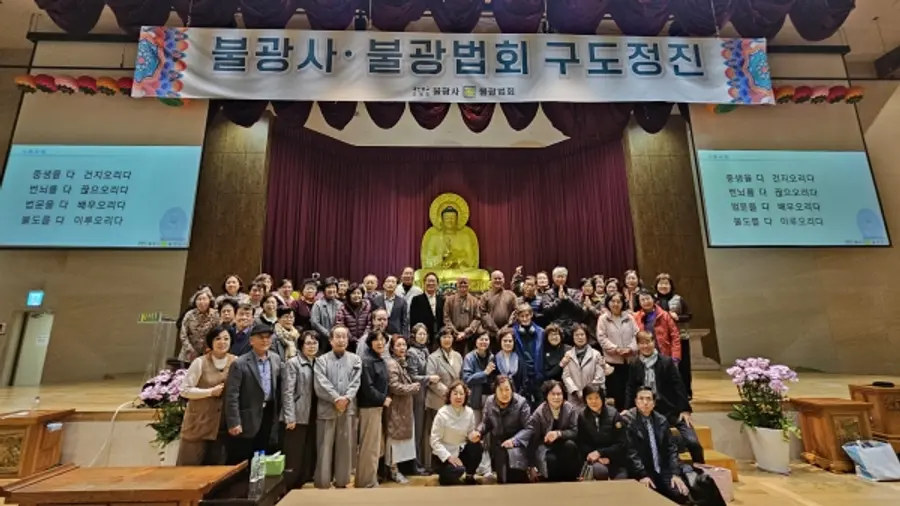
About 220 members of the Bulkwang Dharma Assembly took part, including around 10 foreign attendees. Venerable Phap Kham had expected 20 to 30 people and was reportedly surprised by the much larger turnout. Kang Hong-gil, an international missionary with the Bulkwang Dharma Assembly, interpreted the session.
Venerable Phap Kham explained that the program rests on three pillars: mindfulness, concentration and insight. The mind changes through four stages, the monk said: stopping, calm, rest and healing. Participants said the session helped them ease the stress they encounter in everyday life.
The practice session is a gathering the Bulkwang Dharma Assembly has held every month for more than 50 years, since its founding, following the third Sunday Dharma assembly.
Why do short phrases paired with the breath bring the mind back?
The breathing gatha meditation taught that day is one of the central practices in Thich Nhat Hanh’s Plum Village tradition. A gatha is a short poetic verse. When the mind wanders or stress builds, practitioners pair a short phrase with each in-breath and out-breath to bring the mind back to the here and now.
Tell many people simply to watch their breathing, and their minds quickly wander. That’s especially true for people today, whose attention is pulled away all day by screens and notifications. Breathing gatha meditation gives the mind a phrase to hold on to with each breath, leaving less room for thoughts to intrude. It requires no equipment and can be started right away, on your own, in just five to 10 minutes a day.
Try the four steps of breathing gatha meditation tonight
First, sit on a chair or cushion with your back straight but relaxed. Breathe naturally, silently reciting one phrase at a time. The key is to follow your own breathing rhythm rather than deliberately lengthening your breath. The Plum Village app’s guidance also says not to try to control the breath: simply notice it, and it will naturally become deeper and slower.
Step 1 is to notice the in-breath and out-breath. As you breathe in, silently say, “I know I am breathing in.” As you breathe out, say, “I know I am breathing out.”
Step 2 is to observe the breath becoming deep and slow. Recite, “Breathing in, my breath grows deep; breathing out, my breath grows slow.” Rather than forcing the breath to deepen, simply observe it as it does.
In Step 3, calm the body and mind. Say, “Breathing in, I calm my body; breathing out, I smile.”
Step 4 is to stay in the present moment. Recite, “Breathing in, I dwell in the present moment; breathing out, I know this is a wonderful moment.”
Once the phrases feel familiar, keep just two words
Once the phrases roll off your tongue, shorten them to just a few words. Step 1 becomes “in” and “out”; Step 2, “deep” and “slow”; Step 3, “calm” and “smile”; and Step 4, “present moment” and “wonderful moment.” Pair the shortened words with your breath and move through the four steps in order, and the practice begins to feel like reciting a short poem.
There is no set number of times to repeat each phrase. Plum Village guidance says you can stay with each phrase for as long as you like. Beginners can repeat Step 1 several times, then move on when the mind settles.
Why this breathing meditation works for busy people
Breathing gatha meditation suits people who find it hard to set aside a long stretch of time. It takes only a few breaths and can be practiced on the subway commute, for a few minutes before a meeting or under the covers before bed. According to Plum Village guidance, the gatha can also be used in walking meditation. Those who find sitting meditation stifling can try moving with their steps while reciting the same words.
For people new to meditation, being told simply to watch the breath can feel daunting. This method offers a phrase to lean on, providing an accessible way in. The practice that brought 220 people together in one temple hall, breathing the same phrases, can be continued alone tonight.
Article inquiries: fare3041@naver.com