

From security tourism site to stay-and-heal destination… sound meditation park and barefoot loess trail to be built by 2028
Few people associate the word dam with meditation. The image that usually comes to mind is a vast concrete wall and the tense scenery of security tourism. Peace Dam in Hwacheon, Gangwon province, has long been remembered in those terms. But when I heard that a sound meditation park would be built there, something inside me quietly brightened. The idea of bringing stillness to a place that carries the weight of division felt welcome, especially to someone who has lived with meditation for many years.
Hwacheon’s Peace Dam to be reborn as a stay-and-heal destination
Hwacheon County Office and the Korea Water Resources Corporation’s Peace Dam Branch signed an agreement at Hwacheon County Office on 18 September to implement a project creating a stay-and-heal space at Peace Dam. Kim Se-hoon, governor of Hwacheon County, and Shin Pil-soo, director of the Peace Dam Branch, attended the signing ceremony. The project is being pursued after being selected in the Korea Water Resources Corporation’s local-government competition for new dam support projects. Of the total project cost of 1.2 billion won, the corporation will provide 500 million won and Hwacheon County 700 million won. The Peace Dam Branch will provide the project funding, while Hwacheon County will handle administrative procedures and operations.
The project’s direction is clear: to turn a destination where visitors look around and leave into one where they stay and rest. Completion is targeted for 2028.
Sound meditation park, barefoot loess trail and seven healing facilities
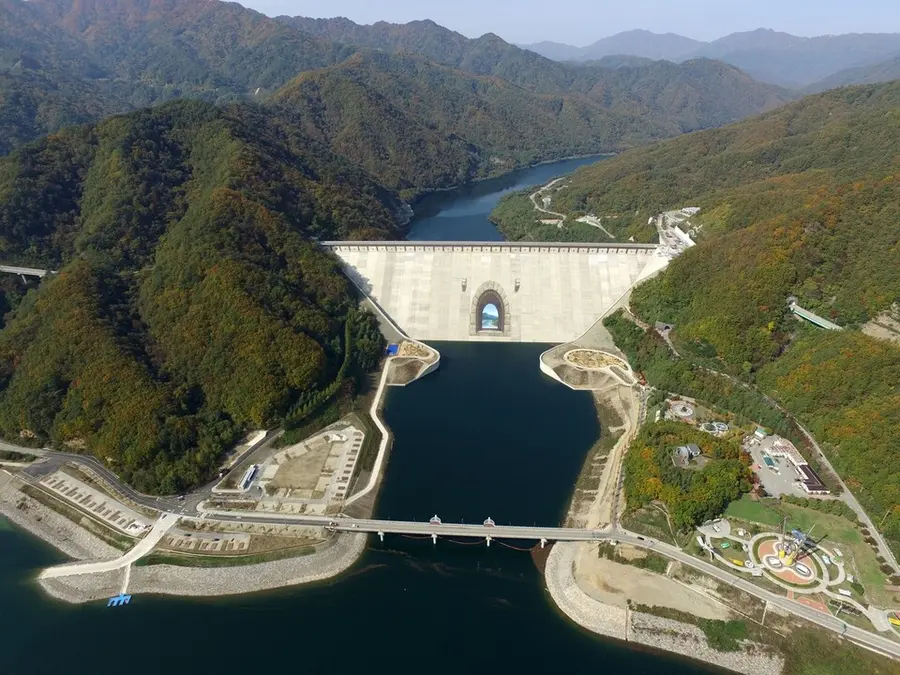
Hwacheon County plans seven projects in all at a park downstream from the dam: a traditional Korean-style circular colonnade shelter, a sound meditation park, a barefoot loess trail, a light-experience space, a stargazing area, a Healing Eco Ride and an unmanned agricultural-produce shop.
As I slowly read through the list, I lingered over the sound meditation park. The detailed design has not yet been disclosed, but simply imagining meditation accompanied by the sound of water in the upper reaches of the Bukhangang River and wind moving through the mountain valleys is enough to slow the breath. Listening closely to sound is one of meditation’s oldest gateways. When we practise letting sounds pass without trying to hold on to them, the thoughts crowding our minds gradually make room.
A traditional Korean shelter inside a circular colonnade, a loess trail where the soles of the feet can feel the texture of the earth, and stargazing beneath the night sky above a dam surrounded by mountains. Together, they suggest not a collection of separate facilities but a journey through a day taken at a slower pace.
A place to reflect on peace amid the history of division
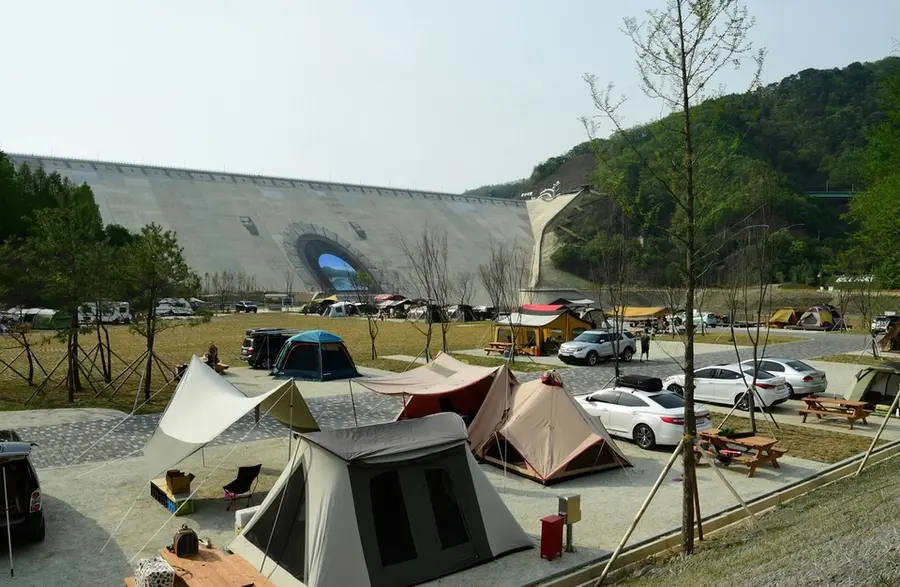
Peace Dam stands on the upper reaches of the Bukhangang River, on the border between Hwacheon and Yanggu. Construction began in response to North Korea’s construction of the Geumgangsan Dam in the 1980s, funded by donations from the South Korean public. The dam is 125 metres high and 601 metres long. A large trompe-l’œil mural titled The Gate to Reunification is painted on the dam wall.
Several places nearby invite visitors to reflect on peace. They include World Peace Bell Park, where visitors can ring a bell made from shell casings from countries that have experienced conflict; Bimok Park, which tells the story of how the art song Bimok came into being; International Peace Art Park, where decommissioned military equipment is displayed after being transformed into symbols of peace; and the Water Culture Centre, which explains the background to the dam’s construction. An auto-camping site and the Baegamsan Cable Car are also nearby.
The arrival of a meditation park among these landscapes feels particularly significant. A place that speaks of peace in the outside world will also allow people to practise peace within themselves. After seeing the history of tension and confrontation, visitors will be able to close their eyes quietly and spend time looking at the conflicts within. Perhaps that is when the word peace finally settles into the body as a physical sensation.
What a stay can leave behind
Kim Se-hoon said he wanted to develop Peace Dam into a leading stay-based tourism hub where visitors could experience nature, peace and healing together. Hwacheon County also expects visitors’ accommodation, activities and purchases of agricultural products to generate income for local farms and residents.
After travelling for a long time, you learn that the places that stay with you are not necessarily those where you saw the most, but those where you stayed the longest. Trips spent hurriedly taking photographs before moving on to the next destination soon fade, while a journey that gives the body enough time to catch its breath in one place lingers for much longer.
I picture people meditating to the sound of water in the park downstream from Peace Dam in 2028. What a scene it would be: each person finding their own peace beneath a dam once seen as a symbol of division. I am already looking forward to that first autumn.
Article enquiries: fare3041@naver.com