

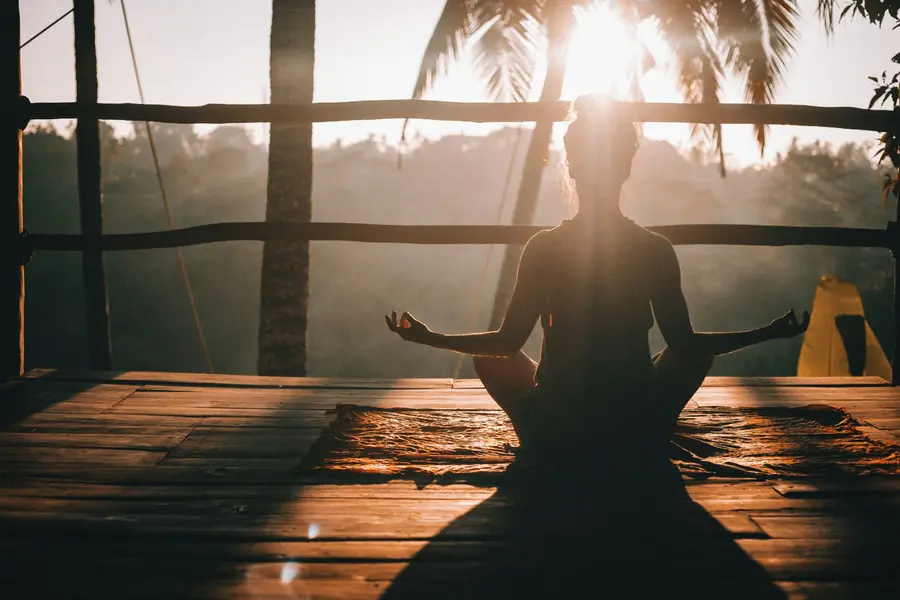
About ten years ago, at the suggestion of a friend, I travelled to Ubud, Bali together.
Back then I was not particularly interested in yoga or meditation, yet it felt as though the whole of Ubud existed for yogis: in every corner of the village, yoga and meditation had become part of daily life. There were vegetarian restaurants with a range of allergy-free menus, and before long it felt certain that this wave would reach Korea as well.
Dawn in Ubud wakes first with sound. Low strains of the gamelan drifting from the temple, mist carrying the smell of wet earth, and the overlapping sound of water running down the terraced rice fields. In this inland village, where the heat of Bali’s southern beaches and club music do not reach, the purpose of a trip quietly shifts from seeing something to letting go of something. The moment your foot lands on a yoga mat, sunlight spreading across the rice fields warms your first breath of the day.
Why is Ubud called the “wellness capital”?
Bali is often known as an island of beaches, but for travellers seeking meditation and healing, the destination they head for is Ubud, set in the middle of the island. With a royal palace, Hindu temples, and traditions of dance and crafts kept alive, this village has long been the centre of Bali’s arts and spirituality. Rice paddies, tropical rainforest and valleys carved by rivers wrap around the community, and instead of the noise of the city, the rhythm of nature carries you through each day.
On this kind of ground, Ubud has established itself as a world-class wellness destination over the past 20-odd years. Yoga and meditation studios, retreats that blend Ayurveda with traditional Balinese healing, and vegetarian restaurants focused on healthy food have gathered throughout the village to form a single ecosystem. A wide range of stay options — from drop-in classes for short-term visitors to yoga teacher courses lasting several weeks — is one of Ubud’s strengths.
[Image: Ubud city centre and a temple, traditional architecture — Unsplash "Ubud Bali temple" / Search for the Wonderful Indonesia tourism board press kit ]
The stage for meditation shaped by water and forest
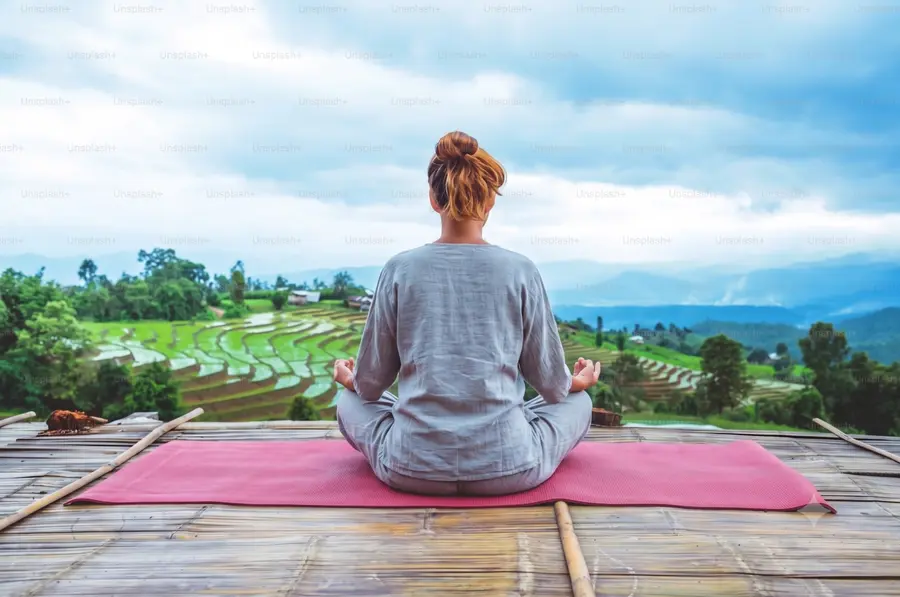
Ubud’s scenery itself counts as part of the programme. The terraced rice paddies of Tegalalang in the north of the village are formed by Bali’s traditional irrigation system, Subak, and green waves extend layer by layer along the valley. They are often used as a backdrop for morning strolls or outdoor yoga. The Campuhan Ridge Walk, a ridge path that runs through the village, is the route people look for if they want to enjoy walking meditation early in the day.
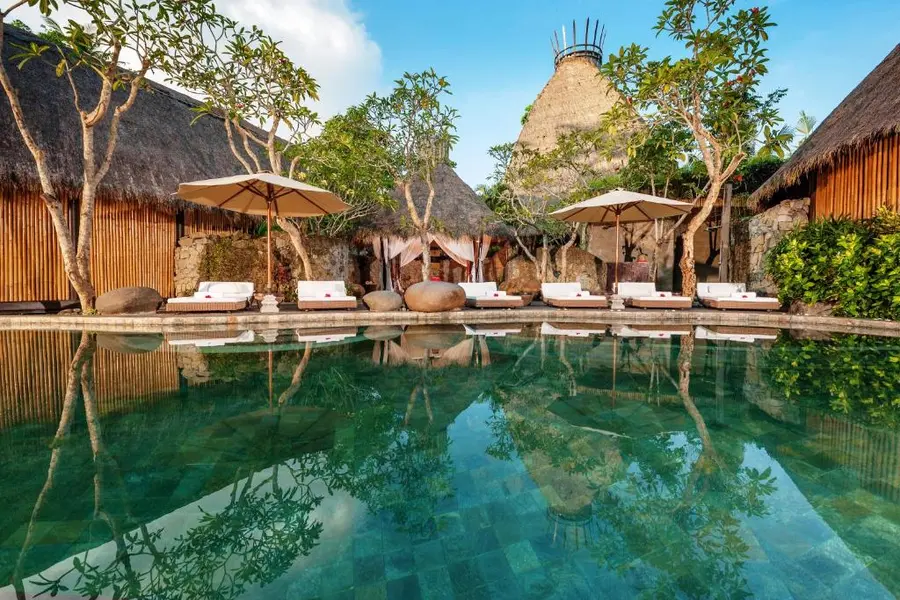
Many of the accommodation and retreat centres were built as if to hide their bodies within this natural setting. Yoga shalas (practice rooms) with rice fields and farmland visible directly through open walls are common, as are spa pavilions where the sound of water in the valley becomes the background, and outdoor meditation decks. Rather than air conditioning, many buildings manage temperature through the tropical breeze and shade, and the key feature is that you remain connected to the surrounding nature even while practising.
From one-day classes to week-long retreats: flagship programmes
The threshold for wellness in Ubud is lower than you might think. One of the village’s best-known wellness centres, The Yoga Barn, runs multiple classes a day, from basic yoga such as Hatha, Vinyasa, Yin and restorative yoga to yoga nidra, sound healing, qigong, ecstatic dance, and various meditation and breathwork sessions. According to the official guidance, a single drop-in session is priced at 165,000 rupiah (around 14,000 won), a five-session card costs 700,000 rupiah, and an unlimited pass for 30 days costs 2,950,000 rupiah. The won amount may vary depending on the exchange rate.
There are also package options that bundle several days. A one-day package that does not include accommodation based on the same centre costs 1,100,000 rupiah (around 90,000 won), while a three-day package is around 2,250,000 rupiah; both bundle massages, meals and class passes. A seven-day retreat including six nights’ accommodation, unlimited classes and treatments is listed at 14,238,000 rupiah (around 1.2 million won). Programme components and prices can change depending on the period, so you need to check at the time of booking.
Meanwhile, the choices for travellers looking for high-end retreats are also broad. Representative options include Fivelements Retreat Bali, which combines Ayurveda and traditional Balinese healing, and COMO Shambhala-run accommodation, known for wellness programmes in nature-filled valley settings. They operate tailored wellness journeys in multi-day units, and the most accurate fees and schedules are best confirmed directly with each facility. Rather than tying yourself to a single provider, the approach suggested is to compare based on your budget and purpose.
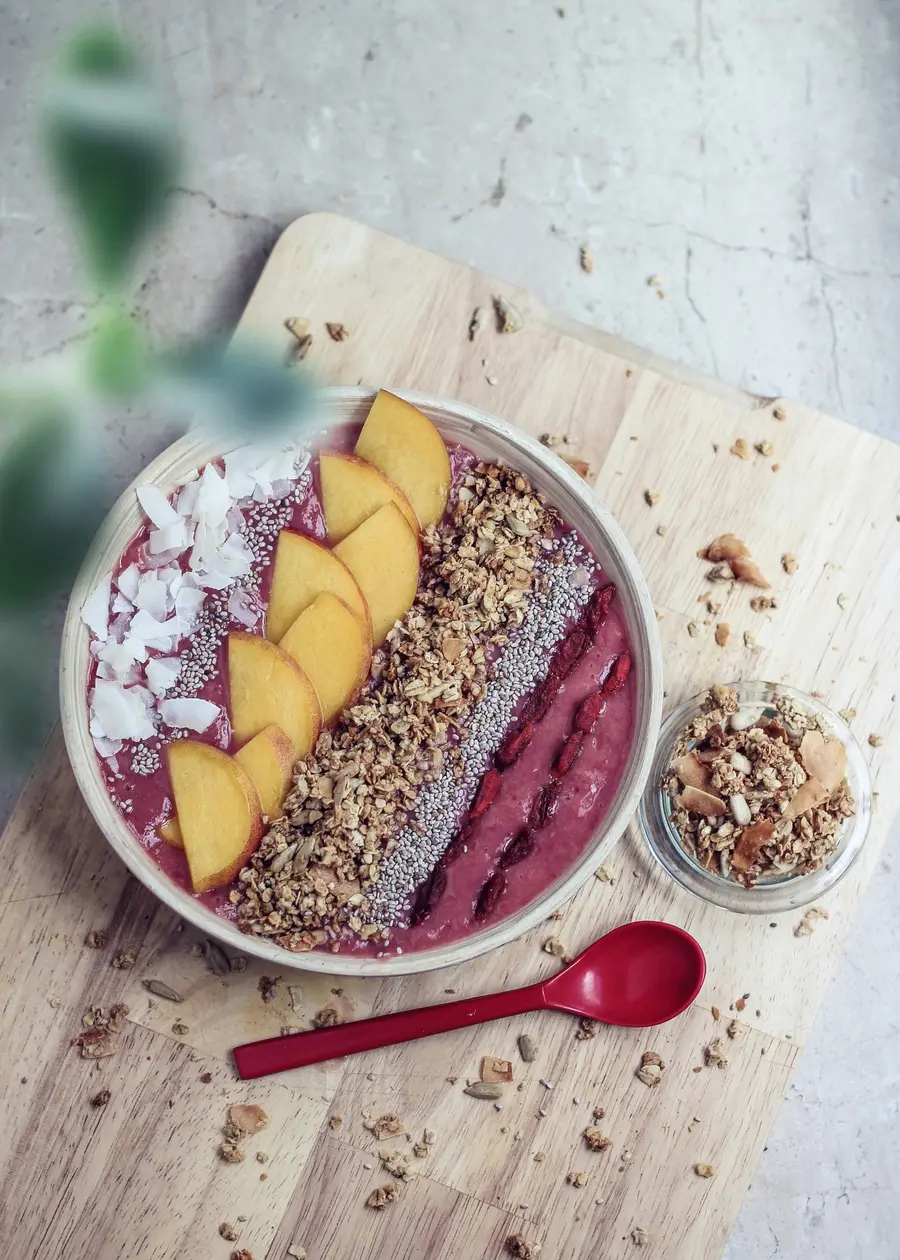
Wellness in Ubud continues beyond the practice room to the dining table. The village is packed with vegetarian and healthy-food restaurants that use organic vegetables and tropical fruit. From traditional dishes such as Balinese mie and nasi to smoothie bowls, raw food and juice cleanses, the range of options is wide, so travellers with dietary restrictions can still handle their meals without too much difficulty.
Experiencing culture is as much a pillar of an Ubud itinerary as practising itself. In the evenings, traditional dance performances are held in the palace courtyard, and in workshops around the village you can learn silversmithing, woodworking and batik dyeing. During Balinese Hindu festivals such as Galungan, the entire village turns the colours of the ceremonies. If you weave in time for both practice that empties the body and moments to see local culture, the shape of your journey deepens.
How to get to Ubud, Bali, and enquiries for booking
How do you get to Ubud, Bali?
Bali’s gateway is Ngurah Rai International Airport in Denpasar (DPS). From Incheon to Denpasar, you can reach it in around 7 hours on a direct flight. A number of airlines, including Korean Air and other carriers and low-cost operators, operate direct routes. From the airport to Ubud is 41 to 44km, and by car it takes about 1.5 to 2 hours. Private car transfer fares are quoted at 450,000 to 950,000 rupiah depending on the vehicle type, and the actual cost varies with the booking route and traffic conditions.
Recommended time to visit
Ubud has two seasons: the dry season (April to October) and the wet season (November to March). During the dry season, humidity is lower and clear days are common, making it suitable for outdoor practice and walking. Local guidance singles out June to April as a particularly good time, when the weather is sunny but not excessively hot. During the wet season, afternoon showers are frequent, but there is the advantage that fewer tourists mean you can stay quietly.
Booking and enquiries
Key centres, including The Yoga Barn, allow you to book classes and retreats via their official websites, dedicated apps and WhatsApp. For The Yoga Barn, retreat packages are guided with a minimum advance booking window of four nights. For high-end retreats, the most accurate information comes from each facility’s official website or email enquiries. There are also wellness package products through domestic travel agencies, so if language is a burden, using that route is another option.
Language and convenience
Ubud is a place where travellers from all over the world gather, so English is widely used at wellness facilities, restaurants and accommodation. Most classes are also conducted in English. Payments use Indonesian rupiah, and card payments and electronic wallets are widely available. For Korean travellers, you need to check visa-free or arrival visa-related rules in advance, using notices from the Ministry of Foreign Affairs and local immigration authorities before you depart.
Ubud as a destination for meditation travel
The value of Ubud is not confined to one particular studio; it lies in the wellness ecosystem formed by the whole village. Backpackers dipping in with one-day classes, trainees following multi-week teacher courses, and travellers seeking quiet, high-end retreats share the same lanes. The combination of low entry barriers and varied layers of depth is a point that travel agencies and tourism organisations aiming to design meditation and wellness travel products should take a close look at.
With the distance you can cover in half a day from Incheon, English-friendly convenience, and the dense experience where nature and culture combine, Ubud turns itself into a benchmark for wellness trips across Asia. Not the question of what you can pack in, but what you can leave out. Ubud answers that question with the green of rice fields and the breath of dawn.
