

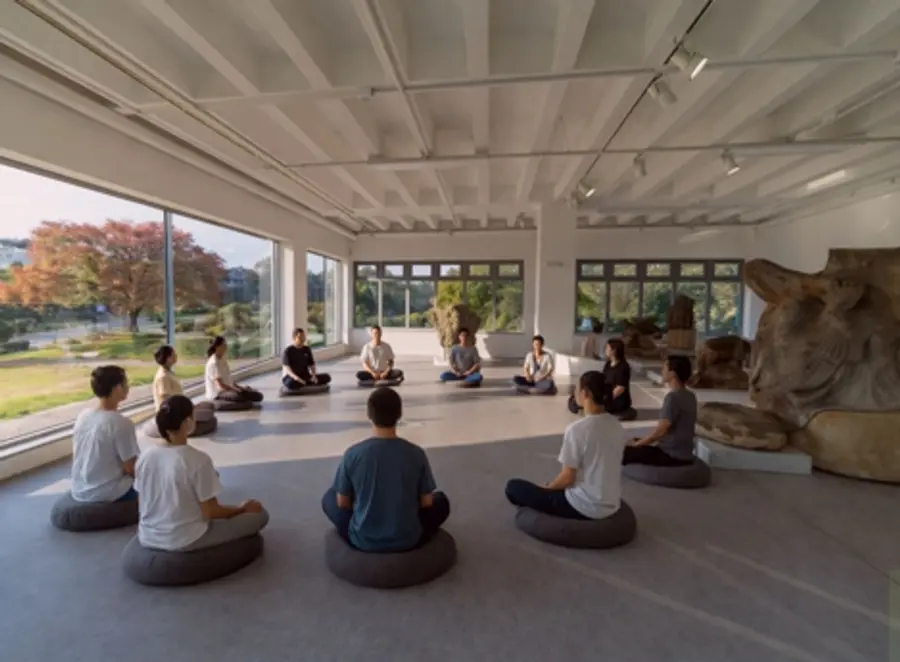
Kyungpook National University Museum will hold ‘Listening to Sound’, a gugak meditation programme linked to its special exhibition of Korean musical instruments, from 5pm to 7pm on 18 November. Using traditional music as a starting point, the programme invites participants to focus on their breathing and senses and reflect on body and mind. University members and local residents can take part free of charge. It is the second session, following the first on 28 October, and the final one of the year.
Two hours on a Wednesday evening: a meditation session open to the public
The gugak meditation sessions will take place on two Wednesday evenings, 28 October and 18 November. Both will run from 5pm to 7pm. The instructor is Professor Park Jeong-a of the Institute for East-West Thought Studies.
Notably, participation is not limited to students and university staff. The museum has invited local residents as well as members of the university community, and there is no charge. To apply, use the application link in the notice about recruitment for the special exhibition’s associated programme on the museum website. The museum describes the programme as a chance to step away briefly from busy daily life, listen closely to sound and settle the mind.
Twelve pitch pipes and eight materials: the order of sound in the adjoining exhibition gallery
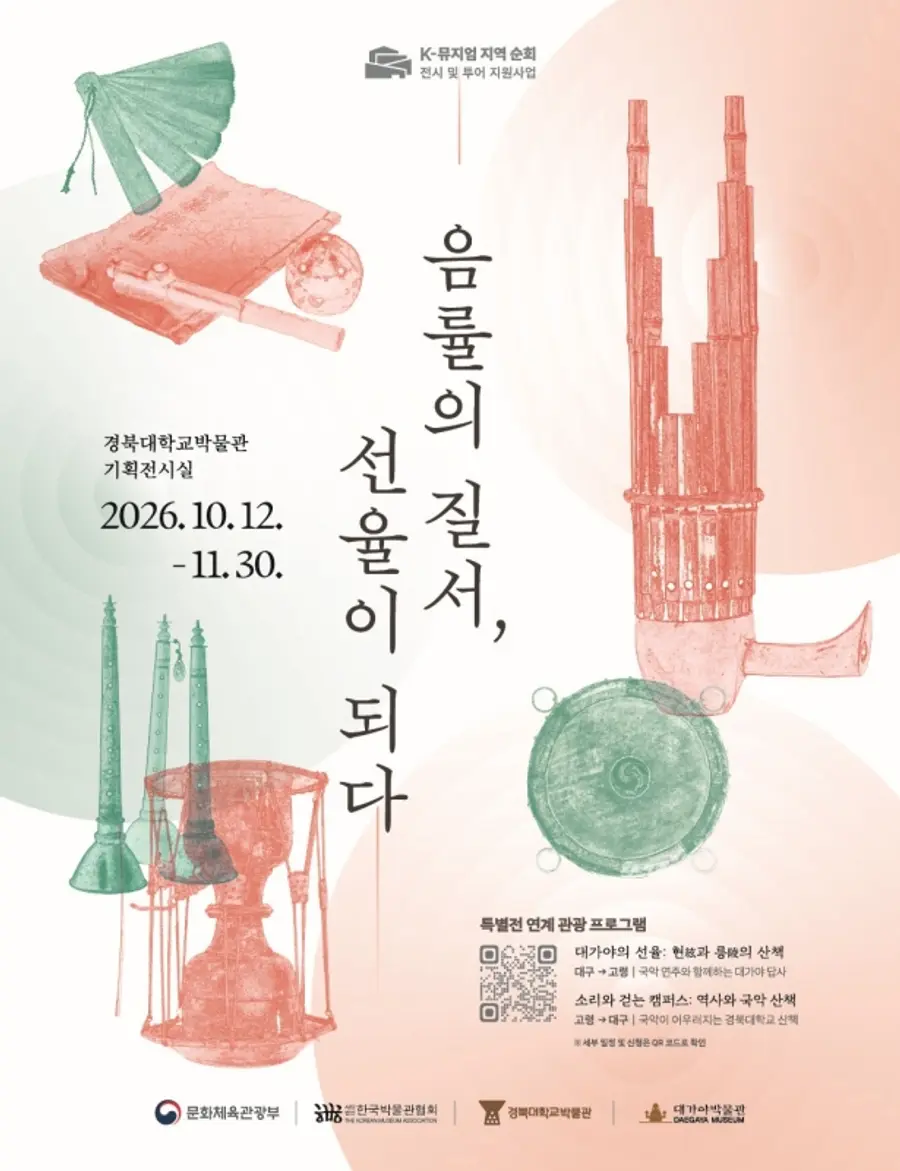
The special exhibition underpinning the meditation programme, ‘The Order of Tones Becomes Melody’, runs from 12 October to 30 November in the special exhibition gallery at Kyungpook National University Museum. Admission is free. The travelling exhibition was jointly organised by Kyungpook National University Museum and the Daegaya Museum (Ureuk Museum) in Goryeong. It is part of the 2026 K-Museum Regional Touring Exhibition and Tour Support Project, hosted by the Ministry of Culture, Sports and Tourism and organised by the Korean Museum Association.
The exhibition is arranged in four sections, tracing a path from sound to musical pitches, from pitches to instruments, from instruments to melody, and finally to the world of ritual music. It presents the twelve pitch pipes, which organise sound into a consistent system, and the eight categories of materials used to classify instruments (八音). Through the structure of string, wind and percussion instruments, it introduces how Korean music is made. The final section explores how music served to express ritual and harmony within the community through Joseon-era ritual music philosophy and Jongmyo Jeryeak.
The story of how people in the past set standards for high and low pitches and brought different sounds together in harmony has something in common with meditation, which gathers scattered attention in one place. Visiting the exhibition before meditating may offer a different way of experiencing the sounds you hear.
Can simply sitting and listening be meditation? Where gugak meets meditation
With information pouring in relentlessly these days, being told to sit without thinking can sound more difficult than it seems. The moment you close your eyes, there is nowhere to place the thoughts that come to mind. Sound meditation lowers the barrier here. Following a single sound as it reaches your ears gives you somewhere to return to, even if your thoughts wander.
Gugak is well suited to this practice. You can follow the resonance of each instrument and the spaces between notes while paying attention to your breathing in and out. For anyone who has never meditated, or has found it hard to keep up a solo practice, a session like this—with sound as a guide—could be a good place to start. Those who enjoy traditional music can experience familiar sounds in a new way.
The meeting of gugak and meditation is also an experience of meditation that can be had in Korea. Bringing together a museum exhibition and guidance from a university meditation instructor, this programme offers an example of how K-meditation could take shape close to everyday life. Of course, sound meditation is not the right answer for everyone. Some people find calm through movement; others feel more at ease in quiet silence. Simply trying it once and seeing whether it suits you is a good enough start.
After meditation: make a wooden book ring or take a musical walk around campus
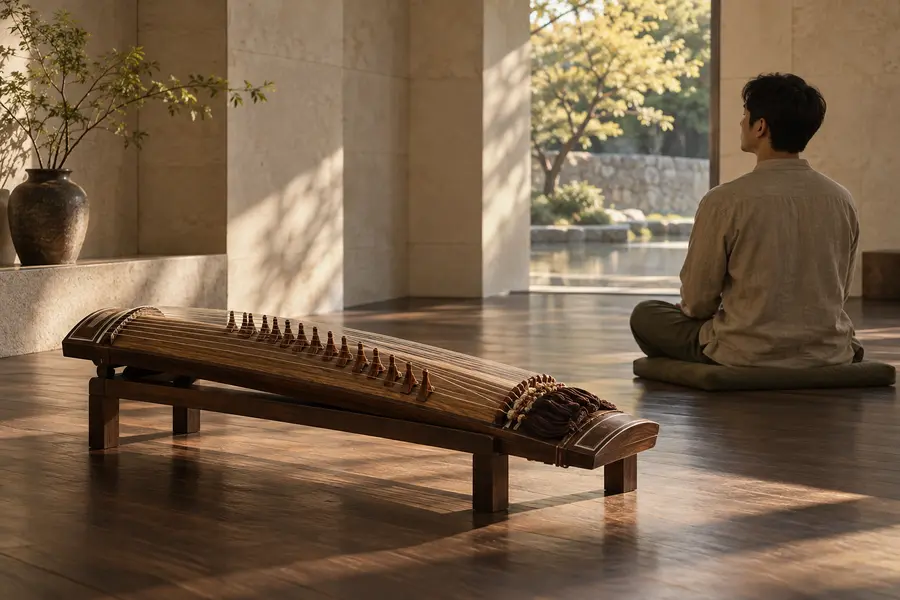
Alongside gugak meditation, the museum is running two other programmes linked to the special exhibition. ‘Sound Shaping’ is a craft activity in which participants make a wooden book ring modelled on the shape of an anjok (雁足), the bridge supporting the strings of a gayageum. It will run from 2pm to 4pm on 31 October (Saturday), 11 November (Wednesday) and 21 November (Saturday). Anyone in the upper years of primary school or older can take part free of charge.
‘A Campus Stroll with Sound’ is a cultural tourism programme combining a visit to the special exhibition with a tour of historic sites on campus, including Wolpagwon, the outdoor museum, as well as a gugak performance and a walk. It will take place from noon to 6pm on 9 November (Monday) and 21 November (Saturday), for Goryeong residents and people from the local community. Participation is also free.
Carving wood by hand, listening while walking and sitting to steady your breathing: all three experiences begin with the same exhibition. If listening meditation feels unfamiliar, you could first get to know the sounds through a craft activity or a walk. Details of each programme’s venue, capacity and application process are available on the Kyungpook National University Museum website (museum.knu.ac.kr). Enquiries can be made to the curatorial office on 053-950-6537.
Article enquiries: fare3041@naver.com