

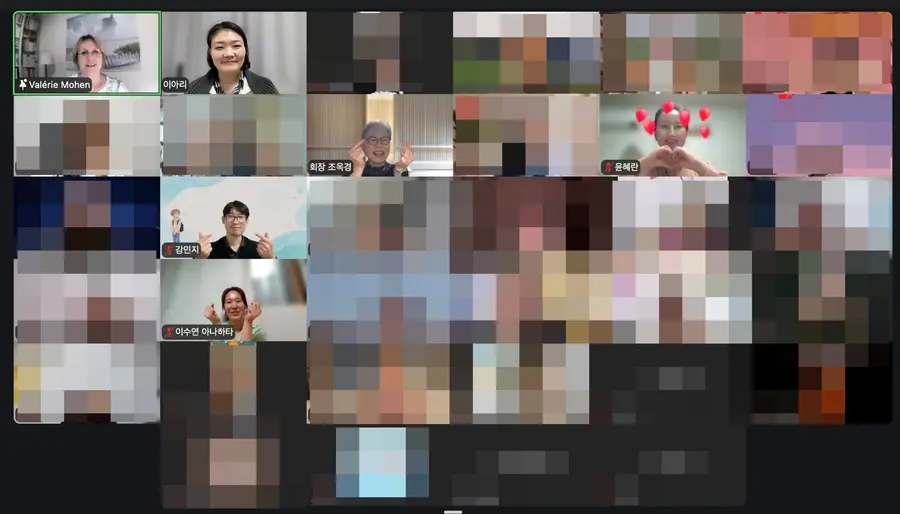
The Korea Association for Somatic Psychology Education, chaired by Jo Ok-kyung, held its first International Somatic Psychology Workshop 〈BodyBTI: Your Body Shape Is Your Personality〉 online from 10am to 7pm on 21 November, with around 50 participants. Jo and Valerie Moen, from France, gave talks exploring the wounds and fears that may lie behind recurring patterns of behaviour and relationships, looking at thoughts and feelings as well as actions and bodily responses.
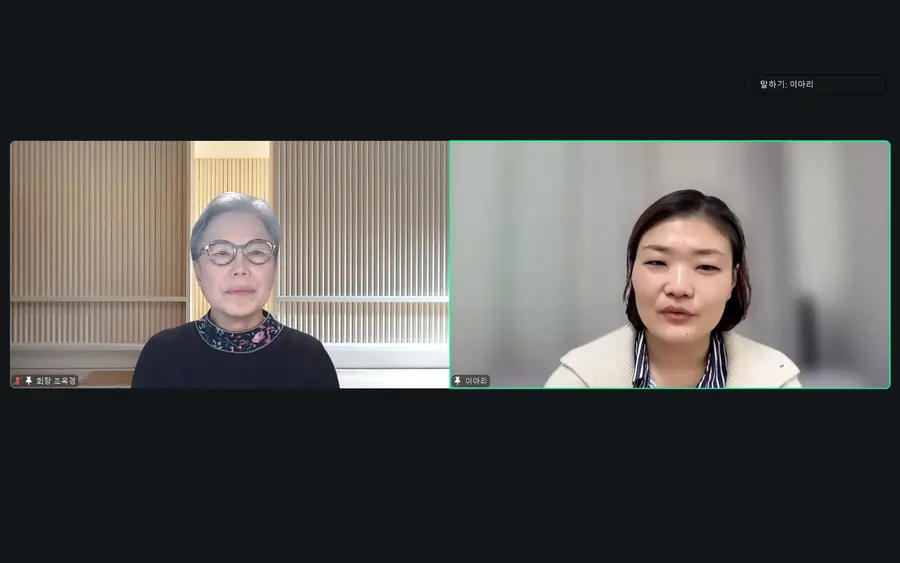
The event was hosted by Lee Ari, the association’s secretary-general, with consecutive interpretation by Hong Hee-yeon. Five members of the association’s board — Kang Min-ji, Yoon Hye-ran, Lee Rang, Lee Soo-yeon and Lee Ari — led talks and discussions in small groups organised around the five types.
Wounds are not flaws, but shields that protected the child within
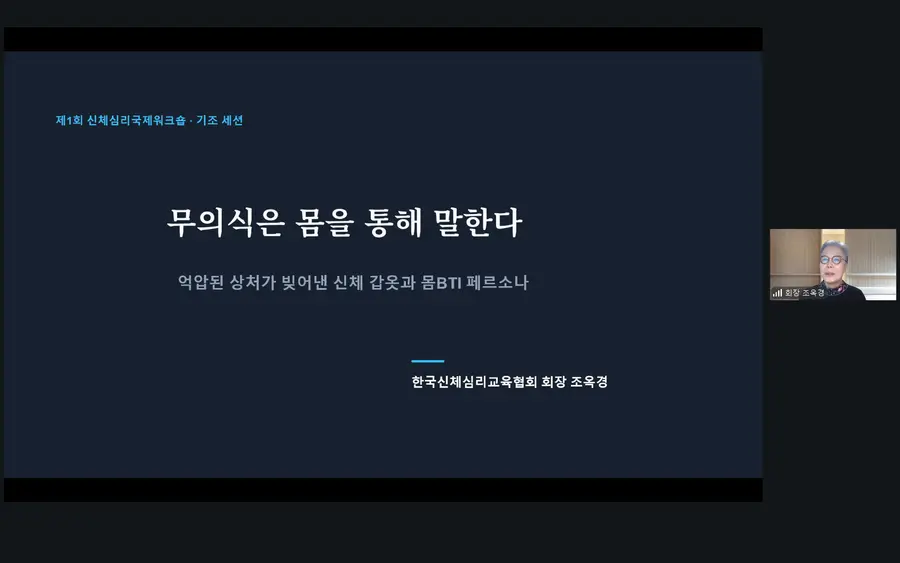
In her keynote, Jo said that thoughts, feelings and habitual behaviours alone were not enough to explain a person’s character. From the perspective of somatic psychology, emotional experiences accumulated since childhood, and the defences developed to protect oneself, are also etched into breathing, posture, muscle tension and changes in sensation.
Jo introduced the defensive responses of fight, flight and freeze that arise under stress, along with implicit memory and Wilhelm Reich’s concept of character armour. She explained that blocking bodily sensations to avoid pain can also weaken the ability to feel joy. Being unable to flee or fight when faced with a threat may be an automatic bodily response rather than a sign of weak will, she said, urging participants to see wounds not as flaws to be eliminated but as shields that protected them when they were at their most vulnerable.
The sensation of the soles of the feet and walking meditation: recovery begins in the body
The suggested route to recovery was to practise experiencing the body directly: grounding by noticing the soles of the feet touching the floor; walking meditation, moving slowly and observing the shift of weight; and noticing changes in tension in the jaw and shoulders, and in the breath.
Rather than forcing tension to ease, Jo said, it is important first to notice and accept it. Somatic psychology, she explained, sees self-understanding and recovery as a process of turning energy that has long been unused into strength for living in the present.
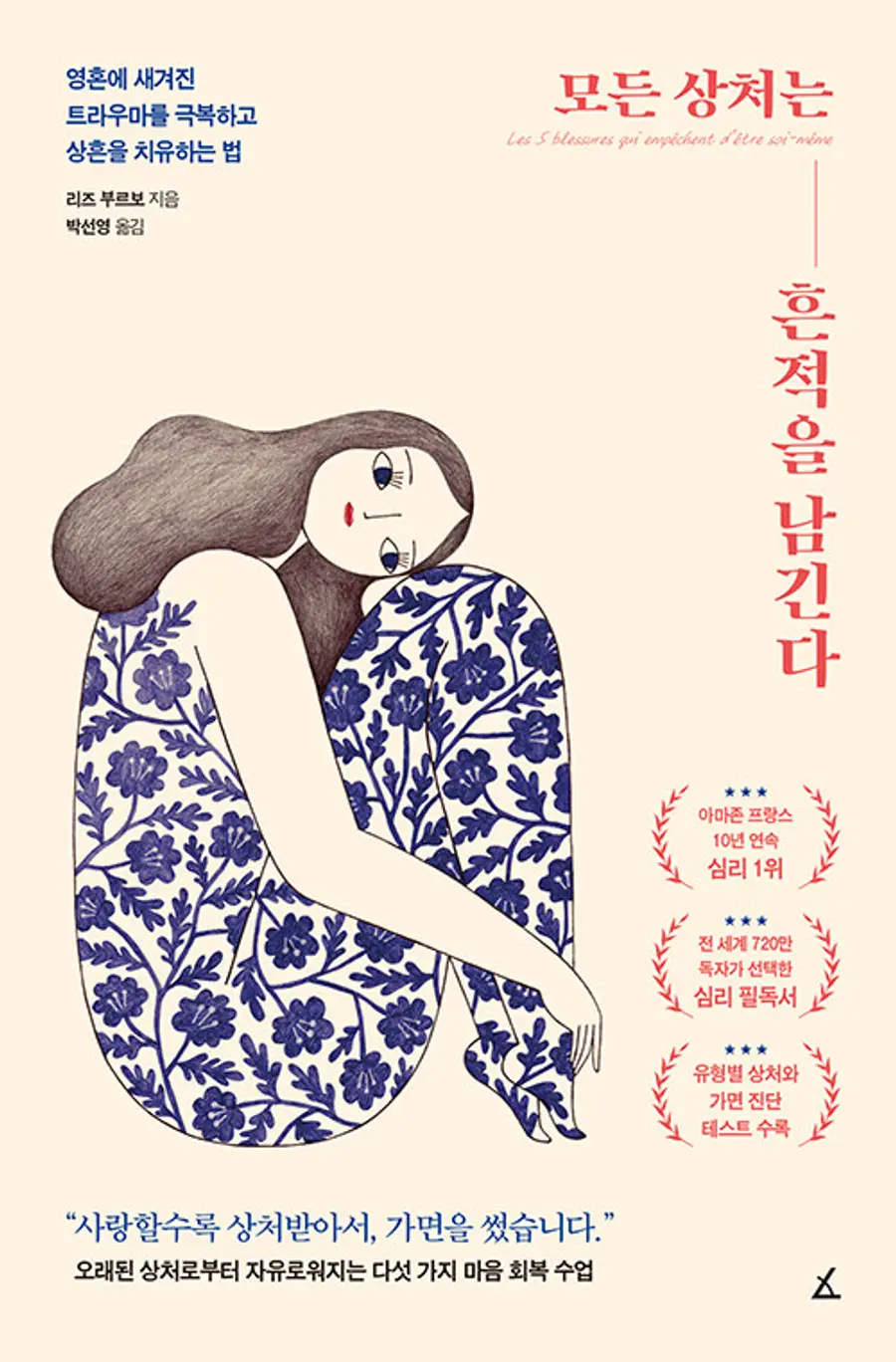
In the afternoon, participants used a checklist in Lise Bourbeau’s book 〈Every Wound Leaves a Mark〉 to identify their own wounds and mask types. They then split into five groups — flight, dependence, endurance, control and rigidity — for short talks and discussions. They also explored how familiar strategies can serve as strengths. One participant said that the experiences shared by others in the same group felt just like their own story.
Why a speaker who was hospitalised with a heart problem began studying this subject
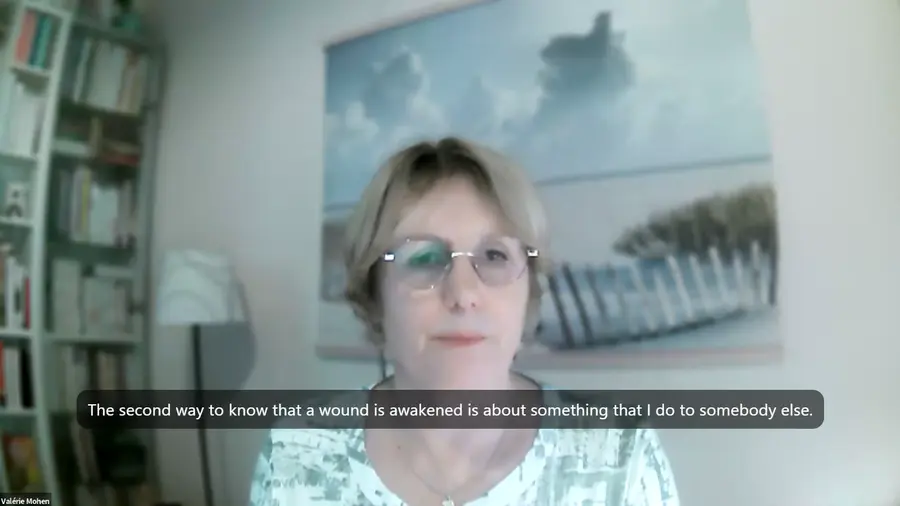
Valerie Moen, who led the afternoon session, graduated from the school founded by Lise Bourbeau and has taught about the five wounds and the dynamics of human relationships since 2012. Her journey began with a personal experience. In 2012, severe burnout led to a heart problem and hospitalisation. While in hospital, she was introduced to Bourbeau’s book by a doctor. After going through her own recovery using its ideas, she became a facilitator so she could share them with more people.
The talk began with three questions: Why is it difficult for me to live as my true self? Why can’t I express myself as I would like? Why are some relationships difficult to make satisfying? Moen said that answering these questions requires observing not only thoughts and feelings, but also behaviour, attitude and the body.
From flight to rigidity: the fears hidden behind five masks
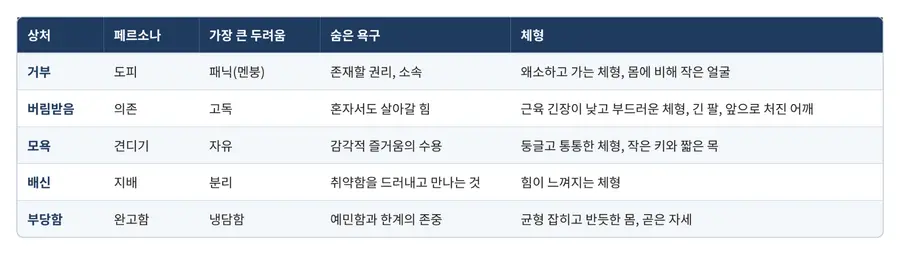
The wounds discussed in the talk are not simply unpleasant memories, but intense emotional pain experienced when needs go unmet in relationships. A persona, or mask, is a protective strategy developed to avoid experiencing that pain again. A child who feels rejected may try to minimise their presence, strive to be loved, suppress their needs, control others or become perfect.
Moen grouped the five wounds as follows: rejection leads to the flight mask; abandonment to dependence; humiliation to endurance; betrayal to control; and injustice to rigidity. Someone with a wound of rejection may leave before they can be rejected, while someone with a wound of humiliation may suppress their own needs and find it impossible to refuse other people’s requests. A person does not wear just one mask, she said, and the way masks can change rapidly depending on the situation is likened in Bourbeau’s teaching to a masquerade ball. Moen added that this classification is a framework for self-understanding, and that body shape is likewise a point of reference for self-observation.
What it means to prescribe ordering bulgogi instead of water
The stages of healing she outlined were awareness, acceptance and responsibility. Wearing a mask puts a person on autopilot, so the first step is to notice what is happening. Acceptance does not mean submission or giving up; it means allowing oneself the right to exist as a human being in the present. As one sentence to take away from the workshop, Moen offered: "I have to accept the parts of myself I don’t want in order to become the person I want to be."
Small actions to try in everyday life were also suggested for each wound. If you have a wound of rejection, express your opinion without making excuses; if speaking in front of a group feels daunting, start by telling one person. If you have a wound of abandonment, choose to spend time alone by walking along a river or sitting in a café by yourself. If you have a wound of humiliation, give yourself permission to order bulgogi instead of water and fully enjoy its taste. If you have a wound of injustice, try saying "Could you help me?" instead of "I’ll do it all myself." Change, she explained, lies in the intention behind the same action.
In-person workshop focusing on the body planned for the first half of next year
Moen said applying these ideas with her two daughters had helped greatly, and that she hoped to share them more widely with younger generations. She added that the number of young participants at Lise Bourbeau workshops in France has recently been growing.
The Korea Association for Somatic Psychology Education believes that practical work with the body is as important as theory and plans to hold a follow-up in-person workshop in the first half of next year. Building on this first international workshop, it plans to create more opportunities to study and experience somatic psychology in greater depth.
Article enquiries: fare3041@naver.com