

The sound of a temple bell, ringing for more than 380 years, and the vibrations of singing bowls filled the concert hall. Yongheungsa Temple in Damyang and the Damyang Buddhist Association held Conversation in the Mountains, part of the 2026 Yongheungsa Temple Mountain Music Festival, at Damyang Culture Centre on 7 November. Now in its seventh year, the festival brought together around 600 people, including monks from local temples, National Assembly member Lee Gae-ho, Damyang County Governor Park Jong-won, Damyang County Council Chair Jang Myeong-young, Buddhists and local residents.
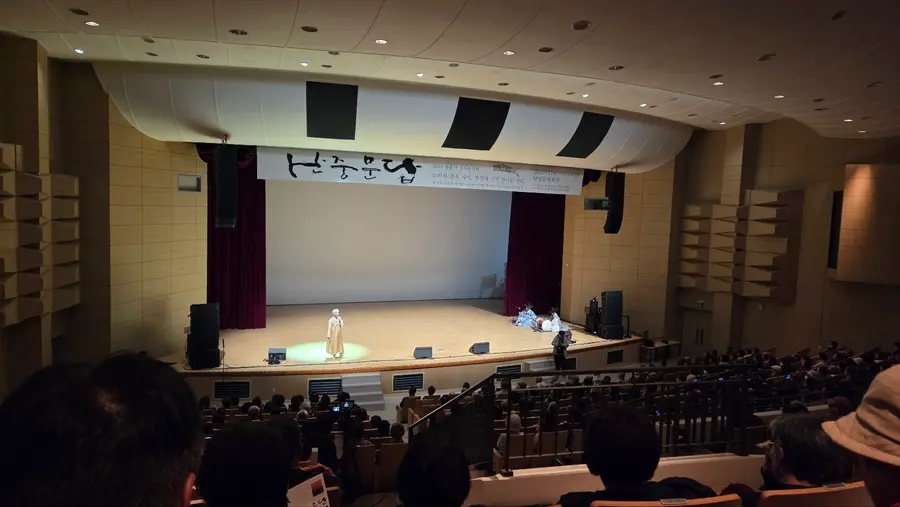
Why the audience closed their eyes during the performance
The performers included singer Jang Sa-ik, Cho Eun-hee performing the salpuri dance, Lee Ju-hee on the five-drum dance, Kim Dong-eon on the seoljanggu hourglass drum and master daegeum player Won Jang-hyeon. Jin Ok-seop, former president of the Korea Cultural Heritage Foundation, provided commentary, explaining the artistic significance of the performances and the value of traditional culture.
What set this year’s festival apart was the inclusion of Buddhist meditation as a key part of the programme. Audience members who had come to enjoy song and dance also took time during the performance to close their eyes and reflect on themselves.
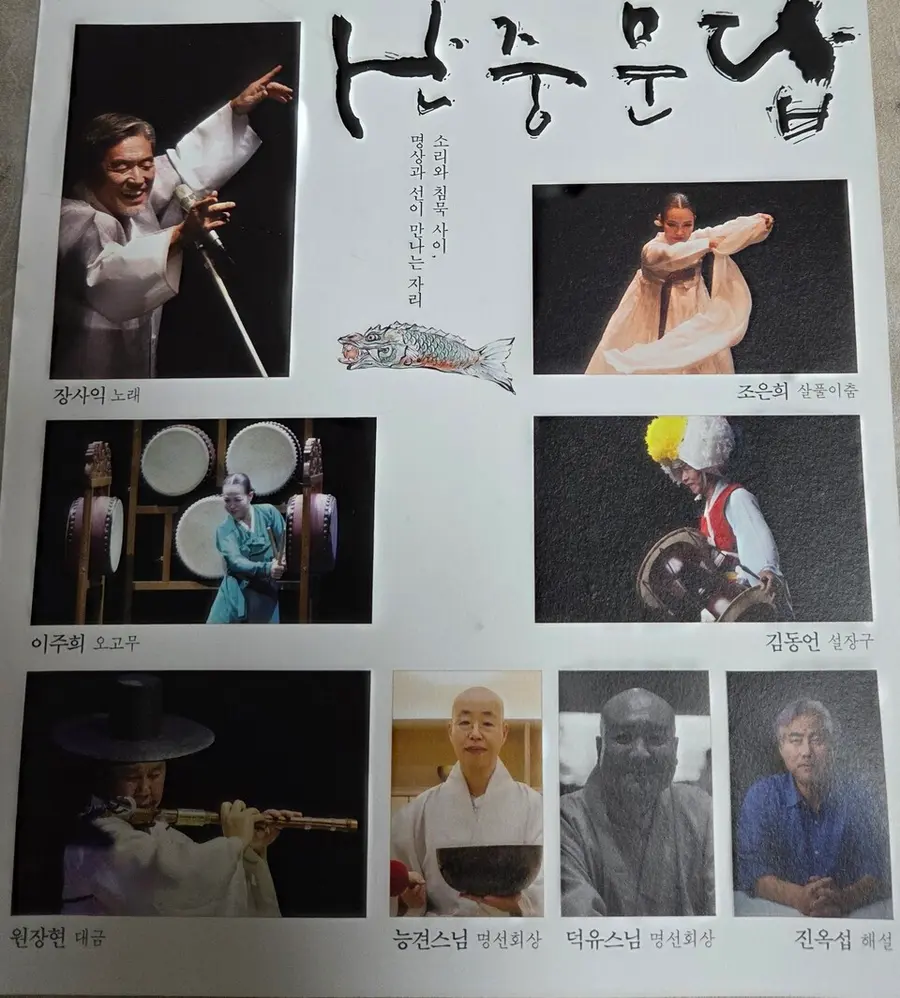
How to entrust your mind to the sound of a bell cast in 1644
During the myeongseonhoesang segment, Yongheungsa Temple’s abbot, the Venerable Deokyu, introduced the temple’s bronze bell, made in 1644. He explained that its sound, carrying more than 380 years of history, holds the prayers of those who came before for peace in the country and well-being for all living beings. He invited the audience to set aside their heartfelt wishes for a moment, focus on the clear sound of the bell and encounter their true selves.
During the myeongsanghoesang segment, the Venerable Neung-gyeon led a singing-bowl meditation. Those present calmed their minds by following the gently spreading sound and vibrations.
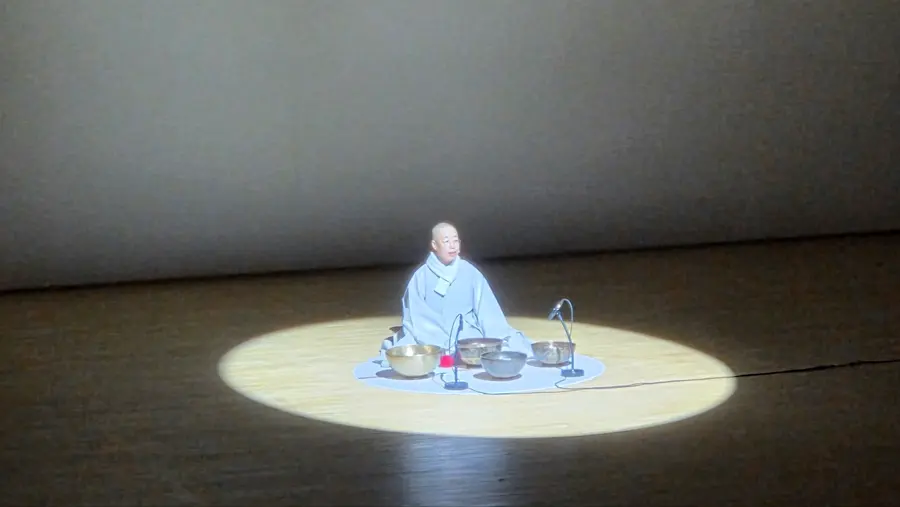
Sound meditation begins not with an instruction to empty the mind, but with guidance to follow what the ears can hear. Even those who find meditation daunting amid the flood of information in their heads can start by focusing on a single bell or the resonance of a singing bowl.
A format Jang Sa-ik said he had never experienced at a mountain music festival
Jang Sa-ik said that, although he had performed at many mountain music festivals, experiencing music through monks’ teachings and meditation was something new for him. He added that the event, bringing together traditional arts and Buddhist practice, had shown the potential for new directions in mountain music festivals.
Damyang County Governor Park Jong-won said he hoped the event would offer residents rest and comfort, and help promote Damyang’s cultural assets. Council Chair Jang Myeong-young thanked Yongheungsa Temple and the Buddhist community for organising the festival for the peace and harmony of local residents.
The name Conversation in the Mountains conveys the idea of listening to the sounds of the mountains and finding one’s true self in their resonance. Yongheungsa Temple first brought meditation and traditional arts together last year, and this year expanded the programme around the theme of sound and silence. The temple is also one of those selected for Jeollanam-do Province’s Thousand-Year Temples World Meditation Tourism project.
Stages like this, where audiences come to watch a performance and naturally experience meditation, are worth noting as one strand of Korean-style meditation culture that lowers the barrier to getting started. Meditation that begins with familiar parts of Korean culture, such as music, dance and the sound of temple bells, could be a good gateway for introducing K-meditation to the world.
Enquiries about this article: fare3041@naver.com