
Vice Minister of Culture, Sports and Tourism Jang Mi-ran's Experience on Ganghwa Island
From Jeondeungsa to Chungpung, experiencing forest yoga and singing bowl meditation.
The "Spring Travel Campaign" conducted by the Ministry of Culture, Sports and Tourism and the Korea Tourism Organization until May is gaining attention with its "Travel to - Cultural Small Town Travel" course. Among these, Ganghwa Island, the fourth largest island in Korea, is attracting special interest. Vice Minister Jang Mi-ran personally experienced this course and emphasized the charm of domestic travel, saying, "While overseas is nice, there are many better places in the country."
Jeondeungsa, which Holds a Thousand Years of History
The starting point of a trip to Ganghwa Island is Jeondeungsa, which boasts a history of 1600 years. Founded in the 381st year of King Sosurim of Goguryeo, Jeondeungsa is one of the oldest temples in Korea, and in spring, the azaleas and cherry blossoms bloom beautifully, offering a more stunning landscape.
Jeondeungsa has a unique entrance structure where visitors bow their heads as they pass through the Daejooru. Entering with a humble heart, the smiling Buddha in the Daeungjeon welcomes travelers. The nearby Jeongjok Mountain Fortress has three peaks shaped like a cauldron, and a 10-minute hike offers a panoramic view of the sunset over the West Sea.
Jeondeungsa functions not only as a temple but also as an art space. Works by artist Lee Young-seop, known for his "Excavation Sculpture," such as The Little Prince and stone Buddha statues, are placed throughout the temple grounds, and exhibitions by contemporary artists are held year-round at the Museoljeon Seowon Gallery.
A must-visit space at Jeondeungsa is the tea house "Jukrim Dawon." The "jujube tea" highly recommended by the head monk Yeaham is the signature menu here. Yeaham confidently stated, "No jujube tea from any house in the country can compare to Jeondeungsa's jujube tea." The secret lies in not only boiling jujubes but also simmering various fruits like apples to create a natural sweetness. Vice Minister Jang also praised, "It tastes exactly like the jujube tea my mother made for me during my athlete days," giving a thumbs up.
100 Years of Tradition at Geumpung Brewery, A Space for Experience and Memories
Located about a 10-minute walk from Jeondeungsa, Geumpung Brewery is a place with a 100-year history. It was registered in the architectural register in 1931, but its actual operation is believed to date back even earlier. Currently, it is run by the third generation, with CEO Yang Tae-seok (50), a former marketer, taking over operations in 2020.
One of five designated breweries in the country, this place produces traditional liquor using local agricultural products such as Ganghwa Island rice, contributing to the revitalization of the local economy. It has also been recognized in the food sector of wellness tourism selected by the Ministry of Culture.
CEO Yang has utilized the brewery's long history as an advantage, keeping the exterior intact while giving the interior a retro feel. The well and nuruk storage space used 100 years ago are still preserved. On the pillars of the second-floor experience area, there are characters inscribed by past brewery workers wishing for "good fortune," and it is said that touching them with your palm brings good luck.
Recently, it has gained attention in the culinary world, receiving positive responses through a collaboration with Singapore's Michelin restaurant Akira Back for a makgeolli pairing.
Here, in addition to tasting and purchasing makgeolli, unique wellness experiences such as making makgeolli yourself and a "makgeolli hand spa" using fermented rice and makgeolli dregs are available. Dipping your hands into the fine dregs transmits the subtle warmth of fermentation, and the gentle aroma relaxes you. Recently, they are also preparing a scent therapy experience using incense and candles made from dregs.
Chungpung,
A Healing Space Created by Young People of Ganghwa Island
The last course of the trip to Ganghwa Island is the cooperative "Chungpung," selected in the content sector for promoting regional growth as the "2024 Star of Korean Tourism." This space, operated directly by local residents, is a complex cultural space that combines small workshops, exhibitions, cafes, and rest areas, becoming a hub for sharing the daily life of Ganghwa with travelers.
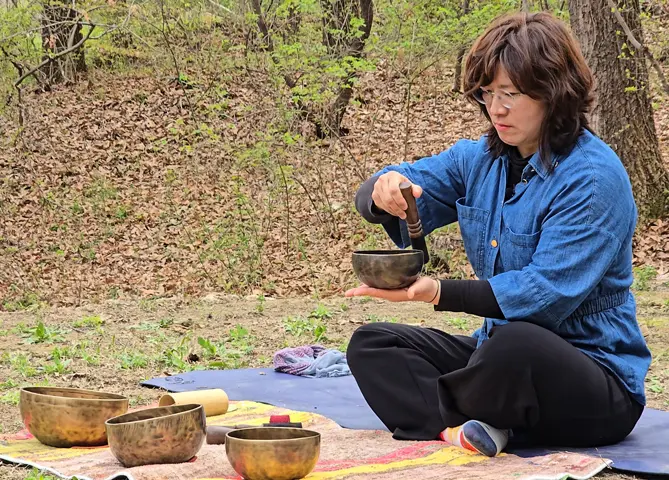
Chungpung offers forest yoga and singing bowl meditation experiences through the "Momentary Island" program. Laying mats on the grass and listening to the clear sound of singing bowls imported from Nepal during meditation time, though short, provided a deep healing experience. Vice Minister Jang was also captivated by the vibrations and resonance of the singing bowls, saying, "That's really amazing."
A New Tourism Trend, The Aesthetics of Slowness
A day on Ganghwa Island is a journey that feels the breath of the region by staying in one place for a long time rather than moving quickly. This place shows the potential to be a sustainable domestic travel destination beyond just a day trip.
Vice Minister Jang Mi-ran expressed, "I had a great time experiencing various activities in Ganghwa and getting immersed in its charm," and added, "Due to recent economic uncertainties and social atmosphere, the domestic market has shrunk. To recover from this, it is important to travel lightly to nearby areas and find vitality in daily life." She continued, "We will continue to discover various tourism content in cooperation with the region and improve the local tourism environment so that citizens can travel naturally in their daily lives."
Ganghwa Island, where tradition and art, local flavors, and sensory relaxation come together, is undoubtedly an attractive domestic travel destination that makes you want to revisit, as Vice Minister Jang said, "I really want to come back with family and friends."
