

There are feelings that words can’t fully reach. In moments when you want to share love with someone but feel at a loss about how to express it, people often end up trapped inside themselves. There is a place where that uncertainty is unraveled through the body, expression, and the language of relationships. This is the “Geumse-Dal Festival,” held once a month for over 20 years.
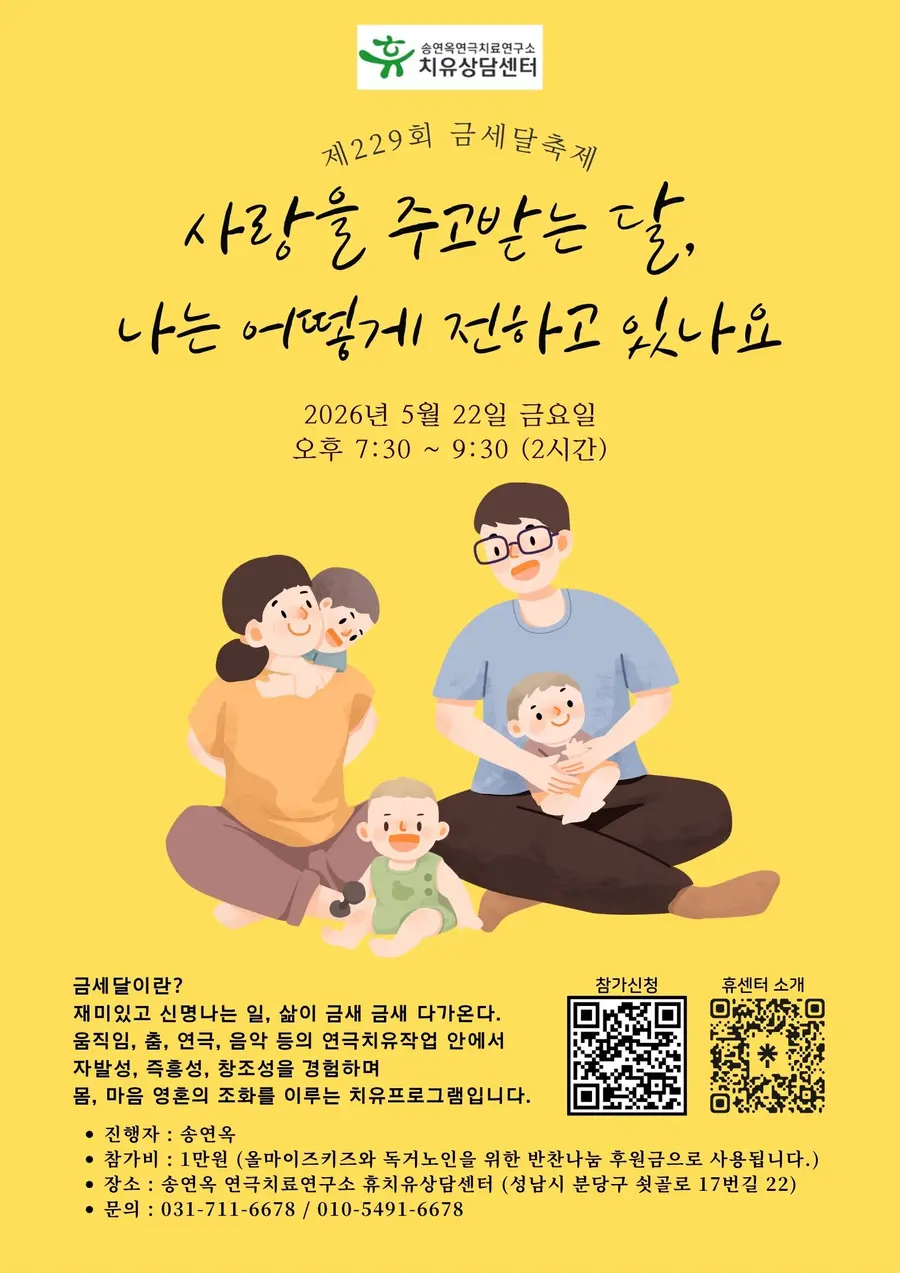
The 229th Geumse-Dal Festival on May 22, themed “A Month of Giving and Receiving Love”
On May 22, the 229th Geumse-Dal Festival will be held at the Hu-Chi Healing Counseling Center of the Song Yeon-ok Drama Therapy Research Institute in Bundang-gu, Seongnam-si, Gyeonggi-do. This session’s theme is “A Month of Giving and Receiving Love—How Am I Sharing It?” Participants will reflect on how the emotion called love flows through their own lives, and they will directly experience ways to give and receive love through the body, roles, and imagination.
The Geumse-Dal Festival works through a variety of expressive activities such as dance and movement, drama, and music. Participants can safely reveal their emotions, and within each other’s stories they encounter natural empathy and healing. That is why it has become more than a cultural event—it has established itself as a healing space that reconnects people with one another.
Healing Every Month for 20 Years Without Missing a Single Month—Flowing Through Sharing
The number 229 means “20 years, once every month, without ever skipping a month.” Where the Geumse-Dal Festival adds meaning is in its identity as a donation-based healing program. Participation fees flow beyond program operations into community sharing. It has long been carried out as a structure in which individual healing expands into community care—used for things like sharing side dishes for elderly people living alone and children.
In that caring time for oneself connects to someone else’s table, the Geumse-Dal Festival is regarded as a healing model that is rare in Korean society.
The Hu-Chi Healing Counseling Center at the Song Yeon-ok Drama Therapy Research Institute—A Place That Paved the Way for Korean Drama Therapy
The Hu-Chi Healing Counseling Center at the Song Yeon-ok Drama Therapy Research Institute, which hosts the Geumse-Dal Festival, is an integrated psychological counseling organization that launched in 2002 and has pioneered the path of drama therapy in Korea. It is recognized as a leading institution that helped introduce and develop drama therapy—once unfamiliar—and trained countless experts in drama-based psychological counseling.
The center’s core philosophy is “Healing is another name for growth.” The distinctive aspect lies in leading changes in emotional states through a drama-therapy approach in which the body, expression, and relationships move together—beyond counseling understood only through words. Starting with individual counseling, it has expanded its activities into schools, organizations, and local community settings. It runs ongoing programs covering the full spectrum of life stages, including “A Very Special Play” for parents and adults, “Tto Tto Assa” for adolescents, and “STAMSDAM,” which combines psychological drama with meditation.
The Healing Flow Expands to Leaders and Business Owners
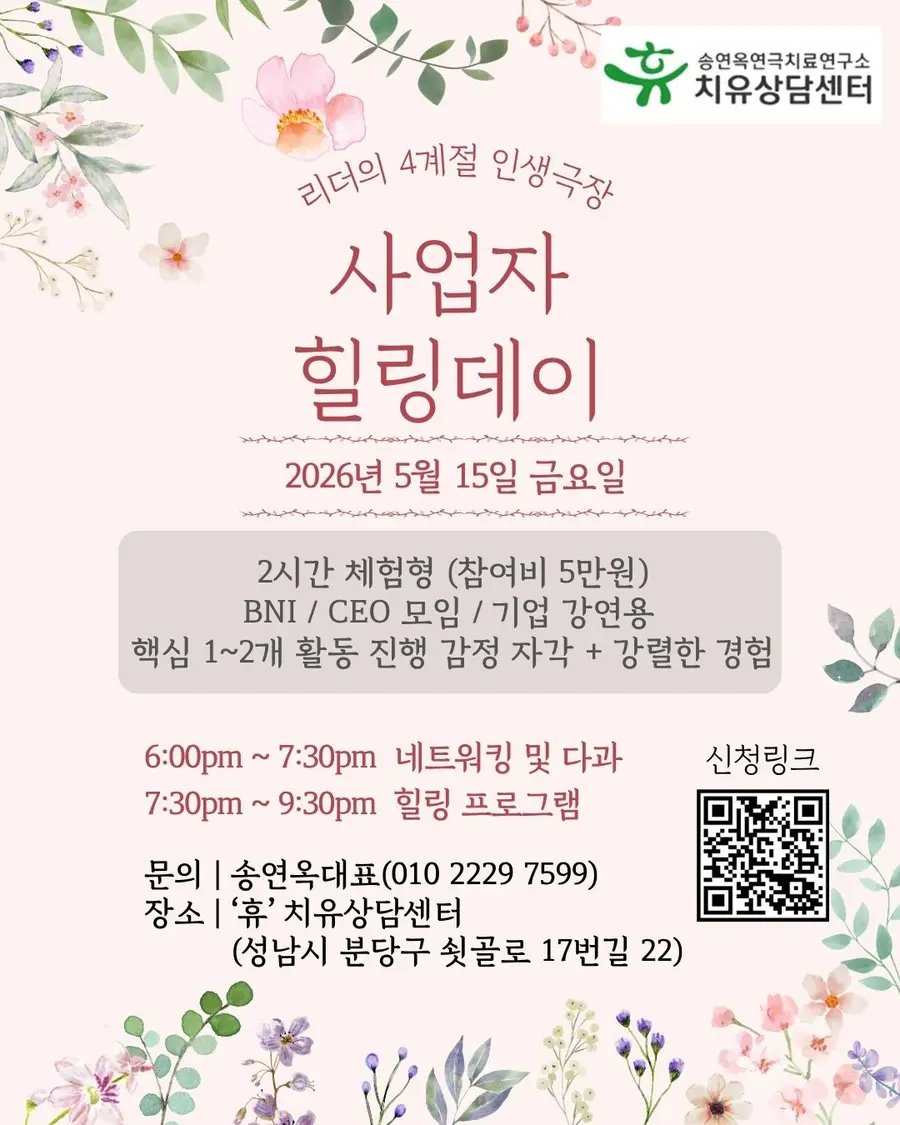
This flow is also extending into programs for leaders and business owners in recent times. On May 15, a “Business Owner Healing Day” is planned for various leader groups such as BNI and CEO gatherings. It is an experiential program in which business owners—who can easily miss their own emotions amid performance and responsibility—directly experience their body and emotions for two hours and encounter a shift in perspective.
This is a moment that shows how the philosophy of the Geumse-Dal Festival, sustained every month for over 20 years, begins with individual healing and expands into healthy relationships for organizations and society.
This is an era when relationships are disconnected and emotions are consumed only as words. Geumse-Dal offers a single question.
“How are you sharing love right now?”
On May 22, in Bundang, there will be a place that invites you to find the answer—not in your head, but in your body and your life.