

If you’ve decided to try meditation but have only 15 minutes to spare today, which kind should you choose? A new study suggests that beginners may benefit from focusing on their breath or body when time is short, and from observing their thoughts when they have more time.
A research team from the School of Psychology at Liaoning Normal University in China, led by corresponding author Ren Guiqin, examined how the length and type of meditation affect mind-wandering. The study was published October 28 in the international journal Current Psychology.
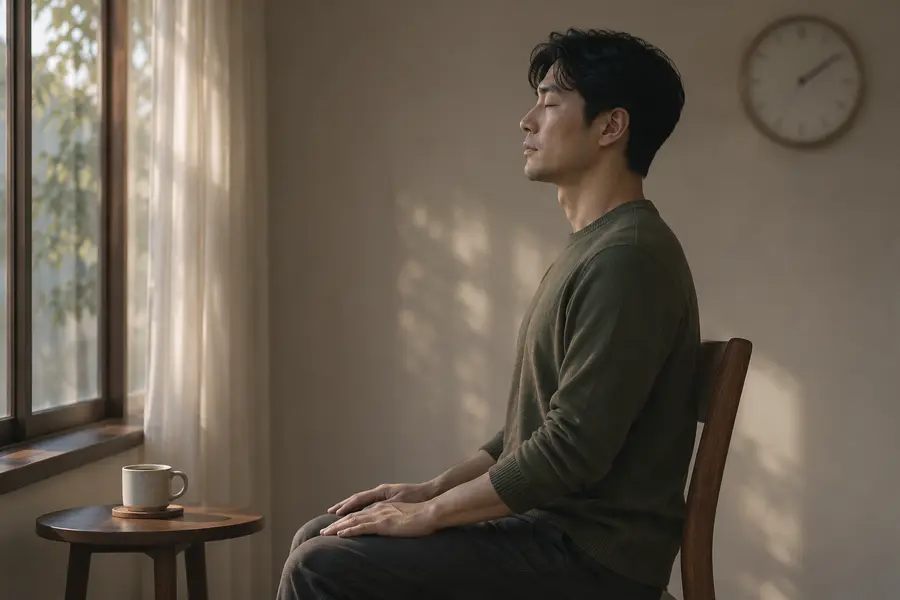
Which 15-minute meditation reduced mind-wandering?
The researchers divided people with no meditation experience into groups and had them practice one of three types of meditation: breath meditation, a body scan or open-monitoring meditation. They compared the groups with one that did not meditate. In open-monitoring meditation, practitioners do not anchor their attention to a single object, such as the breath, but instead observe thoughts and sensations as they arise without holding on to them.
After meditating, participants completed a concentration task: They pressed a button whenever a number appeared on a screen, except when a designated number appeared. The more the mind wandered, the more inconsistent participants’ button-pressing speed became. The researchers used that variability to measure mind-wandering.
After a single 15-minute session, the breath-meditation and body-scan groups showed less mind-wandering than the group that did not meditate. There was no difference between the two meditation groups. Open-monitoring meditation produced no clear change after 15 minutes.
After 30 minutes, observing thoughts also made a difference
When the meditation session was extended to 30 minutes, the results changed. The groups that practiced breath meditation and body scanning—and the group that practiced open-monitoring meditation—showed less mind-wandering than the group that did not meditate.
The researchers said meditation beginners may need longer sessions of open-monitoring meditation to reduce mind-wandering. This may mean that meditations with an anchor, such as the breath or body, make it easier to focus in a short time, while observing thoughts without an anchor takes longer for the mind to settle into.
A 15-minute morning session or 30 minutes in the evening: Which meditation should you try?
The study does not say that one type of meditation is better than another. Instead, it shows that different practices may suit different schedules and situations. In a time when information and notifications constantly pull at our attention, a meditation with a clear anchor can help bring the mind back during a short break.
For a roughly 15-minute break before work or during lunch, choose breath meditation or a body scan. When you have at least 30 minutes free, such as on a weekend evening or before bed, consider trying a meditation that involves observing your thoughts. If observing thoughts felt difficult at first, it may not mean meditation isn’t for you—your session may simply have been too short.
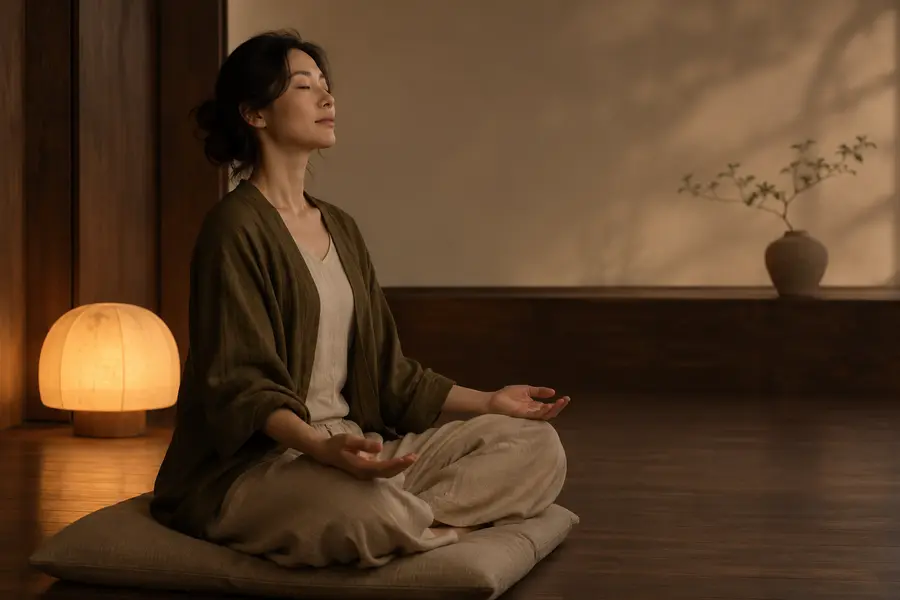
Trying a body scan for the first time? Start at your toes and work up to the crown of your head
If you choose a body scan for a 15-minute meditation, try this: Sit comfortably in a chair or lie on your back on the floor. Take a few slow breaths, then bring your attention to your toes and the soles of your feet. Notice whether they feel warm, tingly or numb. Slowly move your attention up through your ankles and calves, knees and thighs, then your abdomen and chest, shoulders and arms, neck and face, and finally the crown of your head. If other thoughts arise, don’t blame yourself; simply return to the part of your body you were focusing on.
For a 30-minute session observing your thoughts, spend the first few minutes focusing on your breath to settle your mind. Then release your focus on the breath and watch thoughts, sounds and bodily sensations pass like clouds in the sky. If you notice that you’ve followed a thought, step back and return to the position of an observer.
On short days, turn to the breath and body; on longer ones, observe your thoughts. The time you have today can guide your choice of meditation.
Article inquiries: fare3041@naver.com