

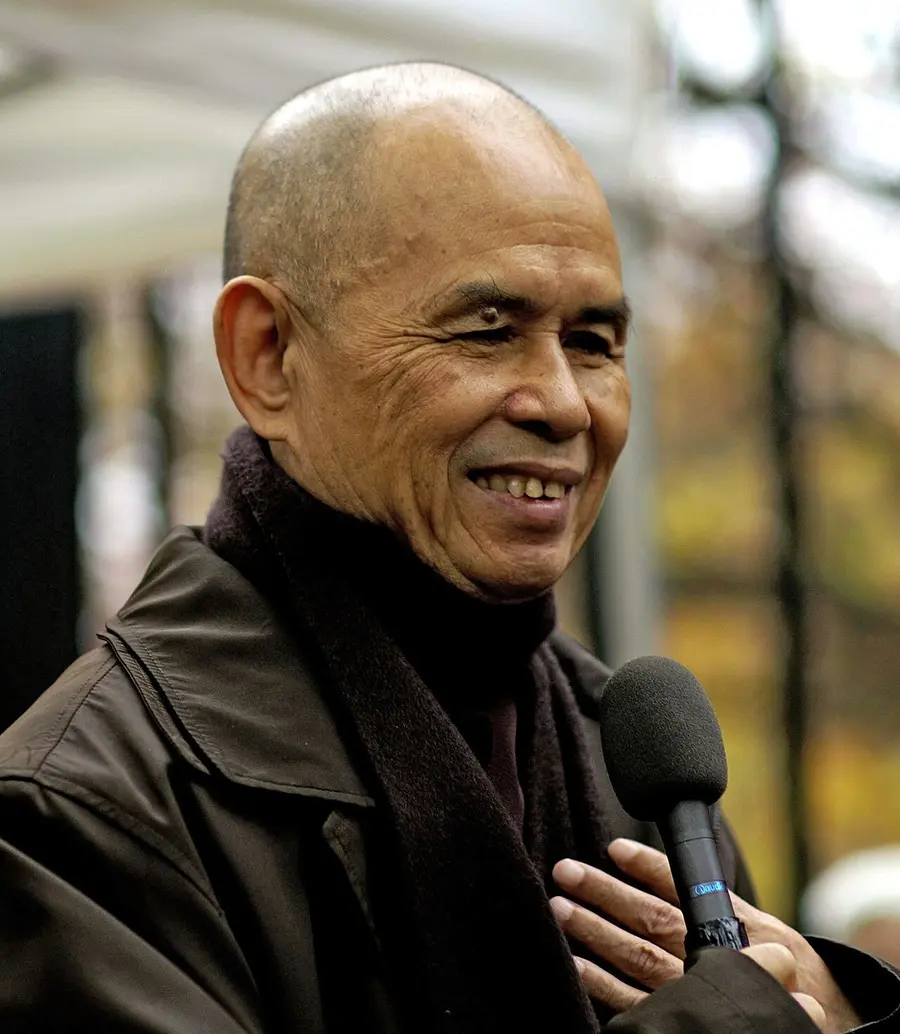
October 11 marked 100 years since the birth of Vietnamese Zen master Thich Nhat Hanh (1926–2022). The Plum Village tradition he founded calls the day Continuation Day. The name comes from the Zen teaching that there is no separate birth and death, the U.S. Buddhist magazine Tricycle reported.
The anniversary passed a month ago, but the story continues. In an article by Barry Boyce published on the 5th of this month, U.S. meditation publication Lion’s Roar reported that Plum Village will open an online monastery in January 2027. Four years after their teacher’s death, whom has the community chosen to take his place?
How does a community move forward without naming a successor?
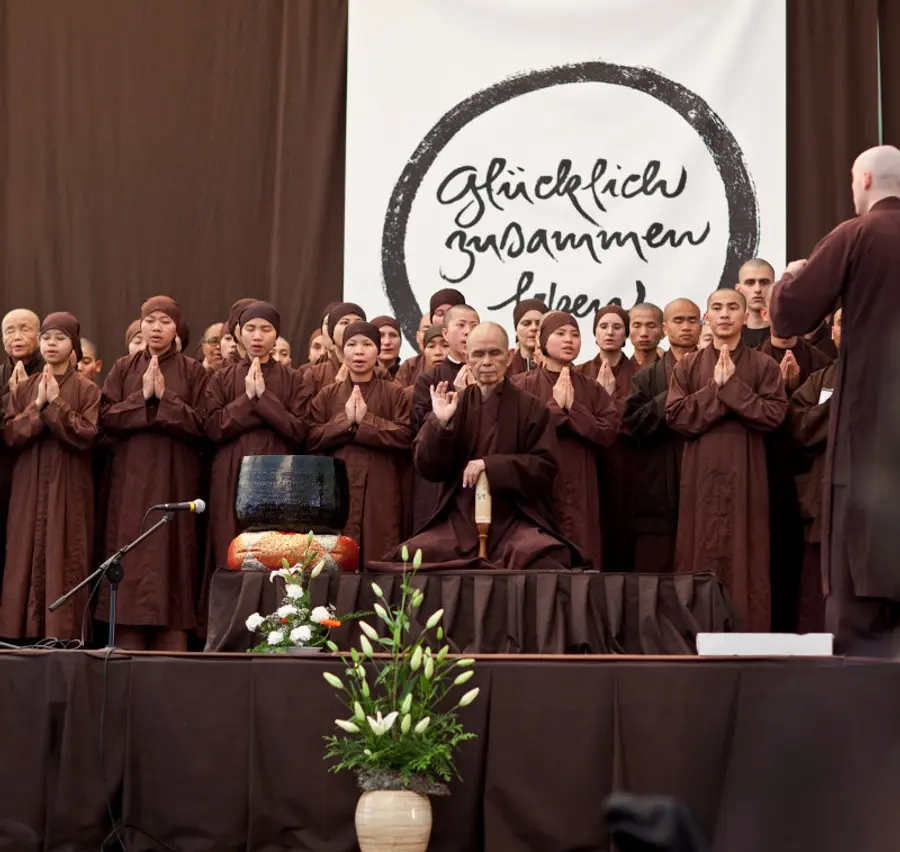
The answer: no one. According to Lion’s Roar, the Plum Village tradition comprises 11 practice centers around the world and more than 700 fully ordained monastics. Sister Tue Nghiem told the publication that their teacher had made clear he did not want a single leader, and that he did not make decisions alone even during his lifetime. Final decisions are made collectively by the fully ordained monastics, while lay practitioners also contribute to the teachings and the community’s operations.
In a Tricycle article marking the 100th anniversary, nun True Virtue wrote, “The successor is the sangha.” Sangha refers to a community that practices together. The meditation app, too, is called the Plum Village app, not the Thich Nhat Hanh app. Rather than relying on one exceptional teacher, the community had prepared to share responsibility for the teachings while he was still alive.
Why they didn’t turn 4,000 Dharma talks into a chatbot
One major project the community is undertaking now is preserving the teacher’s voice. Lion’s Roar reported that nearly 4,000 recorded Dharma talks remain in Vietnamese, English, and French. More than 100 volunteers are helping digitize old cassette tapes, videotapes, and MiniDiscs and create new transcripts; they have reviewed more than 600 talks so far. The result is Living Gems, the Dharma talk archive launched in March this year. Its official page lists English, French, and Vietnamese as subtitle languages.
What stands out is what they decided not to do. Maarten Hunink, who led development, explained that they could have built a chatbot to talk with the teacher, but decided against it because it could never actually be him. The community believed context-free answers could distort the teachings, so it focused on a search feature that helps people find passages within actual Dharma talks. That decision is all the more worth noting in an age awash in AI that can answer anything instantly: it comes from a community devoted to sharing meditation.
What will the online monastery offer next January?
Venerable Phap Huu told Lion’s Roar that the online monastery will open in January 2027, offering live Dharma talks by Plum Village teachers, recordings of past talks, and courses. The article did not give an exact opening date or price.
There are online courses people can join before then. In its October 11 article marking the 100th anniversary, Plum Village announced Who Is Thich Nhat Hanh? (October 11–January 31, 2027) and Zen and the Art of Saving the Planet (October 18–December 6). Both have already started, and the latter is taught in English over seven weeks.
How can you get started with walking and breathing meditation?
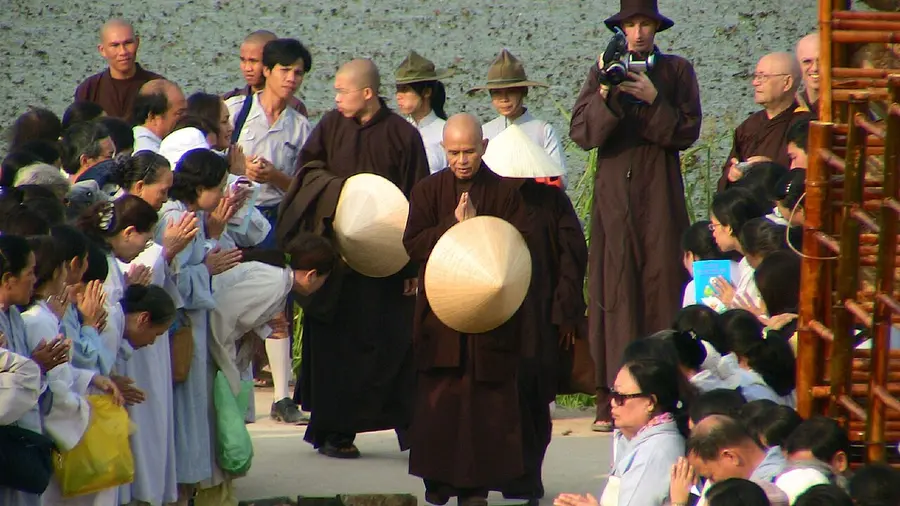
You don’t have to wait for the online monastery to open: Plum Village’s practices are already accessible. According to its official guidance, walking meditation means walking while being aware that you are walking. Notice the feeling of your feet touching the ground and the flow of your breath, and coordinate your steps and breathing at a pace that suits your lungs and stride—for example, taking two or three steps on an in-breath and three or four on an out-breath. Relax your shoulders and arms, and broaden your awareness to the sounds and sights around you. One advantage of this practice is that you can do it anywhere.
Breathing was also a practice the teacher himself relied on. Lion’s Roar recounted how he recalled getting through the most difficult moments of the war by breathing mindfully. His 2013 visit to South Korea also included walking meditation at Woljeongsa Temple on Mount Odaesan.
Today, information keeps flooding in while opportunities to use our bodies are dwindling. For those unfamiliar with sitting quietly with their eyes closed, meditation that starts with the soles of the feet and the breath can be a good first step. Of course, there is no one right answer for everyone. Some people prefer practicing alone; others draw strength from a community. Try it yourself and choose what works for you.
How to carry on the teachings after a teacher’s death is a question that remains for South Korea’s meditation community, too. As the country seeks to introduce K-meditation to the world, Plum Village’s 100-year history of carrying on a tradition through a way of practice and a community—not just one person’s name—is an example worth considering.
For inquiries: fare3041@naver.com