

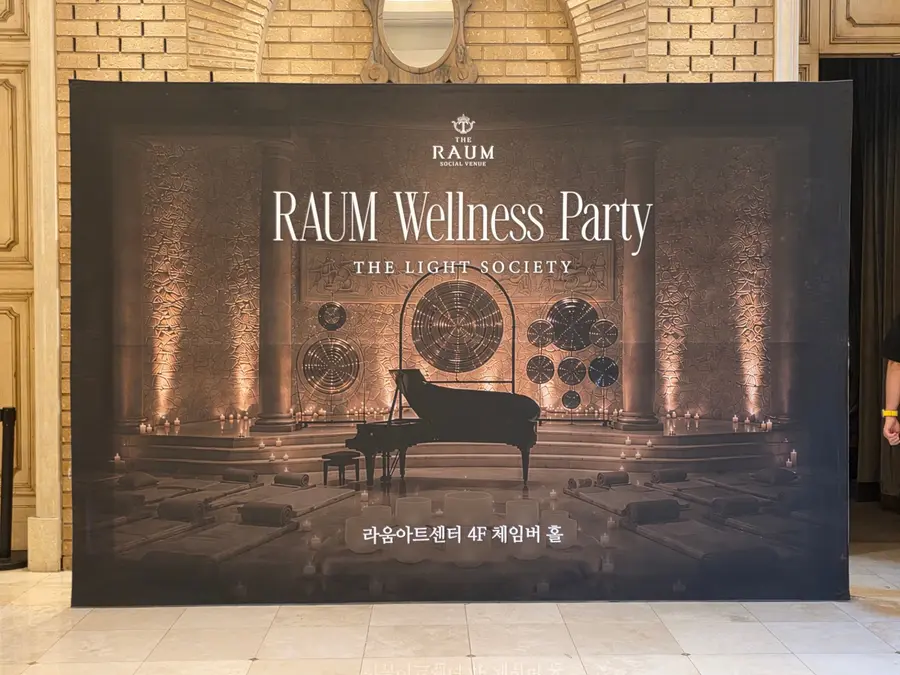
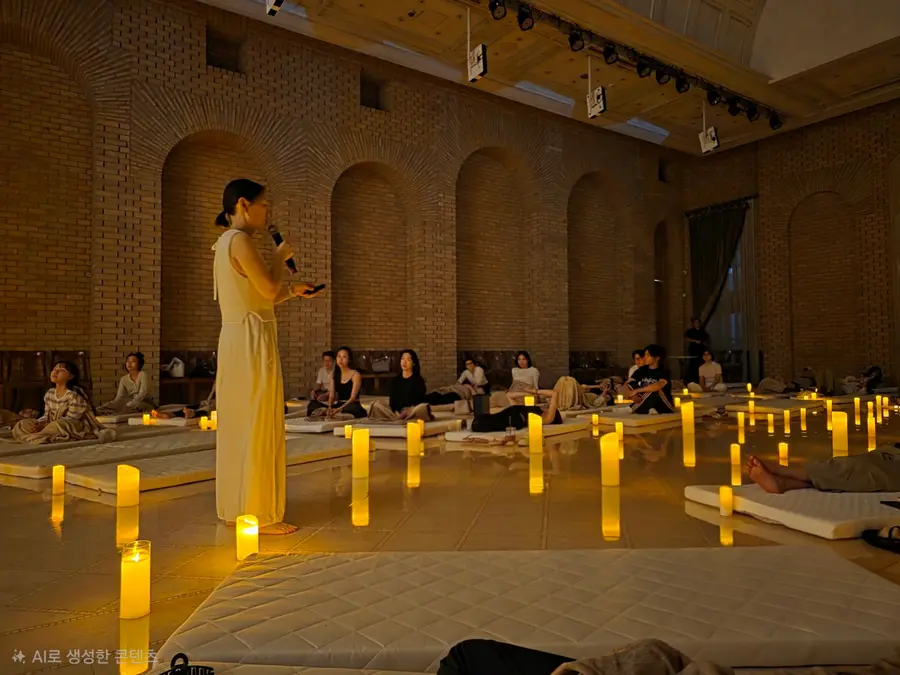
As the lights dimmed, only candles remained in the hall. What was usually remembered as an upmarket wedding venue in Gangnam was transformed that day: instead of chairs, plush mattresses covered the space. People took off their shoes and chose where to sit or lie down. The performance began from the posture, set by the audience, in which they first let go of tension in their bodies.
A performance watched while lying down, not sitting
The Raum Wellness Party, held in the chamber hall on the fourth floor of the Raum Art Centre, ran as an open-for-celebration programme over two days. The series title was ‘THE LIGHT SOCIETY - Neuro Arts Medi-Therapy: Wellness Series’, and the first instalment was titled ‘Shining, shining—finding the light in my heart’. This is Raum’s first presentation of Neuro Arts Medi-Therapy, which blends psychological counselling and art therapy with sound therapy based on neuroscience and meditation.
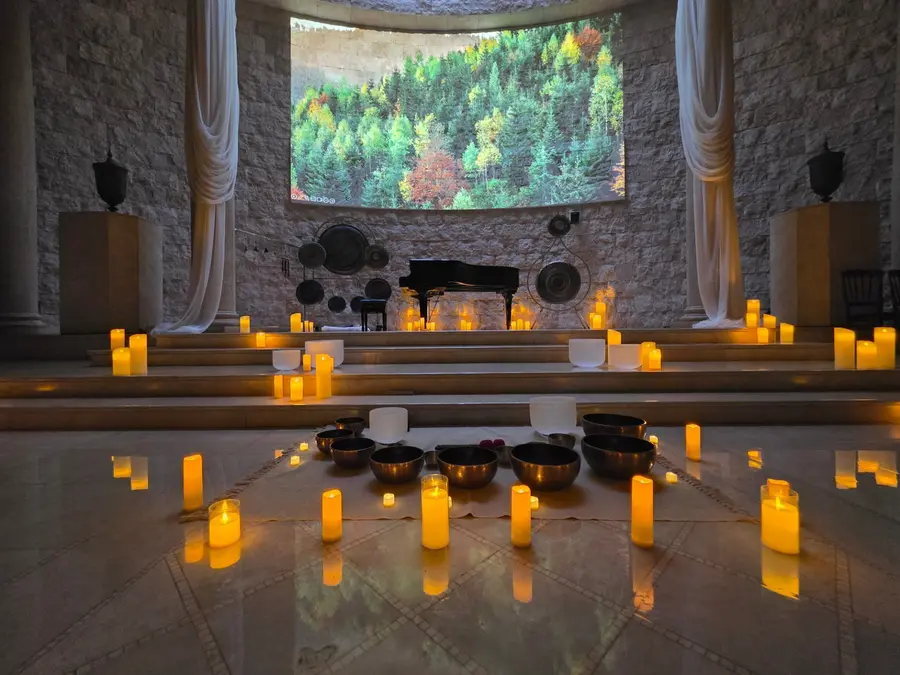
The blurred distinction between the stage and the seating area says it all about what this programme is. The intention is to treat people who came to appreciate the show not as spectators, but as participants. Kim Ja-hye, director of the Raum Art Centre that hosted the event, explained that the programme begins with the question ‘Who am I?’ and is structured as a time to look into the body and the brain, memories and emotions.
Wake the body first, then the mind
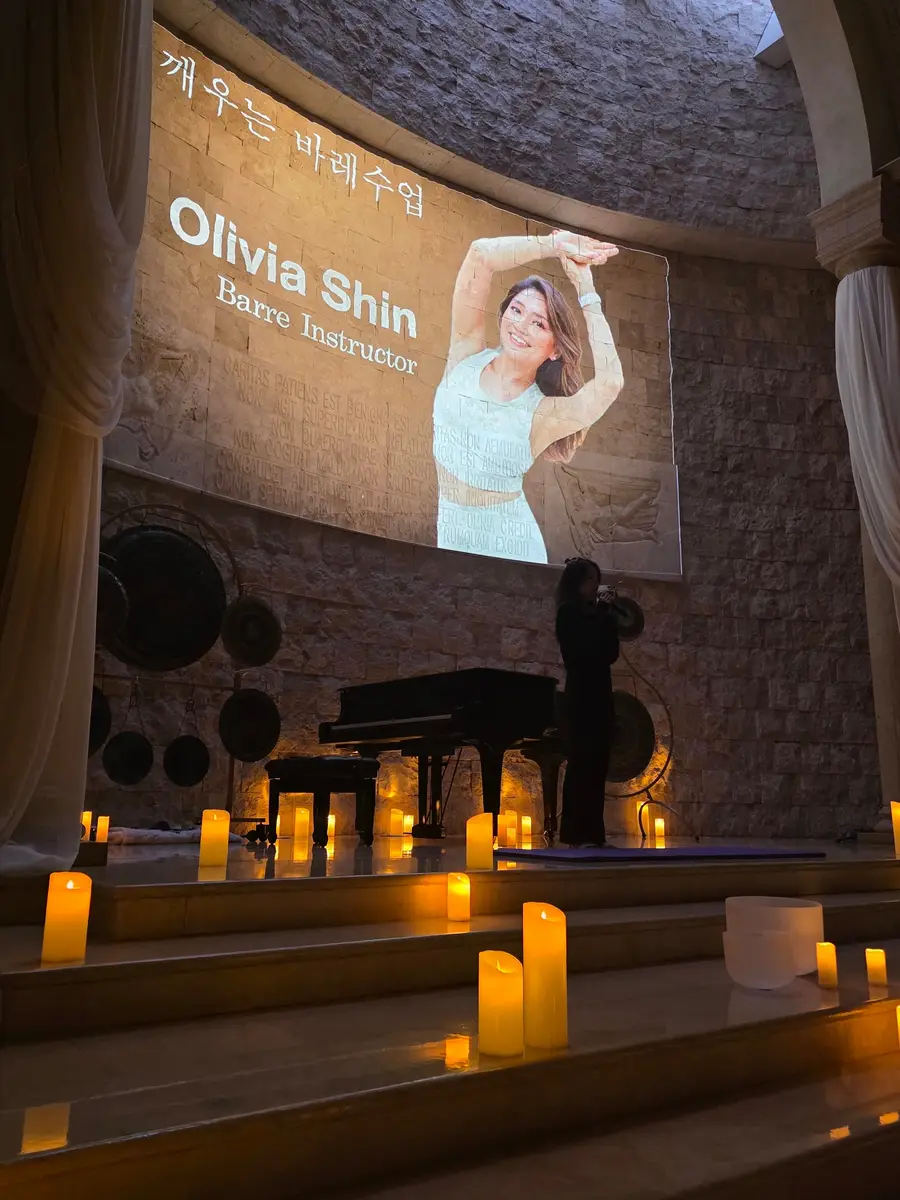
The doors opened with ‘Barre’ by Olivia Shin. As a global wellness director who has worked across South Korea, Bali, Bangkok and Singapore, he guided participants with movements that coaxed stiffened areas to wake up one by one, without making big motions. Director Kim took charge of the piano accompaniment herself, setting the pace of the breath, and as the audience surrendered their bodies to the music, shoulders and backs loosened naturally.
Singing bowls that filled the hall
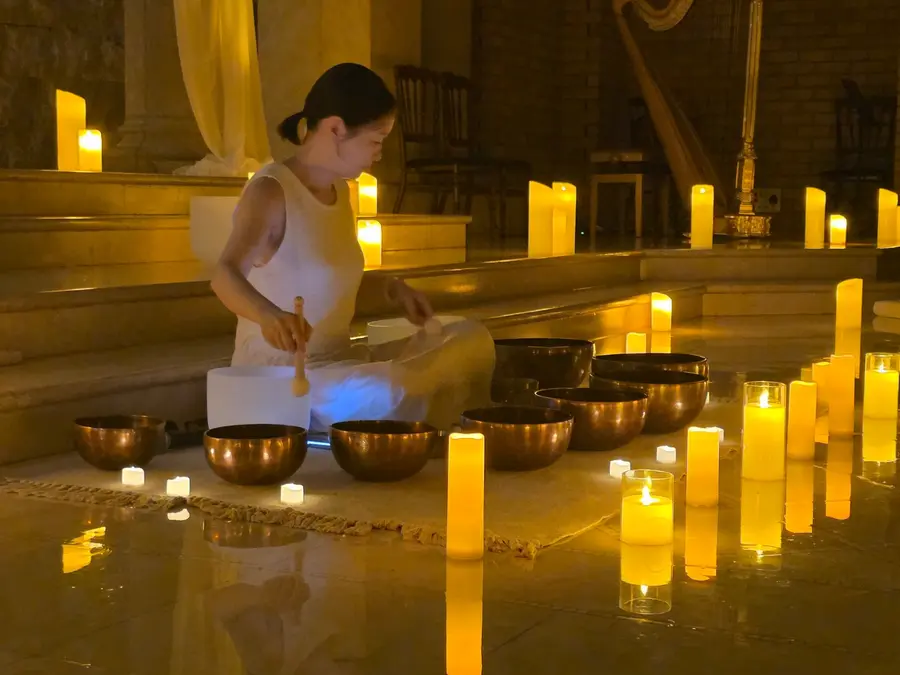
In a relaxed state from the Barre, the sound jointly created by singing bowl meditation specialist Choi Sun-hee and director Kim Ja-hye filled the entire chamber hall. Choi Sun-hee works as a singing bowl meditation leader at the Taktak Healing Art Centre and as an instructor on the Korea Wellness Meditation Advanced Course at Eulji University; she also holds the credential as an accredited singing bowl meditation 지도자 (leader) with the Korea Singing Bowl Association. Through the collaboration between director Kim Ja-hye and leader Choi Sun-hee, the harmonious vibrations of the singing bowls filled the space. Even though it is hard to match musical notes with handmade instruments, the weighty sound of the brass singing bowl hitting the seven-note scale precisely showed that it can act not only as vibration, but also as part of music.
The vibrations that spread through the high ceiling felt less like sound and more like the density of air. If you follow the sensation of sound reaching your body with your eyes closed, you find the pace of thoughts you have been clutching all day slows down on its own. Participants who experienced sound meditation for the first time said the deep, penetrating vibrations of the singing bowls were overwhelmingly moving.
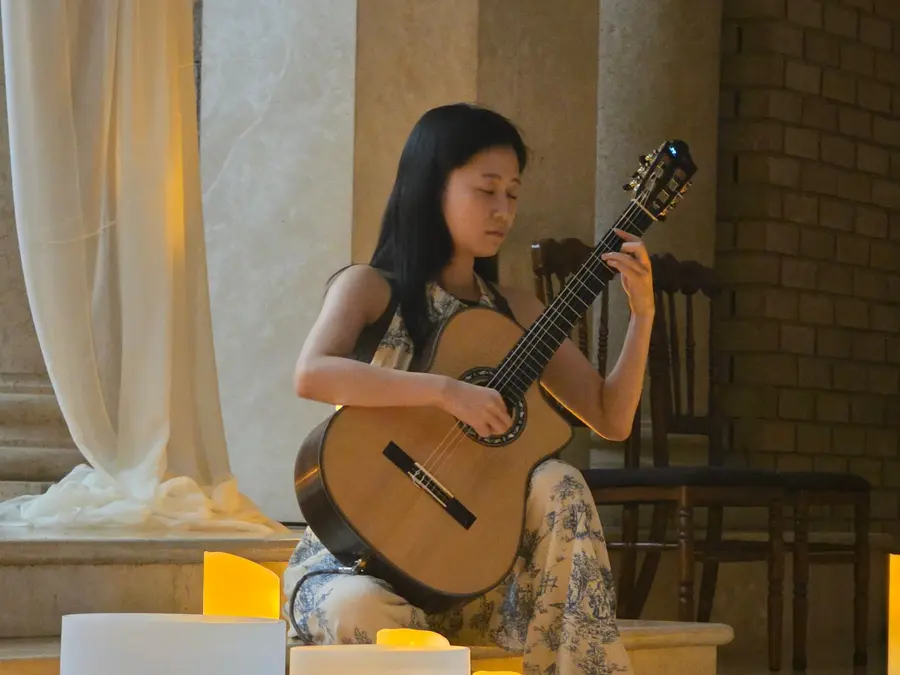
Next came the stage performance by guitarist Jang Ha-eun. She majored in classical guitar at the Korea National University of Arts and has performed at Carnegie Hall and on JTBC’s Superband 2. In the dark hall where only the faint glow of candles remained, her rendition of ‘Eurydice’ felt like a dream. Hearing guitar while lying down did not land only in the ears; it settled alongside the back and chest.
A confession that took 12 years from director Kim Ja-hye
What stayed with me the longest that day was director Kim Ja-hye’s story. She has worked as an artist and as the head of a cultural foundation, delivering messages of peace and healing through art while moving between the US Congress, the UN General Assembly Hall, and Carnegie Hall. During the period when she threw herself into the work with pride, serving the world, she did not realise that she was breaking down from burnout herself, she said.
The turning point came from respected older people she admired. After she learned that a respected elder over ninety and his friends, and even the pastor and evangelist she had followed for a long time, were suffering from illness of the heart, she decided to trace the peace she had gained back in reverse and find solutions of mind for everyone. She said, “It took 12 years for the name Neuro Arts Medi-Therapy to come out into the world outside.”
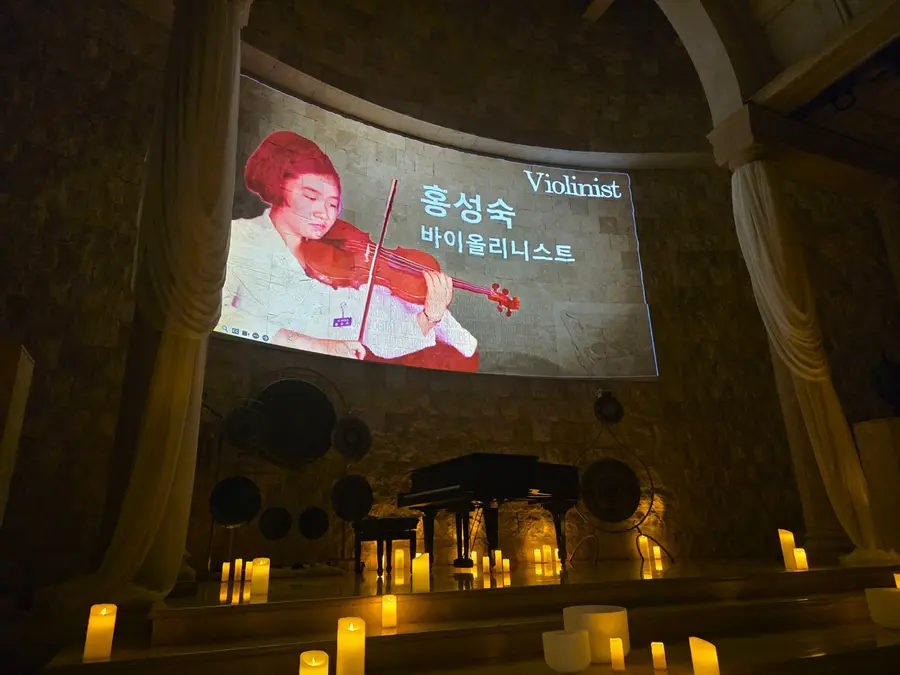
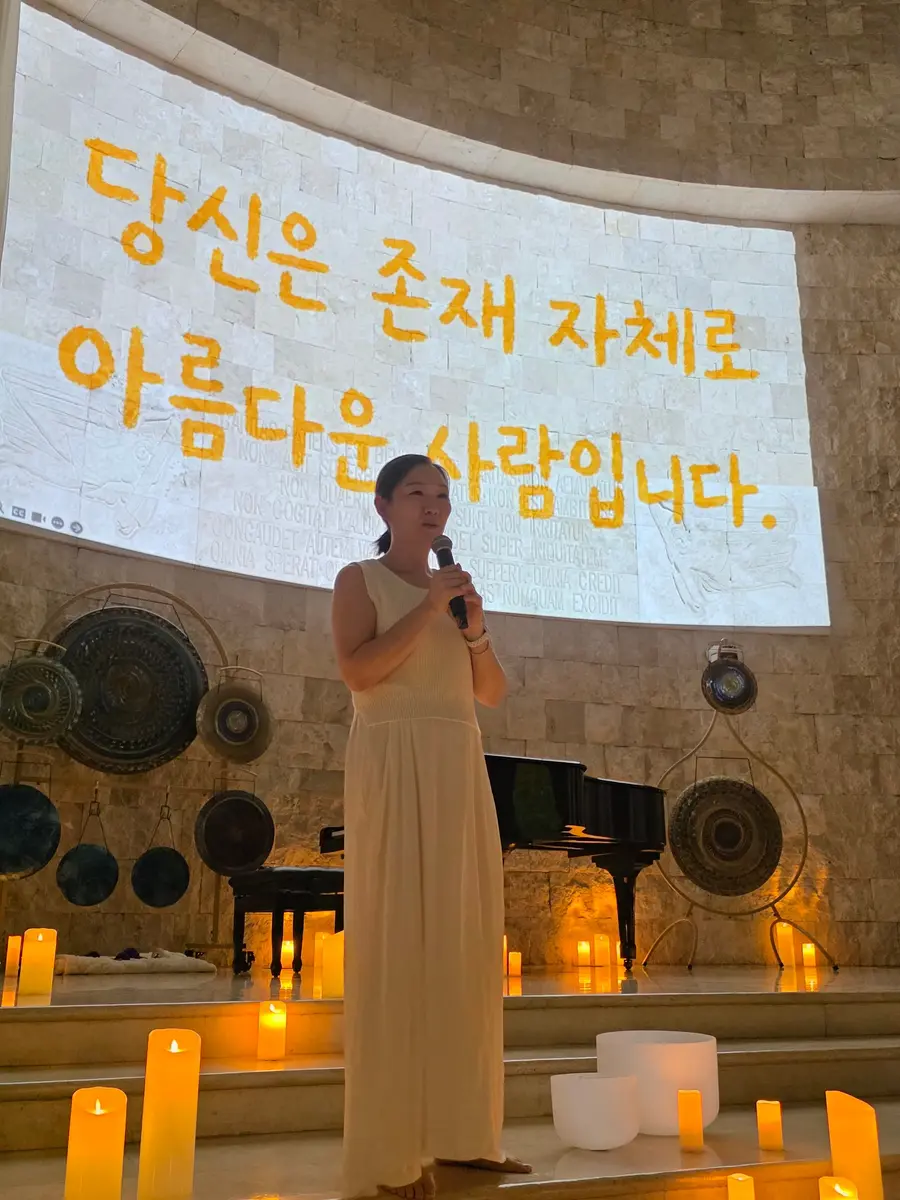
In the middle of the programme, a surprise violin duet followed with director Kim Ja-hye and his mother. His mother, who had spent her life with the piano at her mother’s wish, was not happy. After telling the story of how she rose again at the place where her heart had fallen apart, and as she matched her breathing side by side with her son, the moment made clear—more than any explanation—where this programme was heading.
From a wedding hall to a Gangnam wellness hub
The Raum Art Centre has been known so far as a high-end wedding hall. The scene in which that space is filled with mattresses, candlelight and Neuro Arts Medi-Therapy shows how far the uses of wellness spaces in South Korea can expand. It was also confirmed that a performance venue with good acoustics and high ceilings is how suitable a space it can be for sound meditation.
The programme continues on the evenings of August 19 and 20 at 7pm in the chamber hall on the fourth floor of the Raum Art Centre. Details on how to participate and enquiries can be found through the official channels of the Raum Art Centre and the event host.
