

As the year draws to a close, several temple ordination schools are inviting participants to experience the daily life of a Buddhist practitioner for ten days. Unmunsa in Cheongdo, North Gyeongsang Province, starts its nine-night, ten-day course on 27 November; Donghwasa in Daegu begins its course on 19 December; and Bongnyeongsa in Suwon starts on 21 January 2027. The programmes centre on practice learned through the body, including dawn services, 108 prostrations, meditation and formal monastic meals. Bongnyeongsa’s theme is meditation through preparing tea and observing the mind. Beomeosa Temple’s short-term ordination school, due to start on 18 November in Busan, has been postponed until 2027 because of low enrolment.
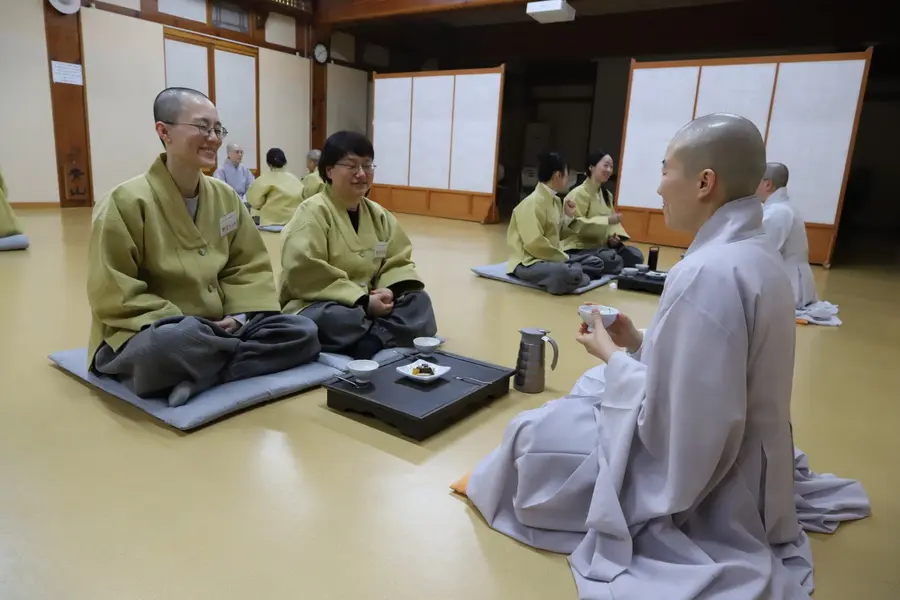
Why spend ten days here rather than at a temple stay?
Unlike a temple stay lasting a day or two, an ordination school involves following the same routine as the monks for nearly ten days. Participants rise before dawn for services, then continue with prostrations, meditation, formal monastic meals and unryeok (communal work), allowing the body to become accustomed to the rhythm of practice first. For modern people surrounded by notifications and information, entrusting themselves to a set routine lowers the threshold to meditation more than trying to empty the mind. As communal living and early starts are part of the programme, all three schools are intended for people in good physical and mental health who have a clear reason for taking part.
Unmunsa accepts only 15 women and holds interviews
The second Baramil Ordination School at Unmunsa runs from Friday 27 November to Sunday 6 December. It will select 15 women aged 17 to 65 who are able to live communally. Applications are being accepted through the Unmunsa website. Applicants who pass the document screening will be interviewed before the final selection. A copy of an identity card and a medical certificate must be submitted with the application.
The fee is 400,000 won for adults and 200,000 won for high-school and university students who provide proof of enrolment. The second course follows the first, held in June. The daily programme includes dawn services, 108 prostrations, communal work, walking meditation, sutra transcription, meditation and keeping a practice journal. Enquiries: Unmunsa Baramil Ordination School (010-3686-7118).
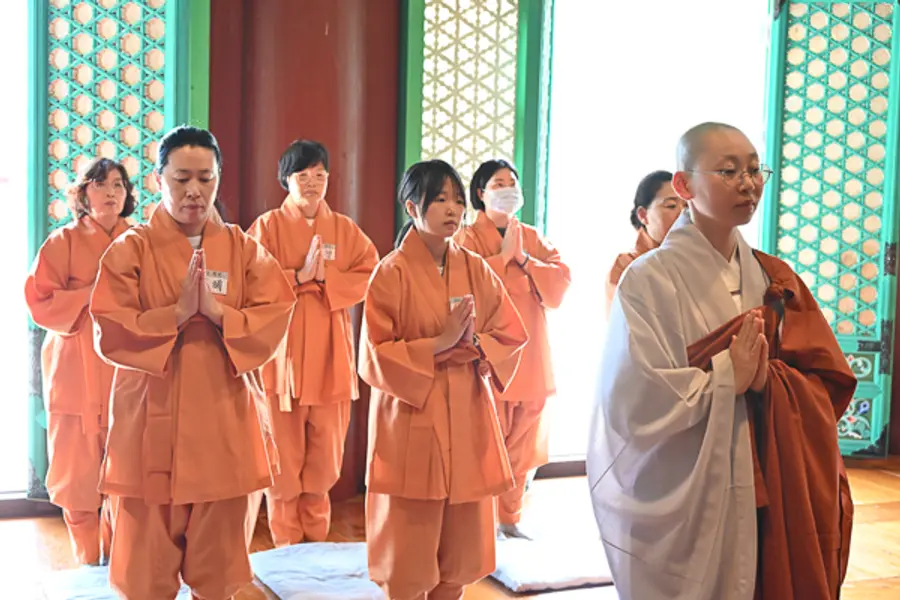
Ten men and ten women: Donghwasa offers three-step, one-prostration practice and a hermitage pilgrimage
The second Mumun Ordination School at Donghwasa will be held at Seonyeoldang, Donghwasa, from Saturday 19 to Monday 28 December. It is open to members of the public aged 17 to 65 who can live communally, with ten places each for men and women. Apply through the Donghwasa website; participants will be selected after document screening and interviews.
The programme includes classes on the life of the Buddha, basic Buddhist doctrine, precepts, the Cheonsugyeong and Heart Sutra, and Buddhist meditation. Participants will also take part in services, meditation, 108 prostrations and three-step, one-prostration practice, formal monastic meals, learning to play the moktak, and a pilgrimage to hermitages within the temple grounds. Donghwasa is the only one of the three schools open to men. The fee is reported to be 400,000 won for adults and 200,000 won for university students. Enquiries: Donghwasa Mumun Ordination School (053-980-7985, 010-3053-1033).
Meditation begins with the hands preparing tea
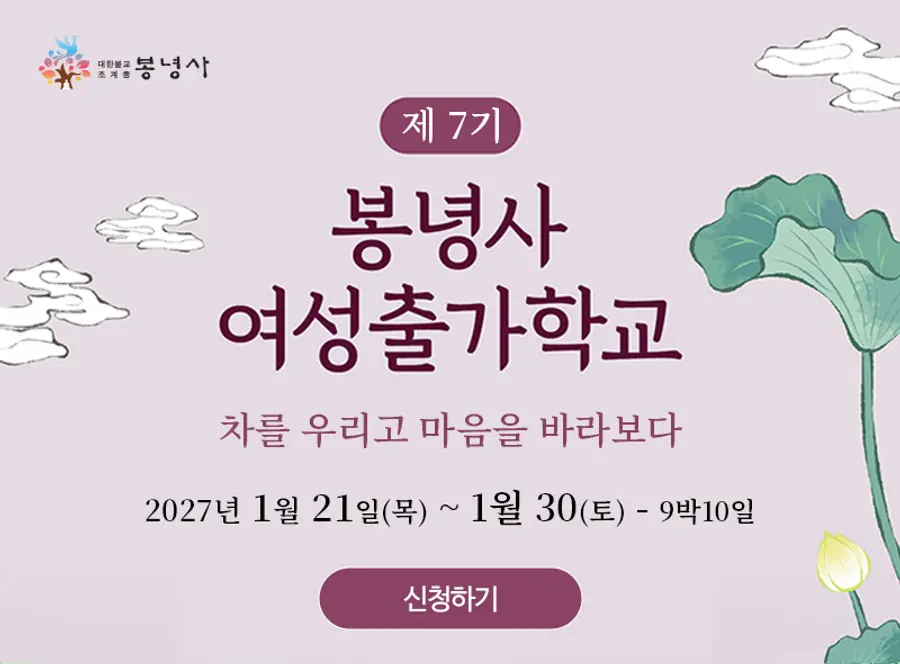
Bongnyeongsa’s seventh women’s ordination school runs from Thursday 21 to Saturday 30 January 2027 under the theme ‘Preparing tea and observing the mind’. It will accept 20 women aged 17 to 60, in good physical and mental health and able to live communally, in order of payment. The fee is 600,000 won; high-school students and undergraduate students receive a 50% discount. Applicants should complete the admission form under ‘Apply for the Women’s Ordination School’ on the Bongnyeongsa website, then upload a copy of their identity card and a medical certificate as PDF files.
The curriculum listed on the Bongnyeongsa website includes tea meditation, Buddha Bowl meditation, Buddhist yoga, one-step-one-prostration practice, tea gatherings with Buddhist nuns and a special lecture on temple food. Tea meditation, which involves paying attention to each movement involved in boiling water, steeping tea and pouring it into a cup, offers an entry point through the hands and senses for those who find it daunting simply to sit still and observe their breathing. Outside class hours, participants must observe silence and may not go out, receive visitors or make phone calls. Those who cancel by 15 January will receive a full refund. Enquiries: programme coordinator (010-9897-4127).
Choosing an ordination school to suit your fitness and schedule
All three schools last nine nights and ten days, but differ in their eligibility requirements and style of practice. Unmunsa and Bongnyeongsa are for women only, while Donghwasa accepts both men and women. Donghwasa may suit those who want physically demanding practice involving prostrations and walking, with its three-step, one-prostration practice and hermitage pilgrimage; Bongnyeongsa may be a good fit for those who want to quietly explore the mind over a cup of tea. Unmunsa starts first, in just over two weeks. None of the three has announced a separate application deadline, so places may fill and applications close early. If you are interested, it is best to call first to check availability. Those who had been considering Beomeosa will have to wait for its new dates in 2027. Beomeosa said it would prepare more thoroughly before running the programme next year.
Article enquiries: fare3041@naver.com