

The second event officially hosted by Healing News. Last weekend, the first Taehwasan Forest Healing and Wellness Festival was held at K-Mirae Clinic, on the slopes of Taehwasan in Gwangju, Gyeonggi Province. Co-hosted by K-Mirae Clinic, Seoul National University’s Taehwasan Academic Forest and Healing News, a media outlet specialising in meditation, the event attracted such interest that all accommodation and experiential programmes were fully booked within two hours of registration opening. BioTimes, Gwangju Newspaper and Gonjiam Valley sponsored the event. Opening on the first day with wellness booths, it featured health talks, a traditional Korean music performance, body meditation and sleep meditation, before concluding on the second day with a forest-healing programme.
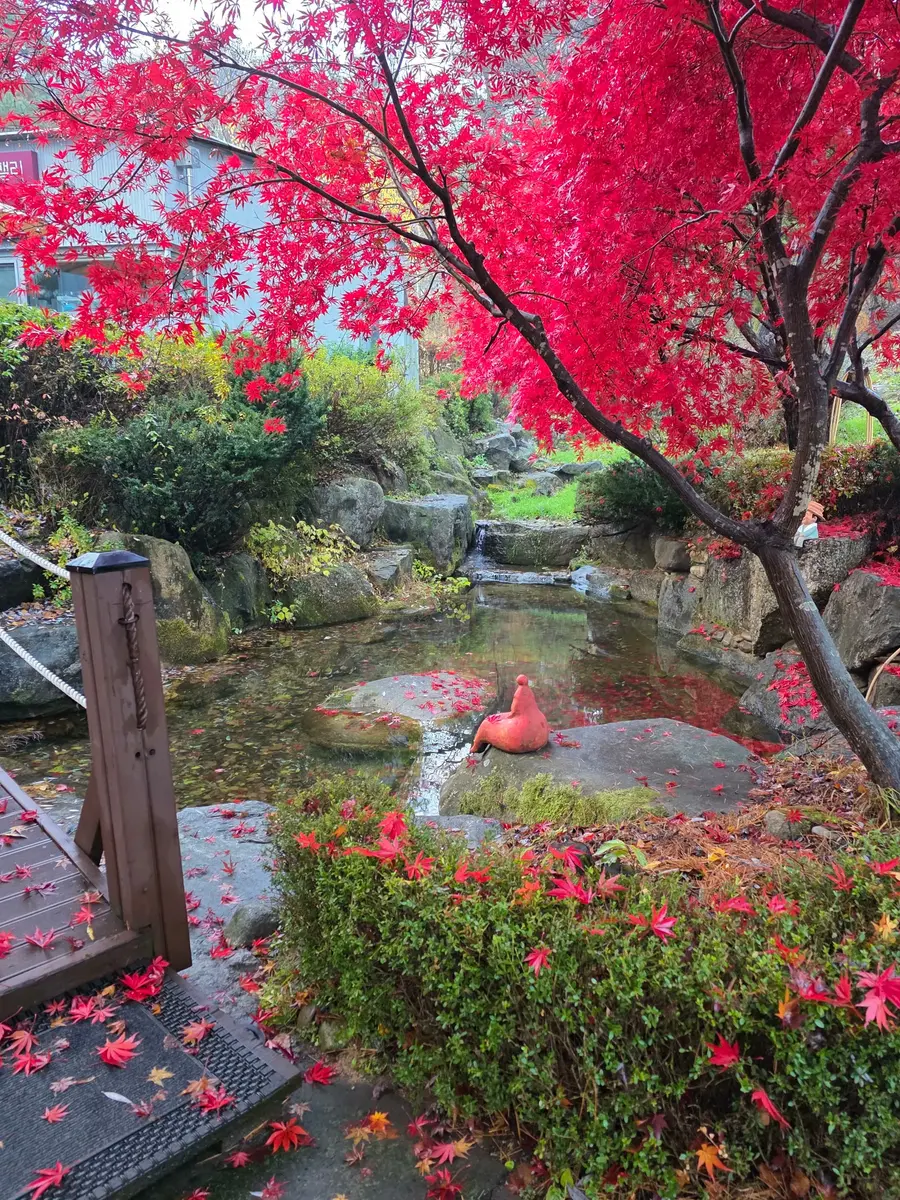
The first wellness festival opens beneath red autumn leaves
The garden at K-Mirae Clinic, the event venue, was in the full flush of late-autumn colour. A small stream ran beneath red-leaved maple trees, while fallen leaves formed a vivid pattern across the rocks and wooden decking, drawing admiring looks from everyone who came to the festival. With the forest on the slopes of Taehwasan, which covers 25,000 pyeong, and the clinic’s facilities serving as the venue, even the paths between the lecture room and meditation room became woodland trails.
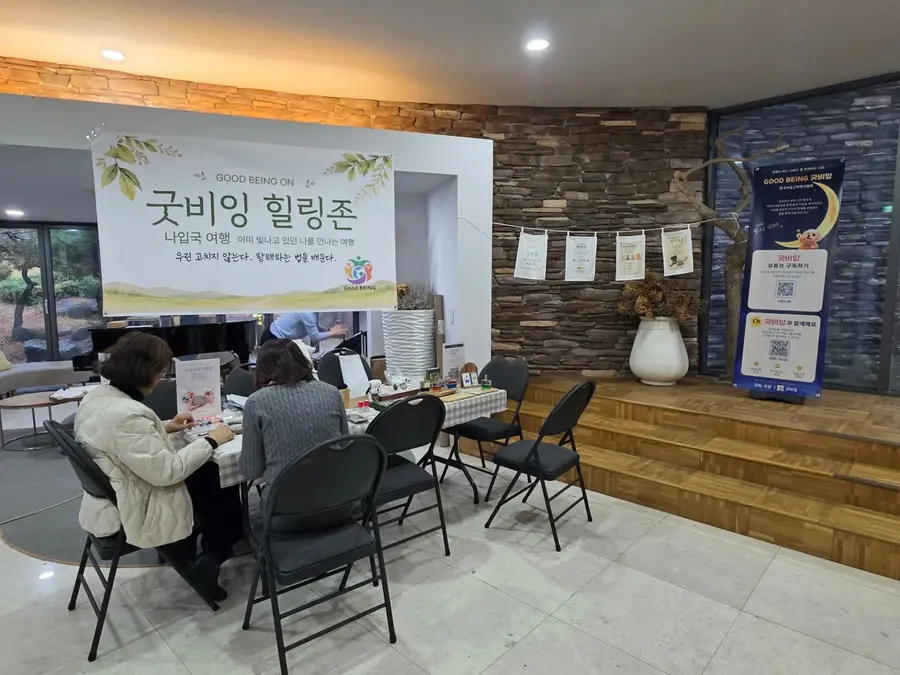
A booth that asked how you were feeling, using traffic lights
The wellness booths opened first, at 1pm. The Good Being Healing Zone, run by the Korea Mind Strength Meditation Association, was designed around the theme of a journey to meet the self that was already shining. Participants gathered around tables, coloured small stones and tried stone mandala meditation.
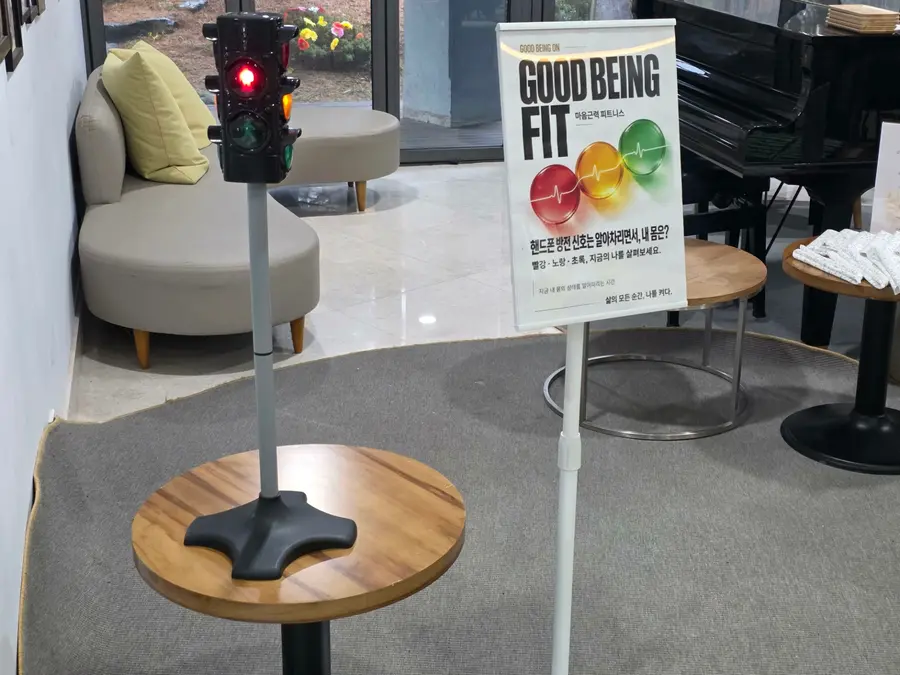
A mind-strength fitness corner was set up nearby. Beside a set of traffic lights glowing red, amber and green, a sign asked whether people noticed the warning that their mobile phone battery was running low, but missed the signals from their own bodies. The experience invited them to reflect on which colour best matched how they were feeling at that moment.
At the Kkum Ruby booth, which showcased colour-psychology products, there were bottles filled with coloured sand, beads sorted by colour and crocheted flowers. Participants followed a personal colour checklist, choosing the shade that drew them in at that moment as a way of looking within and checking how they felt.

A range of meditation experiences and programmes on offer
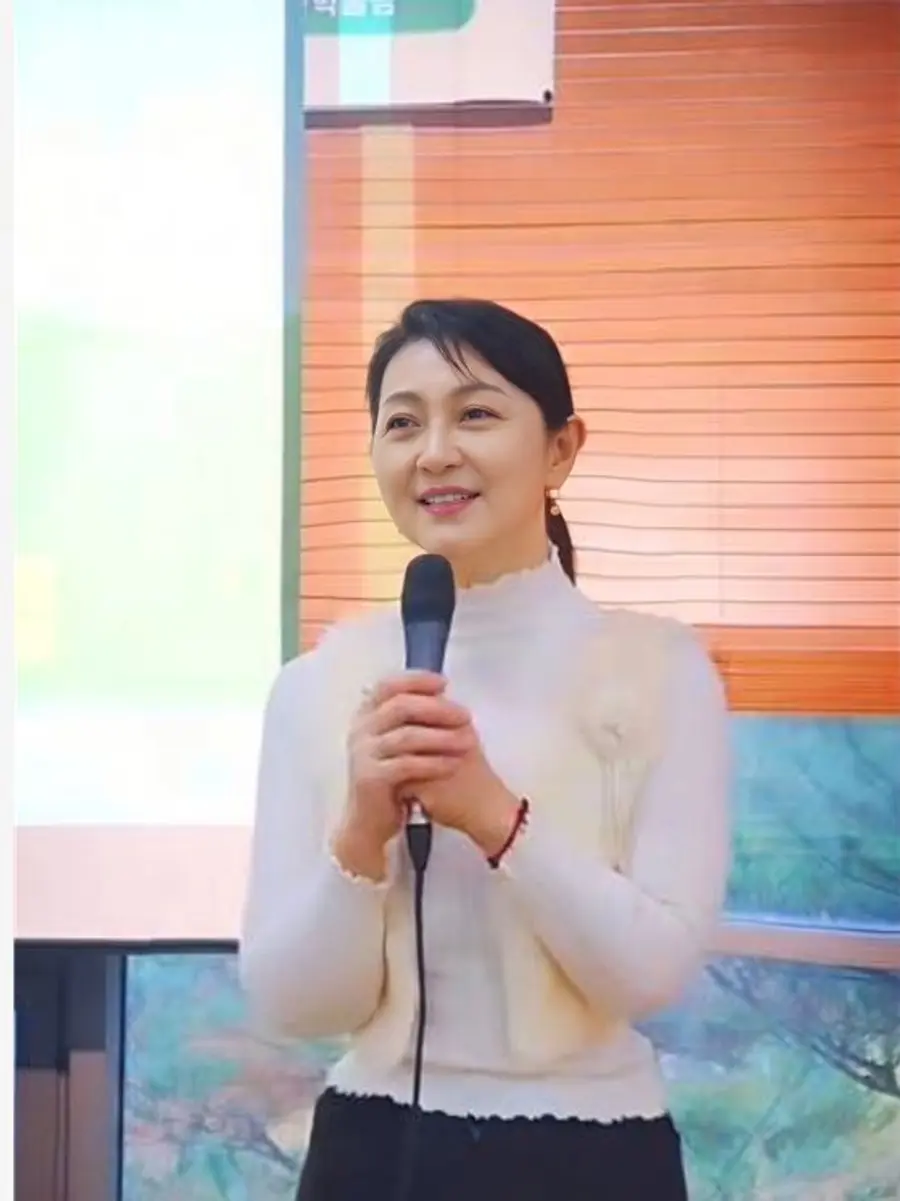
At the opening ceremony at 2pm, Healing News CEO Oh Hye-sun, representing one of the co-hosts, delivered a welcome address and introduced the people behind the event’s experiential programmes and booths.
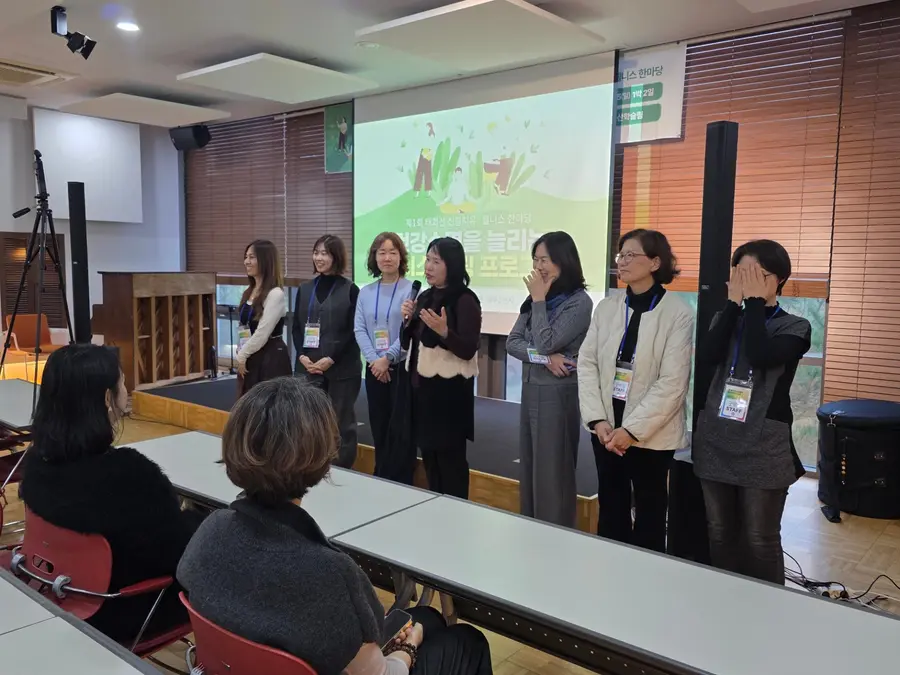
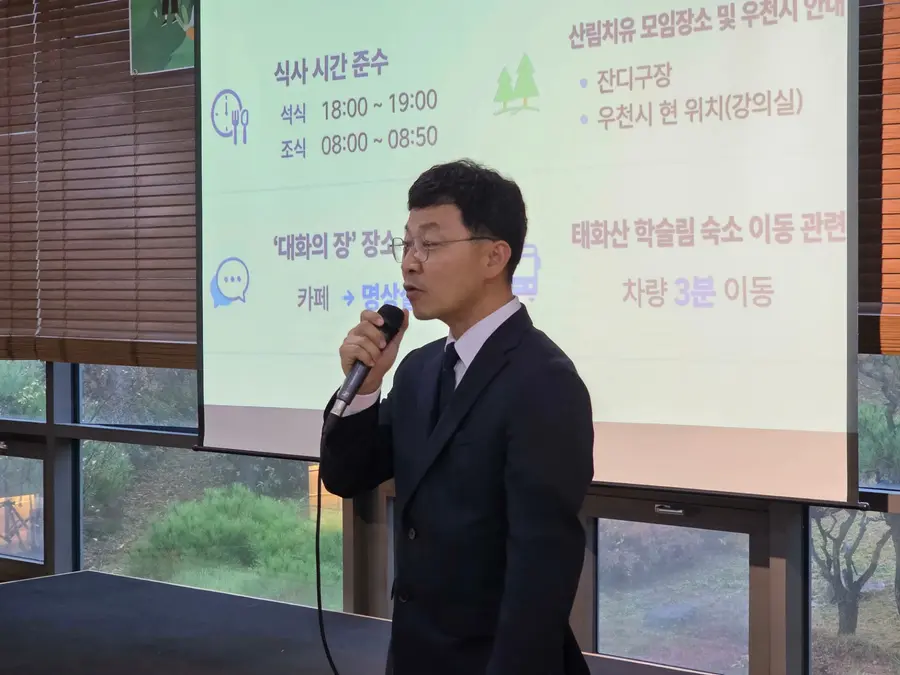
Kang Gyeong-min, a researcher at Seoul National University’s Taehwasan Academic Forest, which co-hosted the event, then gave a welcome address and outlined the two-day, one-night programme. He went through the arrangements for dinner and breakfast the following morning, the venue for a gathering where participants could talk, and the meeting point for the forest-healing session on the second day. He explained that it was just a three-minute drive to the accommodation at the Academic Forest.
A doctor’s talk on healthy life expectancy and cell regeneration
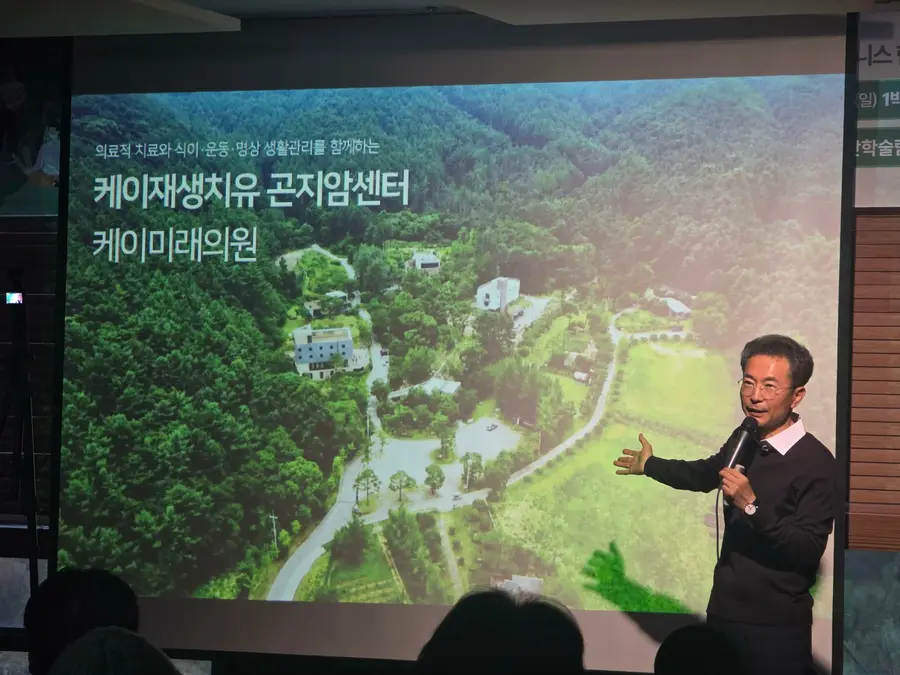
The first talk was given by Cho Byung-sik, director of K-Mirae Clinic. Under the title ‘Medical trends and health based on cell regeneration’, he introduced an integrative-medicine approach centred on cell regeneration, drawing on his book published this year, ‘Regenerate Cells and Disease Will Heal’. The talk explored an innovative approach to cell regeneration, bringing together the wisdom of Korean medicine and Western precision medicine.
Cho also introduced K Regenerative Healing Centre, Gonjiam, the event venue. He described it as a place where people manage their lifestyle through diet, exercise and meditation alongside medical treatment. A panoramic photograph of the centre, surrounded by forest, filled the screen.
Daegeum music with the forest beyond the glass
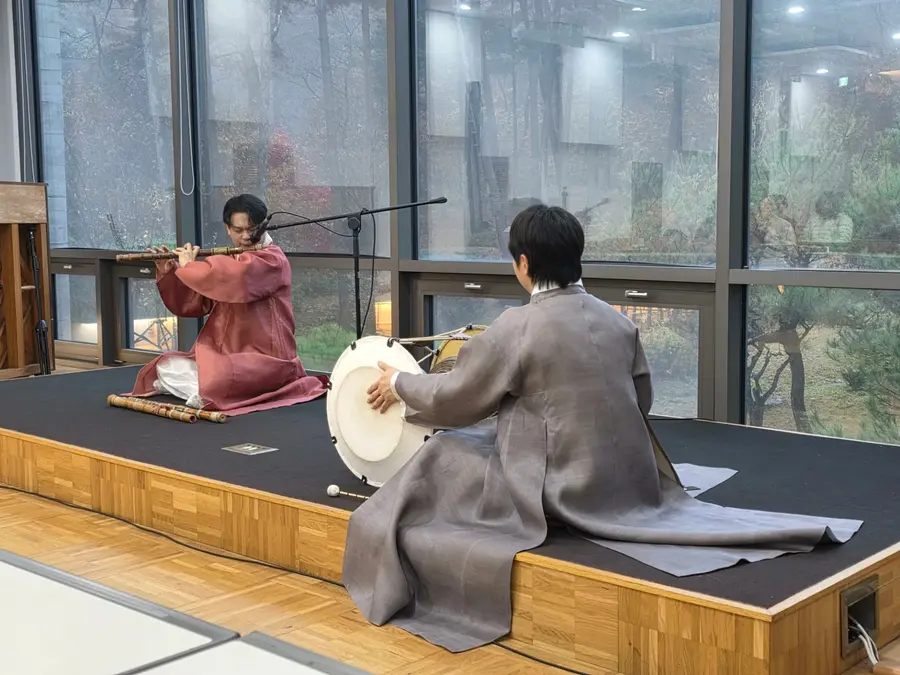
After the talk came ‘Traveller of the Wind’, a healing music concert by daegeum player Lee A-ram. On a stage overlooking an autumnal forest through floor-to-ceiling windows, Lee played the daegeum to the janggu rhythms of Jo Han-min. The audience enjoyed the harmonious melodies of the daegeum and janggu. The danso used for the first piece and a spare daegeum lay side by side on the stage floor.
Lee is a performer whose work centres on the traditional daegeum and who has composed and served as music director across a range of genres, including dance, theatre, musical theatre and street arts. The programme began with ‘Suryong-eum’, played on the danso, followed by Seo Yong-seok-style daegeum sanjo, ‘Traveller of the Wind’ and ‘Yangryuga’, a new composition based on Gyeonggi folk songs. Despite feeling unwell, Lee performed with all her heart, sweating profusely. Everyone was moved by the wonderful sound of the danso, daegeum and tungso.
An experience of smelling aromas and measuring brainwaves
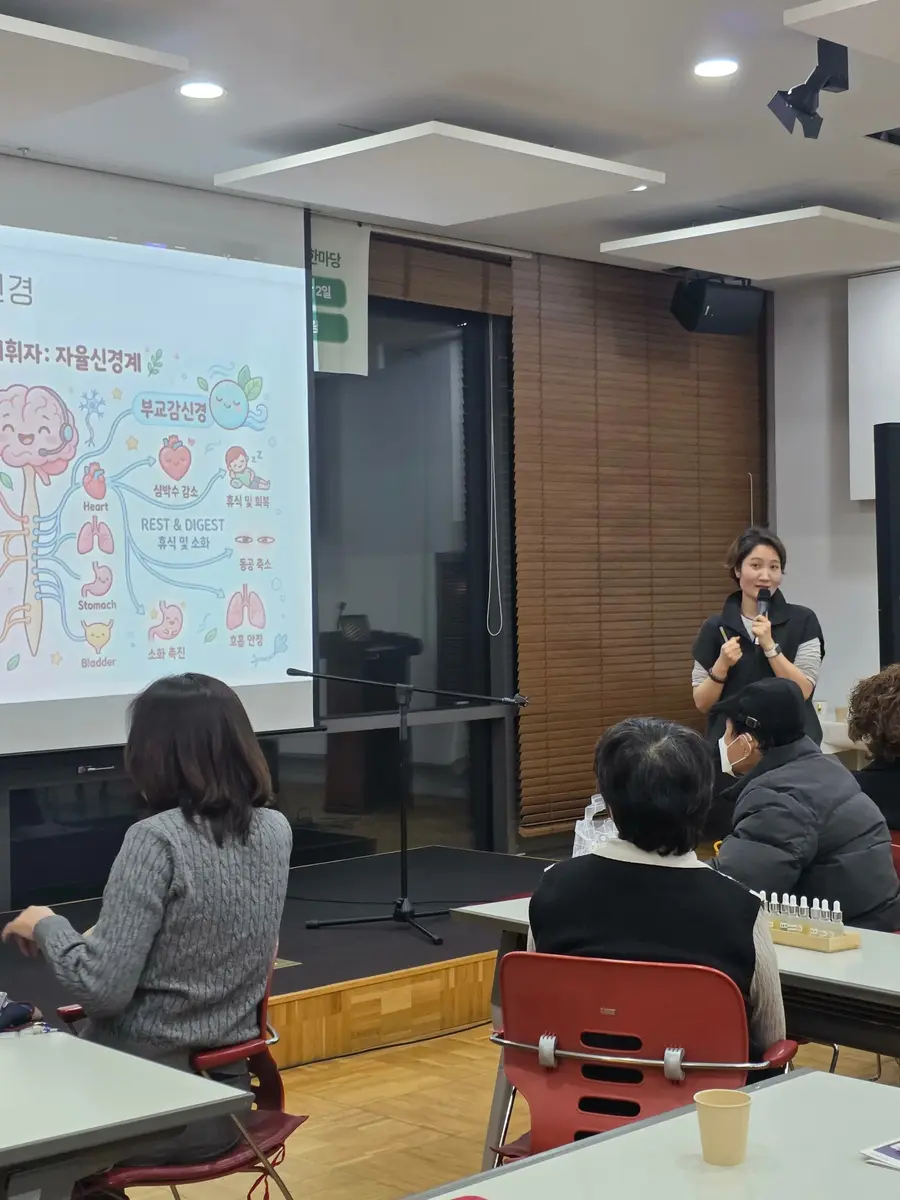
After the concert came a talk on a brainwave programme, followed by an aromatherapy experience and individual brainwave analyses. The instructor explained the autonomic nervous system, which regulates tension and relaxation in the body, and described the role of the parasympathetic nervous system in rest and digestion. Participants smelled the aroma oils on the tables and had their brainwaves analysed to check their current state.
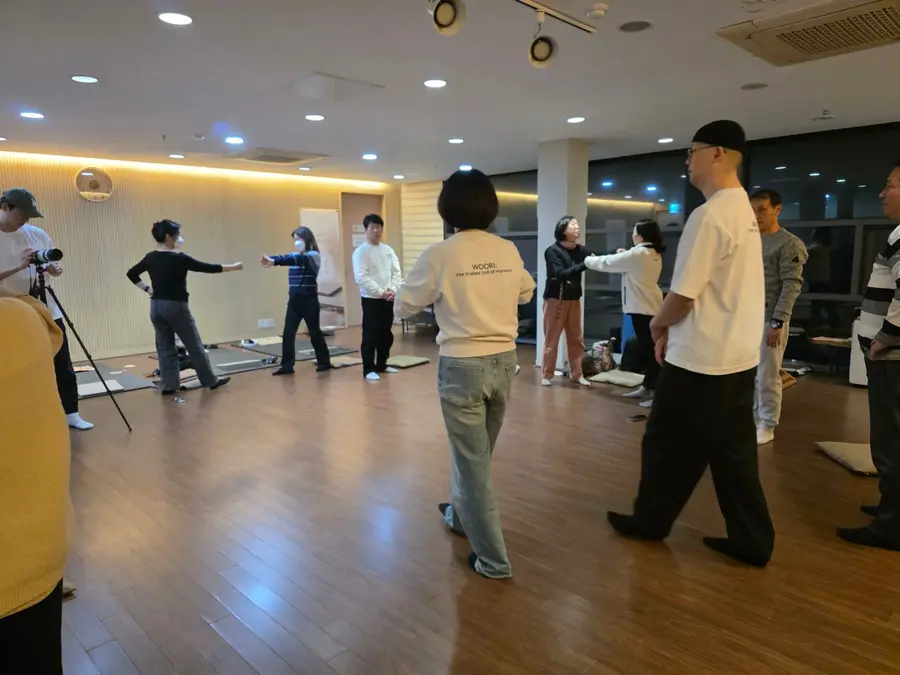
What was it like to do body meditation facing someone else?
Next, Woori Movement led a body-meditation session developed from the Feldenkrais Method and aikido. Participants got up from their mats and stood facing one another in pairs, following movements that involved reaching their arms towards their partner and sensing through their bodies the distance and force between them. Unlike meditation done alone, this was a chance to notice how the body responded to someone else’s movements.
The Feldenkrais Method is a way of moving that involves slowly tuning in to the senses, while aikido is a martial art in which practitioners move in connection with a partner. Drawing on developmental psychology, Woori Movement brings together these two principles, focusing on exploring the bodily responses that arise between two people.
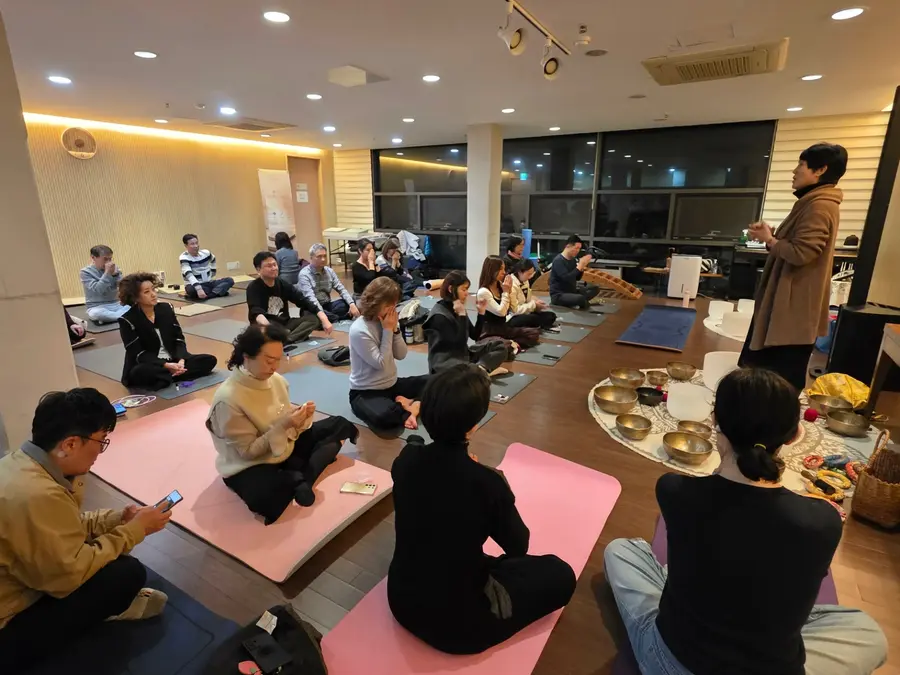
A forest night deepened by the resonance of singing bowls
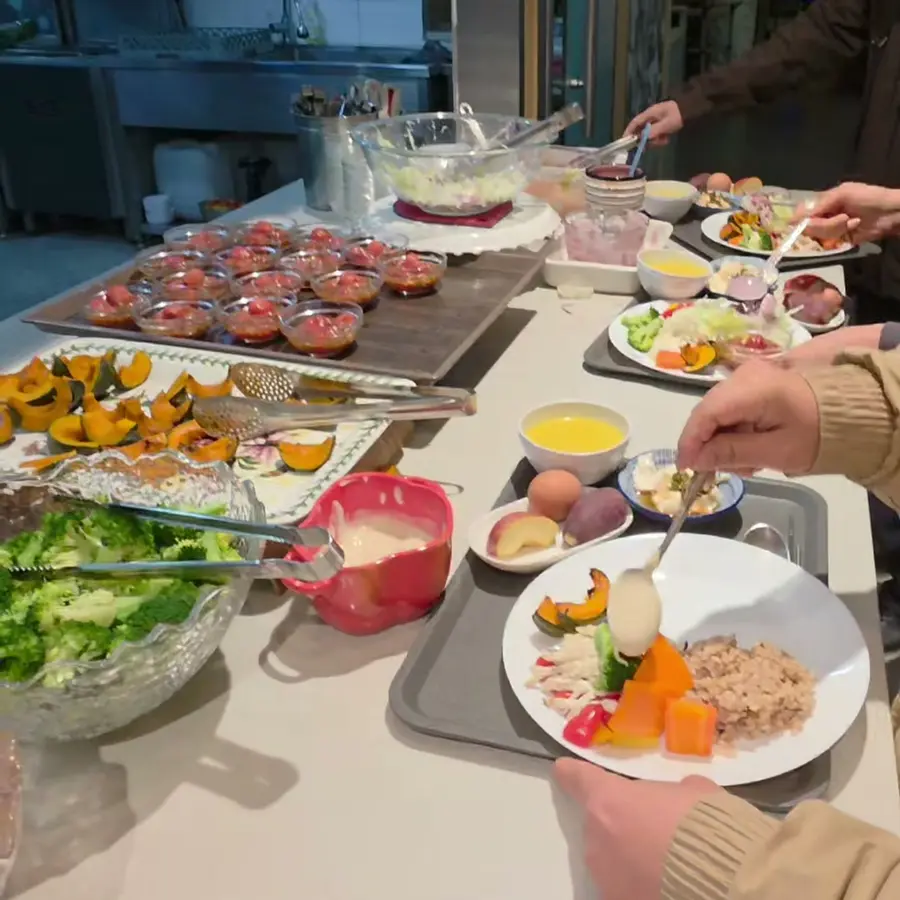
Dinner that evening was a vegetarian buffet made with organically grown vegetables. Dishes prepared with a range of fresh vegetables, including peppers, carrots, broccoli, roasted kabocha squash, marinated tomatoes and mushrooms, were laid out buffet-style. Participants said they were all impressed by the healthy and delicious meal.
After dinner, an aromatherapy singing-bowl sleep meditation was held to bring the day to a close. It was a sleep-inducing meditation led by Jo Yun-gyeong of Inner Peace Healing. Large and small singing bowls and crystal bowls were arranged in a circle on the floor of the meditation room. Participants sat on their mats, bringing their hands, scented with aroma oil, to their noses as they settled into their breathing. As the singing bowls resonated and a subtle fragrance filled the room, participants entered a state of deep relaxation. Many relaxed so quickly that snores could be heard from here and there less than two minutes after the singing bowls began.
A clear morning after the rain: walking meditation on the Academic Forest trails
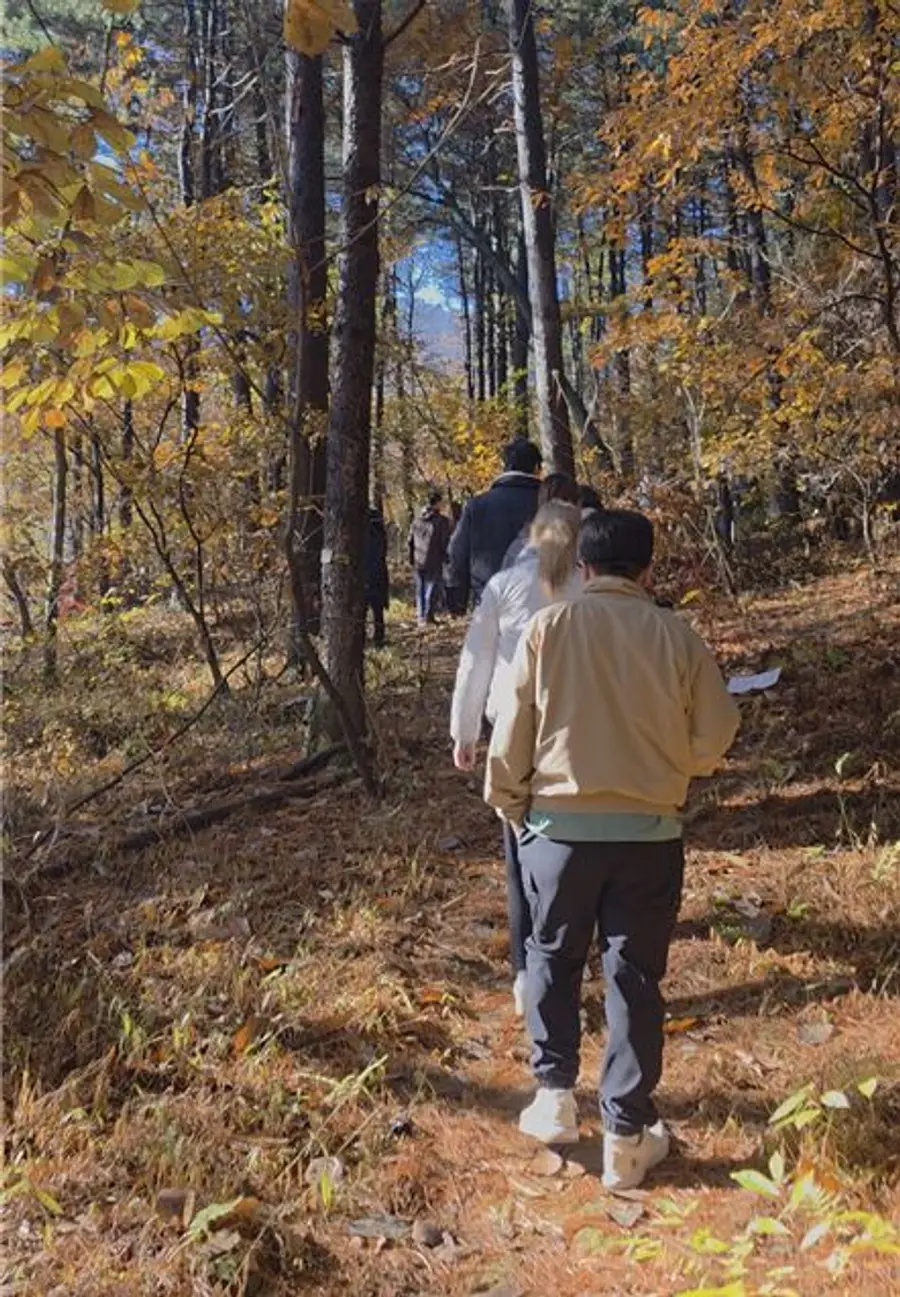
On the morning of the 15th, after spending the night at K Regenerative Healing Centre, Gonjiam, and Seoul National University’s Taehwasan Academic Forest, the rain that had fallen the day before had stopped and the sky was much clearer. Beneath the warm sunshine, the second day’s forest-healing programme took place in the woods of Seoul National University’s Taehwasan Academic Forest and lasted two hours.
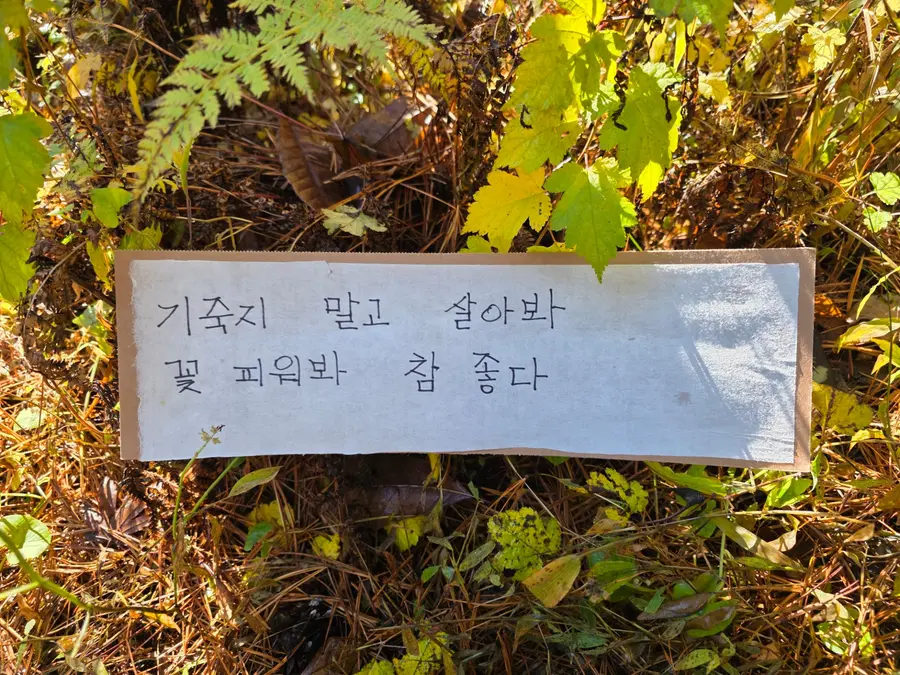
Participants practised walking meditation as they climbed the mountain with a forest guide. Talking was not allowed, and, keeping conversation to a minimum, they walked in quiet company with their inner selves. When the ting-sha sounded, they paused and read the words placed along the path, taking time to reflect.
Halfway up the mountain, they continued with movement meditation, dancing to music with movements drawn from tai chi. After descending, they lay on mats and brought the session to a close with a quiet meditation, resting as they felt the sunshine across their whole bodies. Participants agreed that the two hours spent in the forest had deeply moved them.
A chance for meditation instructors to get to know one another
After completing the programme, participants gathered again in the meditation room to share their impressions of the event and introduce themselves. Most worked as meditation instructors or in related fields, so the conversation was open and candid from the outset, naturally developing into a meaningful networking opportunity.
Organisers outline plans for the next festival
The first Taehwasan Forest Healing and Wellness Festival brought to a close an event that brought together a forest-based clinic, a university academic forest and a media outlet specialising in meditation, with medical talks, traditional Korean music, hands-on experiences and various forms of meditation all in one place.
Oh Hye-sun, CEO of Healing News, which co-hosted the event, said: "I hope this gave participants the chance to experience for themselves, through a range of meditations, that healthy food, clean air, appropriate exercise and mind training are the foundations of all health." She added: "We plan to hold more events in 2027 to showcase a variety of meditation experiences and efforts to reclaim health sovereignty, and hope you will continue to take an interest."
For press enquiries: fare3041@naver.com