

The Purpose of Travel is Changing
Rather than traveling to check off more places, it is about staying in one place to restore the body and mind.
This quiet yet clear change has begun to be translated into the language of policy.
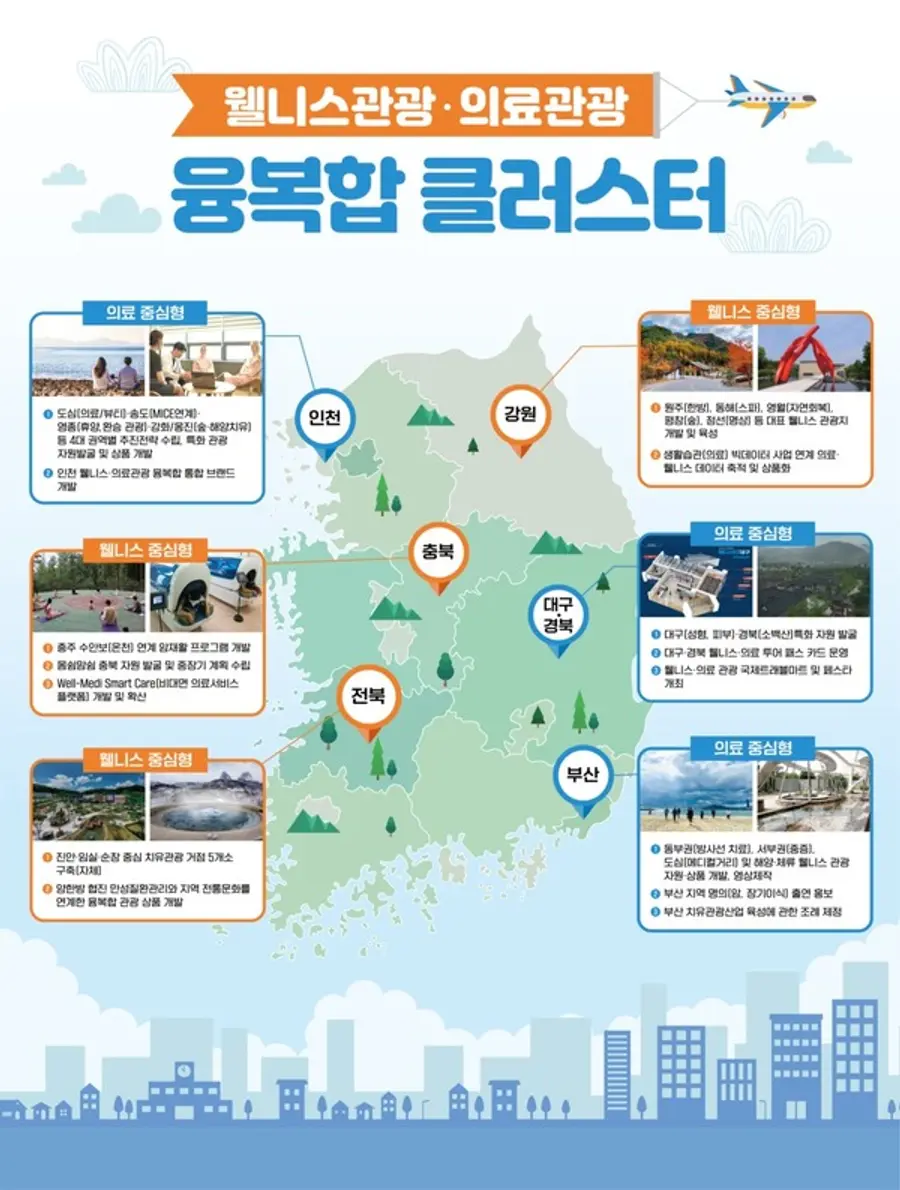
The Ministry of Culture, Sports and Tourism announced that it has selected six locations—Daegu, Busan, Incheon, Gangwon, Jeonbuk, and Chungbuk—as 'Wellness Tourism Clusters' to cultivate high-value wellness tourism by integrating local healing, spa, and other wellness specialized resources.
Why Wellness Tourism Now?
The wellness industry is rapidly growing as lifestyles change towards valuing health and quality of life after COVID-19, and it is being recognized as a key industry that will lead the global economy in the future.
The numbers support this trend. The wellness market size is expected to reach approximately $6.8 trillion by 2024, with an average annual growth rate of 7.6% until 2029. Converted to Korean won by Herald Corp, this amounts to about 9,000 trillion won. In particular, the wellness tourism industry is a new growth sector that is accelerating as the demand for tourism for healing, recovery, and prevention combines and expands in the era of one million medical tourists visiting Korea.
Six Regions, Each with Their Own Healing Language
The six selected locations are divided into two types. Daegu and Busan, which have proposed differentiated commercialization strategies by combining medical tourism with innovative wellness resources, are categorized as 'Medical Tourism Center Type', while Incheon, Gangwon, Jeonbuk, and Chungbuk have been selected as 'Wellness Tourism Center Type' by planning unique tourism themes utilizing their specialized wellness resources.
Each region will receive a preliminary budget of 450 million won this year, and based on evaluation results, up to 1.35 billion won in national funding will be supported for a maximum of three years.
Daegu and Busan — The Intersection of Medicine and Wellness
Daegu, rich in medical infrastructure, aims to promote urban 'Medi-Wellness' and plans to launch over 60 representative products in three years. Busan will leverage its strengths as a marine resort city to implement a regional linkage strategy connecting hot springs in the eastern region, ecology in the western region, and beauty and spa in the urban area.
Incheon — From Airport to Healing
Incheon aims to attract 1.46 million tourists by 2028, enhancing medical tourism linked to the airport and port in the Songdo and Yeongjong areas.
Gangwon — Sleep Becomes Travel
Gangwon plans to attract long-stay tourists by promoting 'Gangwon-style Sleep Wellness Tourism', integrating Wonju's digital healthcare, Yangyang's dynamic activities, Pyeongchang's forest utilization, and Jeongseon's natural relaxation resources.
Jeonbuk — The Most Korean Healing
Jeonbuk aims to realize the vision of being a 'healing tourism city that provides balance and recovery in life', linking local human resources such as Hanok villages and independent bookstores with healing foods based on fermented products and local ingredients, establishing itself as 'the most Korean wellness tourism destination'.
Chungbuk — Blue Wellness of Water and Forest
Chungbuk plans to spread the brand awareness of 'Blue Wellness', the only inland area that combines water and forest, centered around four key cities: Cheongju (spa and beauty), Chungju (meditation), Jecheon (traditional herbal medicine), and Jeungpyeong (forest and nature).
Travel Where Recovery is the Destination
The era of quickly consuming and turning away from travel is gradually fading. Instead, there is a growing trend of traveling to rest more slowly, recover more deeply, and physically experience the resources of the region.
A representative from the Ministry of Culture, Sports and Tourism also noted this trend. "Tourists now seek a higher-level experience that combines treatment and recovery beyond simple visits," he emphasized, stating, "We will foster each region into attractive global tourism destinations through wellness startup support and the creation of an industrial ecosystem through collaboration between the public, private, and academic sectors."
An era where the sea and forest, Hanok and fermented food, hot springs and meditation are woven together into one journey in a region. The steps of these six locations will draw a new map of Korean wellness tourism.