

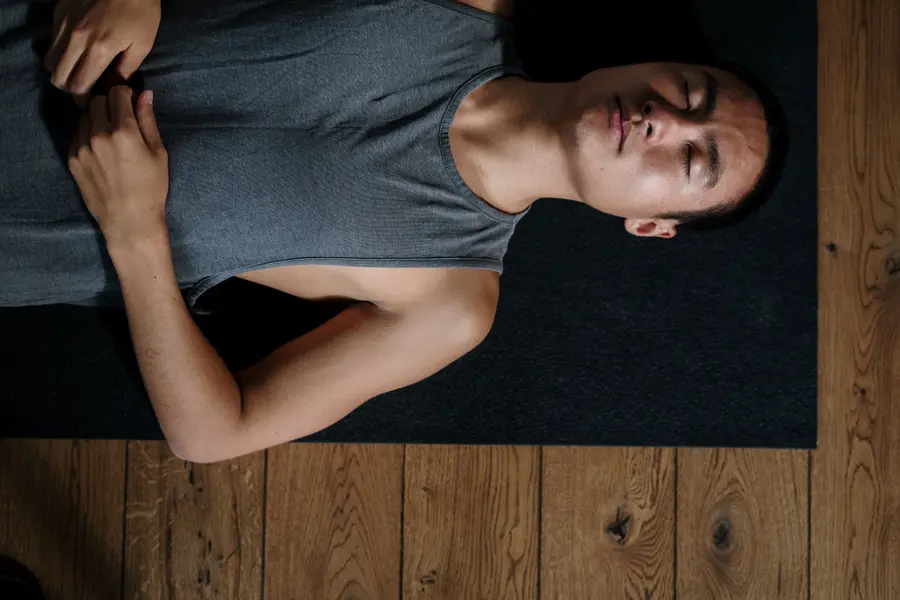
Meditation is shifting from training in a seated posture to a tool that shapes the rhythm of the day. Based on a synthesis of recent developments at Calm, widely regarded as the world’s largest meditation app, as well as Headspace and multiple overseas wellness outlets, global meditation is branching into three directions. Sleep meditation to help with rest. Somatic meditation that addresses the body and the nervous system. And technology-based meditation that is prescribed according to each person’s condition. The common thread is that the focus is on recovery and fine-tuning rather than flashy achievements.
Sleep meditation that opens the day’s end—becoming the widest entry point
The fastest route to mass adoption has been meditation designed to help with sleep. Calm’s audio content, Sleep Stories, has been played more than 1 billion times over the 10 years since the service launched. The company also rolled out a separate app, Calm Sleep, dedicated solely to sleep in September 2025. The decision suggests that sleep has become the biggest entry point for people looking for meditation apps.
Research examining the effects has also been published. A randomized controlled trial listed in the international academic journal “Journal of Medical Internet Research (JMIR)” on February 4, 2026 targeted 135 university faculty and staff members at a university in California, United States. In the group that meditated for 10 minutes a day on the Headspace app for eight weeks, respondents said sleep quality was better than the control group at the 2-week, 5-week, and 8-week marks (all P〈.001). Actual sleep time measured with a wearable device also increased by about 24 minutes at the five-week point. However, the size of the improvement peaked around week five and then eased somewhat by week eight, and the researchers concluded that maintaining the habit over a long period remains a challenge. Even in South Korea, where many people complain about sleep problems, a short meditation before going to bed can be a first step that feels manageable.
Somatic meditation to regain safety through the body and nervous-system recovery
The second trend shifts the focus from the head to the body. Overseas wellness media outlets have named somatic approaches—care for the nervous system, namely the ability to move between tension and relaxation—as a major theme of the year. Behind that is the polyvagal theory developed by Dr. Stephen Porges. As the idea spreads that the vagus nerve governs the sense of safety and connection, interest has grown in ways to calm oneself through breathing and bodily sensations.
The practice style is simple. Long exhalation breathing, yoga nidra that relaxes by lying down, and short practices that help people notice body sensations are typical examples. Researchers from the University of California, San Diego have reported that intensive mind-body training can bring relatively fast changes in brain function and blood indicators. The notion of managing the mind through the body connects with practices already familiar in South Korea, such as body scanning, gukseondo (martial arts-style breathing and movement practice), and qigong. In that sense, it is less unfamiliar than a trend that is being rediscovered.
“Even shorter, and tailored to me”—an era when technology prescribes meditation
The third trend is technology personalizing meditation. According to an overseas review outlet’s tally, the meditation app market in 2026 is estimated at roughly $2.4 billion, and Calm surpassed 4.5 million paid subscribers. Recent apps have evolved to suggest customized sessions that weave together breathing and guided imagery when users input their current emotional state. They also recommend recovery meditation when devices such as Oura Ring or the Apple Watch detect a lack of sleep.
At the same time, short meditation sessions lasting just 2 to 3 minutes are spreading as people build habits of fitting them into everyday moments—like making coffee or commuting. Still, technology isn’t everything. In a Pew Research Center survey, the share of adults under 50 who use meditation apps was just 22%. In an AARP (American Association of Retired Persons) survey, 71% of people aged 50 and older who meditate do not use apps at all. Tools may be multiplying, but it ultimately means that the path that fits each person differs. Even in South Korea’s environment, where apps and wearables are spreading quickly, technology is taking hold as only one of many routes into meditation.
O Hye-seon, publisher of Healing News
Inquiries: fare3041@naver.com