

On Saturday, May 9 at noon, in front of Yeonnamjang at the end of an alley in Yeonhui-dong, a single orange-toned poster stood as if it were holding sunlight. It was the cover announcing the final day of 2026 Yeonhee Yoga Week. Over three weeks, the festival—colored the streets of Yeonhui-dong with yoga, meditation, and wellness—came to its end.
The stage that capped off the finale featured MAGO SOUND’s Silent Soul Move performance, Korea’s first-ever meditation music band.
At the entrance to Yeonnamjang, staff handed out gifts from the natural fragrance brand KALETTE with a gentle smile. A resin hand diffuser tied with a purple satin ribbon in a white paper bag—its name was “11:00 AM.” It sounded like the sunlight of late spring had been condensed into a fragrance. Even before the performance began, a sense of calm had already settled in the fingertips.
Mantras that spread deep into the heart in sunny Yeonnam-dong
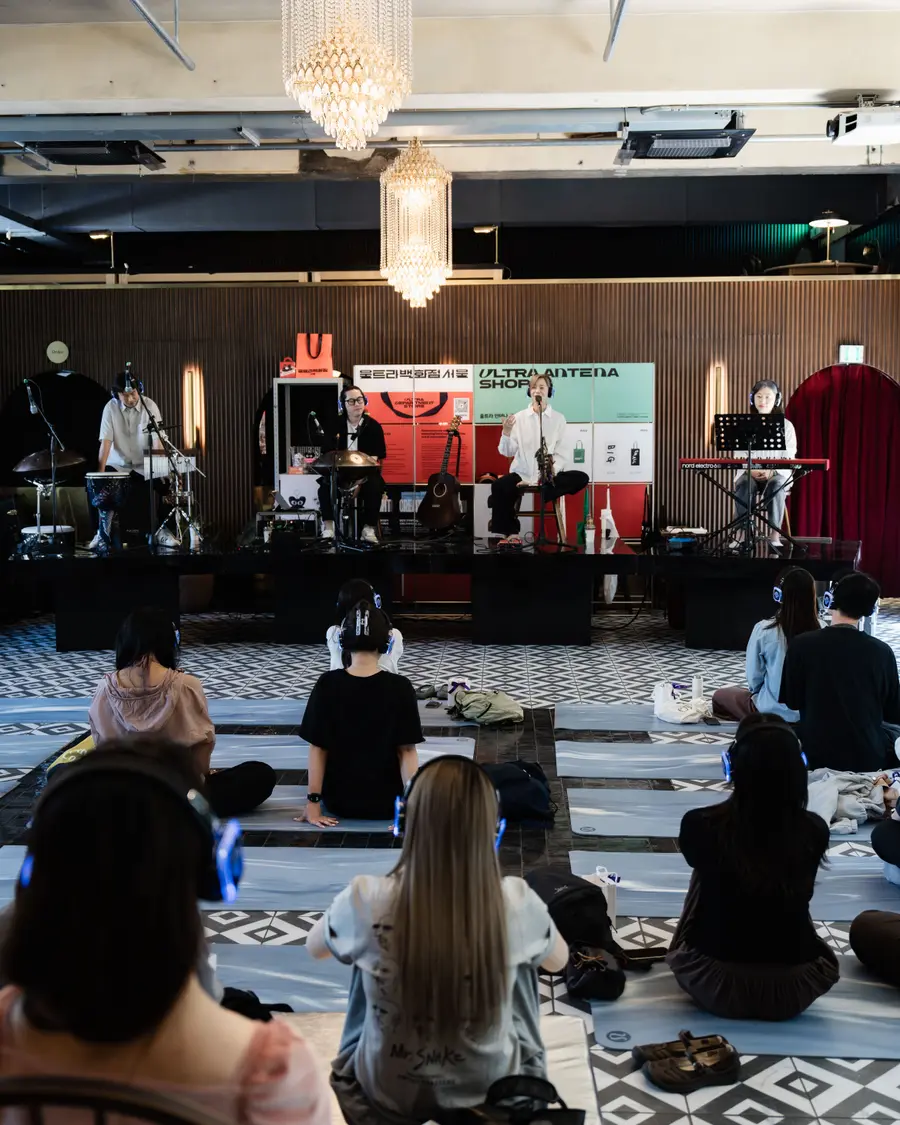
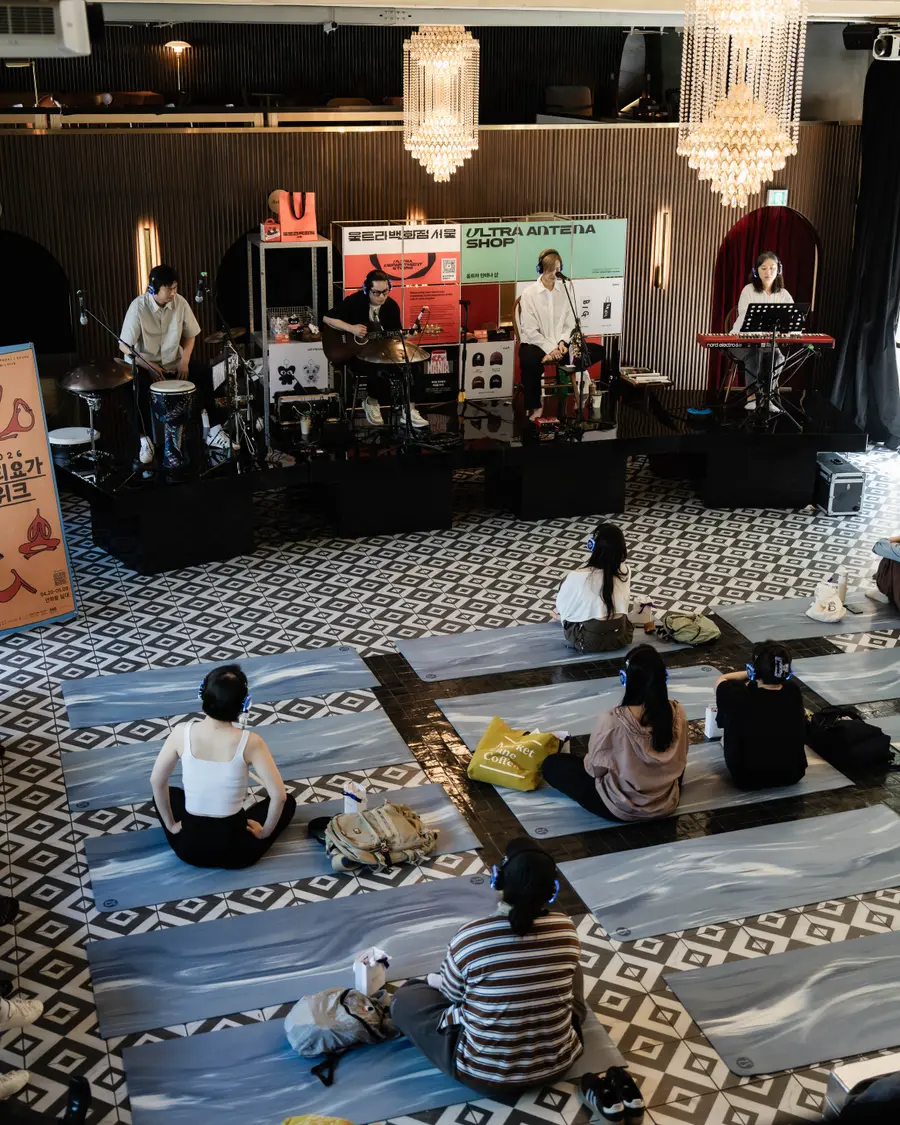
Yeonnamjang is a multifaceted cultural space created by remodeling an old glass factory. Chandeliers with high ceilings blended with natural daylight at midday, softly wrapping the stage. Beneath them, handpans, keyboards, acoustic guitars, and small percussion instruments were arranged. And from the silent headphones worn by the audience—seated comfortably on yoga mats—the blue light could be seen glowing.
The 12:00 p.m. performance was a first even for MAGO SOUND, which had always performed in the evening. MAGO said candidly, “Performing at such a bright time of day is unfamiliar to us, too,” but the sunlight streaming through the windows seemed to align—naturally, almost effortlessly—with the warm results of mantra music.
The first song was “He yama yo.” A piece that carries the meaning of “existing fully right here, right now” in the language of the North American Lakota people. The moment MAGO’s soft yet clear vocals and the metallic resonance of the handpan met and began tapping at the heart, the headphones completely shut out the noise of the outside world—leaving only the performer’s breath and vibrations. It wasn’t music you simply listened to with your ears; it was sound you received with your entire body.
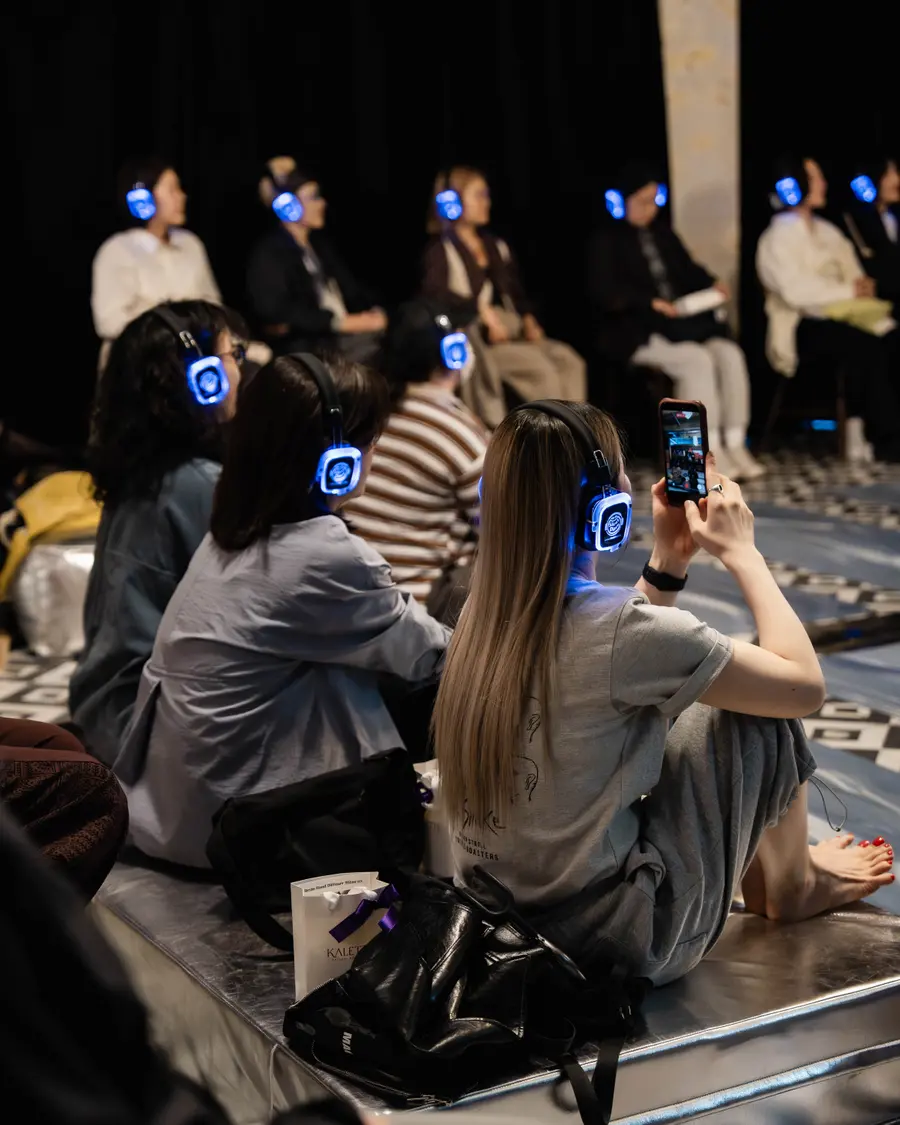
As wireless headphone technology that began in silent discos was applied to meditation performances, a new listening experience was created. With external noise gone, the vibrations of the handpan and even the faint breath of the vocals came alive in a fully dimensional way. And because people weren’t aware of one another’s presence, the time it took for the vibrations delivered through the ears to spread throughout the whole body became even shorter.
The second song was the Gayatri Mantra. Widely regarded in the Vedas as one of the most sacred mantras, it is known as a prayer believed to awaken wisdom and insight. MAGO introduced it briefly as “a song that’s especially nice to listen to when meditating in a quiet, calm mind.” As vibrations layered up—handpan, keyboard, and vocals overlapping one after another—through the headphones, the sensation continued as if it were reaching all the way to the bones of the skull.
The third song, “Asatoma,” is a mantra of peace passed down through the Upanishads. An ancient prayer that asks to guide us from falsehood to truth, from darkness to light, and from suffering to peace. In the bright midday space filled with light, the lyrics asking to lead us to light within the dark took on new meaning.
The fourth song was Lakshmi. It was a mantra offered to Lakshmi, the goddess of abundance and good fortune. In Indian tradition, Lakshmi symbolizes light, wealth, and beauty. MAGO SOUND’s Lakshmi made the audience smile: with a gently swaying melody as the foundation, the vocals were delicately layered on top.
The reason MAGO SOUND’s music is special is that it doesn’t stop at translating mantras into songs. It carefully weaves Eastern traditional philosophical sensibilities with the emotional tone of Western music, guiding listeners to remain fully in this very moment. The soundscape, crafted through precise interplay among the handpan, vocals, synthesizers, and percussion, even turned brief moments of silence into part of the music after each song ended.

Warm energy shared through conversations with the audience
MAGO SOUND’s performance was not a one-way concert where the performer sings and the audience only listens. Between songs, MAGO would ask the audience questions through the microphone. “What does peace mean to you?” People who briefly removed their headphones began defining peace in their own words. MAGO first answered that peace, for them, is “a time when it’s okay to do nothing.” One audience member replied, “a place where I can be myself.” Within about an hour, that warmth of exchanging each other’s energy was fully embedded.
The final regular song was a gentle “boat song.” The boat song was a highlight piece containing MAGO SOUND’s unique excitement and energy. It felt like a small stream was flowing inside a daytime performance venue. All the songs were great, but this was personally the most moving moment. An hour felt far too short.

Om Rada Krishna Namaha—an encore where everyone became one
As the applause grew longer, MAGO SOUND brought out the encore song “Om Rada Krishna Namaha.” A mantra of joy and blessings, it is a chant that awakens the sacredness within you by calling the names of Rada and Krishna. MAGO asked the audience to stand up from their seats. With headphones on, the people who rose together began to call out “Om Rada Krishna Namaha” out loud.
The moment the vibrations spread throughout the entire audience, the quiet of the silent performance transformed into the fullness of a choir. Voices that started quietly gradually grew louder, becoming one unified wave. Some people closed their eyes, and others exchanged smiles with the person next to them. It was the song where the good energy unique to the mantras filled the space, and the response was the hottest.
Leaving the broadcast station, opening a yoga studio, and reaching Yeonhee Yoga Week
Near the end of the performance, Junhyeong-nim, who planned Yeonhee Yoga Week, stood at one side of the stage. After quitting a successful career at a broadcasting station, he told briefly about the journey of opening and operating a yoga studio, and eventually planning a festival together with small studios in Yeonnam-dong. The emotion that rose in the voice was clear—how it felt to make time for a new path after stepping away from a familiar place, and how, at the moment they finished the last performance of the final day safely, it brought up feelings that welled up. Even in the audience, applause continued for a long time.
Yeonhee Yoga Week was an urban wellness festival held over three weeks, from April 20 to May 9, where yoga studios and spaces throughout Yeonhui-dong and Yeonnam-dong joined together to present the program. The final schedule, packed from yoga classes to sound healing and meditation programs, was gently closed by MAGO SOUND’s mantra music.
The lingering afterglow left by the Silent Move performance
When you stepped outside Yeonnamjang, May sunlight shone even more brightly, but deep within the body, the heavy vibrations of the mantra still remained. If there is music that can shake someone’s inner world so much within just a short hour, then it felt naturally likely that wellness performances like Yeonhee Yoga Week could expand even further in the future.
The mantra music of a couple of “lovebirds” who practice yoga and meditation firsthand and create their own music. Now, the music rising from deep within them is no longer a heavy mantra of spiritual practice. The expectation is that it will spread widely like waves—so that anyone can follow along, sing along joyfully, and also awaken and stir the soul within.