

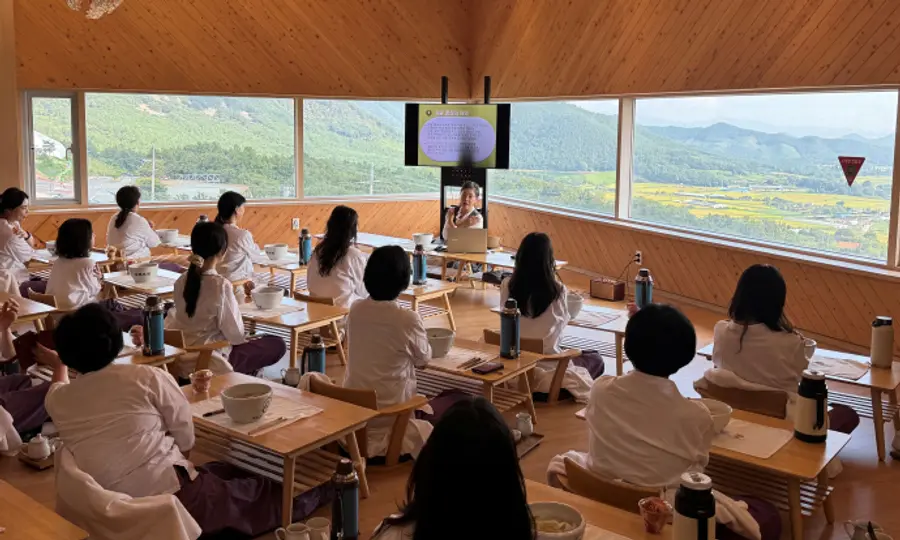
Jeollanam-do’s Jangheung County has secured a launchpad to reinvent itself as a tourism destination built around rest and recovery as core values. After Jangheung County was ultimately selected for the Ministry of Culture, Sports and Tourism’s 2026 project call-based local tourism development program, a total project worth 120 billion won—including 6 billion won in government funding—will be rolled out in earnest.
Jangheung County Selected for the Ministry of Culture, Sports and Tourism’s Project Call-Based Local Tourism Development Program
Jeollanam-do said Tuesday that Jangheung County has been selected for the Ministry of Culture, Sports and Tourism’s 2026 project call-based local tourism development program. The project name for Jangheung County, which made it onto this year’s list, is “The Retreat Tourism (The Retreat Tourism), Jangheung, South Korea’s Healing Tourism City.”
The project call-based local tourism development program is a ministry initiative that helps local governments reactivate aging and underused tourism resources in their regions and discover tourism content with potential. It carries particular significance because it breaks away from an infrastructure-building approach led by the central government—instead, local governments directly set up plans and handle operations. Selected regions receive government funding for four years, and from the stage of establishing detailed plans through management and operations, they receive support through cooperation between the Ministry of Culture, Sports and Tourism and the Korea Culture and Tourism Institute.
The total budget for Jangheung County’s project comes to 12 billion won, adding local funds and more on top of the 6 billion won in government funding.
“Rest” as the Purpose of Travel…The Retreat Tourism
“Retreat” refers to taking a step back from everyday life and carving out time to restore both body and mind. For people tired of the fast-paced life in the city, “a brief pause” became an urgent reason to travel.
Jangheung County’s “The Retreat Tourism” aims to shift away from tourism centered on viewing and spending, and toward a stay-based healing tourism model centered on recovering while you remain. Instead of rushing through attractions and leaving, the county intends to make the experience of breathing in and returning—along forests and the sea—part of the city’s identity. The approach differs from development that simply adds more sights, because it places at the center what visitors recover while they stay.
A Land of Healing Grown by the Japanese red cedar Forest, Jangheung
The foundation that allows Jangheung to promote itself as a healing tourism city rests on nature resources it has built up over the long term.
The Jeongnamjin Japanese red cedar Forest Woodland, on the slopes of Eokbul Mountain, is a forest-healing destination that encompasses a Japanese red cedar grove of about 100 hectares. With Japanese red cedars—well over 40 years old—densely covering the forest paths, the woods are rich in phytoncides, and are cited as a place where simply walking slowly helps settle the mind and body. The county has stay-based facilities such as the healing forest, a Japanese red cedar salt house, and a mal-e-gil barrier-free deck road, allowing visitors to spend an entire day resting.
The “Jeongnamjin” brand, which carries the meaning of “Jeongnamjin” as the southernmost seaside at the end of the road from Seoul’s Gwanghwamun, is also a Jangheung asset. Content that links nature and local culture has already taken root, including the Jeongnamjin Jangheung Water Festival and the Jeongnamjin Jangheung Saturday Market. The county’s work to gather these scattered resources under a single theme—“healing”—is expected to be the centerpiece of this project.
In addition, as railway service opens in 2026 and improves accessibility from the Seoul Capital Area, Jangheung’s conditions as a place to stay on vacation are set to grow even stronger.
A Four-Year Journey, Now at the Starting Point
This selection marks the beginning of the project. In the first year, the county is expected to confirm the specifics of the project and the scale of facilities through the establishment of a basic plan. What spaces will be newly created, and how existing resources will be connected, will become clearer in the next planning stage.
Against the backdrop of declining local population and shifts in the tourism environment, observers are watching to see whether Jangheung County’s challenge—built around making “rest” the theme—can inject vitality into the region. In an era when the most urgent kind of travel for some people is taking time to catch their breath, Jangheung’s Japanese red cedar forest has effectively been preparing the answer for a long time.