

Chiang Mai mornings begin with the alms round. Before sunrise, monks in orange robes walk through the narrow lanes, while residents place rice and fruit into their alms bowls. To visitors, it is a scene that lasts in a single photograph. But for some people staying in the city, the reason they come lies inside that moment too. Temples in northern Thailand have long been known for offering practice places to foreigners.
Wat Ram Poeng, where you sit for 26 days
Among the first places people mention when talking about Chiang Mai meditation retreats is Wat Ram Poeng. Inside the temple grounds is the Northern Insight Meditation Center.
The basic course runs for 26 days. By today’s standards, where short experience programmes are common, it is comparatively long. There is also a separate 10-day intensive course for practitioners who have completed the basic process. If you want to stay for more than 10 days up to 6 weeks, you need to obtain an additional authorisation depending on your circumstances.
A longer duration means this programme is not an “add-on” experience squeezed into a sightseeing itinerary. It is designed to let you follow the flow of Vipassana practice from beginning to end.
A daily schedule, starting at 4am
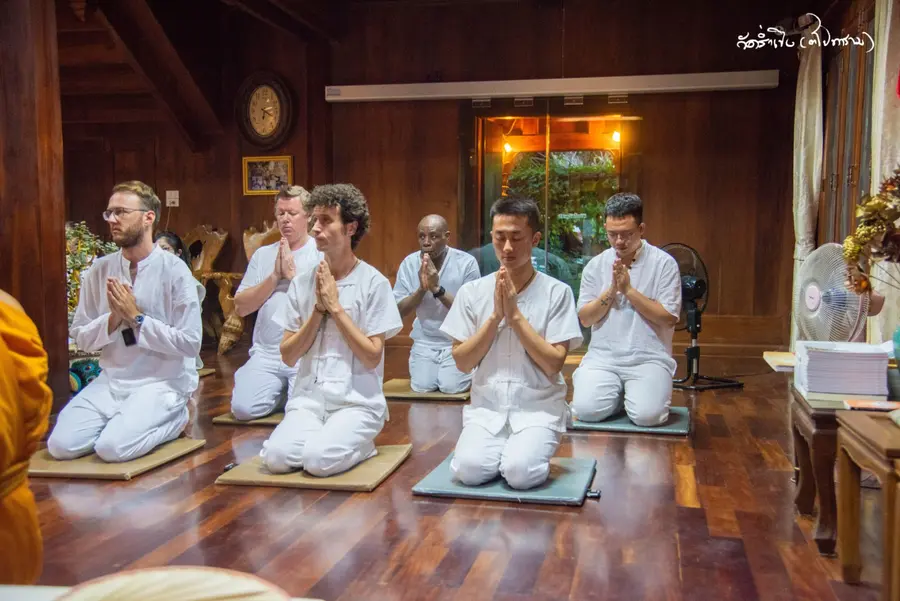
The timetable is simple and leaves no gaps. The day begins with a 4am alarm. You raise the mindful meditation chants, then continue with walking meditation (walking practice) and sitting meditation.
Morning alms are at 6am, and lunch alms are at 10.30am. In the afternoon, you follow the Theravada tradition in which people do not eat food. Around 2pm there is time to report that day’s practice to the guiding teacher. This daily report time can be adjusted.
At 8pm, you go to bed. During the practice period, you keep to a white-clothing dress code. On Uposatha day, the main day for religious observance known as Wan Phra, you join a ceremony in the main hall(s) that involves walking around the stupa three times.
Eligibility and how to apply
Religion and nationality do not matter. Anyone with a valid passport and visa can take part. The centre keeps its doors open, saying that the act of refining the mind is a personal experience.
Applications proceed in a sequence: visit the office in person or contact them, receive official approval, then prepare the required documents.
The cost is not set and is not announced separately. Instead, the offering is collected in a way that issues an official receipt at the temple office. As it is an offering based on one’s means rather than a fixed fee, it is advisable to ask the office in advance and confirm the usual range.
Wat Suan Dok, another gateway inside the city
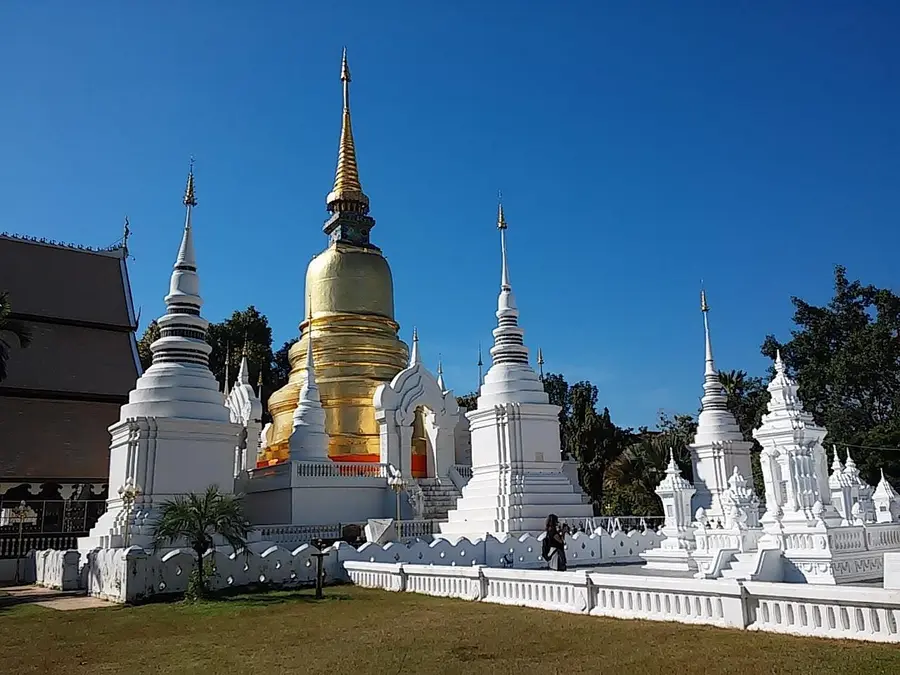
If you want to meet temple culture before setting your practice schedule, Wat Suan Dok is useful. The temple was built in 1370 by King Khun Na for the monk Samana Thera. It stands on Suthep Road, about 1km west of the Suan Dok Gate on the west side of Chiang Mai’s old moat area.
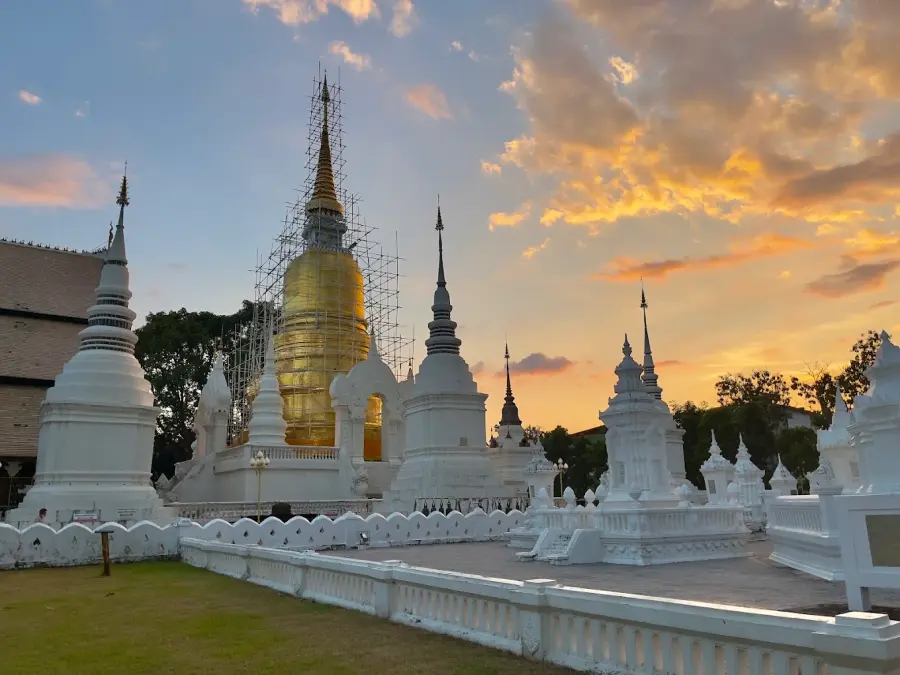
A Sri Lankan-style chedi shaped like a bell, 48m high, is the temple’s symbol. It is joined by the main hall built in 1932, a 4.7m-high bronze Buddha statue cast in 1504, and a white mausoleum complex that enshrines the remains of the Chiang Mai royal family.
Within the temple grounds is the Mahachulalongkornrajavidyalaya Buddhist University, Chiang Mai Campus. The fact that it is a temple that monastic students pass through on their way creates the atmosphere here.
Late November to February is the best time to visit—check visa types too
Northern Thailand is clearly split between the dry season and the rainy season, and also the period when air quality worsens. Generally, late November to February is often cited as the cooler, drier time that makes travel more comfortable. In March and April, there are years when haze occurs due to the impact of burning in agricultural land. If you have sensitive airways, it is safer to check local air-quality information before planning your schedule.
If you plan a long course, you should sort out visa issues first. A 26-day course may overlap with the visa-free permitted stay period, so it is a good idea to check, with guidance from the Thai embassy or consulate before departure, which visa type suits you.
Chiang Mai International Airport sits inside the city, making access easy. There are direct routes from Incheon, and there are also many domestic flight connections via Bangkok. From the airport, you travel by car to the old town and Suthep area. Wat Ram Poeng is located in the Suthep area of Mueang District in Chiang Mai Province.
Chiang Mai as a destination for meditation travel
Several overlapping conditions lie behind why Chiang Mai has established itself as a meditation travel destination. The city is not large, so getting around is straightforward; the cost of living is relatively low; and temples that have received foreign visitors have long experience.
The way this city operates also offers lessons for domestic meditation travel. Rather than building special new facilities, it has shifted towards equipping existing practice spaces with the procedures and language needed to welcome foreigners. It is not that the temple becomes a tourist attraction. By staying as a practice site and continuing to receive visitors in a balanced way, it has become a strength that keeps people coming back for years.
Wat Ram Poeng official website Vipassana course guide https://www.watrampoeng.com/vipassana-course
The telephone number is +66 821 857 701 and the email address is wrp.vipassana@gmail.com.
Facebook account: watrampoeng.chiangmai