

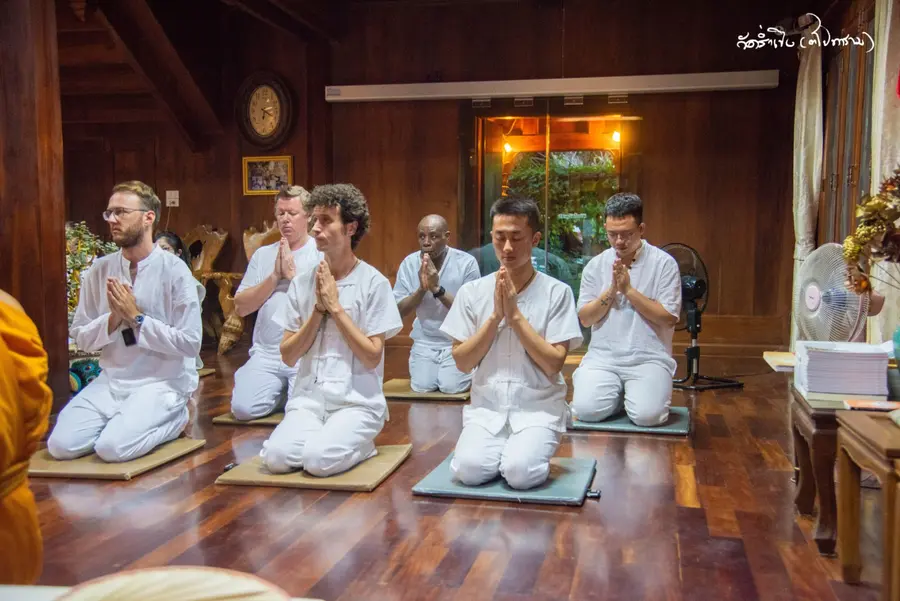
Mornings in Chiang Mai begin with an alms round. Before sunrise, monks wearing orange robes move through alleyways, while residents place rice and fruit into their alms bowls. For tourists, it’s a scene that lasts as a single photograph—but for some people who stay in this city, the reason is the people inside that frame. Temples in northern Thailand have long been known for offering meditation stays to foreigners.
Wat Ram Poeng, a place to sit for 26 days
Among the locations most commonly cited when talking about meditation retreats in Chiang Mai is Wat Ram Poeng. Inside the temple is the Northern Insight Meditation Center.
The standard course lasts 26 days. By today’s norms—when short experience programs are common—it’s on the long side. There is also a separate 10-day intensive course for practitioners who complete the basic program, and staying for more than 10 days but no more than 6 weeks requires a separate approval depending on circumstances.
The fact that the period is long means this program isn’t something you tack onto a sightseeing itinerary as a try-it-on experience. It’s a structured course that lets participants follow the full flow of Vipassana practice from beginning to end.
Daily schedule, starting at 4 a.m.
The schedule is simple and leaves no gaps. The day starts with a 4 a.m. alarm, followed by meditation bell practice and a sequence of walking meditation (경행) and sitting practice.
Morning alms are at 6 a.m., and the lunch alms are at 10:30 a.m. In the afternoon, participants follow the Theravada tradition of not eating food. Around 2 p.m., there is a time to report that day’s practice to the guiding monk. This daily report time can be adjusted.
At 8 p.m., it’s time to go to bed. During the practice period, participants maintain a white clothing dress code. On Uposatha days, known as Wan Phra, participants join a ritual in the main hall where they circle a stupa three times.
Eligibility and how to apply
Religion and nationality don’t matter. Anyone with a valid passport and visa can take part. The center keeps its doors open by saying that the act of cultivating the mind is a personal experience.
Applications are made by visiting the office in person or contacting the center, receiving official approval, and then preparing the required documents.
The cost is not set separately or announced. Donations are accepted in a way that issues an official receipt from the temple office. Since it’s donation based on one’s circumstances rather than a fixed fee, it’s advisable to contact the office before joining to confirm the customary range.
Wat Suan Dok, another gateway inside the city
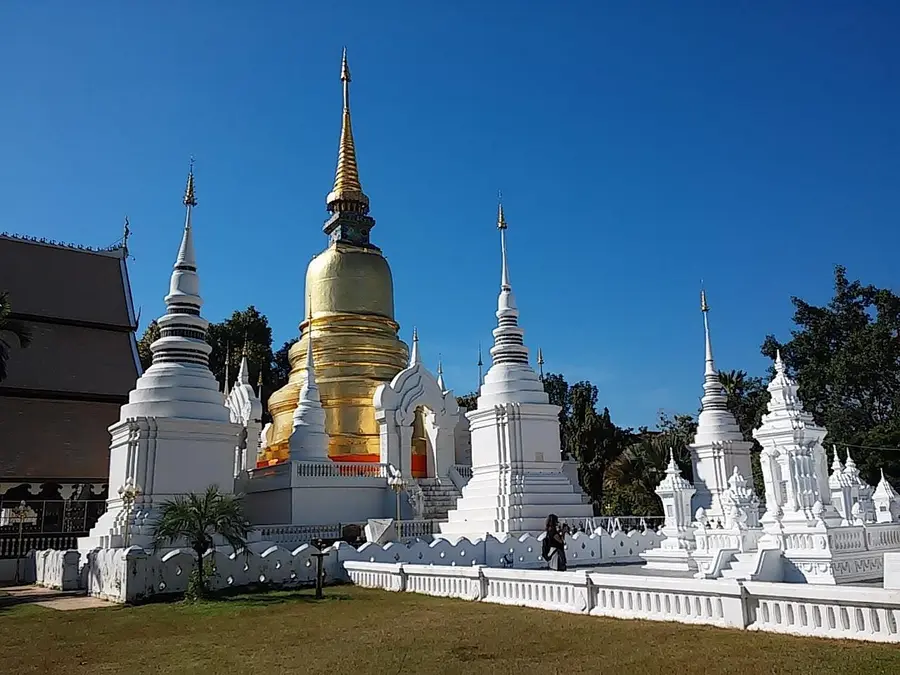
If you want to encounter temple culture before mapping out your practice schedule, Wat Suan Dok is a good reference. It is a temple built in 1370 by King Khun for the monk Sumana Thera. It sits on Suthep Road about 1 kilometer west from the Wat Suan Dok gate on the west side of Chiang Mai’s old moat area.
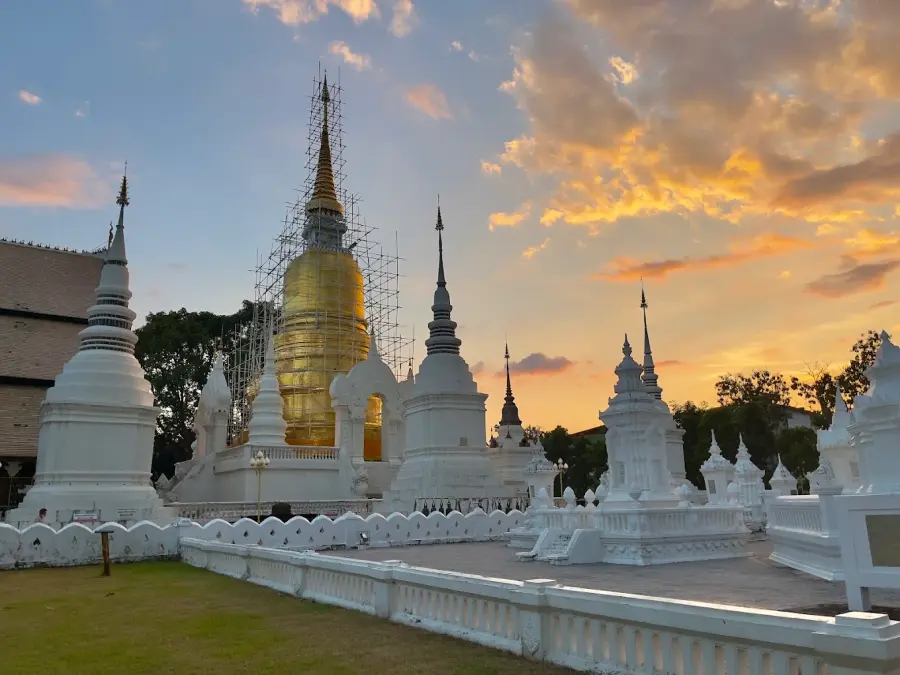
The temple’s symbol is a Sri Lankan-style chedi shaped like a bell, standing 48 meters tall. It also includes a large main hall built in 1932, a 4.7-meter-tall bronze Buddha statue cast in 1504, and a white mausoleum area where the remains of the Chiang Mai royal family are kept.
The temple grounds host the Mahachulalongkornrajavidyalaya Buddhist University Chiang Mai campus. That fact—that it’s a temple where trainee monks come and go—helps define the atmosphere here.
Best visiting season is from November to February—check visa types first
Northern Thailand is clearly divided between the dry season, the rainy season, and periods when air quality worsens. Generally, November through February are regarded as a comfortable stretch with less rain, making it a good time to travel. In March and April, there are years when haze occurs due to factors such as the burning of farmland, so if you’re sensitive to respiratory issues, it’s safer to check local air-quality information and plan accordingly.
If you’re planning a long course, you should sort out visa issues first. Since the 26-day course overlaps with potential visa-free stay periods, it’s a good idea to confirm which visa type fits you by checking guidance from the Thai Embassy or consulate before departing.
The Chiang Mai International Airport is located inside the city, making access easy. There are nonstop routes from Incheon, and there are also many domestic flight connections that pass through Bangkok. From the airport, it’s a short drive to the old city and the Suthep area. Wat Ram Poeng is in the Suthep area of Mueang District in Chiang Mai Province.
Chiang Mai as a destination for meditation travel
Several conditions overlap in the background of how Chiang Mai became established as a meditation travel destination. The city isn’t especially large, so getting around is straightforward. Living costs are relatively low, and temples that have hosted foreigners for a long time have built experience.
The way this city operates also offers lessons for meditation travel within South Korea. Instead of building special new facilities, the existing practice spaces have shifted toward putting in place the procedures and language needed to receive foreigners. The balance that keeps temples from turning fully into tourist attractions—while still welcoming visitors as practice sites—has become a driving force that keeps people coming back.
Wat Ram Poeng official site Vipassana course guide https://www.watrampoeng.com/vipassana-course
The phone number is +66 821 857 701, and the email is wrp.vipassana@gmail.com.
Facebook account: watrampoeng.chiangmai