

Inner Strength Education, a non-profit that has taught meditation to teenagers in Philadelphia public schools, is testing the move from classroom lessons to a digital platform. High-school students were the first to try the platform, which combines a meditation library with an AI coach. The organisation published the results of the pilot on its official blog on 10 November.
Meditation taught in 33 classrooms across eight schools, reaching 700 students a week
Inner Strength held its first lesson at Bodine High School for International Affairs in Philadelphia in 2014. This autumn, it is running classes in 33 classrooms across eight Philadelphia schools, with about 700 students taking part each week. Its teaching team has grown to nine.
In class, students learn how the brain, mind and emotions work, and practise guided meditation and breathing exercises. On the first day of the new school year, they receive blank notebooks and learn to record the day’s emotional weather before beginning their first meditation, focusing on their breath and the sounds around them. At one school, student volunteers also led a movement meditation.
400 recorded uses over four lunch breaks
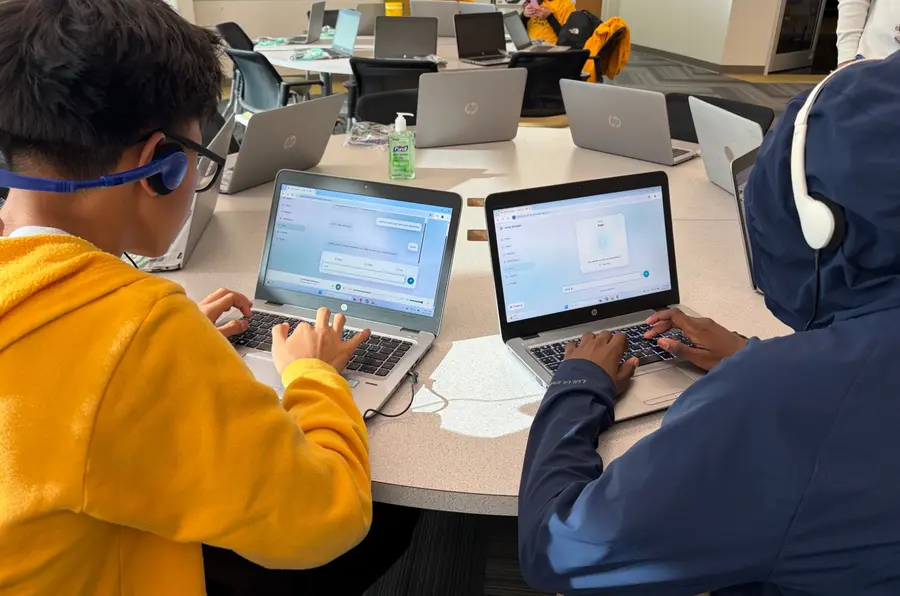
The pilot took place at Carver High School of Engineering and Science in Philadelphia. Students in grades 8 to 12 spent most of their lunch breaks over four days trying out the platform on 25 borrowed laptops.
There were more than 400 recorded uses over those four days. The organisation’s founder, Amy Edelstein, held 100 one-to-one wrap-up conversations with students. Several came back two or three times; some brought friends, while others used the platform on their own at home. Students said meditation and breathing helped them feel calmer, and some said they had only then realised they were stressed, the organisation reported. One student said, “I would use this”. A student who described himself as a full-stack developer asked detailed questions about the platform’s architecture and gave it his approval. The head of development offered him an internship on the spot.
Why the AI coach was kept within the curriculum
The platform includes lessons from the classroom on the brain, mind and emotions, guided meditations and breathing exercises, affirmations, and a private journal visible only to the student. Students can write to the AI coach or speak to it and ask questions.
The organisation devoted the most thought to deciding how far the AI should be allowed to go. Edelstein wrote the curriculum herself, and the teaching team recorded the meditation guides in their own voices. The AI coach is restricted to a body of knowledge defined by the organisation. It does not create new meditations; instead, it supports students as they practise lessons created by people on their own.
Students say it is slow and repetitive; next tests run through December
Students were also candid about what could be better. Some said that parts of the lessons were repetitive and asked for more challenging material; others said the replies took too long or that some features did not work well on mobile phones. The organisation is refining the coach’s responses, fixing bugs and preparing a mobile version, with further testing planned for November and December. Students took home QR codes so they could keep using the platform. The laptops used for testing and snacks for students were paid for through a summer fundraiser. The organisation raised $16,466, exceeding its $15,000 target.
In the age of AI, who should teach meditation?
In an age when AI can write and draw, should it teach meditation too? The Philadelphia pilot offers one possible answer. People create the structure of the lessons and the meditation guides; the AI helps students practise on their own within those boundaries. It acts as a bridge, allowing students to continue at home the meditation they encounter once a week in the classroom.
Meditation is also gradually finding a place in South Korean classrooms. Teaching materials are emerging to help classroom teachers deliver 30 sessions of mindfulness lessons without an outside instructor, among other developments that are broadening the range of tools available for school meditation. For teenagers growing up surrounded by information and screens, what they need may not be a machine that meditates for them, but a guide to help them keep practising how to notice their own breathing and emotions. Choosing the tools that suit our children remains a human responsibility.
Enquiries about this article: fare3041@naver.com