

Many people would like to try meditation but hesitate because they do not know where to begin. A research team from Kyung Hee University found an answer at a local lifelong learning centre. They ran an eight-week mindfulness meditation course for 35 adults at Seoul Citizens University’s Southeast Campus. Thirty-one completed the course, and those who finished reported greater vitality and happiness, alongside reduced depression, fatigue and anxiety. The findings were published on 28 October in the international journal Frontiers in Public Health.
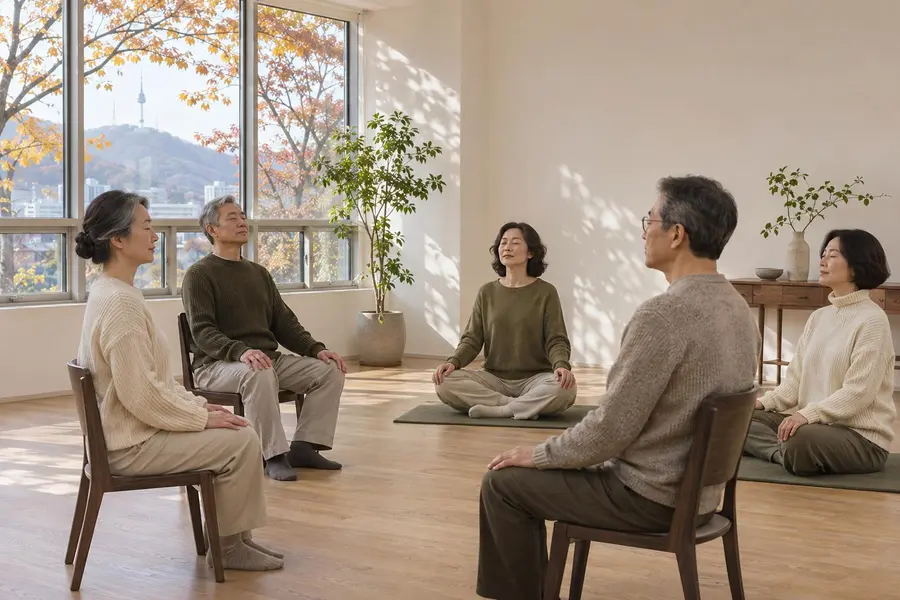
35 people, aged 28 to 79, gather in a citizens’ university classroom
The course was called the Mindfulness-based Vitality Promotion Programme (MVP). It was developed and run by Kyung Hee University researchers Seok-in Yoon, Hee-young Park, Jae-hong Yoo and Sun-yong Jeong, alongside Professor Jong-woo Kim, the corresponding author. Seoul Citizens University’s Southeast Campus, run by the Seoul Institute for Lifelong Education, provided the venue.
Participants were adults aged 19 or over who were experiencing difficulties such as depression, fatigue or stress. They ranged in age from 28 to 79, with an average age of 53.74; 13 were aged 60 or over. Of the 35 participants, 32 were women, and homemakers were the largest occupational group. Two classes ran from October to December 2024, followed by one from February to March 2025, with no more than 15 people in each class.
Notably, the course took place not at a meditation centre or hospital, but at a neighbourhood learning centre where residents attend a range of classes. It shows how a learning venue close to home can offer a first step into meditation.
From breathing to walking meditation: the eight-session programme
The course ran once a week for 90 minutes, over eight sessions. Each class included 20 minutes of teaching, 40 minutes of practice and 30 minutes for participants to share their experiences.
The first session began with breathing meditation. In the second week, participants tried mindfulness yoga and a body scan; in the third, they practised eating meditation, slowly savouring food and focusing on their senses. The fourth week focused on paying attention to the breath and bodily sensations, and the fifth on walking meditation. In the sixth week, participants used breathing meditation to reflect on values they cherished. In the seventh, they practised loving-kindness meditation, sending warm thoughts to themselves and others. The final, eighth session returned to breathing meditation.
Rather than focusing solely on sitting still and observing the breath, the programme offered a sequence of practices that engage the body and everyday life, including yoga, eating and walking. It gave beginners a chance to try several approaches and choose one that suited them.
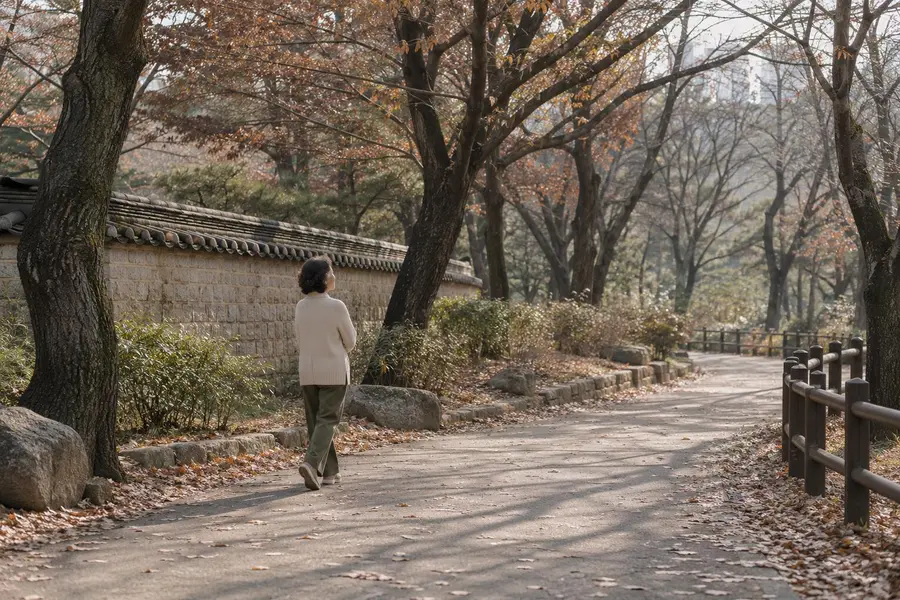
An average of 6.4 sessions attended; 93% would take the course again
Of the 35 participants, 31 (88.6%) completed the course, attending an average of 6.37 of the eight sessions. A comparison of their scores before and after the course found that vitality and happiness increased, while depression, fatigue and anxiety decreased.
Among the 30 people who responded to the satisfaction survey, 28 (93.3%) said they would like to take part again, and all 30 said they would recommend it to someone else. Participants singled out the time spent sharing experiences and the practical techniques they could use straight away in everyday life as highlights.
Finding time each week for eight weeks is not easy in a busy life. The fact that participants particularly valued sharing with others suggests that learning and talking together, rather than going it alone, helped them stick with the course. If you want to keep up a meditation practice, joining a class or group that meets at a regular time may help more than simply opening an app on your own.
At home, once a day: choose a meditation that suits you
The research team gave participants audio guides and asked them to practise once a day at home. The idea was to learn in the classroom once a week and continue with even a short practice at home on the other days.
The course’s sequence can also guide anyone hoping to begin meditating on their own. Start in the first week by spending a few minutes a day paying attention to your breath, then add gentle yoga and a body scan if your body feels stiff. You could also try eating meditation by slowly savouring one meal, or walking meditation by focusing on the soles of your feet as you take a lap around your neighbourhood. After trying different approaches, make the one you find easiest to stick with your own practice.
If you would like to learn with others, search for meditation or mindfulness in the course listings of a nearby citizens’ university, lifelong learning centre or district cultural centre. A classroom close to home could be your first step into meditation.
Enquiries about the article: fare3041@naver.com