

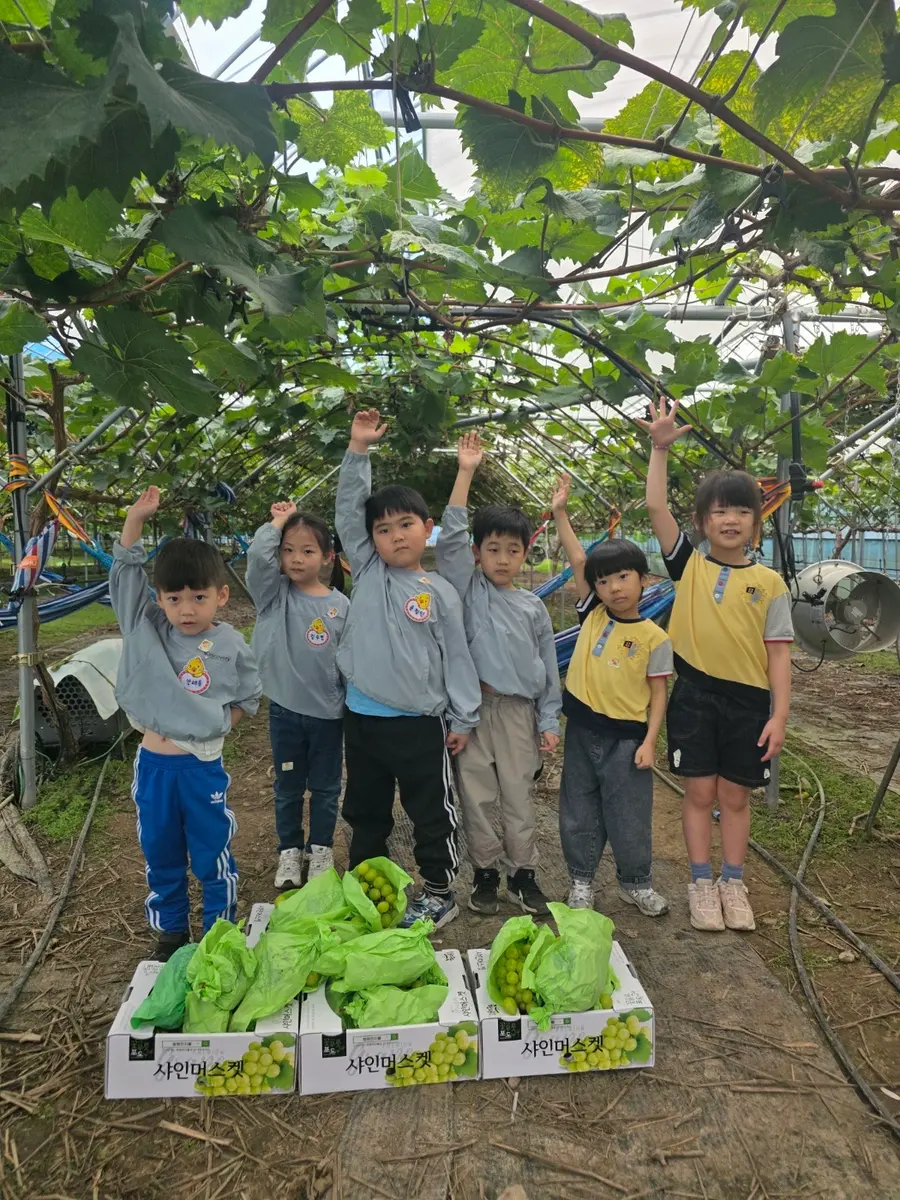
On an afternoon when autumn sunlight filtered through the grape leaves, a special class unfolded in a vineyard in Hampyeong, Jeollanam-do. The clear laughter of first and second graders from Haebo Elementary School and children from the attached kindergarten filled the space between the grapevines.
"Good Being, hello, it's nice to see you again today!"
As the children's greetings crossed the vineyard, this place was no longer just a simple vineyard. It was a classroom where children learned not 'how to live well' but 'how to exist well'.
What took place that day was a BEING Project class led by teacher Song Hee-sook from the Good Being Inner School (Korean Children and Youth Emotional Strength Community). Known by the nickname 'Ddabom', Teacher Song creates a special learning environment in nature to cultivate children's emotional strength with the hope that "the world will always be a warm spring".
What is Emotional Strength? Recovery of 'Being' in a Fast-Paced Society
Our children live in a constant speed of 'Doing'. They rush to academy classes, finish assignments, and run towards achievements. However, they cannot stop to ask themselves, "What state am I in right now?"
Good Being Inner School focuses precisely on this point. The core of emotional education for children and adolescents is not to make them do more, but to help them recover their very existence.
Emotional strength is not the power to suppress or eliminate emotions. Rather, it is the inner strength to notice one's own feelings, observe them as they are, and find balance. Good Being Inner School operates a community of emotional strength where children, parents, and teachers practice 'Well-being' together, recovering body and senses and nurturing inner balance through meditation, experience, and conversation.
The Five Principles of BEING Unfold in Nature
The BEING Project consists of five principles. These principles are not just simple stages of meditation, but a flow for children to fully experience and recover their existence.
1. Breathe - The First Step to Feel Alive with Your Whole Body
2. Embrace Awareness - Realising the Sensations of the World and Myself
3. In the Now - Staying in the Present, Not the Past or Future
4. Nourish Balance - Recovering the Centre of the Mind and Existing Harmoniously
5. Gratitude - Feeling Thankfulness that Connects Me and the World
Following these five principles, the learning in the vineyard quietly began.
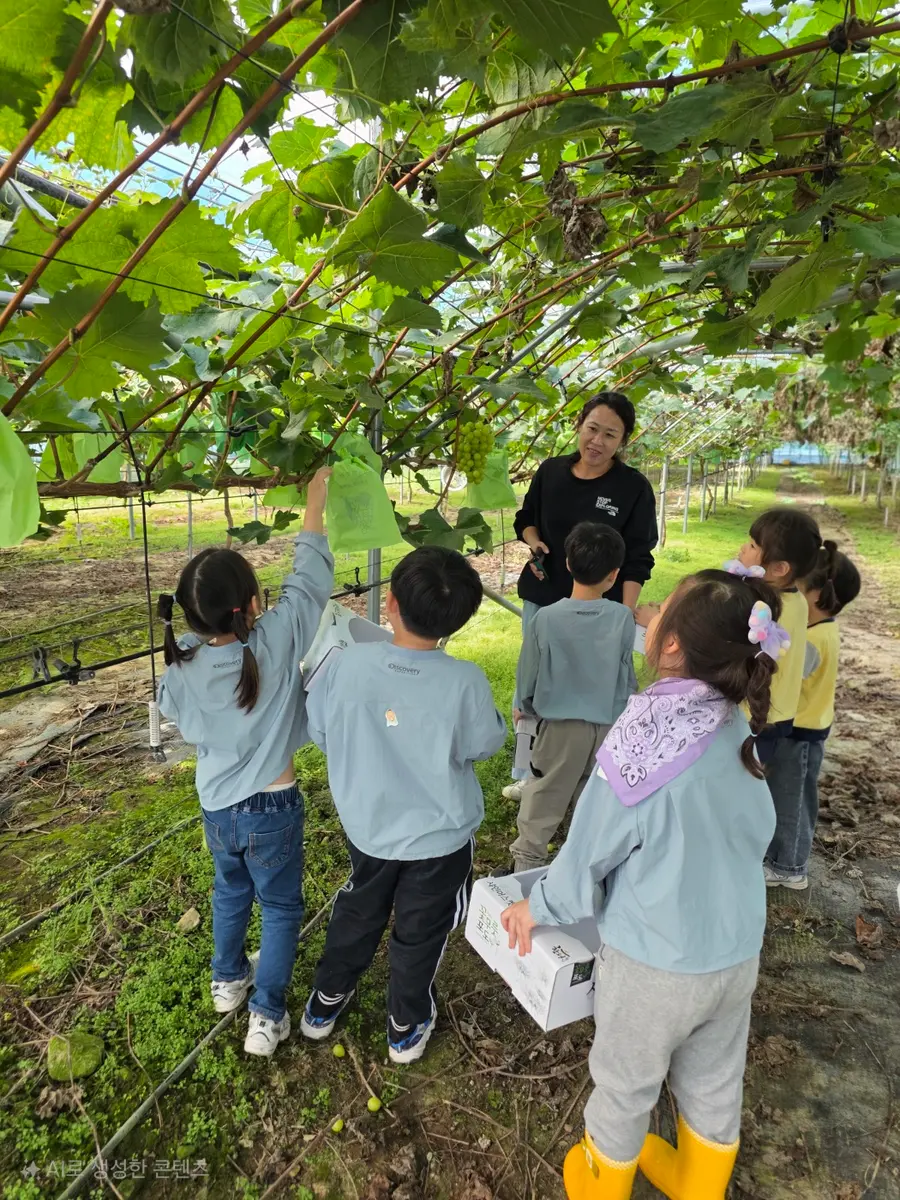
Breathe: Children Breathing with Their Whole Bodies Like Starfish
The class began with the 'Good Being Song'.
"I am thankful to be here right now."
The children clapped their hands and looked at each other. "Hello, grapes!" The entire vineyard was filled with warm greetings.
Afterwards, the children lay on mats and experienced 'Starfish Breathing Meditation'. Starfish breathe with their whole bodies without special lungs or gills. The children did the same.
"Teacher, my legs are breathing too!"
It was a short meditation, but the children's bodies were already living textbooks of breath. Breathing is not just a physiological phenomenon. It is the most fundamental rhythm that connects body and mind.
Dr. Hölzel's research team from Harvard Medical School in Germany (2011) stated that mindfulness meditation regulates the autonomic nervous system, reduces emotional reactivity, and strengthens the brain's self-awareness areas. Through breathing, the children felt their existence and regained their bodily sensations and centre.
Embrace Awareness: Awakening Awareness with the Warmth of the Earth
"Let's walk, let's walk, to the vineyard~"
As the children sang while walking, they suddenly stopped. It was the moment they took off their shoes and felt the earth with their bare feet.
"My feet are ticklish!"
"The earth is warm!"
The warmth of the sunlight, the touch of the wind, and the sound of grape leaves colliding. All of these became the children's 'external awareness', and within that, the inner sense of "I am here now" quietly grew.
For modern children surrounded by digital devices, nature experience learning means more than just outdoor activities. It is an experience that recovers the senses and connects with the world. The earth, sunlight, and wind in the vineyard were the best mindfulness meditation tools for the children.
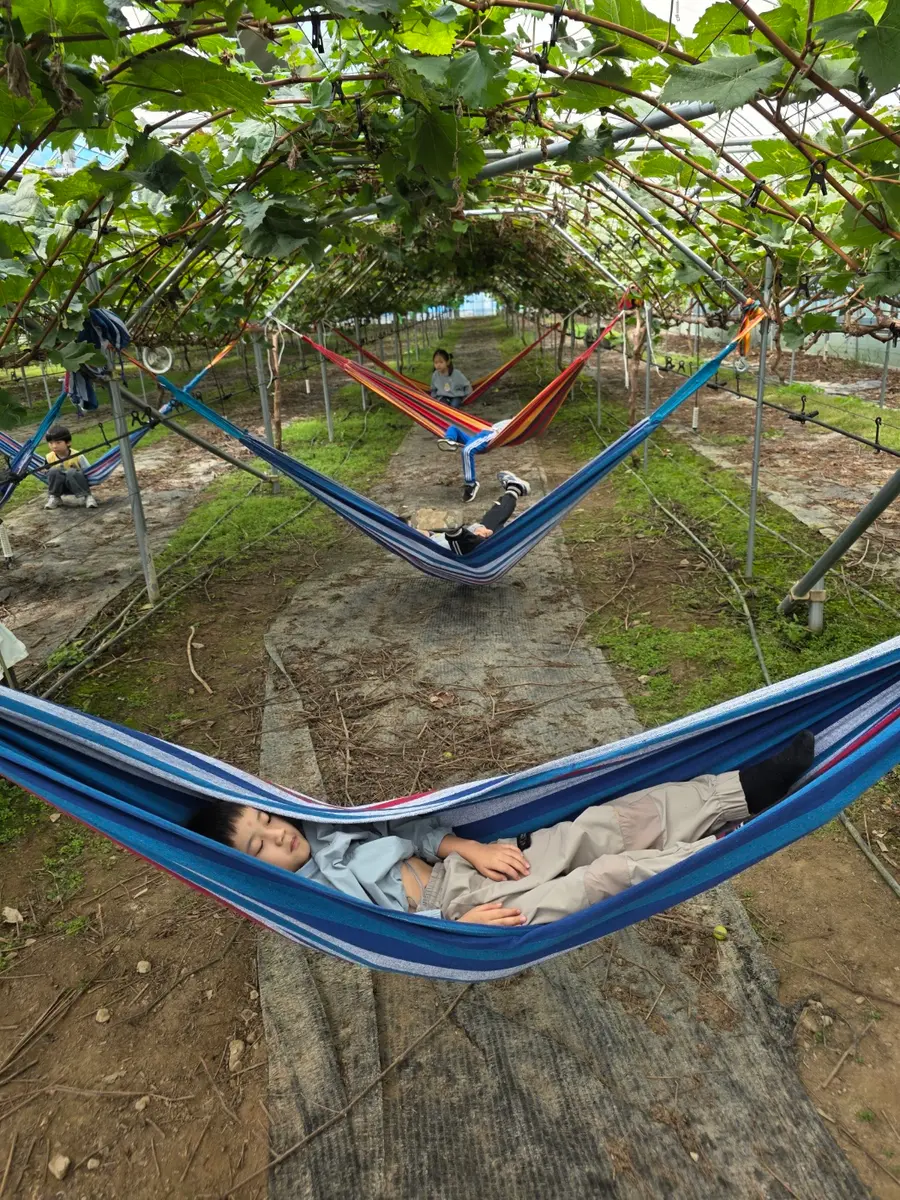
In the Now: Feeling 'This Moment' on the Hammock
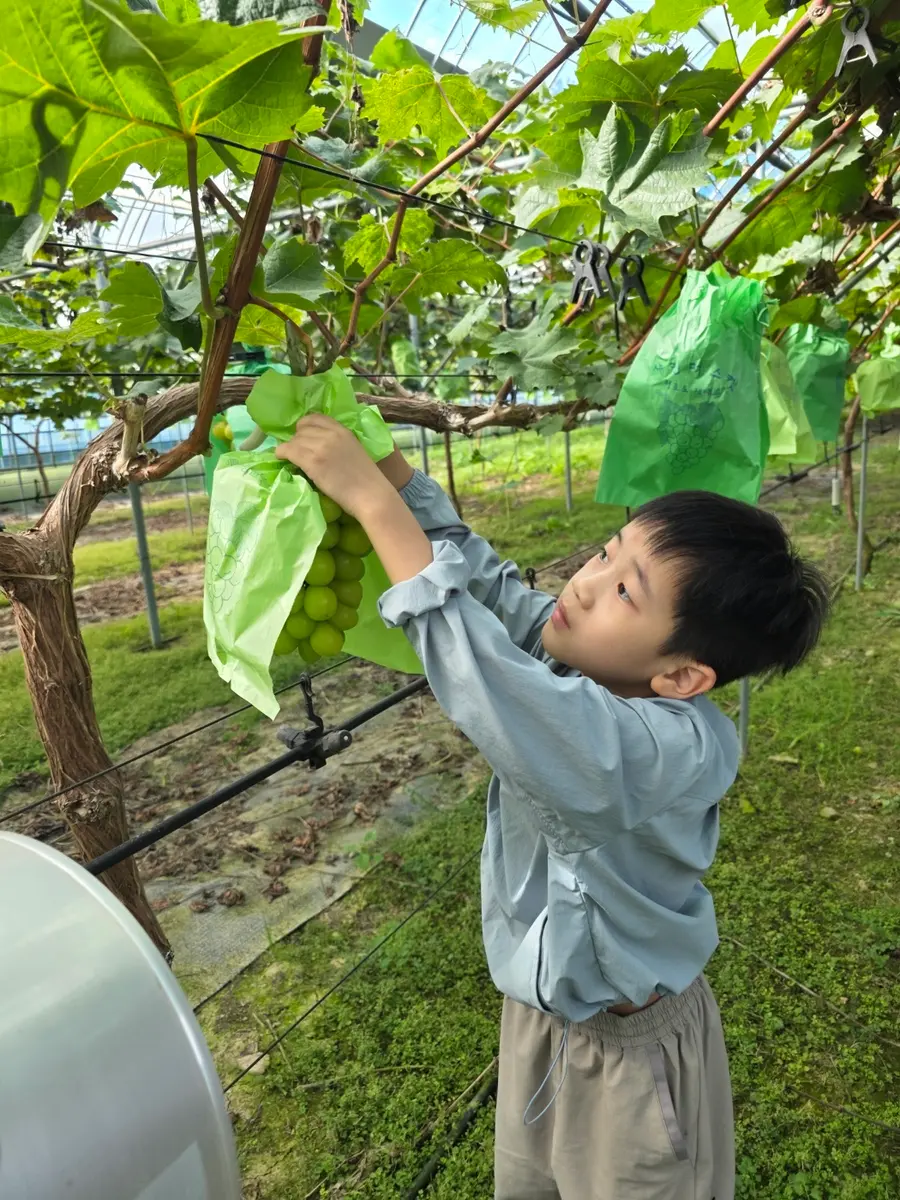
After picking grapes, the children headed to the hammock. Lying on the hammock and looking up at the sky, the children's expressions changed.
"Teacher, the sky is moving!"
"The wind is coming to me!"
The rhythm between movement and stillness, the sensation of existing here and now. Professors Mark Williams from Cambridge University and John Teasdale stated in their research on mindfulness-based cognitive therapy (MBCT) that the 'transition from Doing mode to Being mode' enhances emotional resilience and attention regulation.
The children's laughter on the hammock was precisely that experience of balance. Without the pressure to achieve, simply feeling the moment of swaying. That alone was enough for the children's hearts to recover.
Nourish Balance: The Wisdom of Balance Blossoming Amidst Small Conflicts
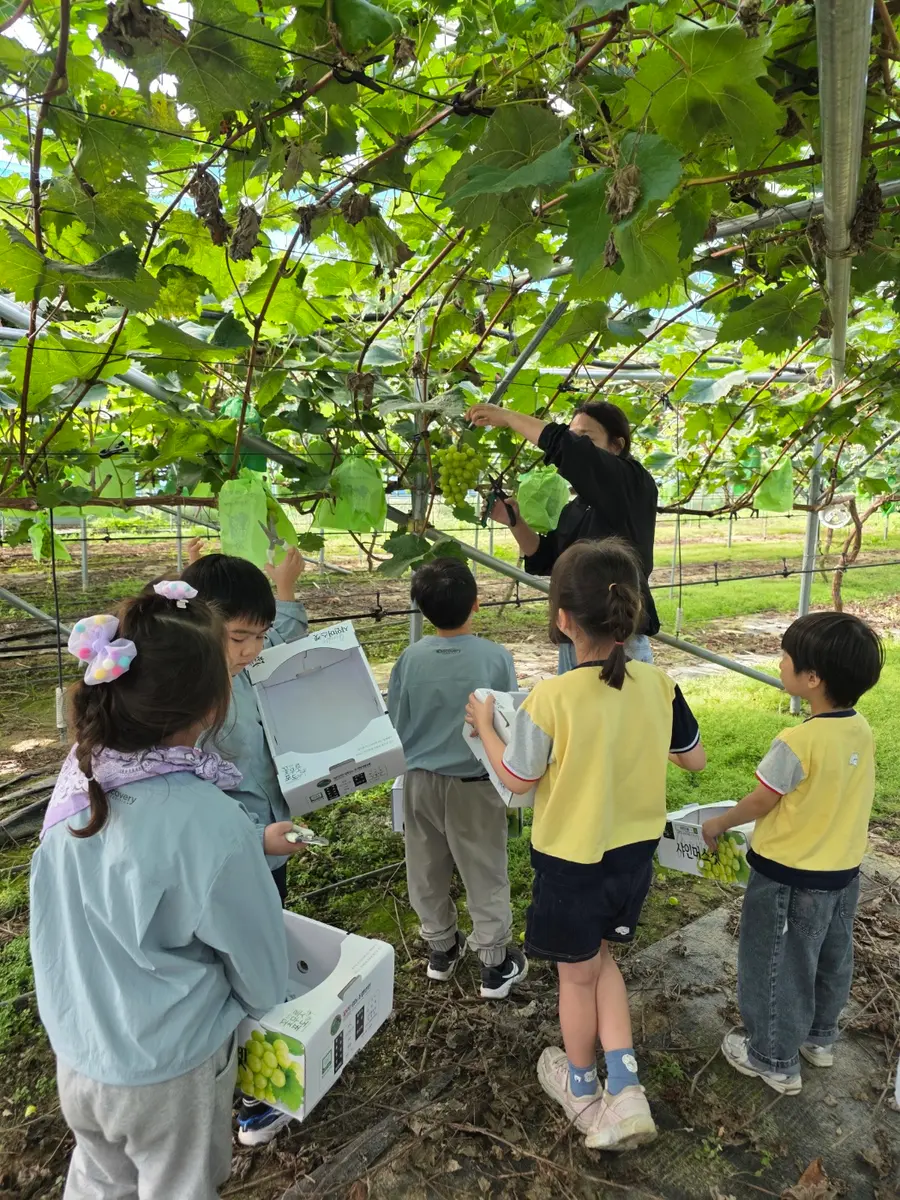
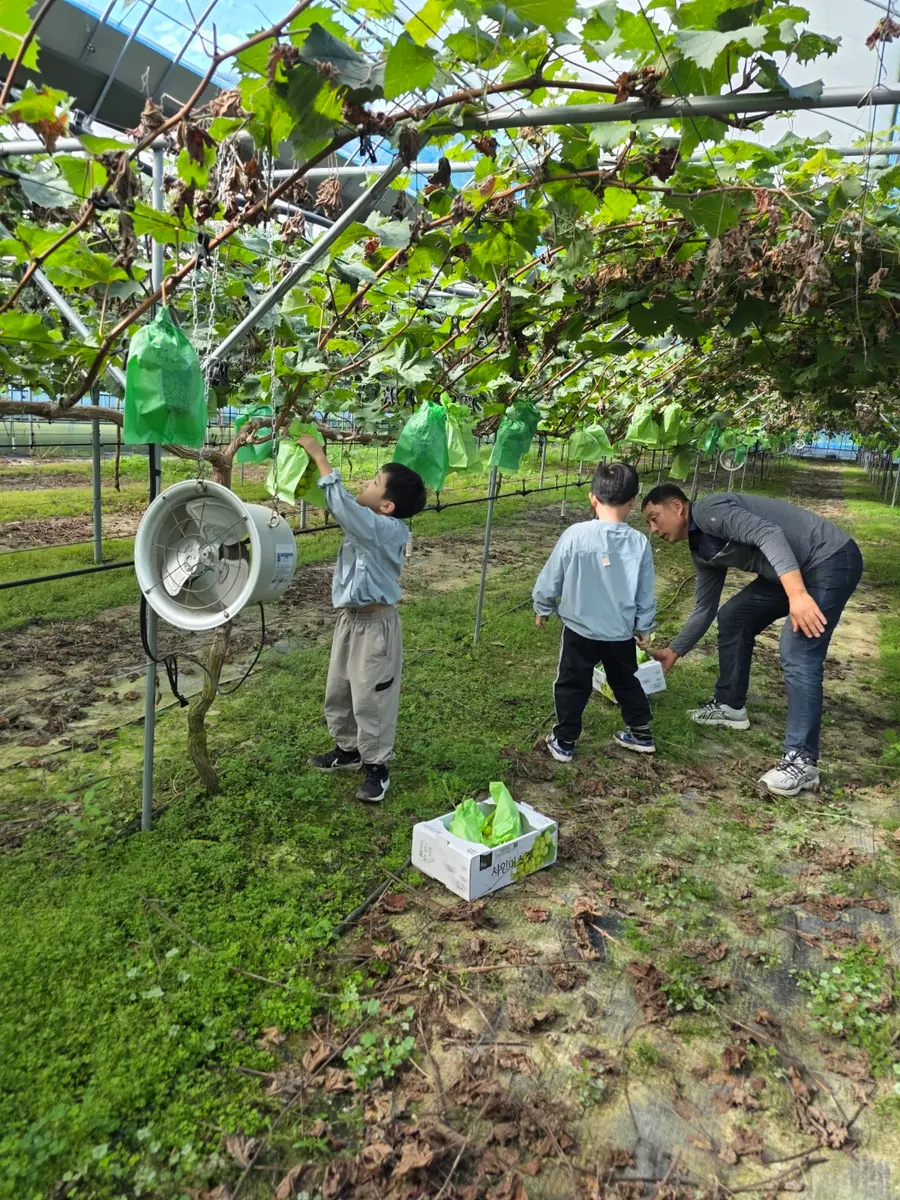
A small commotion occurred while picking grapes.
"Teacher, there are too many grapes."
Someone hurried to pick grapes quickly, while someone else wanted to take their time. Teacher Song Hee-sook did not rush the children.
"It's okay to go slowly."
Stillness and movement, focus and play harmonised. When small conflicts arose, it was, "It's okay, we can pick together." The balance of Doing and Being grew in a relationship of waiting for and respecting each other.
At that moment, Teacher Song quietly asked the children.
"What emotions are rising within you right now?"
Professor Kim Joo-hwan from Yonsei University (2023) explains in 『Inner Communication: Training Emotional Strength that Brings Life Changes』 that the human mind consists of three layers: experiential self, memory self, and background self.
The experiential self is the 'I' that feels the emotions and sensations of this moment, the memory self is the 'I' that interprets that experience and stores it as a story, and the background self is the 'observing I' that looks at all these processes from a distance.
The stillness and waiting in the vineyard, along with the word "It's okay", was the moment of awakening awareness of the background self. Even amidst conflicts with friends, the children learned to say, "I am angry, but there is also the 'me' that is observing that anger," separating their emotions from themselves.
Gratitude: The Small Universe Contained in the Grape Mandala
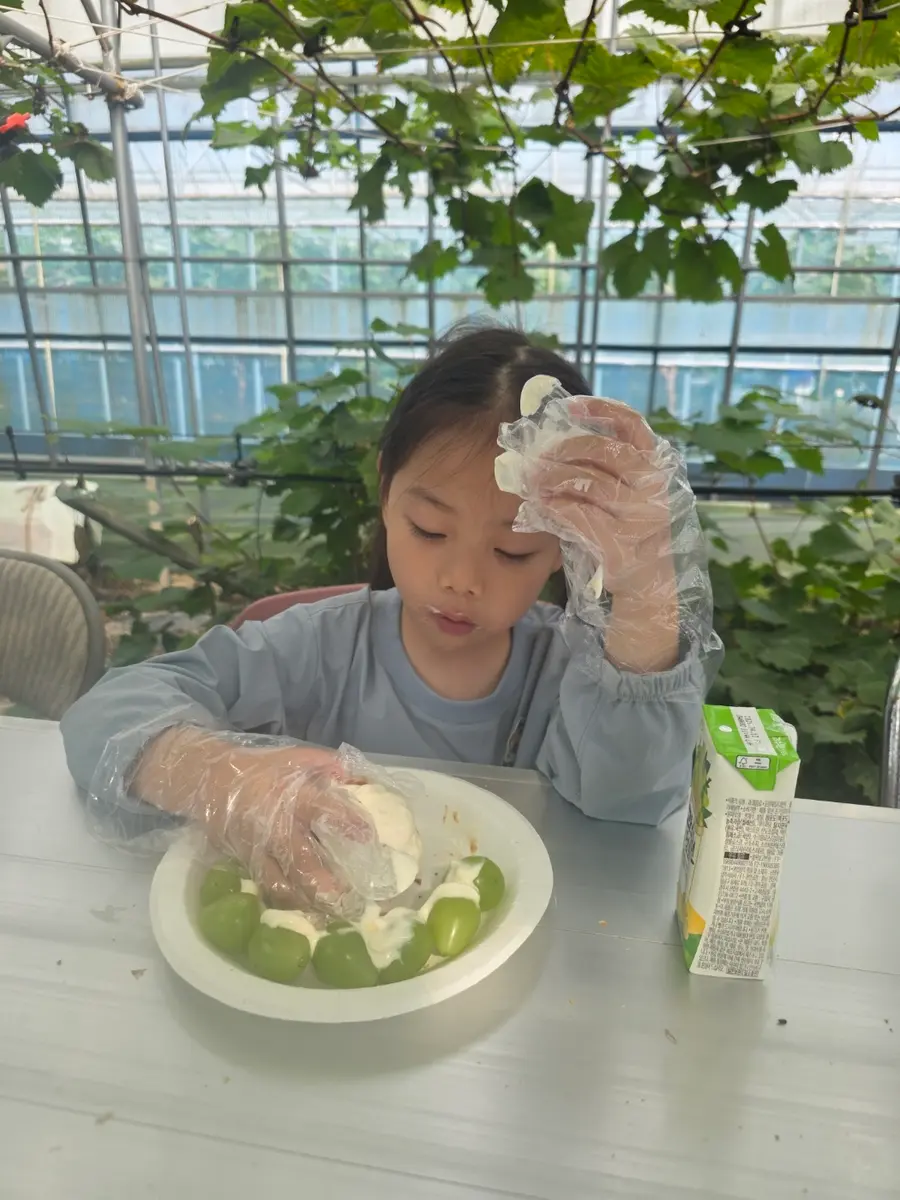
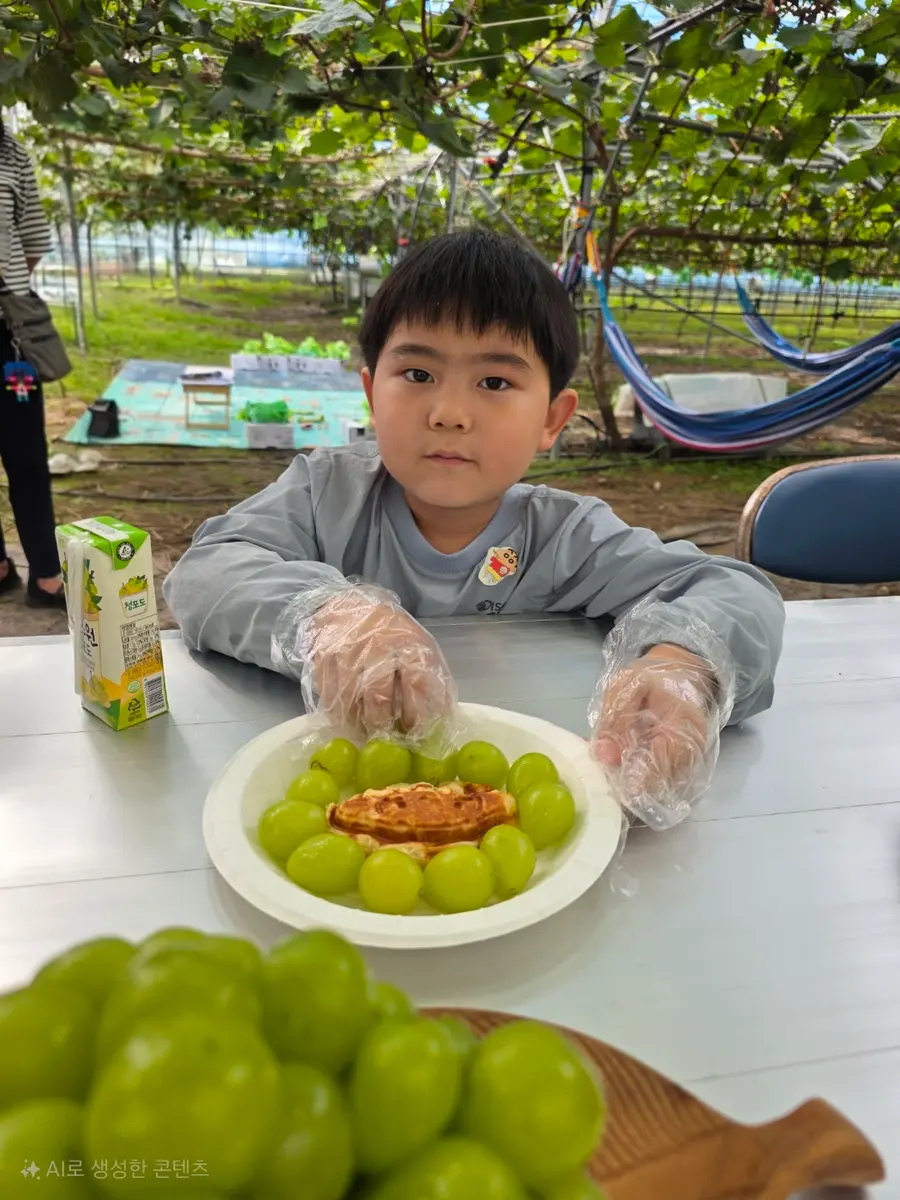
The final activity was making 'Grape Waffle Mandalas'. The children expressed their emotions by placing grapes on waffles.
"I am happy."
"I am a little sad."
"I was upset because a friend said it was boring earlier. But now I am okay."
Each grape contained a heart. "Happiness, sadness, and anger are all me." At the teacher's words, the children smiled. They were learning not how to eliminate emotions, but how to embrace them.
'Mandala' means 'circle' in Sanskrit and symbolizes wholeness and harmony. The grape mandalas created by the children were not just simple snacks. They were a small universe connecting each inner self with the external world and a symbol of recovering the centre of existence.
Dr. Chae Jeong-ho, a specialist in psychiatry (2023), states, "Well-being is not just living well, but existing well." The moments of gratitude shown by the children that day were a scene of 'Well-being'.
Children Growing Through Existence, The Future of Our Education
That day, Goin-dol Farm was a school of learning. Within the flow of the five principles from breathing to gratitude, the children's hearts became stronger.
Existence over achievement, connection over competition. The balance of Doing and Being is the root that supports children's lives. True learning flows when stillness and movement harmonise.
As I watched the children leaving the vineyard, I thought. What our children need is not a faster pace, but the courage to stop and feel their own breath, isn't it? It is not more achievements, but a heart that loves the self that exists here and now, isn't it?
The Good Being Project showed that possibility. In nature, in meditation, in the gazes that look at each other, children learned to act within existence and to act again within existence.
Like the mandalas blooming in the vineyard, our children's hearts were slowly, yet firmly growing.
Program Information
Location: 458-26 Sannae-gil, Haebom-myeon, Hampyeong-gun, Jeollanam-do
Organised by: Good Being Inner School (Korean Children and Youth Emotional Strength Community)
Written by / Ddabom Teacher Song Hee-sook
Edited by / Healing News