

Sometimes it is easier to hear “notice your chest rising and falling now” than “empty your mind”. Research from the US and Australia has found that meditation focused on bodily sensations can be a starting point for emotional recovery. A team at Emory University School of Medicine reported in the journal Neuropsychopharmacology that adding a gentle vibration to the breastbone during meditation changed neural pathways associated with the ability to sense the body. Researchers at La Trobe University in Australia published findings in the journal Mindfulness showing that three weeks of self-compassion meditation, with no mention of appearance, changed how people related to their bodies.
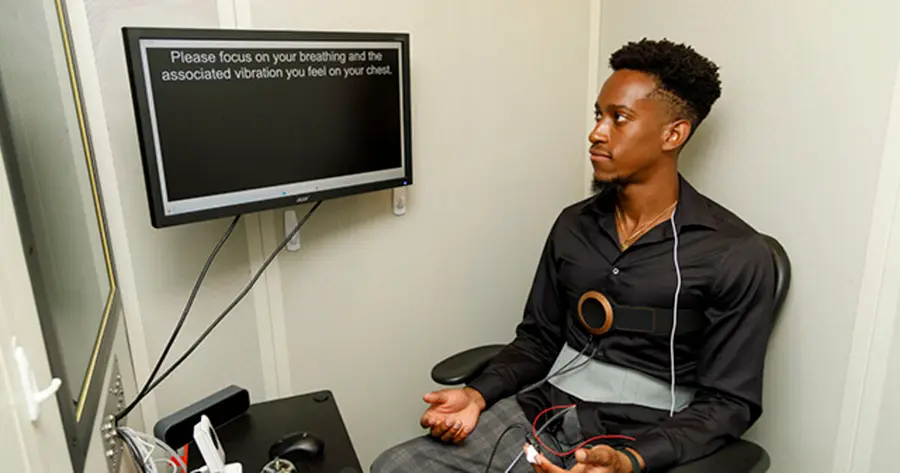
Only the 60 of 116 participants who received chest vibrations showed stronger neural pathways linked to body awareness
The Emory study involved 116 adults with high levels of dissociation after experiencing trauma. Dissociation refers to feeling detached from one’s body or reality. Participants completed eight brief mindfulness meditation sessions, each lasting about 20 minutes. Sixty wore a small device near the breastbone while meditating. It delivered a low vibration either in time with their exhalations or at regular intervals. The other 56 practised the same meditation without vibration. The researchers used magnetic resonance imaging (MRI) before and after the meditation to compare the microstructure of white matter.
Only the group that received vibrations showed an increase in neurite density in the corticospinal tract, a neural pathway involved in processing sensory and bodily information. Body awareness also improved more in the vibration group than in the group that meditated without vibration. The study’s lead researcher, Associate Professor of Psychiatry Negar Fani, said in a university press release that the findings were the first to show that breastbone vibration could induce neuroplasticity in brain pathways involved in sensing the body. The paper was first published online on 16 May, and the US psychology news outlet PsyPost revisited the study on 23 October.
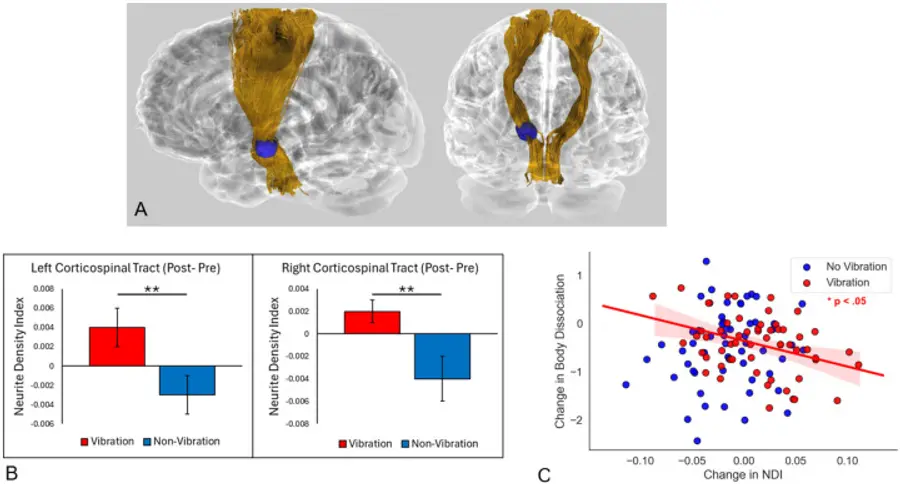
Dissociation eased in both groups; vibration changed the ability to sense the body
One point worth noting is the change in dissociation. According to PsyPost, dissociation symptoms eased to a similar degree in both groups, suggesting that meditation alone also had an effect. In the vibration group, people with larger increases in neurite density also reported a greater reduction in disconnection from their bodies. No such link was found in the group that meditated without vibration.
Professor Fani said that many people who have experienced trauma, particularly those with post-traumatic stress disorder (PTSD), struggle to sense signals from within their bodies. She highlighted the method’s low cost and non-invasive nature as advantages. These findings are an interim analysis of a clinical trial being conducted with the University of Pittsburgh. The research team plans to follow participants for up to six months after treatment to see whether the changes persist, and said more research is needed before the approach could be used as a standalone treatment. The biological mechanisms behind the brain changes remain speculative, and psychological changes were measured through participants’ self-reports.
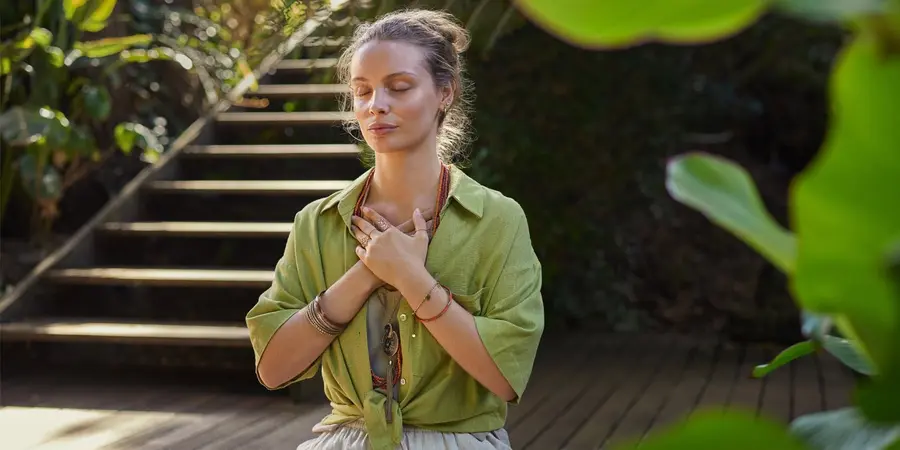
Three weeks with no mention of appearance; a changed attitude towards the body persisted six weeks later

A study by a team led by Dr Joshua Mamara at La Trobe University in Australia focused on how people relate to their bodies. The researchers randomly divided 227 Australian adults aged 18–39 into two groups. One hundred and fourteen listened to three 20-minute guided self-compassion meditations over three weeks; the remaining 113 were placed on a waiting list and given access after the study. The meditations were based on the Mindful Self-Compassion programme. According to mindbodygreen, they included a body scan that invited participants to notice bodily sensations without judgement, breathing exercises, and loving-kindness meditation to help them approach self-criticism with warmth. There were no statements praising appearance or asking participants to evaluate their bodies.
After three weeks, the meditation group reported greater body appreciation, self-compassion and positive wellbeing, and less body dissatisfaction. These changes were still present at the six-week follow-up. The waiting-list group changed little. Participants who became kinder to themselves and more mindful tended to report greater body appreciation, while reduced self-judgement was associated with lower body dissatisfaction. Dr Mamara said in a university press release that the study confirmed that simply encouraging people to treat themselves more kindly could improve how they felt about their bodies.
The research team also found something it had not expected. Participants meditated between one and seven days a week, but those who practised more often did not show greater changes. The team said further research was needed to examine the quality of the practice and identify an appropriate frequency.
People with panic experiences were excluded from the study: why body-awareness meditation is not for everyone
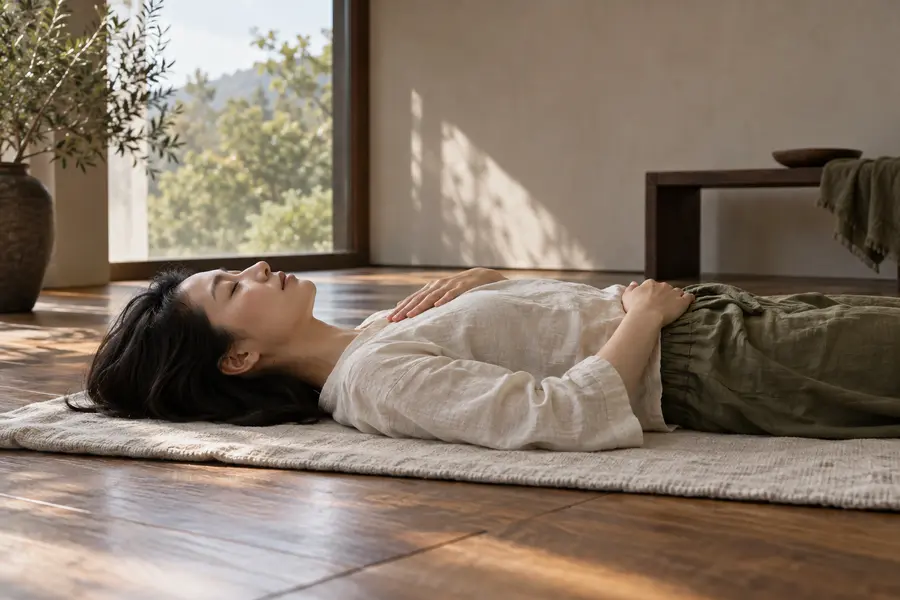
The Australian study excluded from the outset anyone who had recently experienced an eating disorder or anxiety disorder, or who had had a panic attack. mindbodygreen reported that focusing on bodily sensations can increase anxiety for some people. The waiting-list group was given no activity, so the researchers could not separate out the effects of forming a new habit. Men and non-binary participants were under-represented, and the study was not preregistered. As participants were aged 18–39, it is not known whether the same results would apply to middle-aged and older adults.
The two studies involved different participants and methods, but point in the same direction: recovery may begin not by controlling thoughts, but by noticing what is happening in the body in the present moment — sensations such as breathing, the chest and the touch of clothing on the skin. In an age of relentless information, when modern life keeps many people in front of screens for most of the day, sitting still for a long time in meditation can feel like a high hurdle. Approaches that follow the body, such as a body scan practised lying down, placing a hand on the chest and noticing the breath, or slow walking meditation, may offer an easier way in.
The right starting point differs from person to person. If focusing on bodily sensations makes you more anxious, it may be better to try another approach first, such as walking meditation with your eyes open or meditation focused on sounds. If you have experienced trauma or panic, it is best to consult a professional rather than start on your own. Meditation is not a substitute for treatment. But evidence is gradually building that practising how to reconnect with the body can lead to a way of caring for the mind.
Enquiries about this article: fare3041@naver.com