

The Inner Communication Research Institute, led by Professor Kim Joo-hwan of Yonsei University’s Department of Communication, Arts and Technology, launched its AI meditation app, INZEUM, on the Apple App Store and Google Play on 14 November. Based on Professor Kim’s book 『Inner Communication』 and lecture materials, the app is designed to let users talk to AI, write meditation scripts tailored to their needs, record them in their own voice and practise with them. The institute plans to expand beyond its domestic launch to offer the service in multiple languages.
From listening to meditation to creating it: what changes?
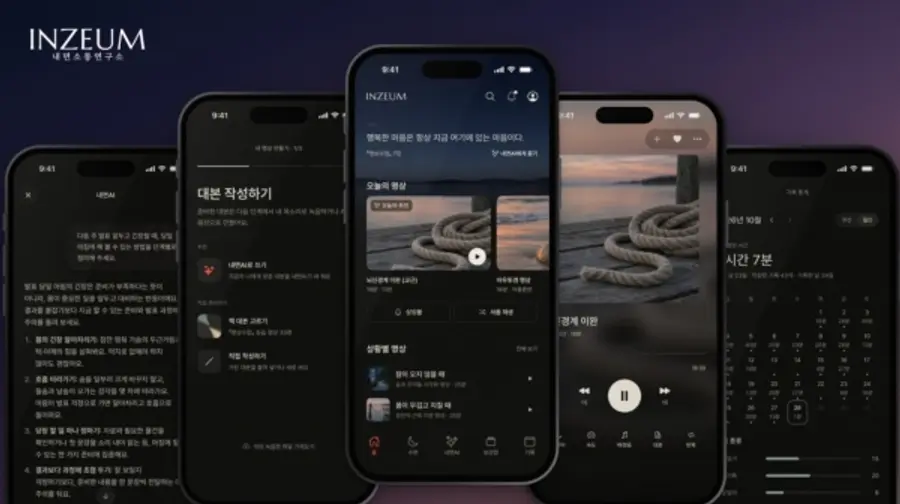
Where existing meditation apps have focused on letting users choose and listen to recordings made by experts, INZEUM also helps them create their own meditations. Its core feature is Inner AI. Ask a question about meditation and the AI will answer using books and lecture materials on Inner Communication meditation, showing the sources it has consulted alongside each response. It also recommends meditations suited to the conversation.
With Create My Meditation, users describe a concern or situation and the AI writes a meditation script for them. They can edit the AI’s wording, write a script from scratch or choose and adapt one provided by the app. Once completed, the script can be recorded in the user’s own voice and turned into meditation audio. If recording is difficult, they can choose an AI voice instead. The app also includes noise reduction to minimise background noise during recording, and a bone-conduction mode that adjusts the timbre to sound closer to the voice users normally hear.
“The process of writing the words you need yourself and reading them aloud is itself Inner Communication and meditation,” Professor Kim said. “Rather than simply listening to guidance read by someone else, the app is designed so you can ask questions, adapt the script to your own circumstances and practise while listening to it in your own voice.”
In a YouTube live lecture on 15 November, Professor Kim explained the neuroscientific significance of meditating in one’s own voice. Because we hear our own voice throughout our lives, the brain processes it efficiently. However, the voice we hear when speaking combines sound travelling through the air with sound travelling through the bones, while a recording lacks the bone-conducted sound and therefore sounds unfamiliar. Bone-conduction mode uses software to compensate for this difference. Professor Kim stressed that meditation is not something to be reserved for a special time, but a practice to continue consistently in everyday life, even in short sessions.
Why bring bedtime meditation and gratitude journalling into one app?
The sleep meditation feature offers themed sessions on physical relaxation, breathing and noticing bodily sensations. Set the sleep timer and playback will end after the chosen time, with the sound gradually fading. Nature sounds, such as rain and birdsong, and music can be played in the background.
After meditating, users can write a gratitude journal, mood log and meditation journal, and revisit their entries by date. The process of asking about the principles of meditation, creating and practising a meditation suited to oneself, and reflecting through journalling all takes place in one app. Listening to meditations, playlists, journalling and recording in one’s own voice are free. Premium usage limits apply to Inner AI conversations, AI script writing and AI voice generation.
The institute’s next step towards a nation that meditates
Professor Kim has written 『Inner Communication』, 『Inner Communication Meditation Classes』, 『Grit』 and 『Resilience』, and has introduced Inner Communication meditation based on neuroscience and psychology through his YouTube channel, Kim Joo-hwan’s Inner Communication. Inner Communication meditation begins by taking a step back and noticing the stories we tell ourselves. It is a practice for building mental strength by calming the amygdala and activating the prefrontal cortex. The institute says it aims to promote meditation practised consistently in everyday life, without relying on a particular faith or mystical experiences.
With the aim of creating a nation where everyone can meditate in daily life and build mental strength, the institute runs an online 30-hour introductory course for Inner Communication meditation instructors, as well as a 200-hour advanced course.
A place to practise together: what will INZEUM Cheongdam be like?
Alongside the app, the institute has also established an in-person practice space: INZEUM Cheongdam, a meditation centre that opened in Seoul’s Cheongdam-dong neighbourhood in November. The name INZEUM combines Inner Communication, Zen and “-eum”, meaning a place, and conveys the meaning of an Inner Communication meditation centre.
The guiding theme throughout the space is polishing (硏磨). The idea, the institute explains, is to pare away what draws the gaze, as if grinding a stone to reveal its grain, and turn attention from the outside towards the body, allowing people to feel the sensations of the here and now. In the entrance corridor leading to the meditation room, visitors walk step by step, noticing the texture and temperature of the floor beneath their feet. In this way, meditation begins with the walk itself.

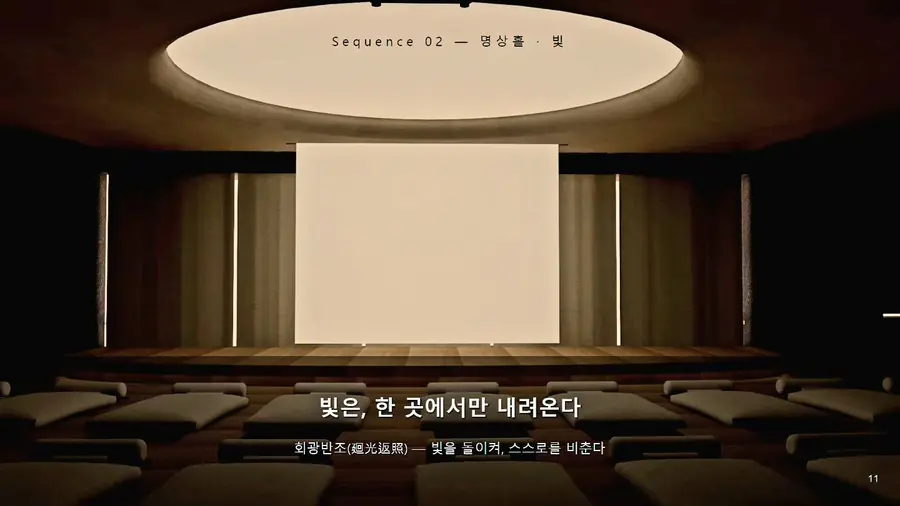
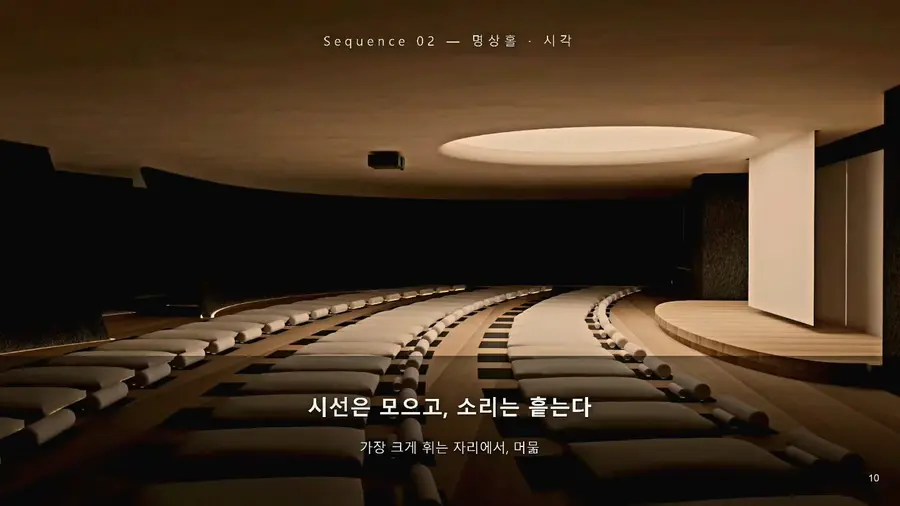
The meditation room has been designed with seating arranged along a curve and light from the ceiling converging on one spot. Participants notice their bodily sensations and breathing beneath the light. After practice, they gather in the tea room to feel the warmth of their cups and the aroma of the tea, and to talk. The layout is intended to let meditation continue even while drinking tea and talking.
The institute plans to announce in stages the courses, workshops, talks and independent practice sessions to be held there.
“Anxiety, stress and insomnia are now challenges the whole world must address together,” Professor Kim said. “We will expand INZEUM, first introduced in Korea, into a multilingual service, so that meditation can take root in people’s daily lives around the world as an everyday habit, like brushing their teeth.”
Enquiries about this article: fare3041@naver.com