

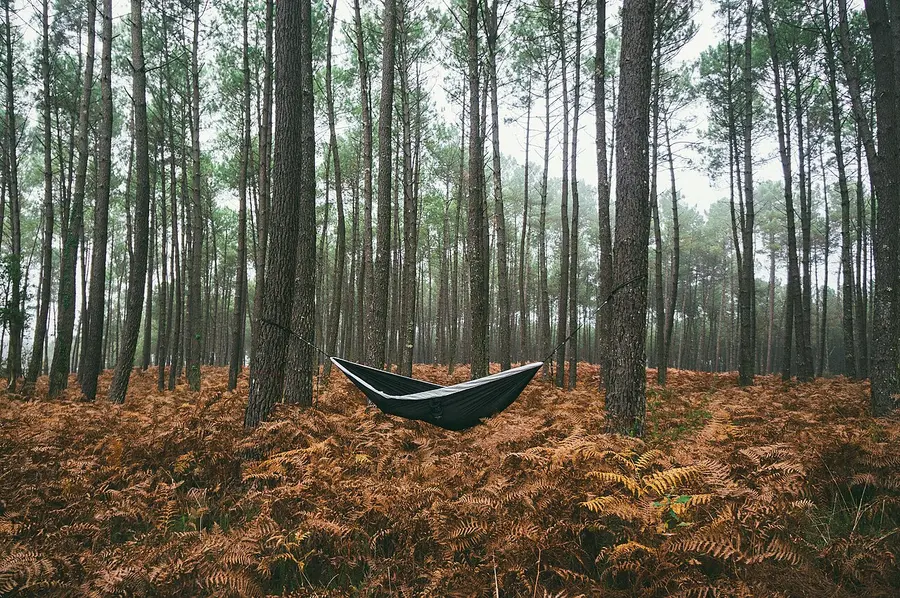
There are days when sitting still and closing your eyes feels unusually difficult. Amid a constant stream of notifications and information, being told to stop thinking can feel like another burden. For people in this position, the forest offers a different way in. As you walk, lie down and listen, the body relaxes first, and the mind follows. Activities that use the forest’s scenery, scents, sounds and sunlight to care for physical and mental health are known as forest therapy. Twenty years after the system took root, South Korea’s forest therapy has moved beyond expanding its facilities and is now facing a new question: how deeply, and for how long, can it encourage people to stay?
A forest-therapy guide system built up over 20 years
The legal basis for forest recreation policy was established in 2005 with the enactment of the Act on Forest Culture and Recreation. The term “forest healing forest” was added in a 2010 amendment, and “forest therapy” entered the law in a 2011 amendment. In 2012, a system for forest-therapy guides came into operation. They develop programmes and guide visitors through therapeutic activities.
The Forest Welfare Promotion Act was enacted in 2015, creating a forest-welfare system that brings together recreation, education and therapy. The following year, the Korea Forest Welfare Institute, an agency under the Korea Forest Service, opened. The institute manages two forest therapy centres, seven national forest education centres and 11 national healing forests. Alongside these are 48 national natural recreation forests, 127 public natural recreation forests and 11 privately run natural recreation forests, creating a network that makes it possible to find a forest anywhere in the country.
Where meditation engages the body: the National Center for Forest Therapy
The National Center for Forest Therapy, which opened in 2016 across Yeongju and Yecheon in North Gyeongsang Province, brings this trend together in one place. South Korea’s first national forest-therapy facility, it offers activities ranging from forest walks, guided forest interpretation and hammock sessions to hydrotherapy, which stimulates the body with water pressure, and aqua aerobics, exercise in water. Visitors can soak in an open-air bath while looking out over the forest, and there are also meditation, breathing, stretching and tea ceremony classes. The centre brings together activities that engage the body: the National Center for Forest Therapy
The facility that brings this trend together in one place opened in 2016… while soaking in an open-air bath and looking out over the forest, visitors can also take meditation, breathing, stretching and tea ceremony classes.
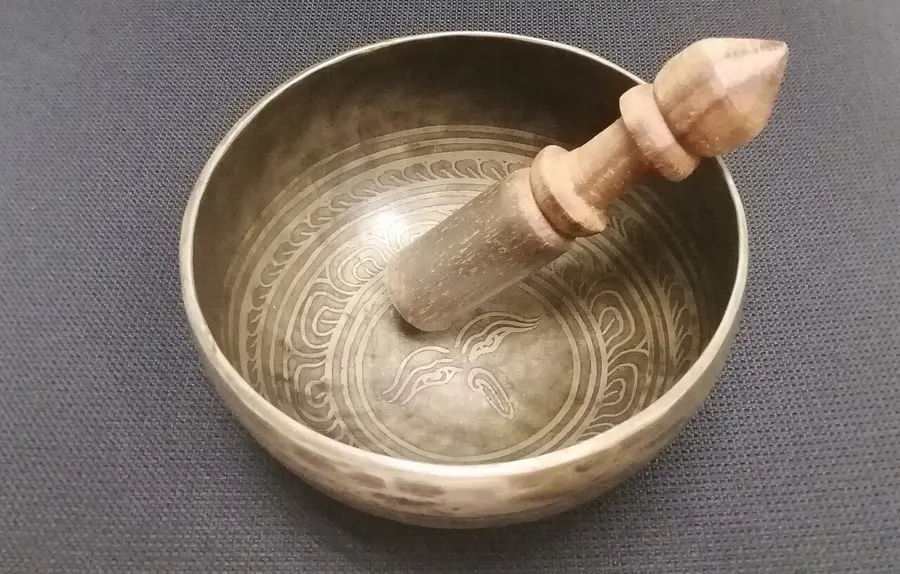
Viewed through the lens of meditation, the centre’s programme is a catalogue of ways into meditation through the body. Options include Forest Hammock, relaxing in a hammock in the forest (two hours, 12,000 won); singing bowl meditation and object meditation, which focus on the resonance of sound (one hour each, 11,000 won); and Forest Activity, experiencing nature on a walk through the woods (one hour, 6,000 won), and Forest Stroll (two hours, 12,000 won). The centre also offers therapy equipment sessions (16,000 won) and Aqua Therapy, which uses water (two hours, 26,000 won). Those unfamiliar with seated meditation can start with an activity that lets the body take over, such as walking or resting in a hammock; those drawn to sound can move on to singing bowl meditation. Visitors can choose the approach that suits them.
It is also worth noting that the rooms have neither televisions nor Wi-Fi. The stay itself becomes a chance to practise stepping away from screens.
Studies increasingly report that forest therapy can help with inflammation, stress levels, cognitive function and mental illness
Research into the effects of forest therapy is also continuing. In 2022, the National Institute of Forest Science announced that walking in the forest and taking in the scenery can help reduce the body’s inflammatory response and stress levels. Researchers at Kangwon National University said in 2023 that, in a study of 52 older people with mild cognitive impairment, the group who took part in a forest-therapy programme for four weeks scored higher on cognitive-function tests and had lower diastolic blood pressure.
There has also been a large-scale analysis of mental health. In 2016, a research team from the National Institute of Forest Science and Seoul National University’s Graduate School of Public Health tracked National Health Insurance Service medical data for 32,000 people with records of forest activities, for up to four years. The group with the highest level of activity was about 10% less likely than the comparison group to receive a new diagnosis of a mental illness such as anxiety or depression. The researchers estimated that, if these effects were extended across the population, the number of people receiving treatment for mental illness each year could fall by 4.2 million and medical costs could be cut by about 5.6 trillion won.
The same forest, a different prescription
With around 63% of its land covered by forest, South Korea is well placed to expand forest therapy without creating new resources. In the Ministry of Culture, Sports and Tourism’s 2025 National Survey of Physical Activity, walking ranked first among the activities people enjoyed (40.5%), while hiking came third (17.1%). This suggests that heading for the forest is already part of everyday life.
The challenge is to move beyond one-size-fits-all experiences. Calls are growing for programmes tailored to age and health, rather than offering everyone the same forest walks, meditation and exercise. A 2019 meta-analysis by Cho Young-min found that play-based activities over 16–20 weeks were relatively effective for infants and young children; a two-night, three-day residential programme for adolescents; and a physical-activity-focused course over 11–15 weeks for young and middle-aged adults. Older people showed marked positive changes when they took part in walks, forest interpretation and sensory experiences over 11–15 weeks. In a 2023 survey by the Korea Forest Welfare Institute, people aged 40 and under highlighted exercise, those in their 50s the scents of nature, and those aged 60 and over phytoncides as important therapeutic resources.
Choosing a form of meditation is no different. In the same forest, a vigorous walk may be meditation for one person, while another may find it in time spent with the scents and sounds.
From one night to several days: the challenge of longer-stay models
Stays are still short. In the first half of 2026, 61% of visitors to the National Center for Forest Therapy stayed for one night, 24% for two nights, and just 2% for three nights or more. Analysts say that systematically combining meals, exercise, recreation and rest to extend stays, while connecting visitors with local attractions, accommodation and food, could boost both visitor satisfaction and the local economy.
Kang Dong-gyu, a forest-therapy guide and head of the Korea Health Agriculture Research Institute, has warned that growth will be difficult to sustain if forest therapy is viewed solely as a facilities project. He proposed a longer-stay model that brings together therapeutic agriculture, hot springs, walking, local culture and agricultural produce, turning the whole region into a place for health and recreation.
For a forest people want to visit again
The National Center for Forest Therapy welcomed 136,316 visitors in 2024 and 118,630 in 2025; 48,410 people visited between January and June 2026. People in their 50s and 60s account for half of visitors, while those in their 20s and 30s make up 20%. In the first half of 2026, 86% of visitors chose a programme that included an overnight stay.
Kim Gi-hyeon, who took up the post of director of the National Center for Forest Therapy in April 2025, set out a vision of bringing forest lessons into primary, middle and high school curricula, and developing forest therapy into a form of social prescribing, in which medical institutions prescribe it according to a patient’s condition and it is covered by health insurance. He also identified expanding facilities near cities and providing transport for older people as priorities. Plans include widening programmes for different stages of life and social-contribution projects for residents affected by forest fires and disadvantaged groups, as well as holding a healing expo and a World Healing Forum to promote the value of South Korean forest therapy at home and abroad.
A cushion and four walls are not always needed to rest a mind tired by information. Walking, lying down and listening in the forest can be a natural first step towards meditation for modern people whose bodies have grown tense. The next steps towards longer-stay models will be watched closely, as the question remains whether the time spent in the forest—growing deeper the longer one stays—can become a face of South Korean wellness presented to the world.
Book through Sooperang, the website run by the Korea Forest Welfare Institute
Accommodation and experience programmes at the National Center for Forest Therapy can be booked through Sooperang, the website run by the Korea Forest Welfare Institute. Bookings for the following month open at 9am on the 15th of each month, and applications can be made until 3pm on the day before a visit. People aged 65 and over can book and pay by calling the customer support centre. There are 108 rooms in total, including rooms for three, six and nine people. Depending on the room type and whether it is a weekday or weekend, rates range from 58,000 to 173,000 won. Check-in is from 3pm to 9pm, and check-out is by 11am. Drinking alcohol, smoking and cooking are prohibited on site, and only those who have booked in advance may use the restaurant. Visitors should bring their own water bottle, toiletries and towels. Pets are not allowed, but guide dogs and assistance dogs in training, wearing identification, may enter.
#ForestTherapy #NationalCenterForForestTherapy #ForestMeditation #SingingBowlMeditation #WalkingMeditation #StayBasedWellness #DigitalDetox #KWellness