

The name Sufism is rarely encountered in South Korea’s meditation discourse. This practice, an Islamic mystical tradition that has endured for centuries across India, the Middle East and other regions, has been studied in India by only a handful of South Koreans. Recently, I happened to meet someone with the rare distinction of having immersed himself in all these traditions. For nearly 20 years, Lee Chung-hak has moved between Eastern Taoist philosophy, Kuksando, Indian yoga and Vedanta, and the unfamiliar terrain of Sufism. He now runs the LHS Personal Type Research Institute in Seoul, where he provides personal-type life consulting designed to identify the different qualities of each individual. I met him after being given the opportunity to experience an LHS life-consulting session and Sufi meditation that he recently hosted. He is also seeking participants for a small study exploring each person’s innate, distinctive good fortune through mantras. We trace the path he has taken and the work he is doing today.
A boy who believed in science meets the Tao Te Ching
Lee Chung-hak was exceptionally interested in science from an early age. Unable to readily accept the idea of a god who punishes wrongdoing, he happened upon the Tao Te Ching as a middle-school student and began to feel drawn to Taoist philosophy. In his mid-teens, he studied Gicheonmun and experienced the sensation of energy in his own body. That experience led him towards a lifelong question: the relationship between body, mind and energy.
As a young man, after experiences that made him acutely aware of the transience of wealth and fame, he moved to Seoul with dreams of becoming a writer. While studying film, he practised Kuksando and continued reading widely. He met Dr Lee Kyung-ryong, who introduced him to the philosophy of Wang Yangming, and around this time his experiences of Neo-Confucian meditation began in earnest.
From Kuksando to Dongguk University: philosophy confirmed through the body
After choosing the path of a spiritual seeker practising alone, he says he experienced deep meditative absorptions on several occasions, during which the boundaries of the body seemed to dissolve. While studying yoga and meditative qigong under a teacher he met during this period, he reached a state known as non-dual awakening at the age of 24. This was while he was studying both philosophy and Indian philosophy at Dongguk University.
However, he says he felt that this state was not complete. Although he had a clear sense of remaining in the present whether or not he was meditating, he continued to feel that something remained unfinished. In search of an answer, he left for India.
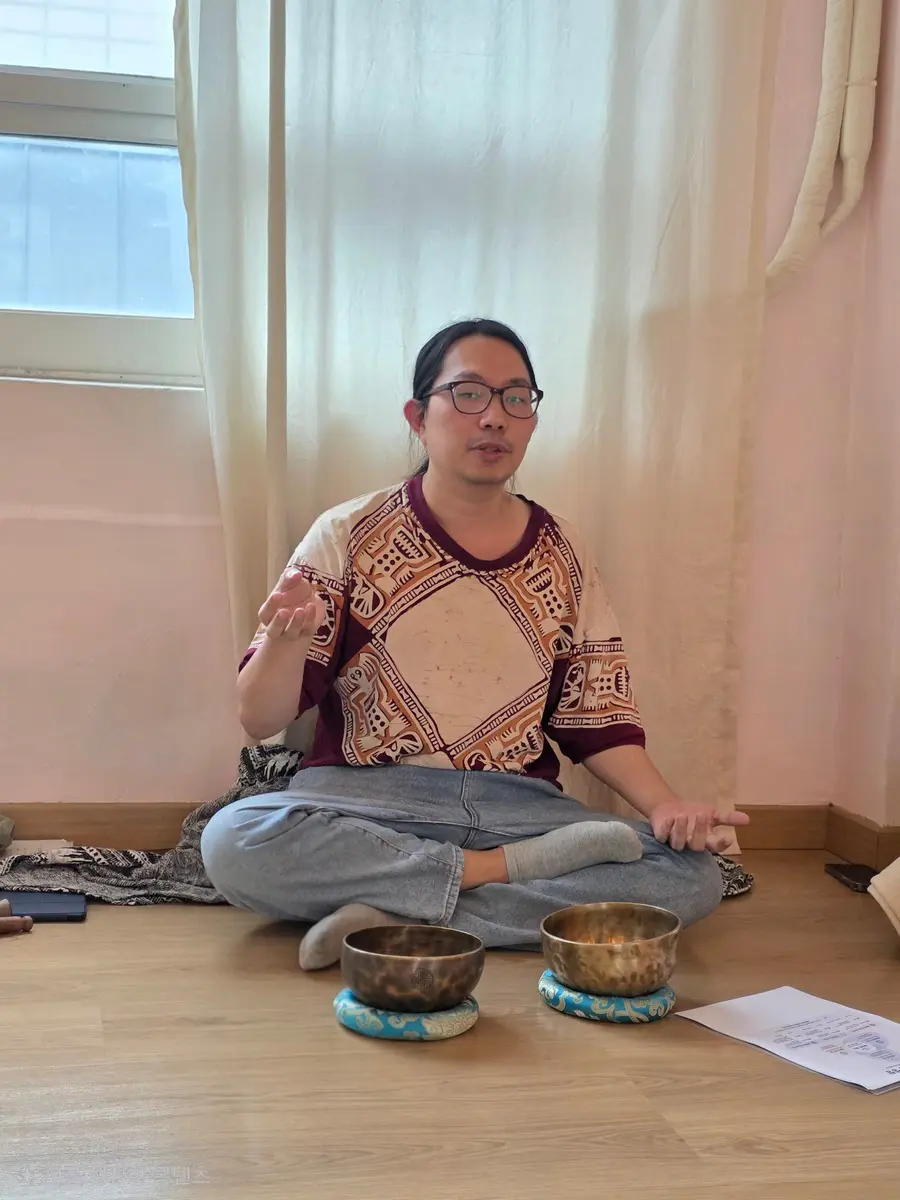
Sufism, an unfamiliar name encountered in India
While completing a master’s degree and doctorate in Indian religious philosophy at Banaras Hindu University in Varanasi, Lee Chung-hak met two teachers who greatly broadened his horizons, both academically and as a practitioner. In return for teaching Sufi Ismael Mervan East Asian philosophy and qigong, he received instruction in various perspectives and practices of Sufism. From Professor K Mishra, an authority on Tantric philosophy, he learnt the theory of sahaja samadhi. It was also during this period that he began studying Sanskrit and exploring the principles contained in the sounds of mantras. The roots of the mantra research he would later begin in Seoul can be traced back to this time.
His doctoral thesis concluded with a comparative study of the experiences of Jiddu Krishnamurti, Yogacara Buddhism and Zen Buddhism, including the experiences of Venerable Daehang. During the process, he practised Ramana Maharshi’s self-enquiry meditation method and repeatedly experienced deep meditative absorption. Before returning to South Korea, he says, his teacher Ismael Mervan confirmed that he had reached fana in Sufism — the dissolution of the self.
Returning home and seeking a way to read people
After returning to South Korea, Lee Chung-hak chose a different path rather than returning to academia. During a period of public service duty, he visited nearly 30 academies and training programmes in an attempt to unlock the secrets of sound that he had been exploring since his time in India. He studied everything from foreign languages and acting to vocals and speech, sports massage and chiropractic care, Pilates and design. This breadth of learning later became the foundation for his research institute.
Another insight he gained during this period was that, in a capitalist society, exchanging time for money is effectively exchanging one’s lifespan for money. He decided not to accept that exchange. Instead of taking a conventional job, he founded the LHS Personal Type Research Institute and began working in his own way to understand people.
LHS personal-type life consulting: three lenses through which to read people
The LHS Personal Type Research Institute’s guiding principle is “understanding people and finding their path together”. To achieve this, Lee Chung-hak has developed three analytical frameworks.
Seven Atma meditation type
This approach examines the structure of the mind through seven atmas, using meditation to identify fundamental dispositions, inner patterns and potential.
Chakra communication type
It reads communication styles through the flow of chakra energy, analysing characteristics and patterns in emotions, relationships and self-expression.
16 constitution physiognomic-core type
By combining the 16 constitutions with physiognomy, this approach examines innate temperament and practical characteristics, then suggests a direction suited to the person’s environment and circumstances.
These are supplemented by status analysis, which identifies current strengths, weaknesses, possibilities and circumstances, and historical analysis, which uses the course of a person’s life and career to understand recurring patterns and life themes. All these processes point towards one goal: the freedom to live as oneself, fulfilling happiness and success in realising one’s values.
The Tang dynasty writer Han Yu wrote that even having a heavenly steed is of no use without Bole, the person capable of recognising it. Lee Chung-hak’s work is not so different. “Everyone needs different things, and everyone wants different things. Meditation is a personal experience, so once people awaken through awareness, anyone can obtain what they want,” he says. He regards helping people do this as his life’s calling and supports individuals on their journey towards discovering their authentic lives.
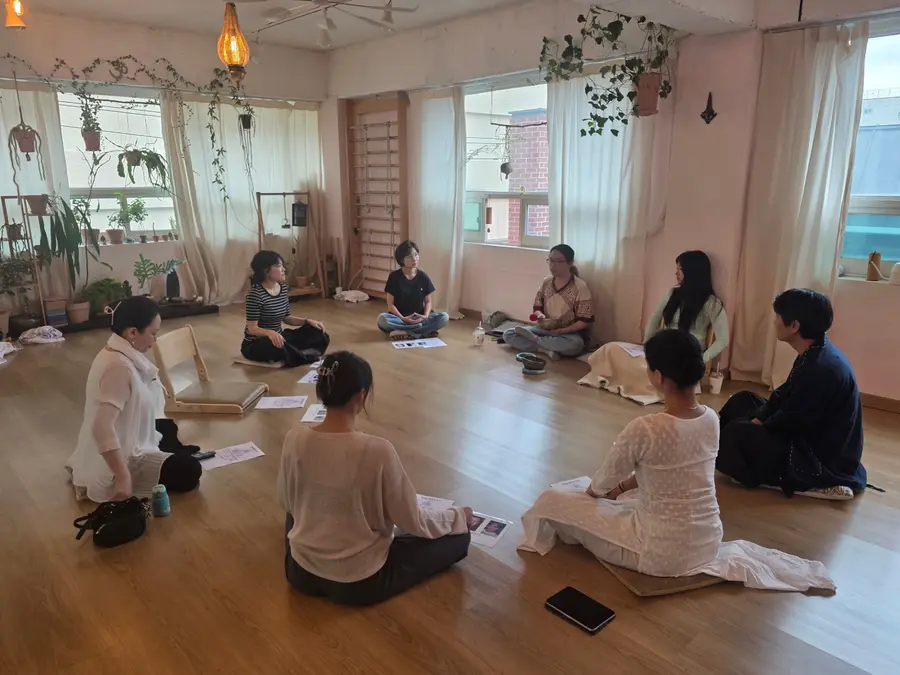
A journey to find one’s own good fortune: participants sought for mantra research
The interest he developed while exploring the sounds of Sanskrit mantras in India has now led to a small research project. Lee Chung-hak’s question is this: if each person possesses their own distinctive good fortune from birth, what is it?
Taking part is straightforward.
Meet at a café and learn a simple mantra sound meditation technique.
Practise the mantra regularly at home.
Record any changes in daily life, including unusual coincidences or good fortune, and changes involving people or work.
Find your own good fortune over the course of three or four meetings.
This is a light study collecting material on the distinctive good fortune possessed by each person. Anyone curious about the subject or keen to experience it for themselves can take part without any special preparation, and a modest participation fee will be provided.
From a boy who questioned science to a consultant who reads people after passing through Taoism, yoga and Sufism, Lee Chung-hak’s story converges on one question: how can we discover what already exists within each of us? This mantra research offers one possible entry point for those seeking the answer together.
Enquiries about taking part in LHS personal consulting and mantra research: 010-3952-7445