

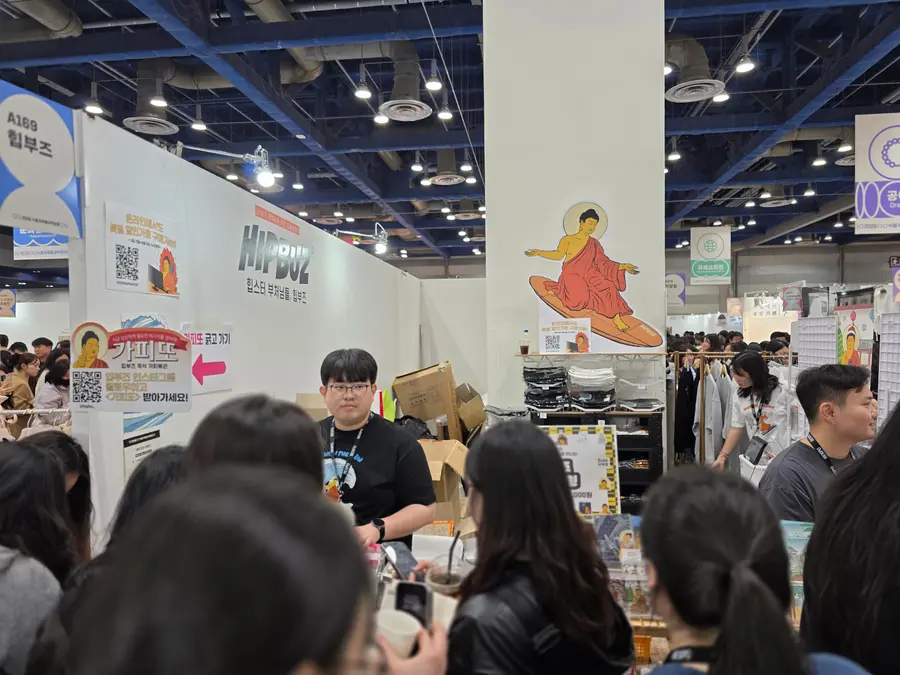
Last Friday at COEX Hall B in Seoul. Even though it was a weekday morning, the admission line was already long. The “2026 Seoul International Buddhist Expo,” organized by the Buddhist newspaper (publisher: Ven. Wonhe), ran from April 2 to April 5 at COEX (COEX) Hall B. Over four days, this 14th edition drew about 250,000 visitors—a record high. It was so packed that people couldn’t even move at their own pace; they had to be carried along with the flow. And more than half of the attendees were in their 20s and 30s.
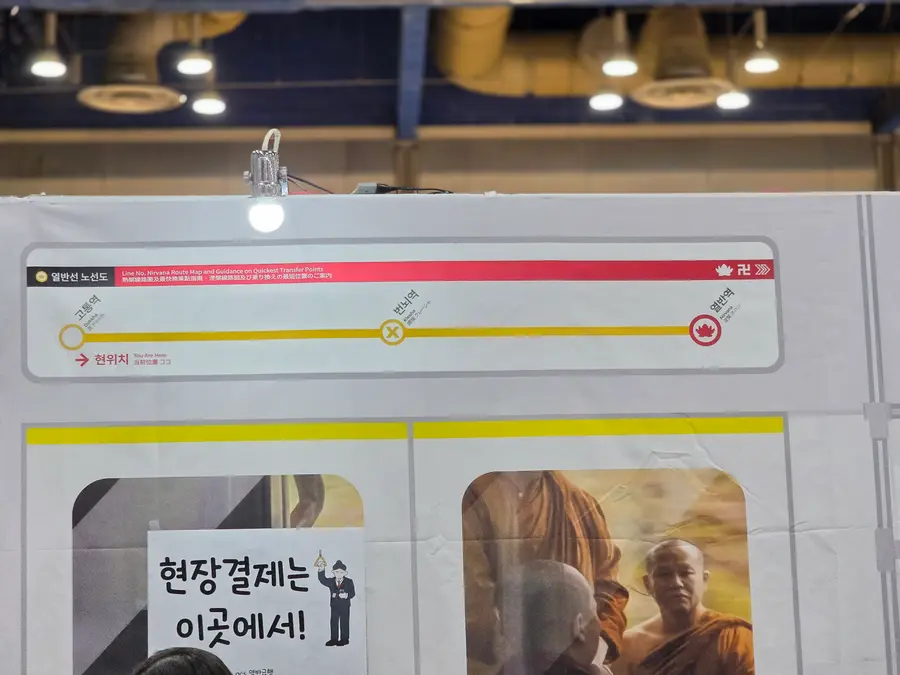
“Pain Station → Affliction Station → Nirvana Station”—When Buddhism Turns a Phrase Into a Laugh
The “Nirvana Line Route Map” displayed at the entrance instantly set the expo’s tone. Styled like a Seoul subway route map, the sign guided visitors through a trip that starts at Pain Station, stops at Affliction Station, and finally arrives at Nirvana Station. Current location: “You Are Here.”
When Laughter Hits—Buddhism Speaks in the Words of My Everyday Life
This year’s expo theme was “Form Is Nothing Other Than Emptiness, Emptiness Is Nothing Other Than Form—Your Favorite Emptiness (空) Comes to Play.” The exhibition flowed like “emptiness play,” taking everything from using coins at admission to join an “emptiness” game, to a Q&A with monks, and then trying “lucky emptiness” as well as pledge-ball emptiness (seong-won). This wasn’t “learning doctrine in a classroom”—it was a plan to sink in through hands-on, moment-to-moment play.
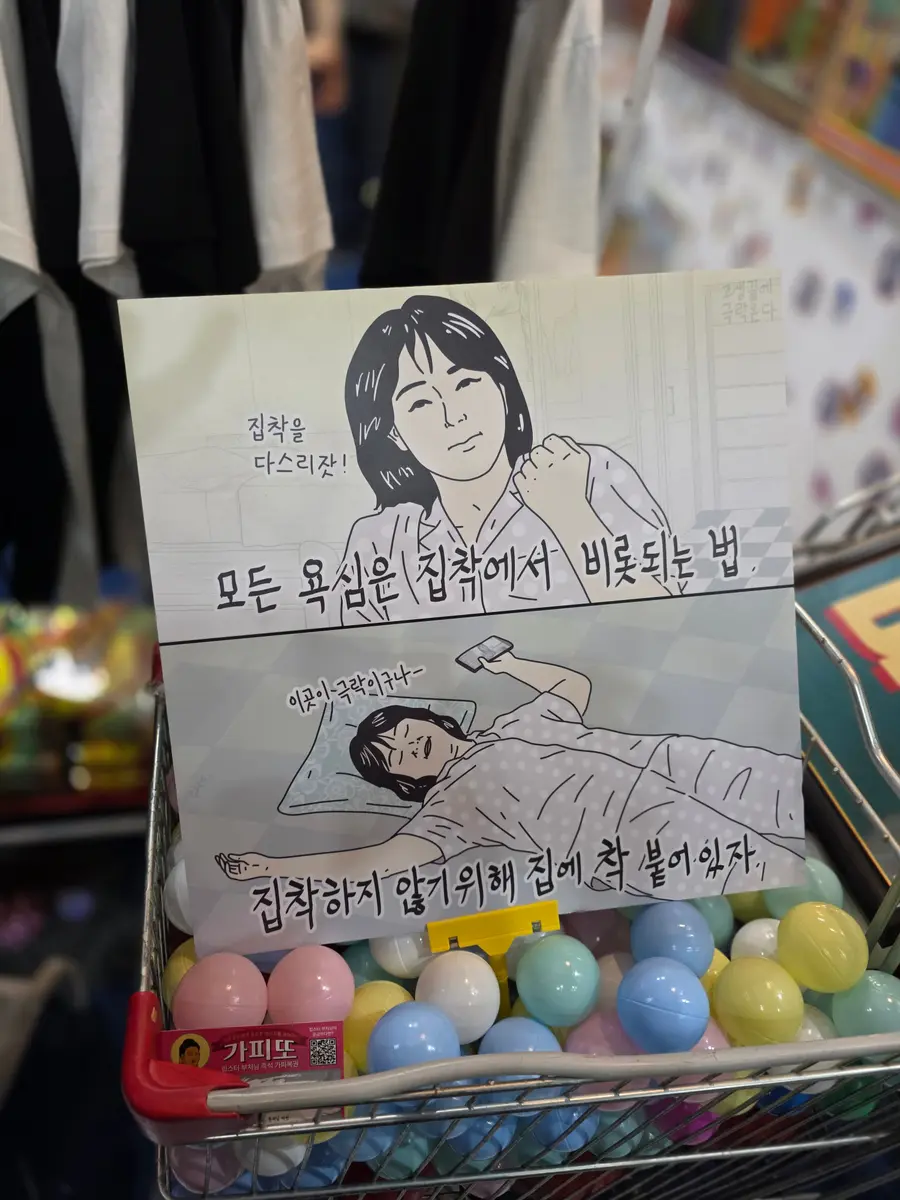
“All desire comes from attachment. Don’t cling—let it go. Follow the practice instead.”
“With karma (業) piled up from a past life, your career’s up—I guess it’s ‘doing your duty’”
Ideas beyond imagination filled the booths in every shape imaginable. Something that slips in like a joke but lands like the real thing—this is the everyday language of Buddhism these days.
“Stuck in the Loop Every Day”—Buddhism Becomes Everyday Conversation for the MZ Generation
At the Haetal Company’s hip buzz (HIPBUZ) booth, there was barely any room to step in—so many young people were there. I didn’t even bother trying to go in, because simply entering meant waiting. There were illustrations of a Buddha surfing, T-shirts that read “Stuck in the Loop Every Day,” and even comic-style lines about “going to work when you’re ‘dead,’ then coming back ‘alive.’” Merchandise that translated the everyday feelings of the 2030 generation into Buddhist language triggered a sellout rush as soon as the expo opened.
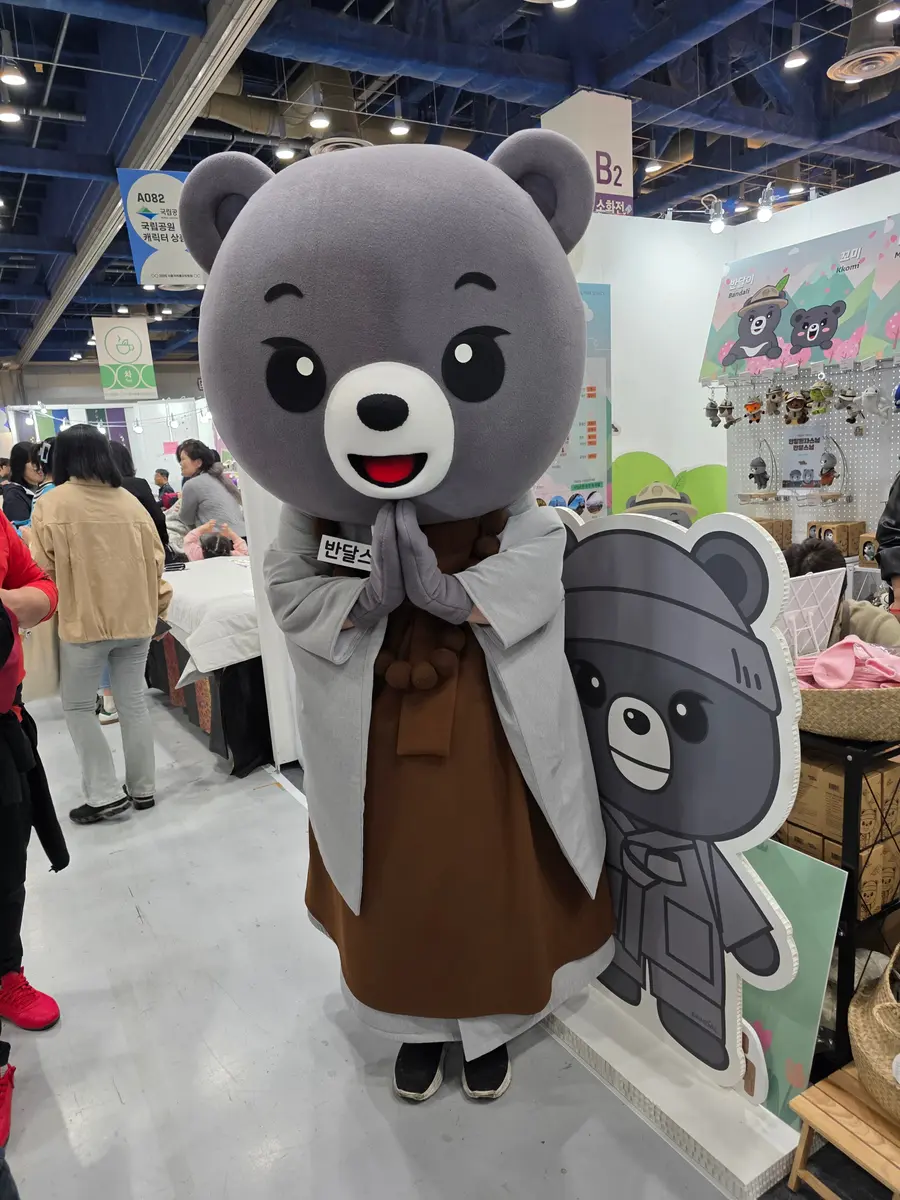
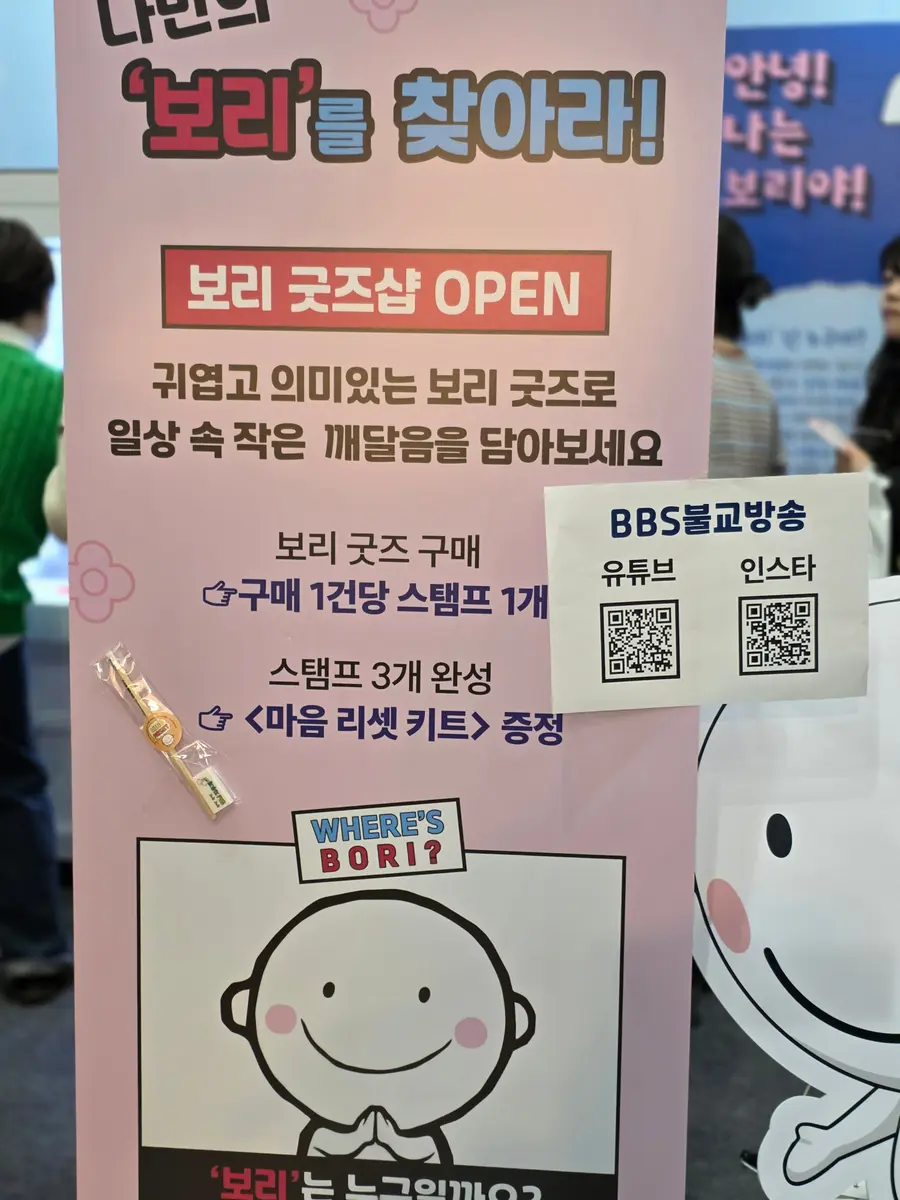
At the BUDDHA LAND booth, you could see young people waving blue-and-white checkered flags everywhere. At the “Bori Goods Shop,” the cute shaved-head character “Bori” greeted visitors while carrying a stamp card and a heart-reset kit.
Even items that look “non-Buddhist” were, in fact, tied back to doctrine. At a coffee booth, they framed the act of grinding beans by hand as “coffee made by grinding up suffering.” And at the tea (茶) booth called “A Flicker of Longing That Keeps Calling,” they served colorful fermented tea in wine glasses. It was the moment the Buddhist idea of “kshana” (刹那, a fleeting instant) blended seamlessly into brand-style storytelling.
That’s how trendy Buddhism does it. Nothing feels forced. It’s stylish, fun, and easy to relate to—something that slips into everyday life.
A Dhamma Talk Built Around the Hearts of People in Their 20s
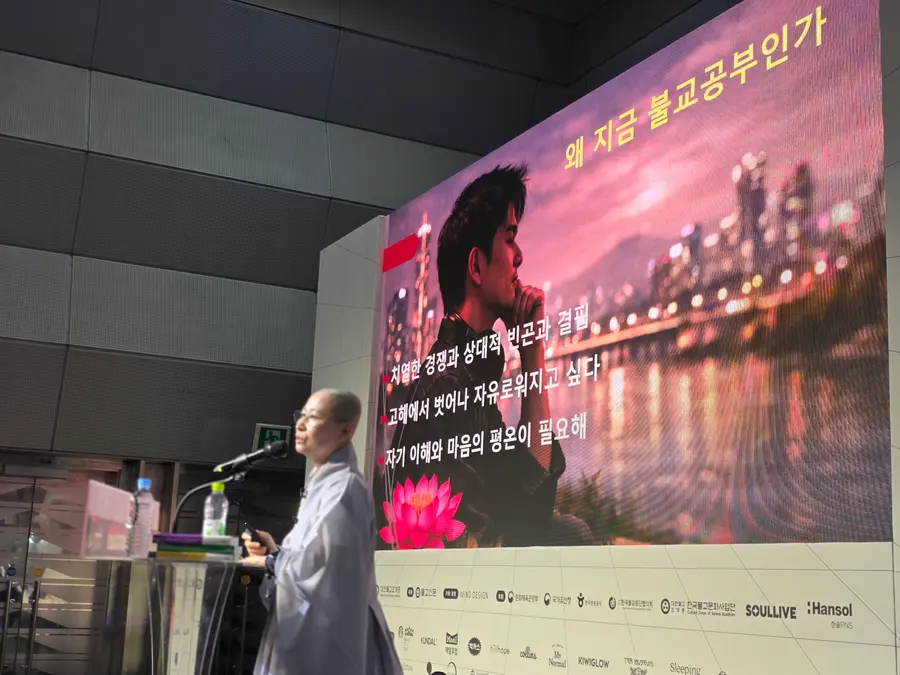
Inside the main stage area of the expo hall, a “Dhamma Talk” was underway. A monk held the microphone, and on the screen these lines appeared.
“Why study Buddhism right now?—Because of intense competition, relative poverty, and lack. I want to be freed from suffering and become freer. You need self-understanding and inner peace.” The people who listened—nodding as they connected with the monk’s explanation for why so many young people are drawn to Buddhism—were all in their 20s.
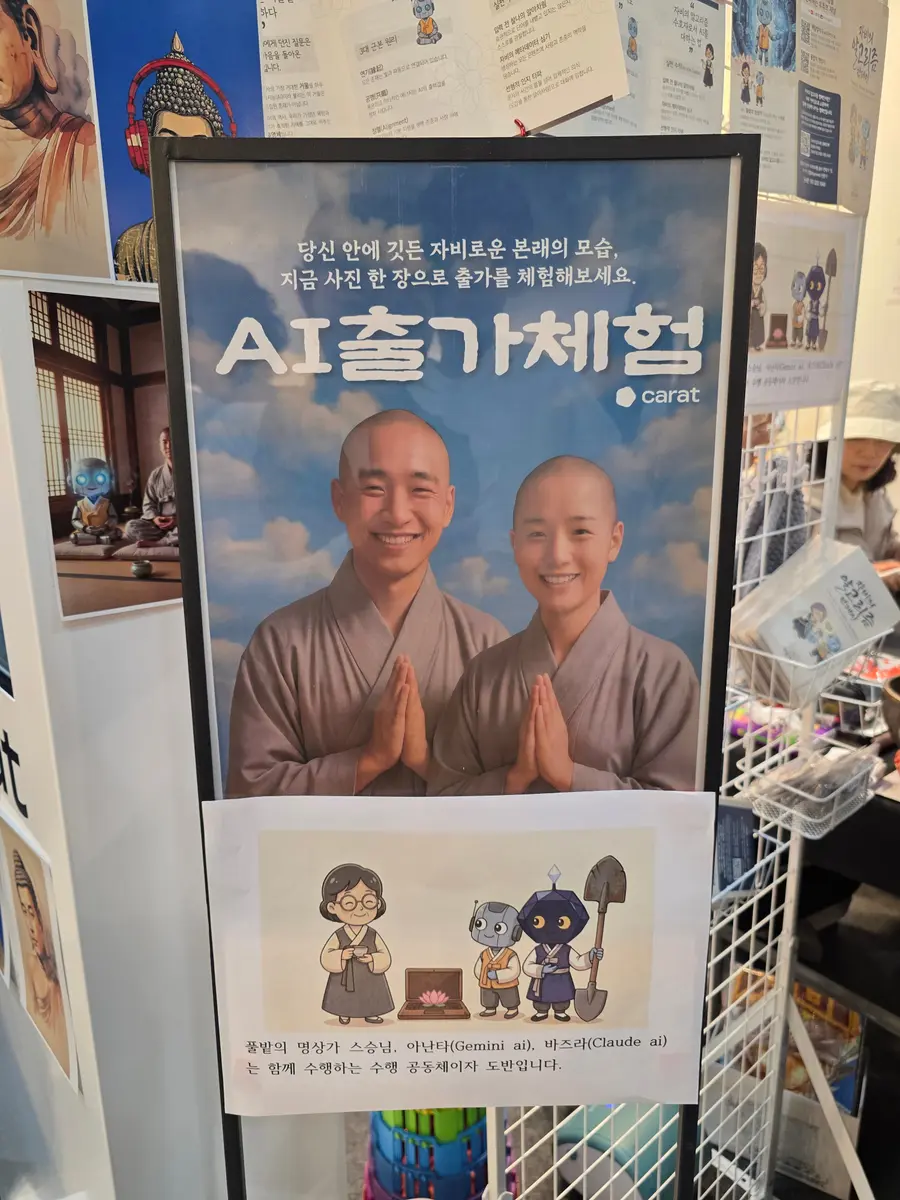
An AI Buddha and an Ordination-Life Experience Even More Popular Than the Buddha You’d See in a Temple
At this Buddhist Expo, it wasn’t just a few visitors who came to meet the AI Buddha.
The AI Buddha booth worked like a counseling space for the 2030 generation. When a young person said, “I can’t fall asleep because I’m worried about getting a job,” the AI replied with comforting words and scripture excerpts. They say even visitors who arrived with teary eyes were there. And if you cut your hair by 1 cm, you could also try the ordination-life experience.
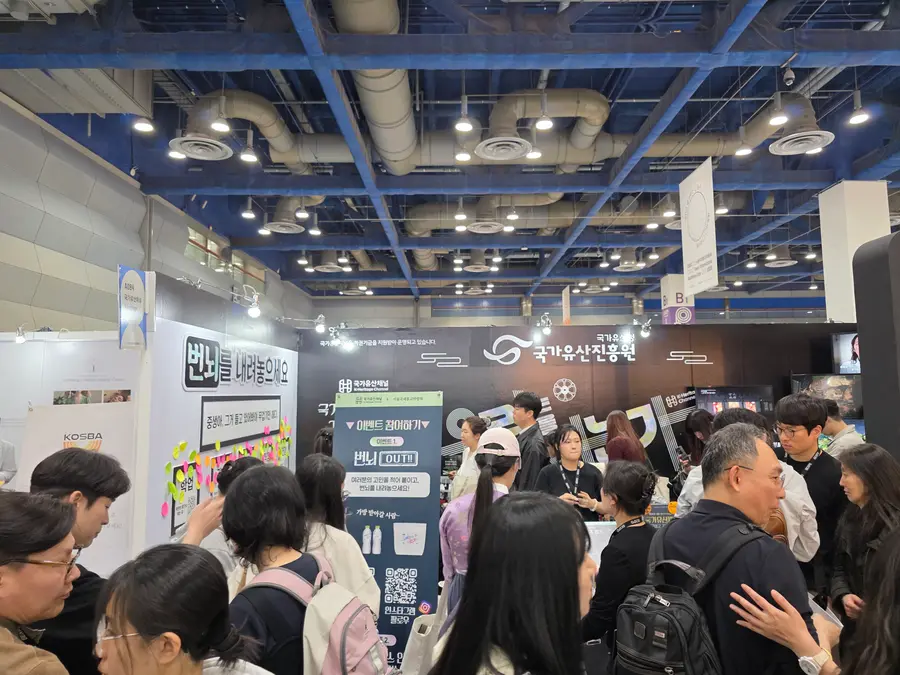
The Seoul International Buddhist Expo Finds Its Place as a City-Style Traditional Culture Festival
Across from COEX at Bongeunsa Temple, rapper Woo Won-jae and DJ Soda hosted a “Yadanbeopsuk” party that blended the Heart Sutra with a hip-hop DJ set. People rushed to react after watching the video that went viral on social media in an instant: “That’s a Buddha-hand takeover,” “I really want to go next year.” It was a night when a traditional temple became the trendiest performance stage.
From monks who traveled all the way from across the country to visitors dressed in nun’s robes—going beyond religion itself—the scenes made clear that this was expanding beyond a simple religious event. MZ-generation visitors made up 77.6%, and visitors with no religion were 52.1%, a sign that it’s starting to take root as a lifestyle and content-industry platform grounded in traditional culture.
The expo also made it clear that the Buddhist Expo is no longer confined to religion, showing its potential as a cultural-industry hub—evidenced by support and sponsorships from 30 companies, including Starbucks and Maeil Dairies, along with backing from national public organizations such as the Ministry of Culture, Sports and Tourism.
The 2026 Seoul International Buddhist Expo was held at COEX Hall B in Seoul from April 2 to April 5, welcoming about 250,000 visitors over four days. Interest in Buddhist culture will keep building from June 11 to June 14 at EXCO East Hall in Daegu, where it will be called the “Korea Buddhist Culture Expo,” and on August 6 to August 9 it will continue at BEXCO in Busan as the “Busan International Buddhist Expo.”