


At the entrance to Haebangchon, a “hip street” known to the 2030 generation, there’s a building with a distinctly more polished, modern feel than the surrounding area. In front of the building is also a café called “Sayo,” which is bustling with young people thanks to the recent wellness boom. But once you circle around to the side of the building, a secret entrance appears—access restricted to members only. This is CenterOne, a meditation society for leaders.
As soon as you step into the building’s entrance, meditation has already begun. As you climb the “Mind Stairway” that leads up to the third floor, where CenterOne is located, questions and phrases that feel heavy with meaning pierce your heart. Once inside the third-floor meditation society, CenterOne, you’re greeted by fragments of ancient Chinese pottery—pieces that span thousands of years. When you look around, nothing is left to chance: from the interior design itself to every small prop, there’s no hint of “good enough.” It wasn’t that someone bought items just to match the vibe. Rather, the person who planned this space collected these things over a long time and poured in their own time and affection—an accumulation of energy harmonized with the space itself. You could tell this place was meticulously designed so that those who come here for meditation could focus fully.
What kind of time has the person who created such an extraordinary space been living?
No Sang-chung, the representative and founder of the CenterOne meditation center and chair of Carat Global, introduced himself by saying that before he became a businessman, he was “a meditation practitioner and someone on a spiritual practice path.” After meeting meditation for the first time at age 15, he continued his practice for nearly 40 years, and he grew a company started at age 30 with two employees into a global competency education company operating for 26 years—now with around 200 people, delivering annual sales of around 60 billion KRW. We follow the reasons he chose, after stepping away from the front lines at age 50, to invest the rest of his life in “the advancement of leaders’ consciousness,” and why the two things he offered left a lasting mark on his heart.
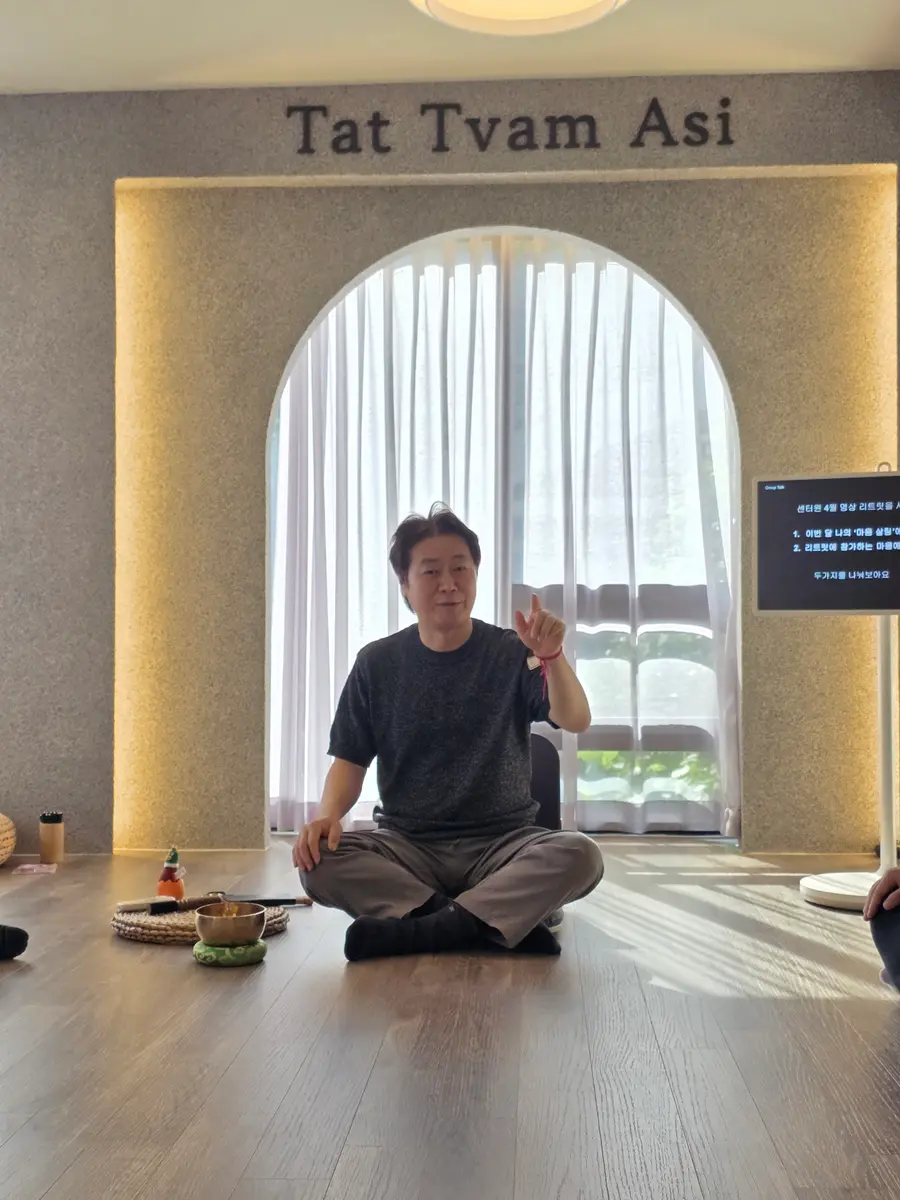
Q. I heard you started meditating at 15. That age can’t have made it easy—who guided you?
“No one taught me. It’s just that one day the world of meditation came to me. Signals like that reach many people, but they simply don’t hear them well. When I was young, I could hear it. After I happened to hear stories about the ‘power of the mind,’ I began studying Danhak and practiced breath meditation. Danjeon breathing is the most basic. I didn’t start because my body hurt, and I didn’t do it because someone told me to. At an early point, the pure question ‘Who am I, and why do I exist like this?’ took hold.”
When I’m asked who my teacher is, I answer: nature. If you hold on to the key question (hwadu), insight comes almost entirely from nature. Later, in my 20s, I experienced various Indian traditional meditations, including Danhak. I only learned much later—during a doctoral program in Buddhism—that the method I had been practicing was, in fact, Zen.”
No representative earned a PhD in psychology from Sungkyunkwan University, and at the Brainwave and Cognitive Function Research Institute of Ilsan Baek Hospital, he conducted neuroscience research using brain waves. After that, he studied Buddhism at Dongguk University. His academic journey, which extended even into brain research in the field of neuroscience, was one branch branching out from a single question: “What is human consciousness?”
Q. For a businessperson competing for time, what role does meditation play?
Anyone who has run a business knows. Meditation and business don’t go separate ways. Because business is a continuous chain of decisions in every moment, if you don’t have insight, you lose your way. When you meditate, you see clearly. That’s why you meditate. Business and meditation don’t go their separate ways.”
Carat Global is a company that has provided global competency enhancement, leadership education, and consulting to about 600 companies and institutions over 26 years. Before turning 50, Mr. No delegated management to younger representatives and stepped away from the front lines. The reason he moved aside from the business front was that he felt his life calling was to train “meditation-style leaders.” The book he compiled, collecting his experiences of finding answers through meditation at every moment of the business over the past 26 years, is titled “The Path to Management Found in Meditation.” It’s also the outcome he co-authored with the coaching pioneer, coach Kim Beom-jin, and it contains his life’s calling.
Building a Leader’s Nest, CenterOne Meditation Society
Q. What was the decisive moment that led you to decide to create CenterOne?
This is an era where you can’t gauge how fast technology changes. Many leaders can’t find their direction and end up wavering. People in business have the strength to fight the world, but their lives aren’t peaceful. Every day feels like war. I thought it was crucial that the consciousness of the people leading this era would be raised.
Q. There aren’t that few places operating meditation centers—what’s CenterOne’s differentiating factor?
Most existing meditation centers either have a strong religious color, or they operate like small local academies. CenterOne aims to be a space like a “HOME,” where leaders can come anytime to rest their minds. The mission is clear: the quiet, insight, and advancement of leaders’ consciousness. If you attend meditation workshops, you’ll see that most participants are women—but at CenterOne, many male CEOs and executives come. There weren’t many places for male leaders in their 50s to go, but here they find their own spot. That’s what makes it most fulfilling.
Mr. No planned every part of the space himself. From choosing the direction to purchasing the site, and even the process of building the building again while leaving only the skeleton—he oversaw it all with his own hands. The ancient sculptures placed in the living room are collections he gathered over many years. His words—“Fragments of ancient artifacts are free in expression and have deep imagery. You can really feel the minds of the people who made them, even in harsh conditions”—explain why this space, CenterOne, feels so calm.
Jeong and Hye—Programs that Run on Two Wheels
CenterOne’s signature program is structured into two tracks. “The Sea of Tranquility” is the path into Jeong, and “The Path of Insight” is the path to Hye. Jeong Hye Double Cultivation (定慧雙修) is a design that brings a Buddhist practice tradition—where both wheels must move together—into the lives of modern leaders.
Q. How do the two programs differ?
The Sea of Tranquility begins with how to take posture, and then leads into deep stillness—the path of Jeong. The Path of Insight is where you take wisdom itself as your key question (hwadu) and enter. It runs in five sessions, with three hours each on Saturday mornings. Without Jeong, there is no Hye. If it only stays at knowing and looking, it isn’t enough. Meditation becomes a way of life only when the two go together.
In membership operations as well, Mr. No didn’t follow conventional thinking. Membership, which originally cost 2.5 million KRW, was converted to a “Welcome Member” system and effectively opened up for free. Daily meditation and the open lectures on Saturdays are also all free. The only programs that charge a fee are the signature courses—“The Sea of Tranquility” and “The Path of Insight.”
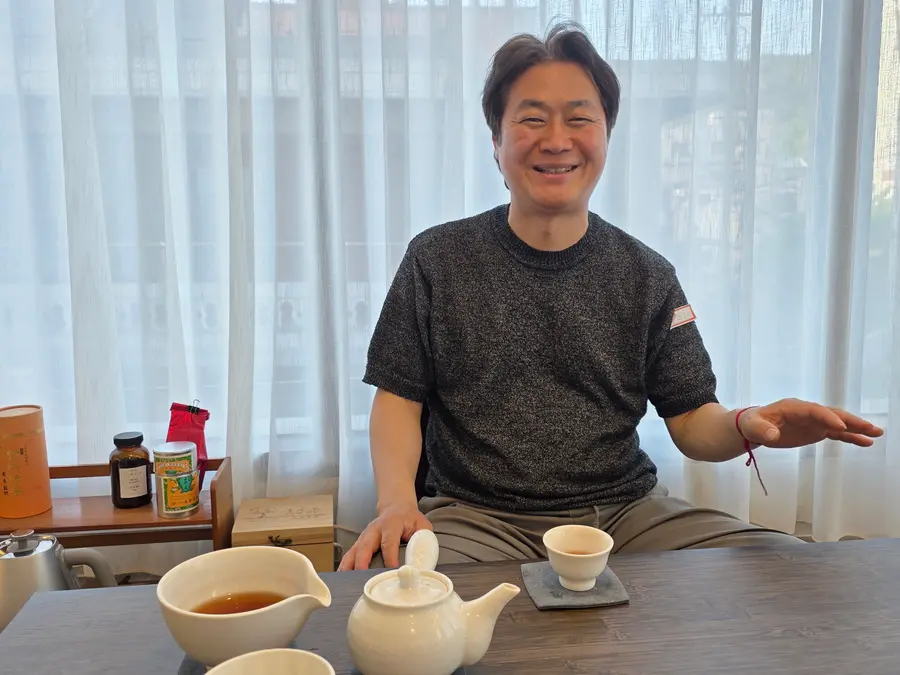
Q. I’m curious why you offered it for free.
Startup representatives often don’t have money. When I saw that cost becomes a barrier to the mind for them, I decided that we shouldn’t start charging from here. I persuaded executives to cover the company’s operating costs through Carat Global’s B2B business and to open it up for free. In return, membership is run on a recommendation system—members recommend other members, or people come in after receiving personal consultation.
Q. If you had to summarize Carat Global’s and CenterOne’s vision in one line, what would it be?
Carat has built the competitiveness of Korean companies through global competency and leadership education for 26 years. Now that a new civilization is arriving, Carat’s other mission is to advance leaders’ consciousness—to create better workplaces and sustainable companies. Leaders whose consciousness has advanced live a clear, fulfilled life as individuals, and socially they become the owners of good workplaces and successful companies. This is no longer an era where you can just make money. With insight, you can look ahead. Especially for young CEOs and company leaders, it’s truly important to have the capability to see and handle their own minds. The goal now is to leave the company to the representatives and train “meditation-style leaders” at CenterOne.
The Two Things Mr. No Sang-chung Says Leaders Need
“A Life You Don’t Have to Choose”
As the interview was nearing an hour, Mr. No said something like this.
“A meditating leader has a higher chance of succeeding in business. That’s because once consciousness rises, you don’t have to go out of your way to do things that make you uncomfortable.”
When the reporter asked, “So you mean they can make objectively good choices in every moment?” his answer immediately elevated the core of the interview to a whole new level.
“You’re preventing situations where you have to choose in the first place. There’s nothing to choose. The act of choosing itself is already an error. You just have to let things flow.”
“A Life Reborn Every Day” (Rebirth)
“Generally, people think reincarnation means dying and being born again. But I think differently. Reincarnation isn’t being reborn after you die—it’s ‘the repetition of the same suffering every day.’ Cutting it off so that yesterday’s karma doesn’t repeat itself exactly today, and being reborn every day—rebirth—is ‘the way to escape the true cycle of suffering.’”
In the many writings about leadership, we often encounter phrases like “the technology of decision-making” and “improving judgment.” These are written on the premise that a good leader is someone who makes the right choice in each moment. One line from Mr. No shakes that premise at its roots. What meditation trains isn’t the muscle for making more precise choices—it’s the root of a way of living that doesn’t even create situations where you have to choose.
It was a line that made me reconsider my definition of “meditation for leaders,” something I had been thinking about. It felt even more powerful because it condensed his 40 years of practice and 26 years of business into one statement. It was enough to explain why meditation is essential for leaders in this era, and why he built this space in the alleyways of Hannam-dong’s Haebangchon.
As I finished the interview and stepped out of CenterOne, the two things he said came back to mind again. A life that doesn’t create what you need to choose. A life that reincarnates every day. Isn’t this what every leader wants most—and what they truly need?”