

When you sit quietly on the wooden veranda of a seowon, the breath you draw in becomes longer than usual. The moment you step on the stone steps of Dosan Seowon, you feel the traces of Yi Hwang (Toegye), known only in banknotes, reaching your fingertips.
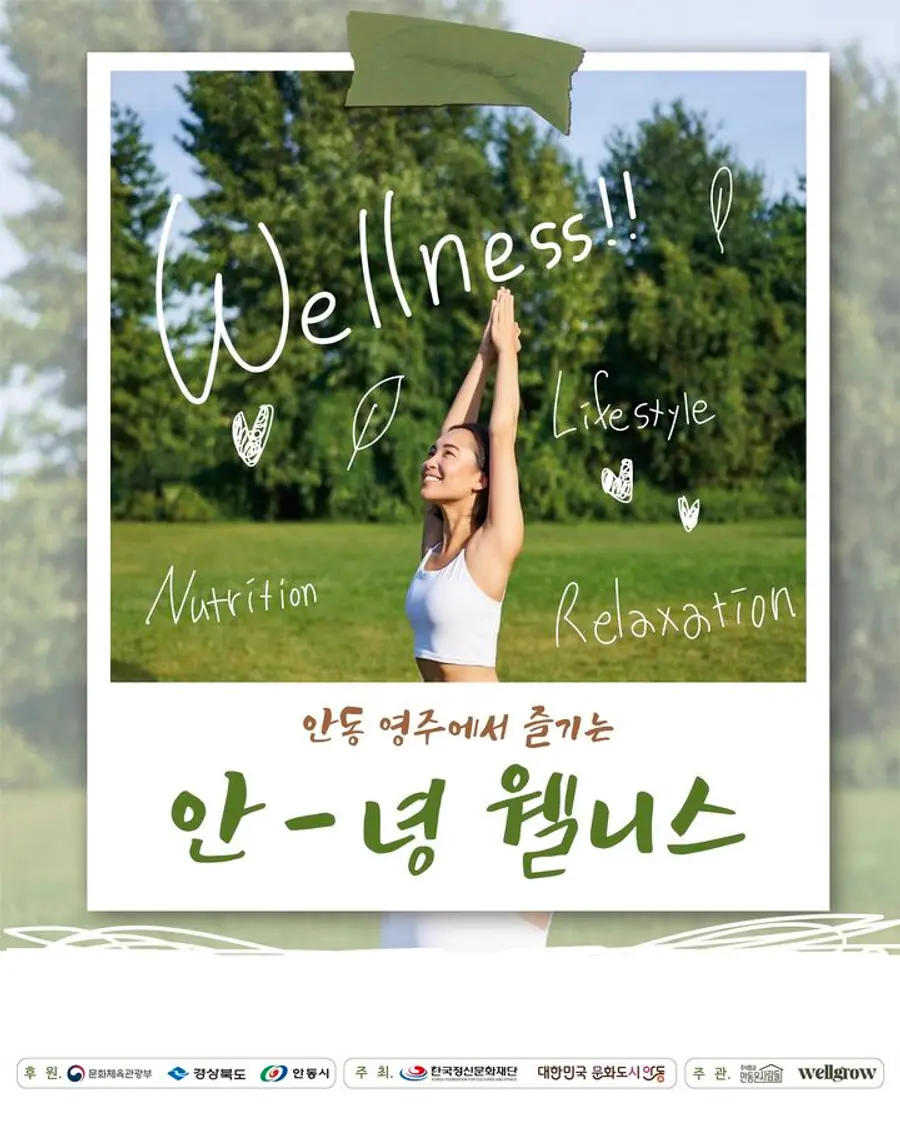
The “Anyeong (安榮) Wellness” program, presented through a partnership between the city of Andong and Yeongju, goes one step further than sightseeing that simply passes by the eye over Confucian cultural heritage. It has been reshaped into a journey of staying awhile, breathing mindfully, and pausing for a moment.
A Wide-Area Connected Wellness Jointly Backed by Andong and Yeongju: What Is “Anyeong Wellness”?
On May 11, the city of Andong announced that it operates the “Anyeong (安榮) Wellness” program as part of the project to foster cultural cities in the Republic of Korea. This is a wide-area initiative in which local companies in the Andong and Yeongju regions participate together. The schedule begins on May 9, followed by two additional sessions on the 16th and the 30th, and it is open to those who apply in advance.
The program’s core concept is “emptiness” and “fullness.” In Andong, meditation focused on setting aside everyday stress takes center stage. In Yeongju, experiences that reinterpret a scholar’s etiquette and aesthetic sensibility in a modern way refill one’s vitality. In other words, the Confucian cultural heritage of both cities has been reinterpreted through the perspectives of “Play” and “Healing.”
Emptying in Andong: Meeting Toegye’s Breathing at Dosan Seowon
The first stage of the Andong itinerary is Dosan Seowon. In the same space, Dosan Seodang—a lecture hall designed by Toegye Yi Hwang himself in 1561—and Dosan Seowon, built by his disciples after his passing in honor of their teacher, stand together. This is where Toegye’s breathing—he regarded modesty as a virtue—seeps into every corner, down to each single space on the veranda and even each column. His footsteps, which had been immersed in study for more than 20 times after resigning from public office since 1543, remain throughout the seowon.
Participants experience meditation and rest programs in this space. They set aside the schedule and notifications filling their minds for a moment, and refine their breath by following the posture of “Gyeong (敬)”—a way of cultivating the mind that Toegye considered the most important throughout his life. It is time designed to help you step out of the city’s pace and look back at yourself.
A Rest by Lake Andong: From a Hanok Break to Walking Meditation at Seonseonghyeon Culture Complex
Another stage is the Seonseonghyeon Culture Complex. Located within Yeqqi Village, a place that has experienced the pain of being submerged once and donned the clothing of art, you can look out at the ripples of Lake Andong from beyond the eaves of the hanok. In the hanok experience hall where buildings from the Joseon-era government offices have been restored, there is time to put on old clothing and follow old steps.
You can’t miss the Seonseongsu Walking Path, floating on the water like a floating platform. That path, where you feel the lapping of the lake under your feet and walk slowly, becomes a walking meditation in itself. While you look at the light of sleep instead of a smartphone screen, your shoulders feel lighter by about a hand’s breadth.
Fullness in Yeongju: The “Wigijihak (爲己之學)” Principle You Meet at Isan Seowon
The Yeongju schedule starts at Isan Seowon. Built in 1558 by the scholar families of Yeongju, with support from military administrator An-sang and the guidance of Toegye Yi Hwang, it is a seowon with a scale of 32 bays. Its significance is deep in that even the names—such as the lecture hall Gyeongjidan (敬止堂), the eastern quarters Seongjeongjae (誠正齋), the western quarters Jinsujjae (進修齋), and the observatory Gwanmuldai (觀物臺)—were created by Toegye himself and left as engraved plaques.
The spirit that sustains Isan Seowon is “Wigijihak (爲己之學).” It means study not for showing off to others, but for taking care of and refining oneself. In an era where you measure yourself only by achievements and evaluations, these four characters arrive with a weight worth contemplating once. The program unfolds the seonbi’s etiquette against the backdrop of this seowon, adapting it to today’s sensibilities.
Rebuilding Aesthetic Sensibility in a Seonbi World Where Hanbok, Hansik, and Hanji Come Together
Seonbi World, located in the Sunheung-myeon area of Yeongju, is a comprehensive experience space that brings together the seven areas of Korean traditional culture: hanok, hanbok, hansik, hanji, Hangeul, Korean music, and Korean studies—all in one place. At the Hanbok Village, you’ll continue making things with your hands, such as putting on hanbok and crafting hanbok danggi su-su (a traditional accessory), headbands, and doll keychains. At the Hansik Village, cooking classes using Yeongju’s local specialties are offered, and places for tea ceremonies, calligraphy, and hanji crafts are set up throughout the area—so even hands that had been busy begin to grow naturally calm.
At “Anyeong Wellness,” the seonbi’s aesthetic sensibility is unfolded here with a modern sensibility. Just as old scholars governed their days by composing a poem and pouring a cup of tea, participants are given time to restore the vitality of everyday life with their own small rhythm.
The Path to a Stay-Over Journey: The Future “Anyeong Wellness” Envisions
Based on this initiative, the two cities plan to further widen the connections between culture and tourism across the northern Gyeongbuk region. The idea is not to leave by marking individual sights like dots, but to lead people into a journey of lines that connects dot to dot. The direction is to bundle Andong and Yeongju into a single tourism sphere, create a stay-type tourism model, and draw in regional spending and lodging demand as well.
In Yeongju, there is an environment where you can link together nearby Buseoksa Temple and Sosu Seowon—both listed as UNESCO World Heritage—and even the forest meditation program at the Sobaeksan Ecological Trail, operated by the National Park Service. A representative from the city of Andong said, “We hope that this cooperation model between Andong and Yeongju will become a new milestone that drives shared growth across the entire northern Gyeongbuk region and leads to win-win development.”