

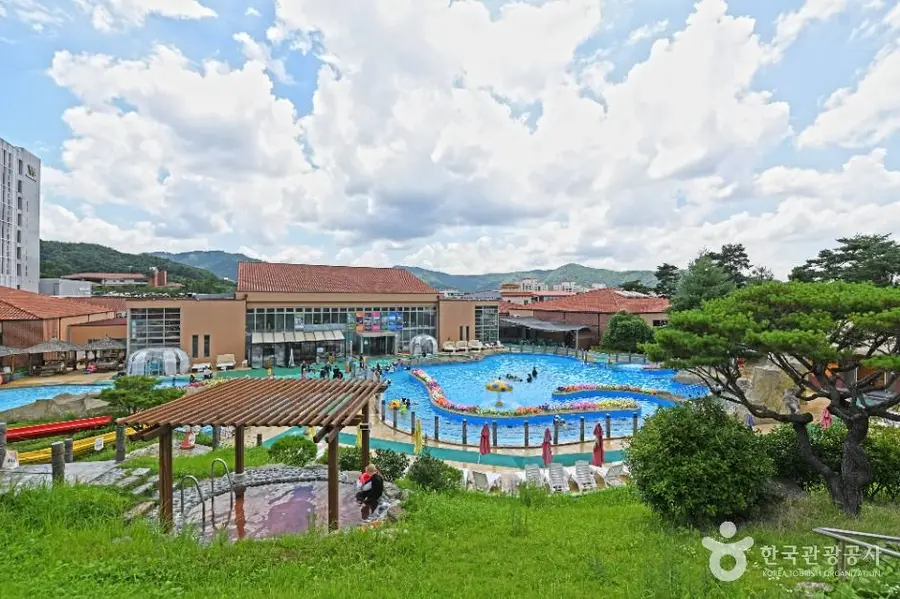
Morning in Gochang begins with water. Hot spring water drawn from underground fills the pools, while a thin veil of steam rises from the surface and warms the air. That is how the day begins at Well Park City, centered on Seokjeong Hot Springs at 173 Seokjeong 2-ro in Gochang-eup.
Gochang is best known for its dolmens and fortress, but the county has a different appeal for wellness travelers. It is home to a mixed-use complex that brings hot springs, recreation, health care and culture, as well as housing, together in one setting. North Jeolla Special Self-Governing Province's tourism guide describes Well Park City as "Korea's leading wellness complex, where nature, health and relaxation come together."
A city that grew from a hot spring
Well Park City's roots lie in Seokjeong Hot Springs. The complex took shape by building out from a single resource, adding lodging, therapeutic facilities and leisure amenities one by one. It now includes Seokjeong Hot Springs Hue Spa, a hot spring and spa facility; a wellness hotel; Healing County, a health-focused loess pension resort; health and medical facilities; walking paths; and green space. The complex also includes a 470,000-pyeong retirement village and an 18-hole family golf course.
Because the facilities serve different purposes, visitors can choose how they want to spend their time. Some stay for a day and use only the pools, while others spend several days following the programs, moving at different paces within the same space.
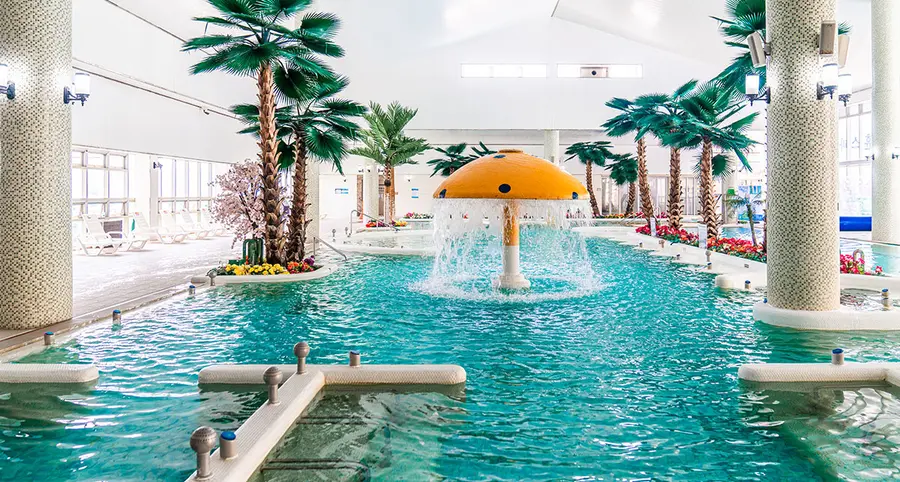
Water rich in germanium
The water here is germanium hot spring water from Seokjeong-ri. Gochang County's tourism guide says the water "earned a strong reputation as healing hot spring water because it is rich in germanium," while Hue Spa says it uses 100% Seokjeong-ri germanium hot spring water.
Travel publications make a wide range of claims about the benefits associated with the water's mineral content. This article reports only on the water's composition and the facilities available. Because hot spring bathing may not be suitable for everyone, people with chronic conditions should consult their doctors before using the facilities.
From pools to spa experiences
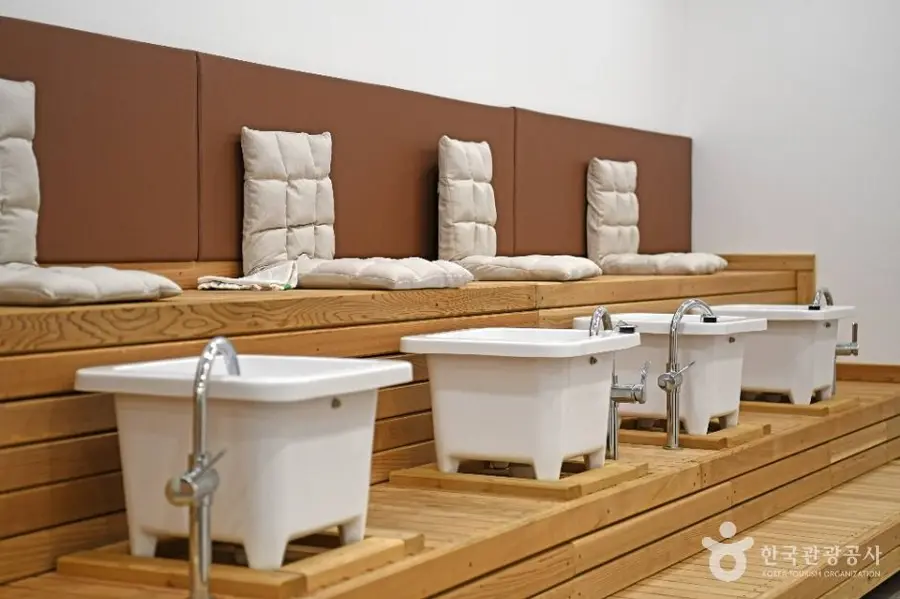
Indoor facilities include separate men's and women's hot spring baths, outdoor baths, a body pool, a kids' pool, and dry and wet saunas. Outside, visitors will find a lazy river, an event pool, a waterfall pool and an outdoor experiential spa, along with sunbed cabanas and a slide for young children.
According to the travel publication Telltrip, the indoor spa has bubble baths, a floating area, neck showers and a hinoki dry sauna. During the summer peak season, the outdoor spa, slides and open-air baths also operate.
The complex's support facilities give a sense of its scale. Gochang County says the site has locker facilities that can accommodate about 2,000 people. There is also a food court, cafeteria, nursing room and dedicated lounge area.
Time out of the water: Yoga and meditation
What sets Well Park City apart from a typical hot spring destination is what happens outside the water. According to North Jeolla Special Self-Governing Province's tourism guide, the complex offers yoga, meditation and aqua therapy alongside healing programs centered on its hot springs and spa facilities. Customized health management programs for middle-aged and older adults and retirees, dining options featuring local farm products, cultural events and health seminars are also presented as key parts of the complex's operations.
The idea is to create a complete day in one place: warm up in the baths, steady your breathing on a mat, then attend a lecture in the evening. The hot spring serves not as the final destination for rest but as the starting point.
Aqua therapy uses the buoyancy and resistance of water to reduce the load on the body. It is an approach recommended for people looking for ways to move without placing stress on their joints. Offering yoga and meditation at a hot spring facility can be seen as an effort to connect water, breathing and movement in a single flow.
Schedules, capacity limits and registration procedures vary by program and season. Visitors should check with the reservation office before arriving.
Two distinct lodging options: Wellness Hotel and Healing County
Lodging comes in two distinct forms. The Wellness Hotel is closest to the hot springs within the complex, while Healing County is a collection of private, standalone accommodations built around the theme of loess. According to Gochang County, guests at Healing County receive a 20% to 25% discount on hot spring admission.
Travelers planning to stay for several days and follow the programs may want to look first at packages bundling lodging and hot spring access. Online travel platforms regularly sell packages that include breakfast and hot spring admission.
Exploring Gochang: Seonunsa Temple and the Pansori Museum
The surrounding area is too worthwhile to overlook after visiting Well Park City. According to Telltrip, Gochang Fortress is a 10-minute drive away. The Pansori Museum and the dolmens at Dosan-ri are also nearby.
Travelers planning a meditation-focused trip may want to add Seonunsa Temple. Located at 250 Seonunsa-ro in Asan-myeon, Gochang County, on the slopes of Dosol Mountain, Seonunsa was founded 1,500 years ago by the Baekje monk Geomdan Seonsa. Its Daeungbojeon Hall is National Treasure No. 290. Temple-stay programs include the one-day "A Walk Above the Clouds, Staying Briefly," the activity-based "Dosolam Trekking" and "Healing Temple Stay With a Coffee Barista," as well as the rest-oriented "Rest in Nature." The one-day program is for groups of 10 or more, while the rest-oriented program runs year-round. For inquiries, call 063-561-1375. Korean-language assistance is available at 010-5231-1375.
A two-day itinerary that relaxes the body in the hot springs and slows the breath for a night at a temple is possible within a single county.
A UNESCO biosphere reserve as a backdrop
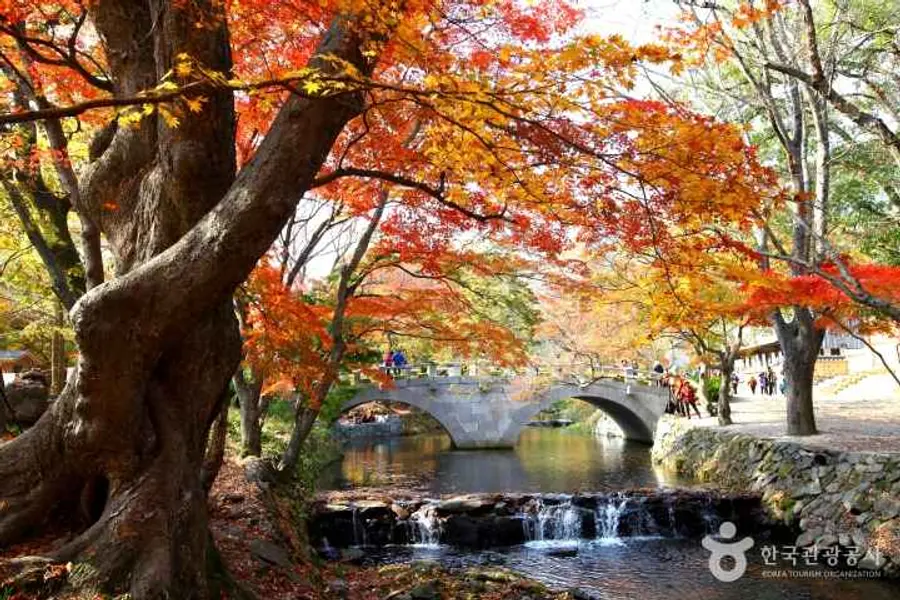
There is another factor easy to miss when considering Gochang as a wellness destination: The entire county is designated as a UNESCO biosphere reserve. The designation reflects the county's geography, where tidal flats, plains and mountain terrain overlap within the same administrative area.
Visitors who want to extend a water-centered itinerary into nature will find plenty of places to walk. Guseopo Beach is Gochang's largest beach, with a pine forest behind its long stretch of sand. Its gentle slope attracts many families, and around sunset, islands including Gamakdo remain as silhouettes on the horizon.
Nodong Reservoir is an ecological refuge created to increase biodiversity in the urban area. Designed with connected wetlands, waterways, grasslands and forests, it received an award from the environment minister. A floating water deck that rises and falls with the water level is one of its defining features. As visitors walk slowly across the water, their breathing seems to settle naturally.
In other words, a three-day itinerary can be completed within one county: warm up in the hot springs, walk through wetlands and along the beach, and spend a night at a temple. That is an unusual advantage for anyone planning the route of a wellness trip.
Getting there and visitor information
The address is 173 Seokjeong 2-ro, Gochang-eup, Gochang County, North Jeolla Special Self-Governing Province. According to Telltrip, the drive takes about three hours from Seoul and 1 1/2 hours from Gwangju. Visitors using public transportation can reach the complex by city bus or taxi from Gochang Bus Terminal.
According to figures listed by the same publication, hot spring admission costs 12,000 won for adults. Spa admission costs 28,000 won in the off-season and 38,000 won to 43,000 won during peak season. The guide says discounts apply to spa admission after 4 p.m. Prices vary by season and seller, so visitors should confirm them before booking.
For inquiries, call 063-560-7500. Information about the complex is available at the Well Park City website, www.wellparkcity.com, while information about the hot springs and lodging is available at www.huespapension.com.
There are two ideal periods to visit. Late fall and winter, when the water is most inviting, are the best seasons for a hot spring trip. Summer, when the outdoor spa and lazy river are open, is better suited to families. Travelers seeking a quiet schedule may want to avoid peak season.
A place in Korea's wellness landscape
Gochang Well Park City was among 11 new destinations selected as outstanding wellness tourism sites, an announcement made by the Ministry of Culture, Sports and Tourism and the Korea Tourism Organization in April 2025. It was the site selected from North Jeolla Province.
Hot spring towns are scattered across the country, but there are few examples that connect water, lodging, programs, medical care and housing within a single complex. The effort to shift from brief hot spring visits to longer wellness stays defines the character of this development.
Its focus on programs for middle-aged and older adults and retirees is also notable. As domestic wellness tourism can easily narrow into spas and yoga classes aimed at people in their 20s and 30s, this complex assumes that visitors will stay longer, with a retirement village and medical facilities on site. Its design anticipates stays of months, not days, placing it at the boundary between wellness tourism and therapeutic care.
It also has the ingredients to serve as a gateway for introducing Korea's hot spring culture to international travelers. Tidal flats, wetlands, dolmens and a 1,500-year-old temple are all within the surrounding area, so visitors do not have to build an entire itinerary around the hot springs alone.
The remaining challenge is information. Although the complex's introduction explicitly mentions yoga and meditation programs, visitors have no clear way to confirm schedules, instructors or fees before they arrive. That is the information travelers seeking meditation and yoga most need first. If program details were organized as clearly as the hot spring information, the complex's identity as a wellness destination would become much sharper.
Article inquiries: fare3041@naver.com