

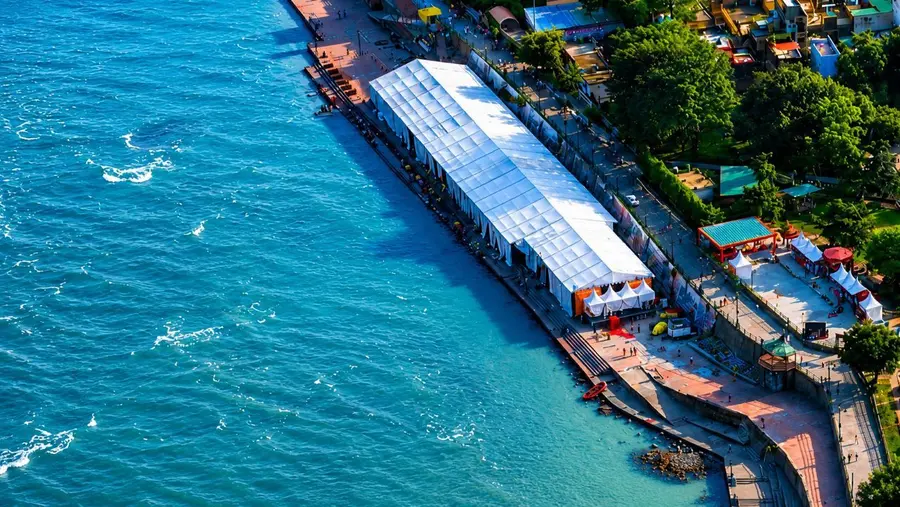
A free mass meditation festival open to all kicked off on October 23 in Rishikesh, at the foothills of the Himalayas in northern India. PMC Society, an Indian meditation organization, said Maha Yog Dhyan Kumbh 9.0 opened on October 23 on the banks of the Ganges in Muni Ki Reti, Rishikesh, and will run for five days through October 27. This year’s theme is inner transformation and world peace.
The festival’s official website lists India’s Ministry of Tourism (Incredible India) as an associate organization and the Ministry of AYUSH, which oversees traditional Indian medicine and yoga, as a campaign supporter. The Uttarakhand state government and Garhwal Mandal Vikas Nigam, the state’s tourism development corporation, are also listed as associate organizations.
Ninth edition since 2017, with more than 10,000 expected this year
Maha Yog Dhyan Kumbh was first held in 2017. It took place twice in 2021, then returned in 2024 and 2025 after a two-year hiatus. This year’s event is its ninth edition. Organizers describe it as India’s first mass meditation festival and say more than 30,000 people have attended over the years. That figure is the organizers’ claim.
Indian events publication EVENTFAQS reported on October 21 that more than 10,000 participants are expected this year. Organizers said volunteers will also distribute more than 150,000 free vegetarian meals over the five days.
Starting with a single breath, then expanding to music and singing bowls
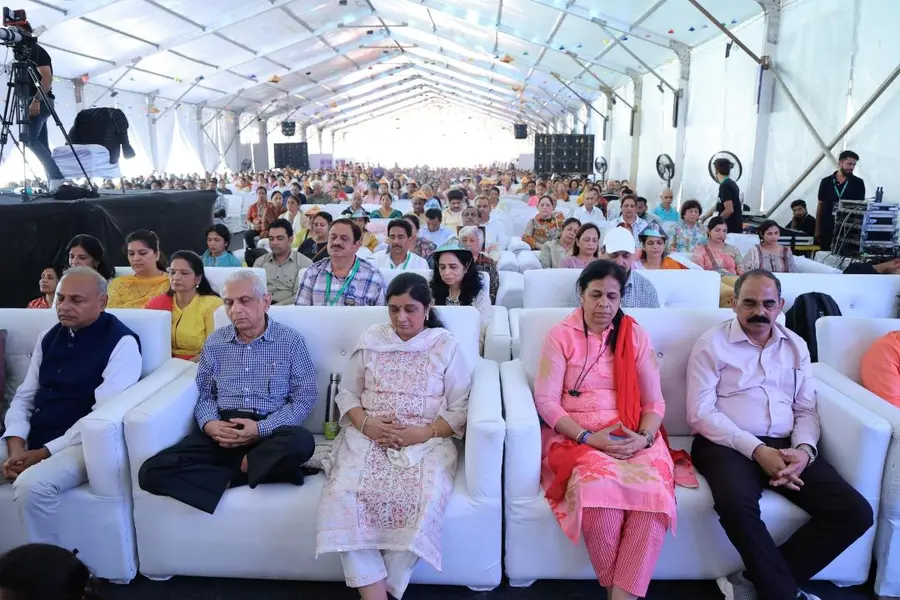
At the heart of the festival is Anapanasati, a meditation practice that involves observing the breath as it comes in and goes out. Requiring no special equipment or posture training, the practice focuses attention solely on the breath, making it easy for beginners to follow. Organizers say anyone can take part, regardless of age or meditation experience.
A range of meditation practices build on breath meditation. Morning meditation accompanied by live music runs daily from 5 to 8 a.m. On the first evening, a music meditation set to the Indian string instrument santoor and tabla is followed by a sound meditation, where participants relax to the sound of singing bowls. The schedule also includes pyramid meditation and guided silent meditation. Yoga and pranayama, Ayurveda, breathing workshops, Indian classical music and performances of Kabir bhajans round out the program, offering ways to engage through the body and sound.
Akhand Dhyan, which runs throughout the festival, is a silent meditation lasting 108 hours without interruption. Separate programs are also available for children ages five to 12 and young people ages 15 to 35.
A gathering of diverse traditions, not just one organization
Another distinguishing feature of the festival is the range of participating organizations. Its official website lists groups representing different meditation and yoga traditions, including The Art of Living, Heartfulness, Brahma Kumaris, the Divine Life Society and Parmarth Niketan. According to EVENTFAQS, speakers include Swami Chidanand Saraswati and Sadhvi Bhagawati Saraswati of Parmarth Niketan, Uttarakhand Forest Minister Subodh Uniyal, and Swarnamala Patri, co-founder of the organizing group.
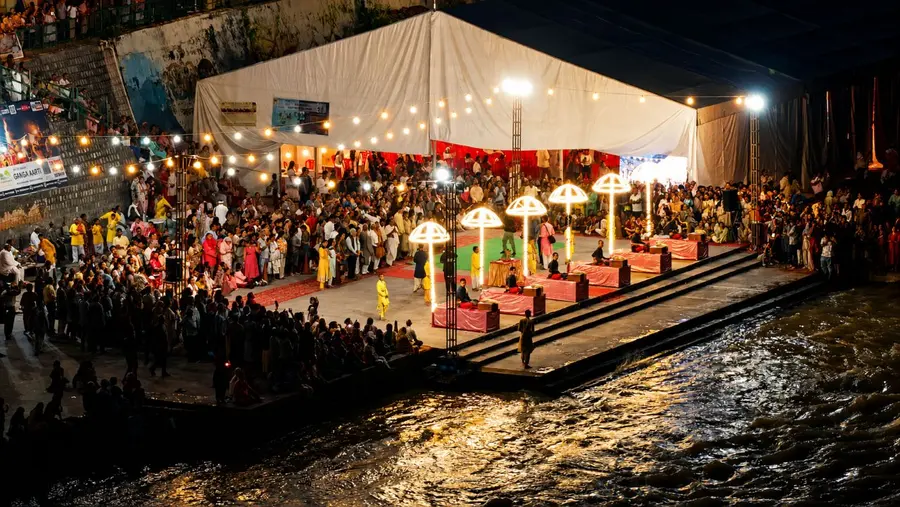
The Hindu ritual of Ganga Aarti, in which offerings of light are made to the Ganges, takes place daily at 6 p.m. The five-day festival will conclude on October 27 with Sant Sammelan, a gathering of spiritual leaders. There is no admission fee, but advance registration is required, and participants must arrange their own accommodations.
A marketplace of meditation options—and a model for Korea’s meditation community
What stands out about the Rishikesh festival is that it does not present meditation as having just one right answer. On a shared foundation of breath meditation, it offers music, sound, silence, yoga and Ayurveda side by side, inviting participants to experience them for themselves. Unlike a retreat focused on learning one organization’s practice in depth, it is more like a marketplace where people can compare different traditions and find the kind of meditation that suits them.
In an age of information overload, sitting quietly alone to begin meditating can be harder than it seems. Listening to music, relaxing into the sound of singing bowls or breathing alongside a large group can make that first step easier. By opening its doors for free, the festival also makes meditation more accessible to newcomers.
The involvement of government ministries in a meditation festival under the banners of tourism and traditional medicine also offers a lesson for Korea. It reflects a view of meditation not only as a personal hobby or religious practice, but also as a tourism resource and an asset for public health. Korea, too, has many organizations and teachers leading temple, forest and sound meditation. A festival that brought them together and let the public explore and try their practices for free could expand the country’s meditation community while creating a platform to introduce K-meditation to the world.
Registration and program details are available on the official Maha Yog Dhyan Kumbh website.
For inquiries about this article: fare3041@naver.com