

Sitting upright on a cushion and counting your breaths isn’t easy for everyone. After spending all day trying to keep up with information on screens, it’s common for thoughts to get even louder the moment you close your eyes. That’s why the ways into meditation are widening. Two popular options are sound baths, where you let the tones of singing bowls wash over you, and mindful coloring, where you fill in patterns with a pen or tablet. In October, reports and research on both practices emerged from universities in the United Kingdom and the United States. Both are accessible forms of meditation, but the evidence behind them varies considerably.
Thirty minutes lying down, but the science is still in its early stages
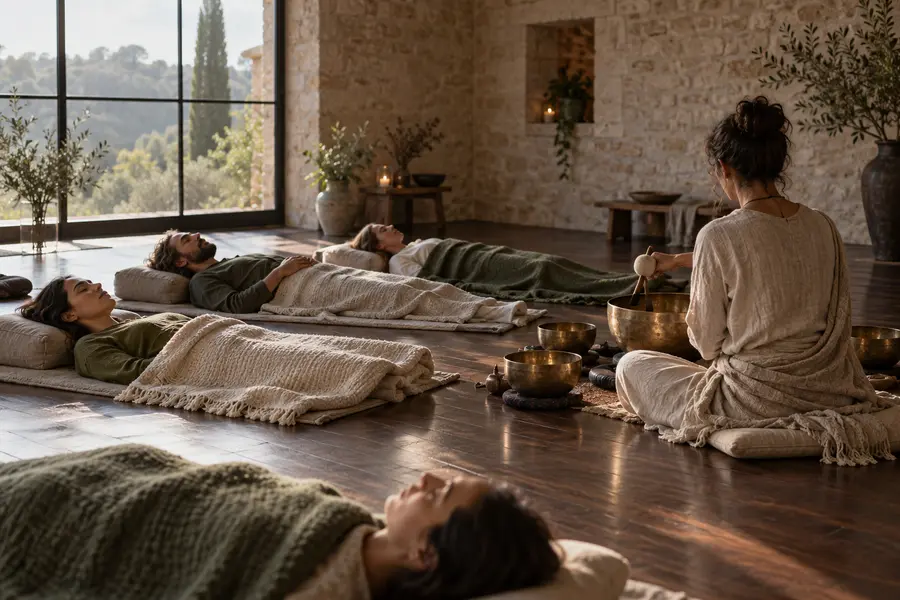
On October 21, Northeastern University News published an account of a reporter’s firsthand experience at a sound bath held on its London campus. The event was part of Mental Health Awareness Week. About eight people lay on the floor for roughly 30 minutes, listening to the resonance of metal and crystal singing bowls and an ocean drum, whose rolling beads create the sound of waves. Students and staff who took part said they felt more relaxed and clearheaded.
In the same article, Elizabeth Bucar, a professor in Northeastern’s Department of Philosophy and Religion, struck a cautious note. Bucar, author of the book Beyond Wellness, said sound baths are gaining popularity as a spiritual wellness practice, but the science of how sound affects the body is still in its early stages. The article also noted theories that sound may help people relax by changing brain-wave states or stimulating the vagus nerve. These remain hypotheses.
The London-based sound healing facilitator leading the session also said that people respond differently. Some may feel nauseated or develop a headache. The reporter, who tried the session, also said it was hard to expect lasting change from a single experience and that it seemed like something that would require regular practice.
297 students colored on phones; results were no different from paper
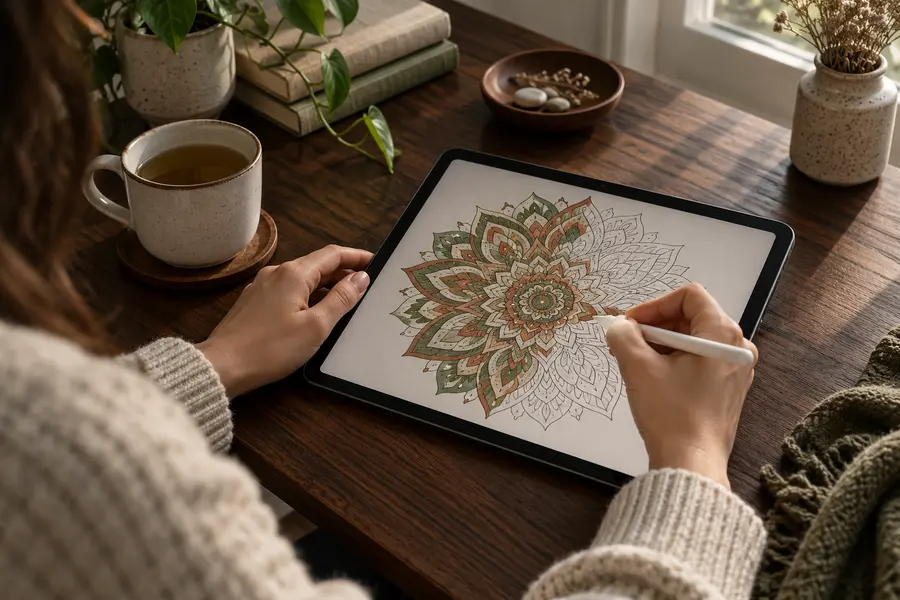
More specific numbers emerged from a hands-on form of meditation. A research team led by Emma Palmer-Cooper, an associate professor in the University of Southampton’s Department of Psychology, asked 297 university students ages 18 to 26 to practice mindful coloring at least six times over two weeks. One hundred thirty-four used colored pencils and paper, while 163 used coloring apps on phones and tablets. The results were published online in the Journal of Mental Health on September 18, and the university issued a news release on October 2.
Both groups reported reductions in stress, anxiety and depressive symptoms, along with improvements in quality of life and mindfulness scores. Students who were doing worse at the start saw greater improvements. There was no meaningful difference between paper and screens. The research team noted that focusing only on the harms of screen use could mean overlooking the potential for using devices to practice mindfulness. They also said mindful coloring is a low-cost option, though it may not suit everyone.
The evidence differs in strength; how to read the numbers
Considered side by side, the two reports show a clear difference. The sound bath article describes a single experience and includes a scholar’s perspective, but it does not discuss a study measuring the practice’s effects. The coloring study went a step further, tracking nearly 300 people over two weeks and measuring changes through surveys.
The coloring study also has clear limitations. The paper says participants were not randomly assigned; instead, the paper and digital groups were formed based on when participants were recruited, making it a quasi-experimental study. Because there was no comparison group that did not color, the study alone cannot determine whether the improvements were caused by coloring or reflected changes that occurred over time. The results also rely on participants’ self-reported survey responses. The study’s strongest finding is that both paper and screen coloring were associated with similar improvements.
How to choose an approach that works for you
That doesn’t make accessible forms of meditation any less valuable. For people who find seated meditation daunting, sound and hands-on activities can be useful ways to start practicing paying attention to the present moment. Those sensitive to sound who prefer to lie down and rest might try a sound bath, while people who find their thoughts settle when their hands are moving might start with coloring. Even spending about 10 minutes coloring on a phone during a commute can be a way to practice working with your mind—a welcome message for those tired of being told to turn off their screens.
Still, programs that promise major results deserve a closer look. If you feel dizzy, develop a headache or feel uncomfortable during a sound bath, don’t push through; take a break. There can be many ways into meditation. Trying a few and continuing at your own pace with whatever helps your body and mind feel at ease—that’s how a lasting meditation practice begins.
For inquiries: fare3041@naver.com