

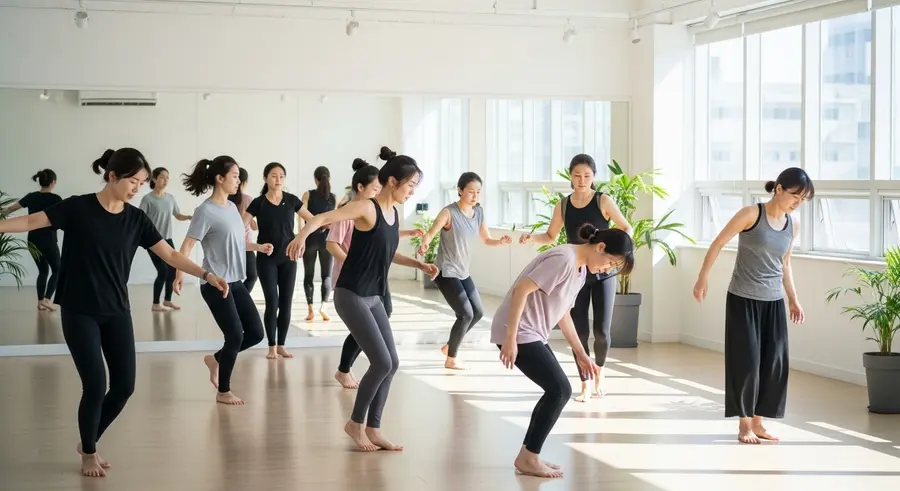
Have you ever wanted to start meditating, but when you close your eyes and try to sit still, you find that all sorts of distracting thoughts come flooding in?
In less than five minutes, your legs start to ache, and your mind fills with worries about what you need to do today and tomorrow. It’s too early to give up and think, 'Meditation just isn’t for me.'
That’s because there is 'Active Meditation.'
Active meditation, which is quietly gaining popularity among modern people, is a new approach that breaks the stereotypes of traditional meditation. It has gained significant support from busy individuals as it allows them to enter a deeper meditative state through movement, breath, sound, and dance.
What is Active Meditation? - A Revolution in Meditation Starting with Movement
Active meditation is a meditation method specially designed for modern people by the Indian spiritual teacher Osho (real name Rajneesh) in the 1970s. Osho stated, "Meditation that does not involve movement is not true meditation." While traditional meditation is 'static,' active meditation is a 'dynamic' meditation centered on movement and the release of energy.
Modern people live in an environment that is completely different from that of people a thousand years ago. In a flood of constant information, rapid pace, and competitive society, we live a thoroughly 'brain-centered' life. We have become very distant from our hearts (the center of emotions) and the hara (the center of being). As a result, anxiety, restlessness, tension, and anger accumulate over small matters, and although we may appear fine on the outside, we become like a volcano bubbling with emotions on the inside.
For these modern individuals, saying, "Close your eyes and sit still while observing your breath" is a practically very difficult command. Therefore, Osho emphasized the method of first bringing repressed emotions and physical energy to the surface through movement and breath, and then entering into observation. Active meditation is known to consist of a total of 112 techniques, each performed with dedicated music structured in stages.
Three Stages of Active Meditation - Awaken Energy, Release Emotions, and Reach Stillness
Active meditation is conducted in three main stages. In each stage, you can vividly feel the changes occurring in your body and mind.
Stage 1: Awaken Energy with Intense Breathing and Movement
First, engage in deep and rapid abdominal breathing while actively moving your entire body. Shake your arms and legs vigorously, and as you breathe quickly, awaken the tension and energy stored within your body. One meditation participant reported, "I felt the distracting thoughts in my head escaping from my body. My body became increasingly warm, and it was the moment my mind awakened."
Stage 2: Release Repressed Emotions with Sound and Dance
In the next stage, freely shake your body or dance while making sounds like 'Ah~' and 'Ugh!' to burst out the repressed emotions. Emotions of anger and sadness that you usually cannot express in words naturally come out in this stage, leading to a complete release of tension. Many have reported, "It felt like I was finally able to let go of a burden that had been stuck in my chest for a long time."
Stage 3: Entering Stillness to Experience Inner Peace
Finally, after the rapid movements and sounds, you calmly stand or sit to experience deep stillness. At this point, you will finally taste the feeling of 'completely emptying your mind.' Many people report that life becomes clearer and more comfortable after meditation. They say, "The silence and stillness that came after dancing was so precious that it cannot be expressed in words."
Amazing Changes Brought by Active Meditation
The greatest advantage of active meditation is that it allows you to 'release' repressed emotions. For modern people, who tend to have more thoughts when sitting still, the process of shaking the body, making sounds, and dancing provides a natural catharsis. Stress and tension are released, making it easier to reach a state of calm.
Additionally, through vigorous movement, you can come to understand the energy and emotions within you. When it feels like energy is blocked, you can directly move to elevate the connection between your body and mind. While it can be done alone, participating in a group adds the energy of the collective, music, and rhythm, allowing you to fully enjoy the fun of meditation.
Medically, the effects of meditation have also been proven. A research team from Seoul National University Hospital's Department of Psychiatry stated, "Meditation can change the brain even in a short period and significantly helps maintain mental health by increasing resistance to stress." In particular, it is said that meditation activates the parasympathetic nervous system, relaxing the body and activating specific areas of the brain that feel happiness.
Opening an Active Meditation Center
In Korea, meditation leaders who have obtained official facilitator qualifications in Osho Active Meditation are actively working. One meditation leader who deeply learned 12 active meditation methods in Pune, India, reported, "I repeatedly experienced the liberation of emotional residues in my heart being shattered and physical energy welling up."
Experiences from ordinary people are also notable. "Sitting meditation was too difficult and overwhelming, but after trying active meditation for the first time, it was really easy and fun. After meditation, my mind felt light, and my day changed," and "After shaking my body intensely, a wonderful calmness comes. Worries naturally disappear, and new ideas spring forth," are some of the feedback.
Active Meditation is Recommended for These People
Active meditation is especially recommended for those who have a lot to do and always feel mentally cluttered, those who need to release accumulated emotions and stress, those who found traditional meditation somewhat boring, and those who want to gift themselves fresh energy today. Let’s start active meditation.
5-Minute Active Meditation Practice Guide to Follow at Home
Active meditation is simpler than you think. You can easily start at home.
Preparation: Wear comfortable clothes and create a little space in a corner of the room to move your body.
1 minute - Quick Breathing and Shaking: Take deep, quick breaths through your nose while vigorously shaking your arms or legs to awaken the tension stored in your body.
2 minutes - Freely Making Sounds and Expressing the Body: Make sounds like 'Ah~' and 'Ugh!' while freely expressing the emotions you have held in your heart with your body and voice. Dancing freely or moving to the rhythm is also good.
2 minutes - Static Experience: Once the movement and sounds subside, quietly stand or sit with your eyes closed, focusing on your inner stillness.
Want to Dive Deeper? Recommended: 'Understanding Active Meditation for Life Growth'
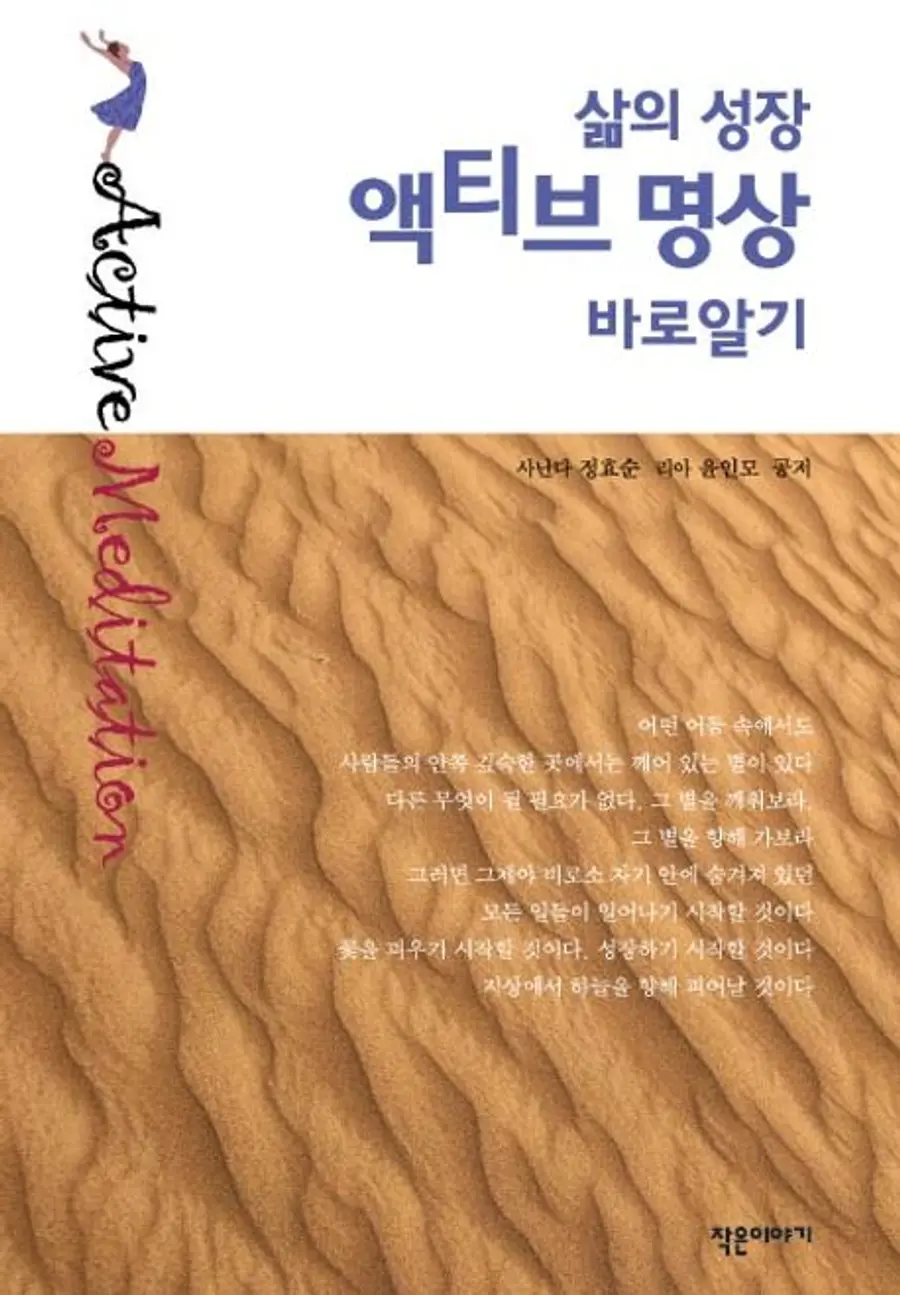
If you want to delve deeper into active meditation, I recommend 『Understanding Active Meditation for Life Growth』. This book is a kind of bible shared by two meditation experts who have introduced and guided Osho meditation for at least 15 years to active meditation practitioners in Korea.
In Part 1, it guides you through meditation methods suitable for overcoming various life challenges, accompanied by the authors' honest experiences, and in Part 2, it vividly shows the arduous training process at the internationally certified Osho Meditation Center in Pune, India. It will serve as a compass for those looking to delve deeper into meditation.
The book introduces various meditation methods that can be practiced in daily life without special preparation or space, and it is also a great help for planners who want to introduce healing and wellness programs in various communities.
Active Meditation: Finding True Stillness in Movement
Active meditation is a modern meditation method for modern people. It shows us that for those of us who find it hard to sit still, moving, making sounds, and dancing can actually be a path to deeper stillness.
The journey of releasing repressed emotions, allowing blocked energy to flow, and finally reaching deep peace. That is the gift that active meditation offers.
Let’s invest just 5 minutes starting today. You will discover true stillness in movement.
Reference〉 Andy's Mindfulness Letter