

A museum, experience centre and tea therapy centre on Ssanggye-ro in Jirisan's Hwagae Valley… South Gyeongsang's only outstanding wellness tourism destination to put tea and meditation side by side
Mornings in Hwagae Valley begin with the sound of running water and the scent of tea. In the valley descending along the southern foothills of Jirisan, wild tea that took root on its own has survived longer than the tea plantations planted by people. The tea bushes scattered across the slopes do not grow in neat rows. Each has found its own place beside a rock or beneath the shade of a tree.
The Hadong Wild Tea Culture Centre, encountered while travelling up Ssanggye-ro, divides the history held by those ancient tea fields among three buildings. Visitors can see tea on display, try making it, then drink it and rest, all in one place. What sets the centre apart from other tea-related facilities is that meditation programmes sit alongside these activities.
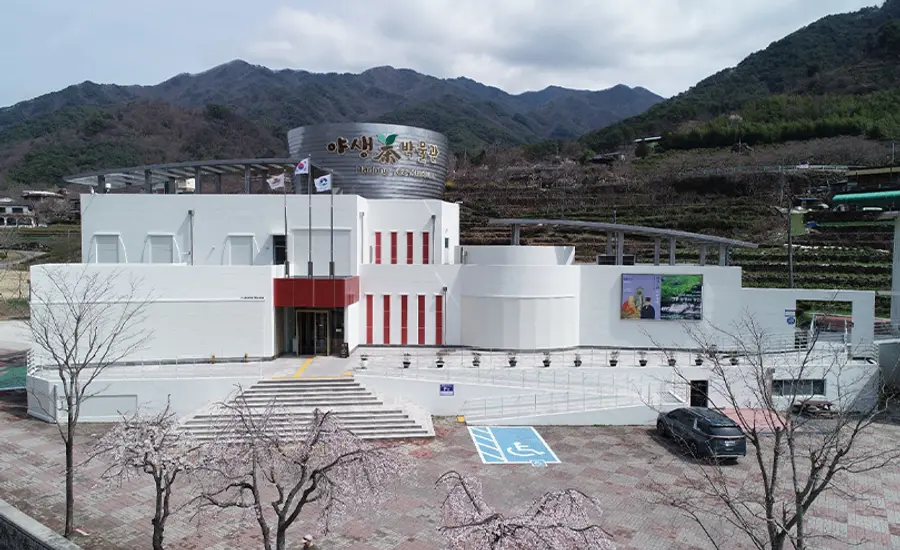
A space set amid tea fields recognised by the world
Hadong's wild tea agriculture is listed as a Globally Important Agricultural Heritage System (GIAHS). The designation recognises a tradition that has continued for hundreds of years, with people hand-picking tea bushes growing naturally on steep slopes.
In 2025, the centre was newly selected as an outstanding wellness tourism destination by the Ministry of Culture, Sports and Tourism and the Korea Tourism Organization. It was the only such destination chosen in South Gyeongsang Province. The assessment took into account the centre's programmes for caring for body and mind through tea, rather than simply drinking it.
A museum, an experience centre and a tea therapy centre
The centre is divided into the Wild Tea Museum, the Tea Experience Centre & Tea Market, and the Tea Therapy Centre.
The Wild Tea Museum displays the history and culture of Hadong's wild tea. Exhibits and archive material trace when tea arrived in the valley and how it has been made over the years.
The Tea Experience Centre & Tea Market hosts hands-on programmes and sells tea made in Hadong. Its tea ceremony and character-building experience can accommodate up to 80 people.
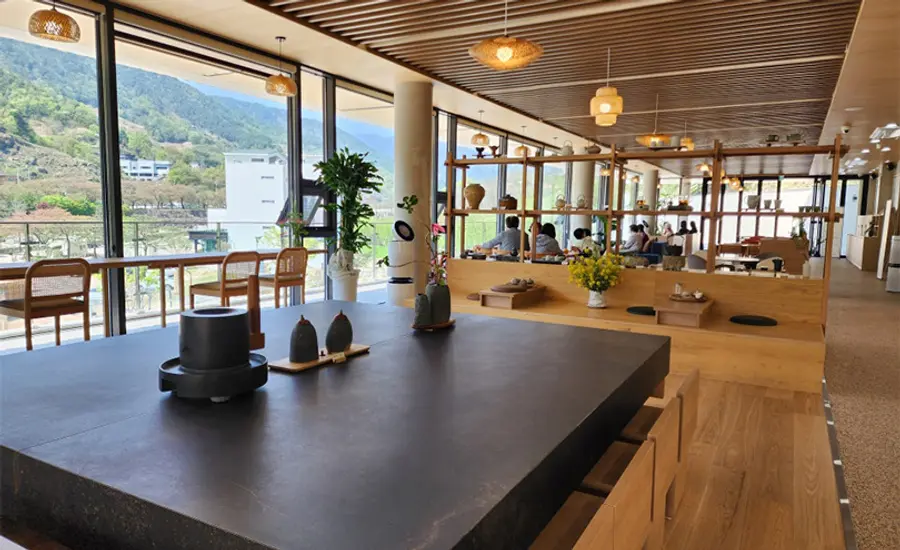
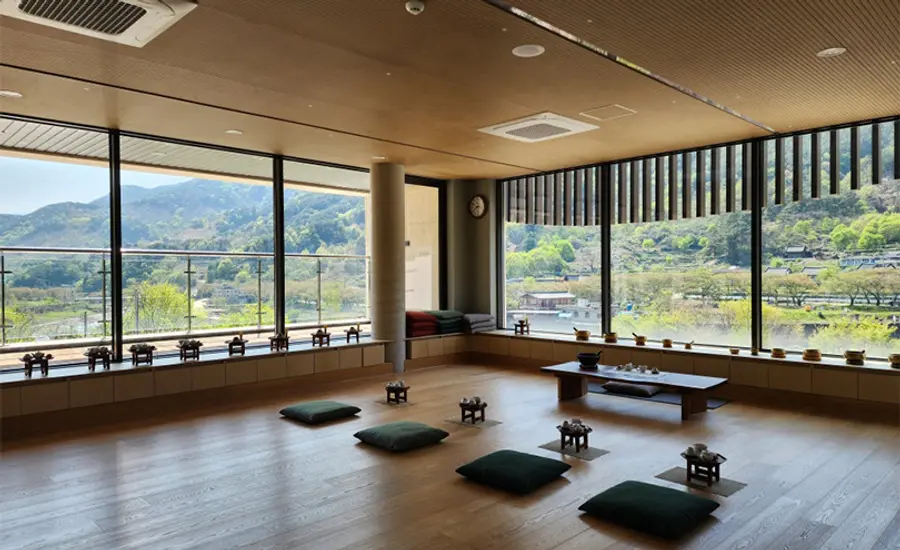
The Tea Therapy Centre, which opened in 2024, changed the character of the complex. The first floor is T-Café Hadong, a tea-drinking space with fine views, while the second houses a speciality room and a multipurpose room for tea classes and meditation programmes.
Tea and meditation in one place
The Tea Therapy Centre's programmes fall broadly into five categories: tea sommelier and Episode Tea experiences, 'Tea and Meditation (Yoga)', tea camping, and green tea foot baths. Pregnancy yoga is also available.
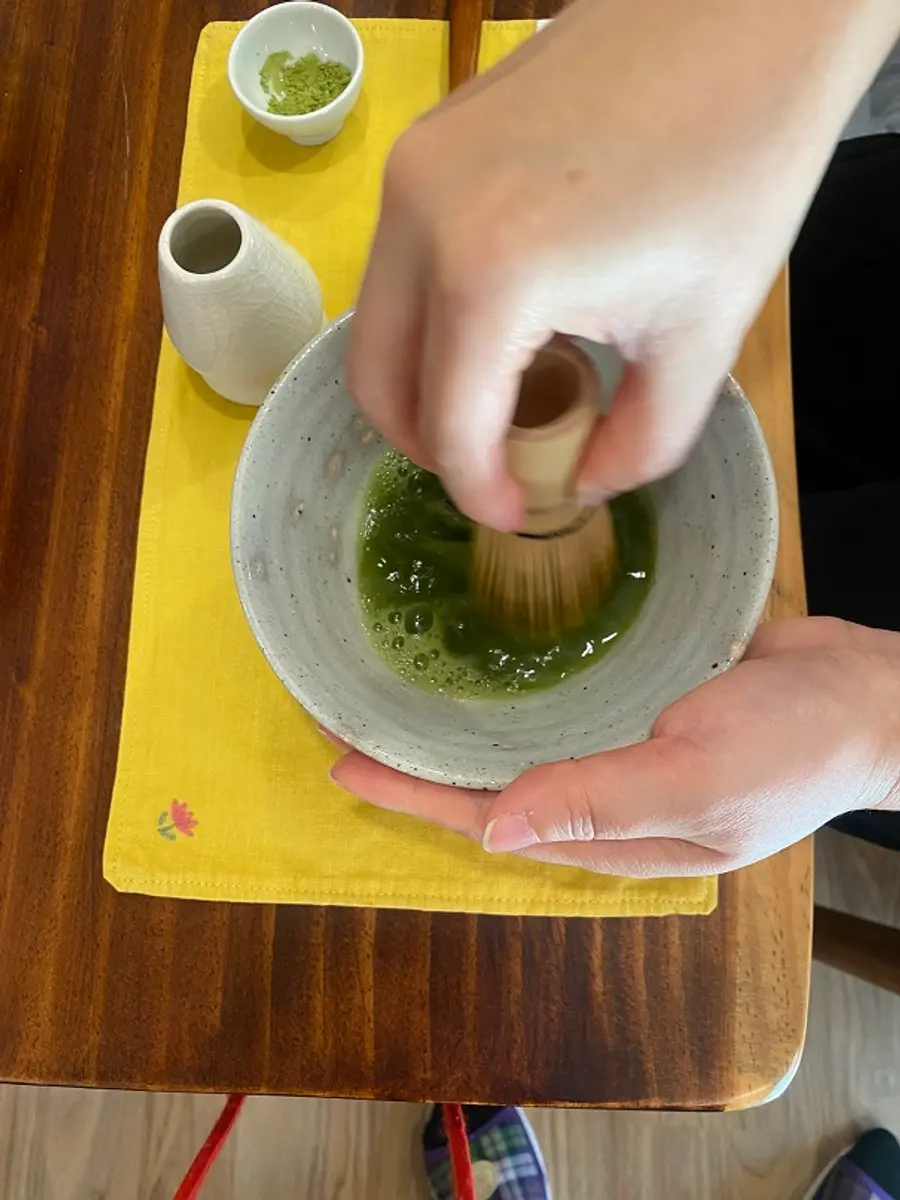
'Tea and Meditation' uses the acts of brewing and drinking tea themselves as objects of mindful awareness. Participants follow, in turn, the sound of water coming to the boil, the time it takes for the leaves to unfurl and the weight of the hand lifting the cup. With a lower barrier to entry than meditation focused solely on the breath, it is easy for beginners to follow.
A green tea foot bath lets visitors take in the tea's warmth and fragrance through their feet. Tea camping combines tea with traditional sweets and is particularly popular with families.
According to a report by Kukje News, the tea class is a hands-on lesson in which participants brew tea using locally made Hadong teaware under the guidance of a professional tea master. It has proved so popular that every session fills up.
Experiences that follow the seasons
Programmes at the Tea Experience Centre vary with the seasons. Tea-leaf picking is available only from April to June. Visitors pick leaves themselves when the first tea of the year appears, then use what they have gathered to make tea.
Making three-colour traditional sweets is an experience in which visitors mould the sweets served with tea. The tea ceremony and character-building experience can accommodate the largest groups, making it suitable for visits by schools and organisations.
All programmes operate by reservation.
'Tea and Meditation' linked to Ssanggyesa Temple stay
The Tea Therapy Centre's meditation programme extends beyond the centre itself. According to an operational update reported by Pressian in November 2024, the centre ran a 'Tea and Meditation' programme linked to a temple stay at Ssanggyesa in August and September, towards the end of summer. Spending a day within the temple grounds before brewing tea in the tea room was an attempt to connect Buddhist practice and tea culture in a single thread.
In October of the same year, it launched a prenatal class for expectant mothers. The move reflects an effort to broaden the scope of care offered through tea.
Cheonnyeon Dahyang-gil, a path through the tea fields
There are also paths visitors can walk after leaving the centre. Cheonnyeon Dahyang-gil, divided into two courses, stretches for a total of 8 kilometres. Hadong County has combined 18 tea fields into a 'Hadong-style Secret Garden' and has also launched package tours linked to nearby resorts.
The sequence of walking slowly among the tea fields, then entering a tea room to brew tea, becomes a meditation route in its own right. Walking and breathing, fragrance and taste follow one another, allowing the body to slow down before any formal practice has been learned.
Where the tea industry meets healing
Hadong Tea Market surpassed cumulative sales of 100 million won within seven months of opening. It works with 37 businesses and handles 348 types of product. This shows that visitors are not ending their experience at the centre but taking tea home with them, creating a cycle that continues beyond the visit.
Destinations selected as outstanding wellness tourism sites receive support for overseas promotional marketing, tourism product development, tailored consultancy and capacity-building education. The role this support will play as Hadong shifts from a tea-producing region to a healing destination remains to be seen.
When is the best time to visit?
What visitors can do here changes with the seasons.
April to June is the only period when tea-leaf picking is available. It is when the first tea of the year appears, and the colours of the tea fields are at their most vivid. Visitors who want to make tea from leaves they have picked themselves must come during this period.
August and September, as summer gives way to autumn, are the best months for meditation programmes. Once the heat of the day has receded and the valley's dampness settles, the air inside the tea room becomes noticeably calmer.
From November to February, opening hours are shortened by one hour, but visitor numbers fall, making the period well suited to those seeking a quieter experience. In winter, the tea fields remain green beneath a layer of frost and are pleasant to walk through.
Visitors should remember that the centre is closed on Mondays. It also closes on New Year's Day, Lunar New Year's Day and the day of Chuseok.
Visitor information
The address is 571-25 Ssanggye-ro, Hwagae-myeon, Hadong County, South Gyeongsang Province. Opening hours are 10am to 6pm from March to October, and until 5pm from November to February of the following year. Closed days are Mondays, New Year's Day, Lunar New Year's Day and the day of Chuseok.
For reservations and enquiries, call 055-884-2955. Programmes at T-Café Hadong can also be booked by searching for 'T-Café Hadong' on a web portal.
If you stay for another day
Hadong Songnim Park is not far from the centre. With a pine forest meeting the Seomjin River, it is an ideal place for a walk after a cup of tea. Asia's longest Hadong Korea Zipwire is also nearby, allowing visitors to combine quiet and high-speed experiences in a single day.
A short guide for first-time visitors
The question most often asked by people new to tea meditation is what they are supposed to do. The answer is usually simple: move a little more slowly than usual.
Listen to the sound while the water boils, feel the temperature at your fingertips while warming the cup, and smell the fragrance once more before swallowing the first sip. In between, the breath naturally lengthens. There is no rule that you must straighten your posture or close your eyes.
People who know tea well may be especially inclined to assess its flavour, but during the meditation programme it is better to set judgement aside for a while. The point is not to identify a good tea but to be aware of the cup in front of you.
A professional tea master leads the session, so participants can follow without any prior knowledge of tea. They are also shown how to handle the teaware.
Tea meditation as a Korean wellness asset
When choosing a destination for a meditation trip, people generally think of forests, the sea or temples. Tea has long occupied an empty space between them. Because the act of drinking tea itself calls for slow breathing and creates a period in which the hands, eyes and nose focus in one direction, tea is a meditation tool in its own right.
Hadong is a land that has refined that tool for a thousand years. If tea can stand alongside temple stays and forest healing when we explain Korean wellness to overseas visitors, the range of stories we can offer will become considerably broader.
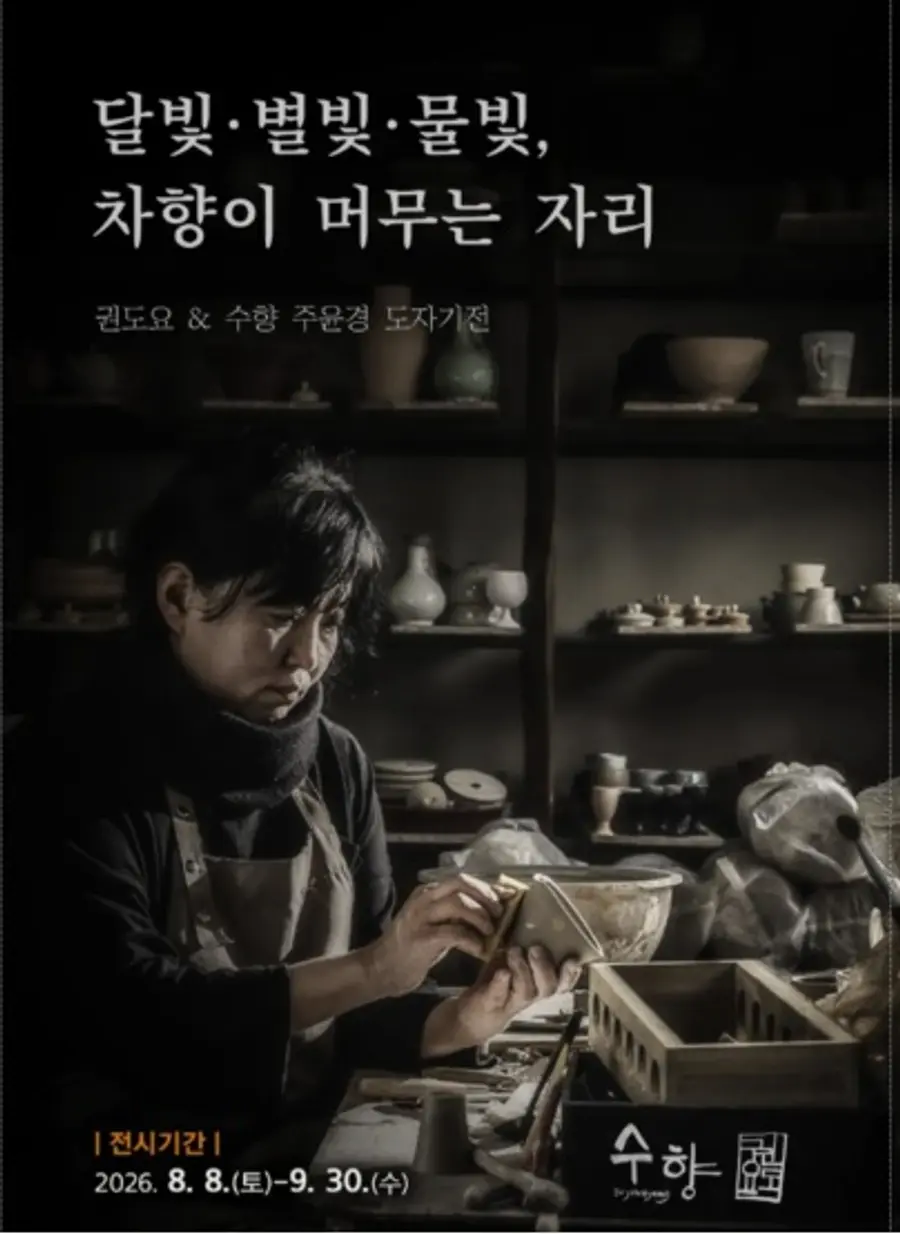
Until 30 September, the centre is hosting local artist Suhyang Joo Yoon-kyung (Kwon Do-yo)'s ceramics exhibition 『Moonlight · Starlight · Waterlight, a place where the fragrance of tea lingers』. Held in Exhibition Rooms 1 and 2 on the second floor of the Wild Tea Museum, the exhibition features about 300 ceramic works made from Hadong clay by Joo Yoon-kyung, who lives in Hwagae-myeon and continues to work there. The pieces capture the colours and fragrance of Hadong green tea and the atmosphere of its unspoilt natural surroundings.
An official from Hadong County's Agricultural Products Distribution Division said: "Through this meaningful opportunity to introduce the work of Hadong's outstanding artists, we hope the museum can serve as a centre for cultural exchange that engages with the local community," adding: "We hope the exhibition gives visitors a special opportunity to experience the value of Hadong's culture and arts and its tea culture."
- Official website http://www.hadongteamuseum.org/main.php