

A museum, experience center and tea-healing center along Ssanggyero in Jirisan’s Hwagae Valley … South Gyeongsang’s only outstanding wellness tourism destination devoted to tea and meditation
Mornings in Hwagae Valley begin with the sound of water and the scent of tea. In the valley descending along the southern foothills of Jirisan, wild tea plants that took root on their own have survived longer than cultivated tea gardens. The tea trees scattered across the slopes do not grow in orderly rows. Each has found its place beside a rock or beneath the shade of a tree.
Hadong Wild Tea Culture Center, reached by following Ssanggyero uphill, divides the history held by those old tea gardens among three buildings. Visitors can see tea on display, try making it themselves, then drink it and rest, all in one place. What sets the center apart from other tea-related facilities is that meditation programs are integrated into the experience.
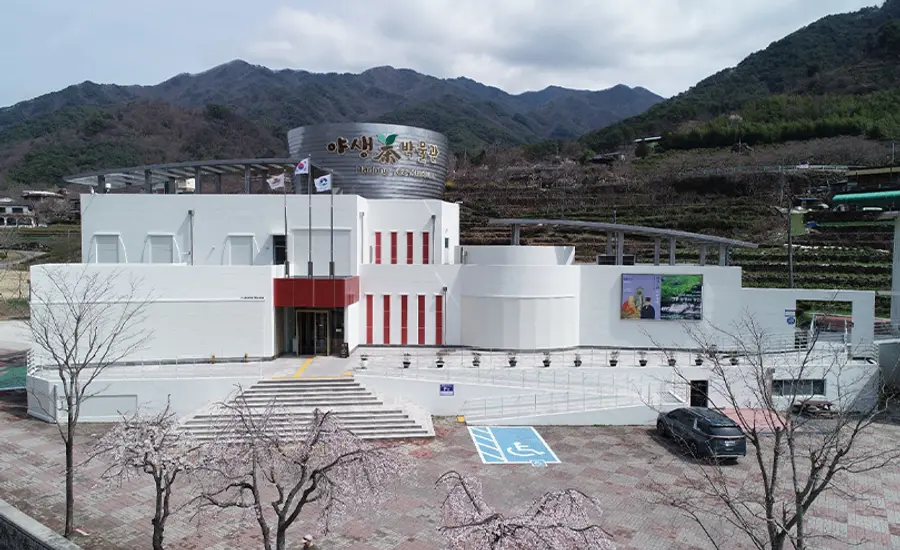
A Destination Set Above Tea Gardens Recognized Around the World
Hadong’s wild tea agriculture is listed as a Globally Important Agricultural Heritage System, or GIAHS. The designation recognizes a method that has continued for hundreds of years: hand-picking tea plants that grow naturally on steep slopes, one by one.
In 2025, the center was newly designated an outstanding wellness tourism destination by the Ministry of Culture, Sports and Tourism and the Korea Tourism Organization. It was the only destination selected in South Gyeongsang province. The evaluation took into account the center’s programs, which use tea to care for the body and mind rather than stopping at tea drinking.
A Museum, an Experience Center and a Tea-Healing Center
The center is divided into the Wild Tea Museum, the Tea Experience Center & Tea Market, and the Tea-Healing Center.
The Wild Tea Museum showcases the history and culture of Hadong’s wild tea. Exhibits and archival materials trace when tea arrived in the valley and how it has been produced.
The Tea Experience Center & Tea Market hosts hands-on programs and sells tea made in Hadong. Its tea etiquette and character-building program can accommodate up to 80 people.
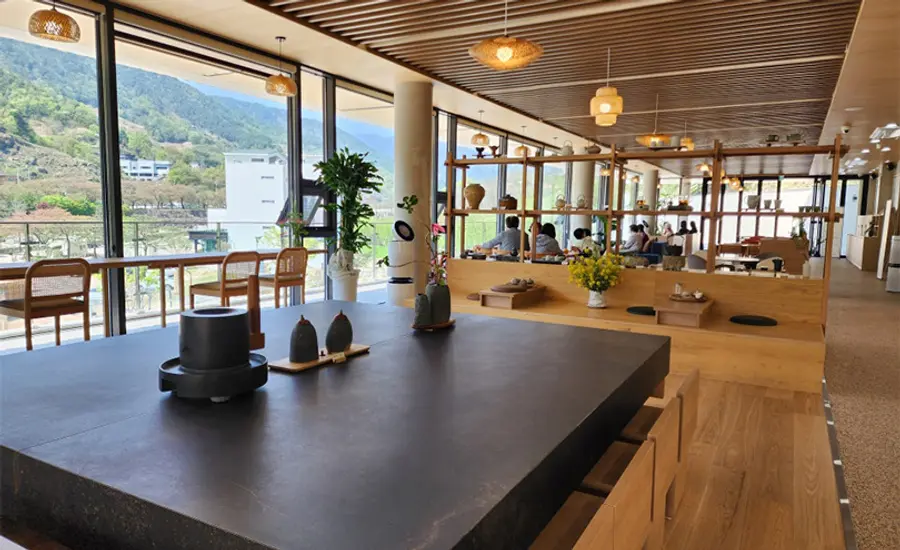
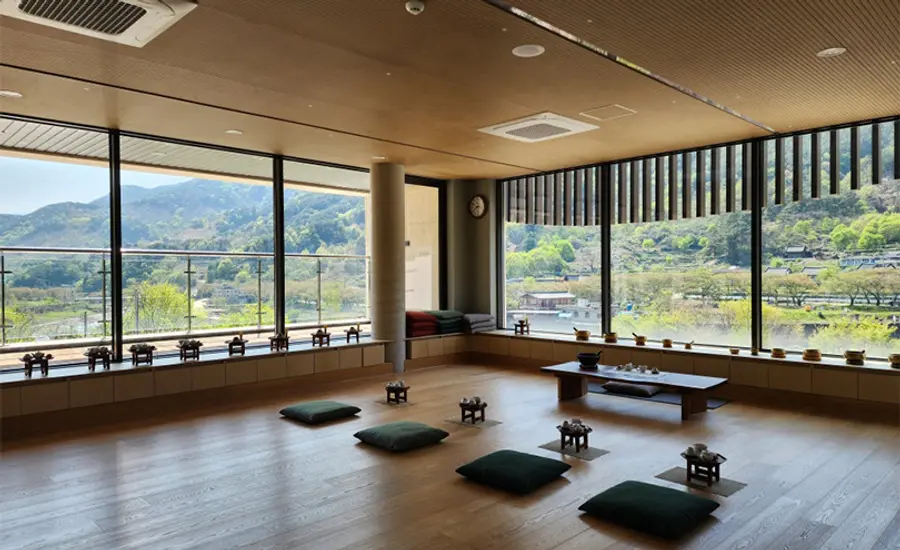
The Tea-Healing Center, which opened in 2024, changed the character of the overall facility. The first floor houses Tea Cafe Hadong, a tea-drinking space with expansive views. The second floor contains a specialty room and a multipurpose room for tea classes and meditation programs.
Tea and Meditation in One Place
Programs at the Tea-Healing Center fall broadly into five categories: tea sommelier and episode tea experiences, “Tea and Meditation (Yoga),” tea camping and green-tea foot baths. Prenatal yoga is also offered.
“Tea and Meditation” treats the act of brewing and drinking tea itself as an object of mindful awareness. Participants follow, in sequence, the sound of boiling water, the time it takes tea leaves to unfurl and the weight of the hand lifting the cup. Because it presents a lower barrier than meditation focused solely on the breath, the program is easy for first-time practitioners to follow.
A green-tea foot bath lets participants take in the tea’s warmth and aroma through their feet. Tea camping combines tea with dasik, traditional Korean sweets served alongside tea, and is especially popular with families.
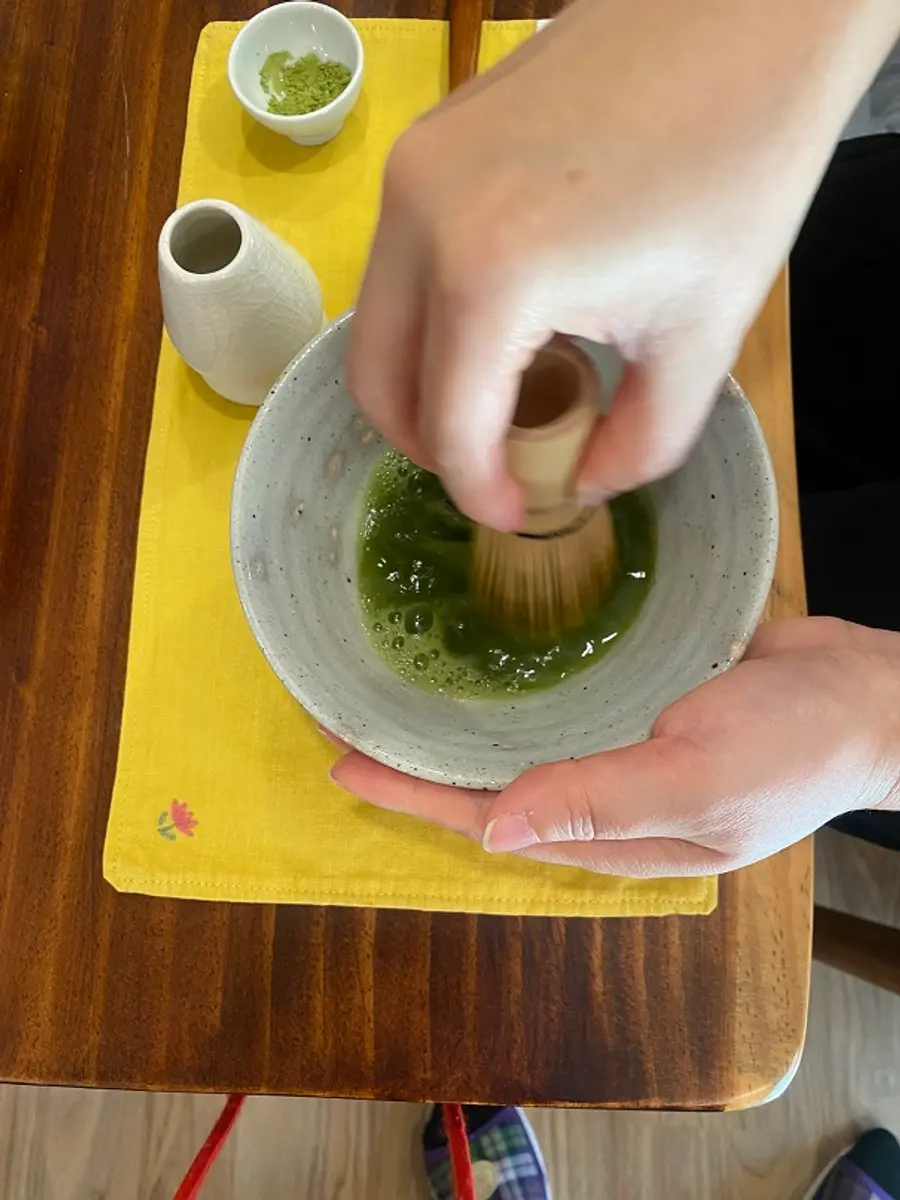
According to a report by International News, the tea class is a hands-on course in which participants brew tea themselves using tea ware made in Hadong under the guidance of a professional tea master. It has proved so popular that every session fills up.
Experiences That Follow the Seasons
Programs at the Tea Experience Center vary with the seasons. Tea-leaf picking is offered only from April through June. Visitors pick fresh leaves during the season’s first harvest and then use those leaves to make tea.
Making three-color dasik is a hands-on experience in shaping the sweets served with tea. The tea etiquette and character-building program accommodates the largest groups, making it suitable for visits by schools and institutions.
All programs require reservations.
“Tea and Meditation” Linked to Ssanggyesa Temple Stay
The Tea-Healing Center’s meditation programs extend beyond the center itself. According to an operating update reported by Pressian in November 2024, the center ran a “Tea and Meditation” program in August and September, at the end of summer, in conjunction with a temple stay at Ssanggyesa Temple. Spending a day inside the temple grounds and brewing tea in the tea room was an effort to link Buddhist practice and tea culture in a single experience.
In October of the same year, the center introduced a prenatal class for expectant mothers. The move reflects an effort to broaden the focus of care delivered through tea.
Cheonnyeon Dahyang-gil, a Path Through the Tea Gardens
A walking route has also been developed outside the center. Cheonnyeon Dahyang-gil, divided into two courses, stretches for 8 kilometers in total. Hadong County operates 18 tea gardens together as “Hadong’s Secret Garden” and has introduced package products linked to nearby resorts.
Walking slowly through the tea gardens before entering a tea room to brew tea becomes a meditative route in itself. Walking and breathing, aroma and flavor unfold in sequence, allowing the body to slow down before visitors have learned any formal practice.
Where the Tea Industry Meets Healing
Hadong Tea Market surpassed 100 million won in cumulative sales just seven months after opening. It handles 348 types of products in partnership with 37 companies. That means visitors are not ending their experience at the center; they are taking tea home, creating a cycle that continues beyond the visit.
Destinations designated as outstanding wellness tourism sites receive support for overseas promotional marketing, tourism product development, customized consulting and capacity-building education. How that support will help Hadong move from a tea-producing region to a healing destination remains to be seen.
When Is the Best Time to Visit?
What visitors can do here changes with the seasons.
April through June is the only period when tea-leaf picking is offered. Because the first harvest is emerging, the tea gardens are at their most vivid during this part of the year. Visitors who want to make tea from leaves they picked themselves must come during this period.
August and September, as summer gives way to fall, are the best months for meditation programs. As the daytime heat recedes and moisture settles into the valley, the air inside the tea rooms grows quieter.
Operating hours are reduced by one hour from November through February, but fewer visitors make this period ideal for those seeking a peaceful experience. In winter, the tea gardens remain green beneath a layer of frost, making them pleasant places to walk.
Visitors should remember that the center is closed Mondays. It also closes on Lunar New Year’s Day, Chuseok and Jan. 1.
Visitor Information
The address is 571-25 Ssanggyero, Hwagae-myeon, Hadong County, South Gyeongsang province. From March through October, hours are 10 a.m. to 6 p.m.; from November through February of the following year, the center closes at 5 p.m. It is closed Mondays, Jan. 1, Lunar New Year’s Day and Chuseok.
For reservations and inquiries, call 055-884-2955. Programs at Tea Cafe Hadong can also be booked by searching for “Tea Cafe Hadong” on a portal site.
If You Stay an Extra Day
Hadong Songnim Park is not far from the center. Located where a pine forest meets the Seomjin River, it is a good place for a walk after a cup of tea. Hadong Korea Zipwire, said to be the longest in Asia, is also nearby, allowing visitors to combine quiet and high-speed experiences in a single day.
A Brief Guide for First-Time Visitors
The question most often asked by people new to tea meditation is what they are supposed to do. The answer is usually simple: Move a little more slowly than usual.
Listen to the sound of the water as it boils. Feel the temperature at your fingertips as you warm the cup. Smell the aroma once more before swallowing the first sip. In between, the breath naturally lengthens. There is no rule requiring participants to straighten their posture or close their eyes.
People who know a great deal about tea may be especially inclined to evaluate its flavor, but during a meditation program it is better to set judgment aside for a while. The point is not to identify the best tea; it is to become aware of the cup in front of you.
A professional tea master leads the program, so participants can follow along without any prior knowledge of tea. They are also shown on-site how to handle the tea ware.
Tea Meditation as a Korean Wellness Asset
When choosing a destination for a meditation trip, people typically think of forests, the sea or temples. Tea has long occupied an empty space among them. Because the act of drinking tea itself calls for slow breathing and creates a period when the hands, eyes and nose focus in the same direction, tea is a meditation tool in its own right.
Hadong is a land that has refined that tool for a thousand years. If tea can stand alongside temple stays and forest therapy when we explain Korean wellness to foreign visitors, the range of stories we can offer will grow considerably.
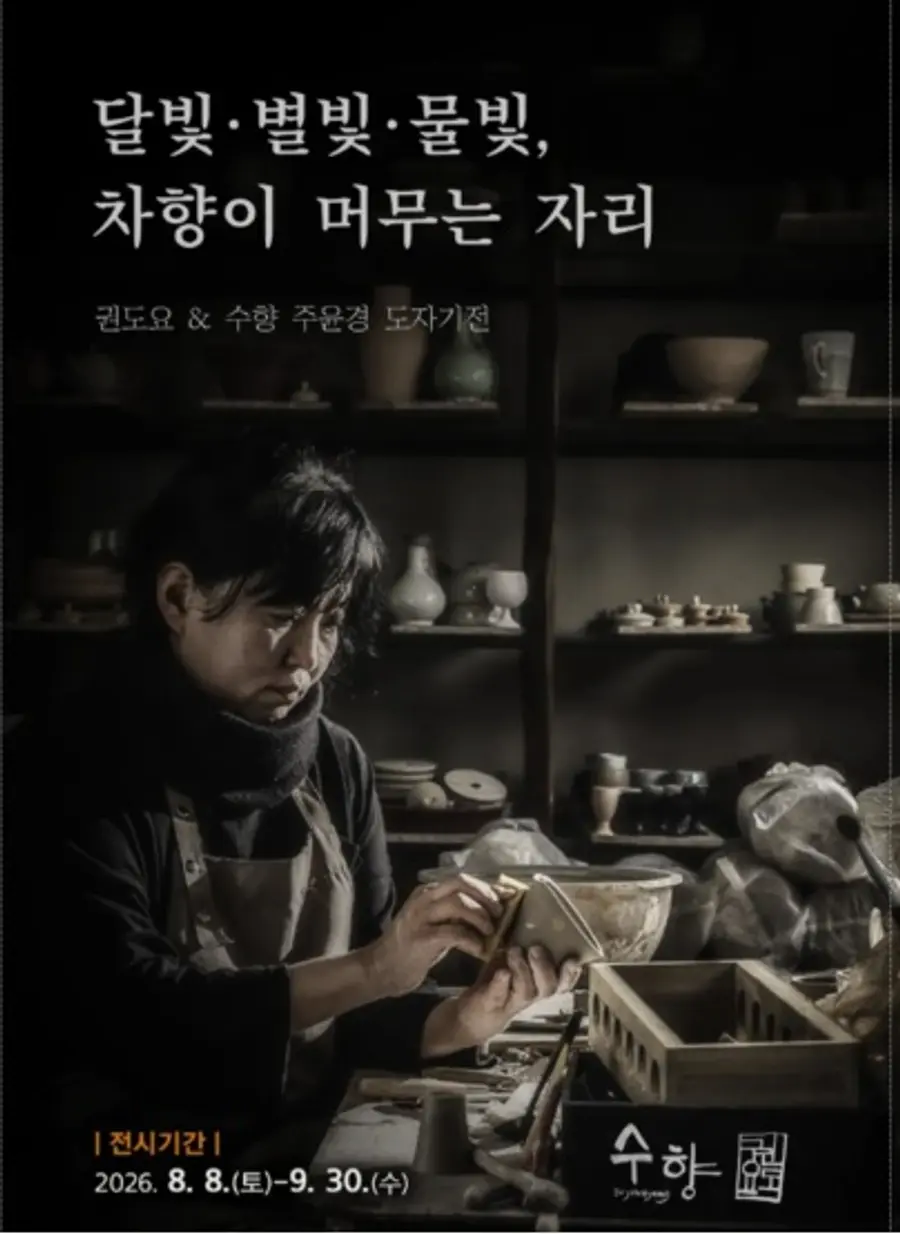
Through Sept. 30, the center is hosting local artist Suhyang Ju Yun-kyung (Kwon Do-yo)’s ceramics exhibition『Moonlight · Starlight · Waterlight, a Place Where the Scent of Tea Rests』. The exhibition, held in Exhibition Rooms 1 and 2 on the second floor of the Wild Tea Museum, features about 300 ceramic works made from Hadong clay by Ju Yun-kyung, who lives in Hwagae-myeon and continues to create art there. The works capture the color and aroma of Hadong green tea and the atmosphere of its pristine natural landscape.
An official from Hadong County’s Agricultural Products Distribution Division said, "We hope the museum can serve as a hub for cultural exchange and engage with the local community through this meaningful opportunity to introduce the work of Hadong’s outstanding artists," adding, "We hope this gives visitors a special opportunity to experience the value of Hadong’s culture and arts and its tea culture."
- Official website http://www.hadongteamuseum.org/main.php