

It was an evening when saying, "to watch the performance" felt strangely awkward. On the first weekend of May, at the Kim Hee-soo Art Center in Hongneung-dong, Dongdaemun-gu, 'Concert in the Darkness' was a stage where you had to pass the time using only hearing and vibrations, after closing your eyes. It was a chance to experience how much more deeply you can feel other senses by not seeing.
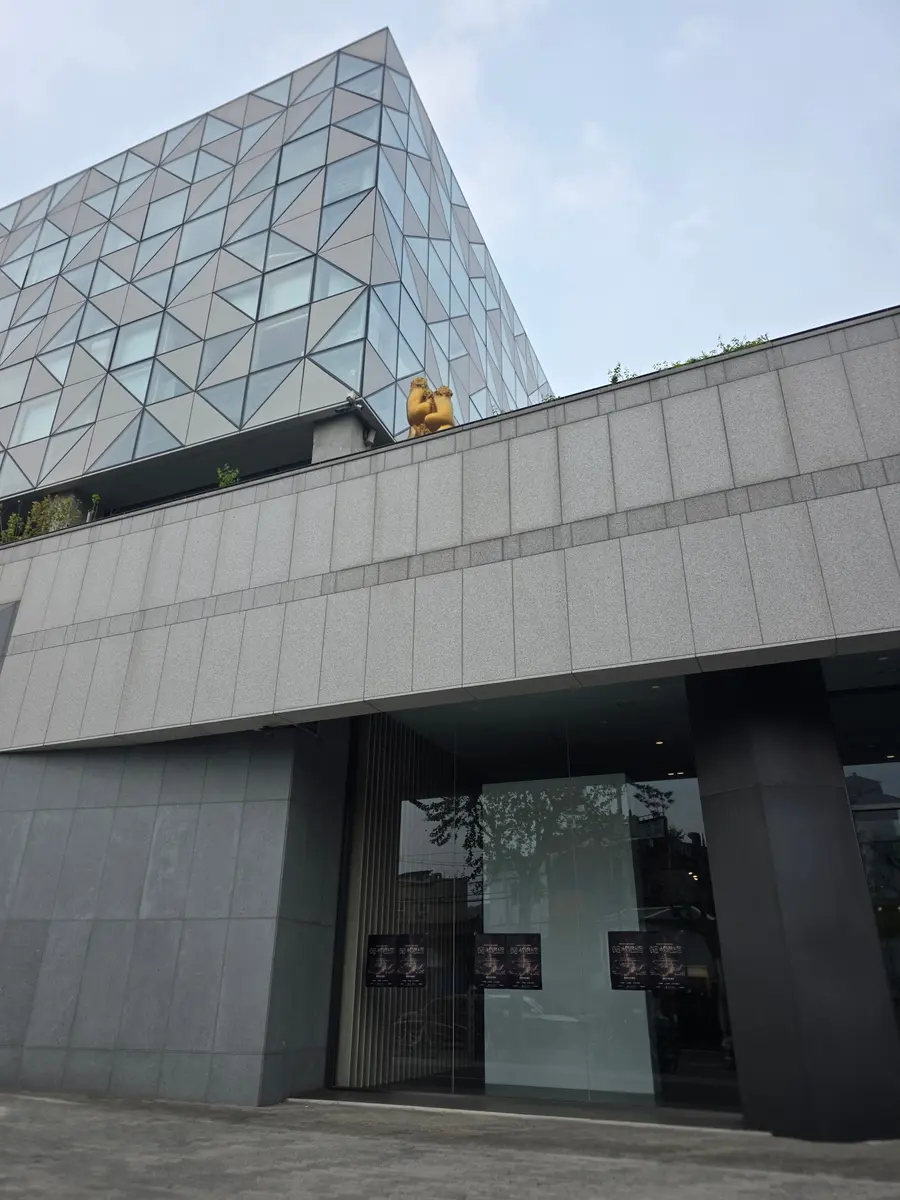
The Kim Hee-soo Art Center I Met for the First Time in the Middle of Hongneung
I have lived in Seoul for nearly 40 years, but this was my first time visiting the Kim Hee-soo Art Center. It is a complex cultural space established in 2009 by the Surim Cultural Foundation to carry on the wishes of Ms. Kim Hee-su, a Zainichi entrepreneur who built his success from the ground up and served as an incumbent of the Chung-Ang University board of directors for 22 years. Just as he said that passing wealth to the next generation is "the lower (하)," passing down a business is "the middle (중)," and leaving behind people is "the upper (상)," this art center was quietly bringing traditional arts and emerging artists onto the stage. The fact that there was such a deep yet neatly composed performance venue in the northeastern part of Seoul felt pleasantly surprising.
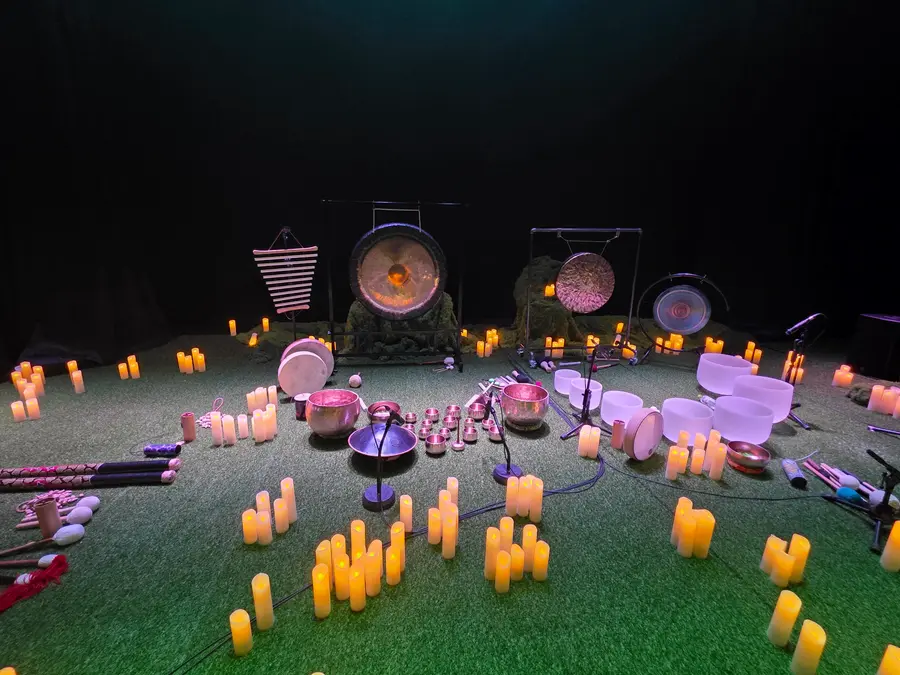
Candles and the Singing Bowl—The First Vibrations of Bangjagingi (Korean Bronzeware)
As soon as I entered the performance hall, the many candles filling the stage claimed the view first. Meditation instruments and Korean traditional instruments—including a Gong, singing bowls, and handpans—were arranged side by side. The front seats were shaped so you could recline at an angle like camping chairs, so I sat in the very front without hesitation. Each seat had a blanket and an eye mask, and a singing bowl prepared one per person. These are works by Lee Jong-deok, the artisan of Bangjagingi, the supporting company.
Before the main performance, the relaxation session left a strong impression. They had me place the singing bowl on my palm, tap it myself to feel the vibrations, and then guided me to follow the sensation as the tremor spread from my fingertips to my shoulders and chest. The Bangjagingi singing bowls made by Lee Jong-deok (Jeonbuk Intangible Cultural Property No. 43) have a tin content more than twice as high as Himalayan singing bowls, producing a distinctly deep timbre unique to Korea. That Korean sound was the first to awaken the sensations in my body that had been closed off.
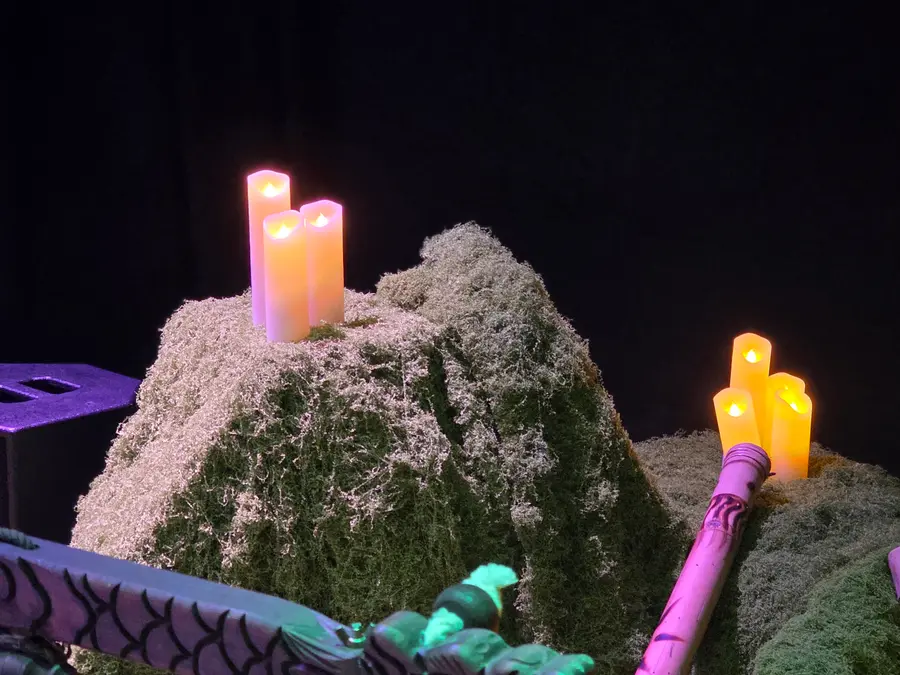
Pansori and Meditation Instrument Vibrations Encountered in Perfect Darkness
When I covered myself with the blanket and put on the eye mask, my field of view disappeared, leaving only my hearing. The stage crafted by six artists—including director Park Seol-a and performers Choi Ye-na, Lee Hyun-a, In Seung-hyun, Jo Sung-gyu, and Park Seo-hyun—began with singing bowls and handpans, unfolding a layered composition of mantra, pansori, and changi. The meeting of Korean traditional music and meditation instruments created a strange kind of mystery. As I focused on the sounds in the darkness, it felt as if the music were being pushed from far away; and at some point, it drew close to the state of spoken lyrics, making it hard to even tell what was being heard. It felt like being submerged deep in the water and listening to someone’s song.
The Voices of Artists with Visual Impairments, Turning Darkness into Light
What added special weight to this stage was the presence of two visually impaired artists, Lee Hyun-a and Choi Ye-na. Their path—years of meeting audiences in the dark using only their voices—naturally flowed onstage. It was a time that transformed an invisible stage not into a lack, but into yet another possibility. Sponsored by the Korea Disabled People’s Cultural Arts Center, this performance was also a rare experiment that translated new forms of disability arts into music.
An Hour, and the Long-Lasting Echo
I couldn’t tell how that hour had passed. When I removed my eye mask, the stage, the performers, and even the candles were exactly the same, but the scenery inside my body had changed. As if it might have felt even more mysterious if foreign audience members had been sitting there too, this stage—where Korean traditional music met meditation—carried enough texture for overseas viewers to feel it as well. I hope to see 'Concert in the Darkness,' planned by the Social Cooperative Culture Factory, more often as a stage that shines a light on both disability arts and meditation culture. When you encounter a good performance, the desire to come back to the Kim Hee-soo Art Center naturally followed.