

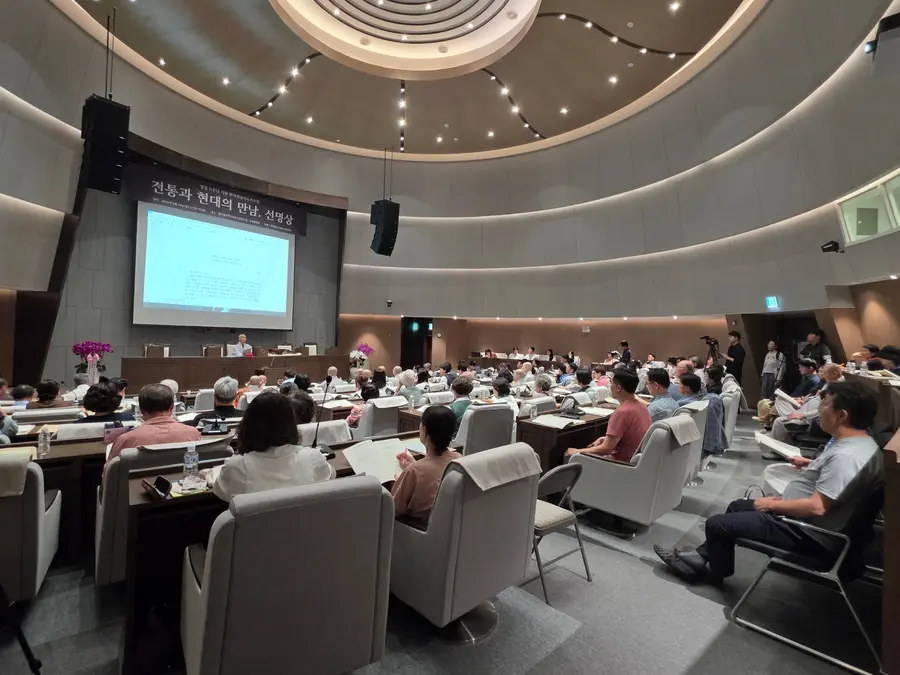
The tranquil breathing of early Buddhism, the interconnectedness of existence described in the華嚴經, Tibet’s contemplative practices, the hwadu of Korean ganhwa Seon, and mindfulness that has seeped into modern daily life. Meditation traditions that have walked different paths for a long time sat down facing each other under the single name “Seonmyeongsang(禪冥想).”
The Korean Meditation Instructor Association held a Korea Meditation Instructor Forum at the International Conference Hall of the Korea Buddhist History and Culture Memorial館 in Seoul on June 28 under the theme “A Meeting of Tradition and Modernity, Seonmyeongsang.” The event was arranged to mark the association’s 11th anniversary since its founding. The association, made up of 31 Buddhist meditation groups, has Mr. Maga Seon, Ms. Jeonghye Seon, Kim Yeol-kwon, the head director of the Maha Vipassana Meditation Institute, and An Hee-young of the Korea MBSR Research Institute serving as co-chairs. The international conference hall of the Jogyesa Temple was filled without a single empty seat, packed with members and relevant officials who came to hear introductions to various cases and traditions to be presented that day, and it was hotter than any other meeting.
“Working Together to Popularize Seonmyeongsang for the Peace of the People”
Jinwoo Seon, the head of the Jogye Order of Korean Buddhism’s headquarters, said through a congratulatory address delivered on his behalf by Ilgam Seon, the secretary-general of the Future Headquarters, that he has sought to pursue a Buddhism that communicates with younger generations and moves forward together with the world. Jinwoo Seon expressed his gratitude to the association for adopting and establishing Seonmyeongsang as the key terminology in an integrated teaching text, and said it will carry forward the Seonmyeongsang popularization movement even more vigorously for the peace of the people.
In a welcome address, co-chair Kim Yeol-kwon said that Korea has grown into a country with world-class competitiveness in the K-Culture and AI and IT fields. He then pledged that the association should become an open platform to share the visions of various practice traditions and meditation methods, saying that now is the era when, beyond material development, people must solve issues of inner maturity and the question of existence together.
One Map Drawn by Five Branches of Practice Traditions
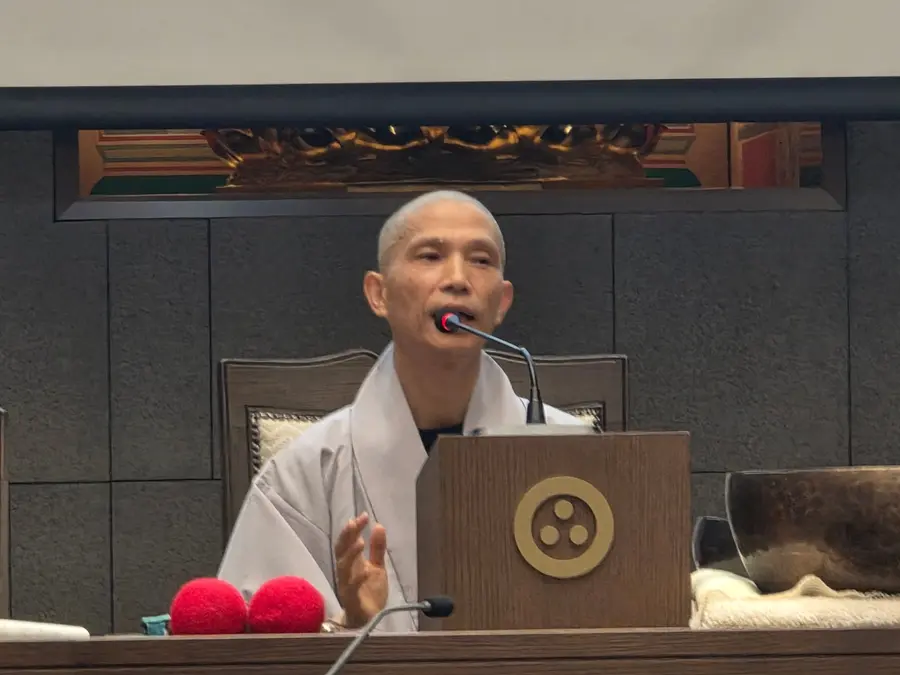
The forum featured five different traditions introduced in sequence. With limited time, the afternoon was packed with passionate presentations that contained the presenters’ feelings of regret for not being able to introduce the deeper traditions in greater detail.
Hyeonam Seon, director of education at Jogyesa, delivered a talk titled “Meditation in Early Scriptures and the Theravada (Sanggwa) Tradition,” and pointed out that Seonmyeongsang is a path that embraces all practice methods within the roughly 2,700-year history of Buddhism without rejecting them, while still responding to modern demands. The suggestions continued that Seonmyeongsang should be the practice that carries forward essential values between preserving tradition and adapting to the modern era.
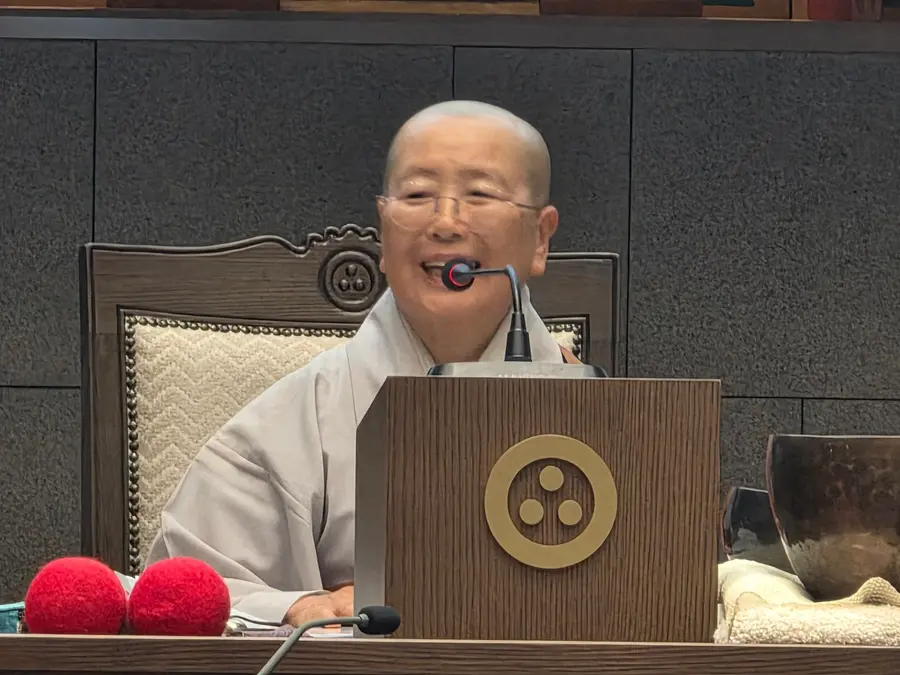
Jeonghye Seon, head director of the Haein Seonmyeongsang Center, explained that a world of華嚴 in which all beings are interconnected should not stop at understanding it with the head, but should be experienced with both body and mind—something she said is Seonmyeongsang. She added that the path involves practicing together intuitive awakening of Seon and meditation’s moment-to-moment awareness, which left a strong impression.
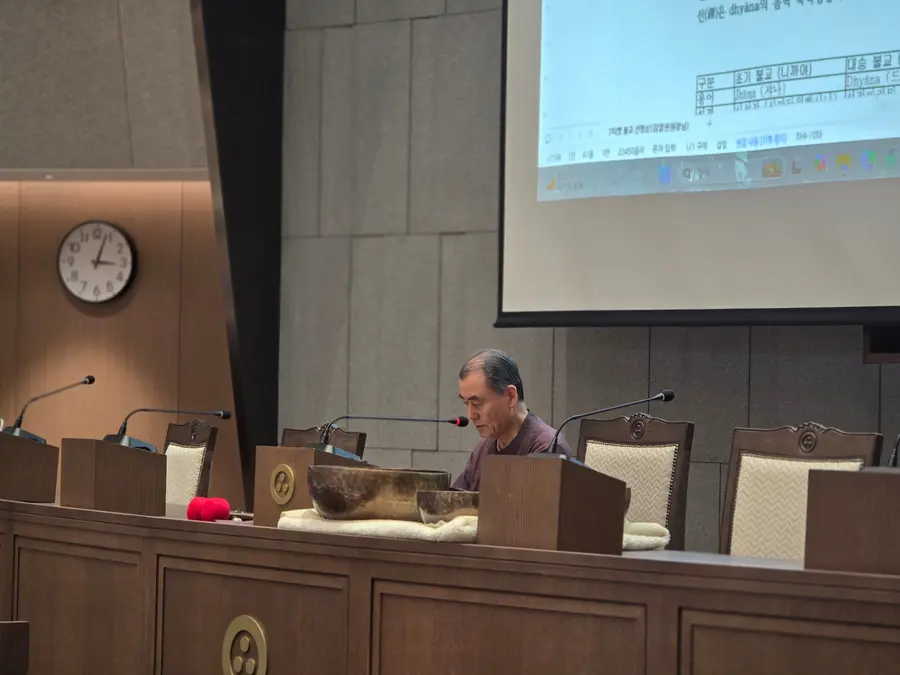
In a presentation on “Tibetan Buddhist Seonmyeongsang,” Wonjang Kim Yeol-kwon organized an overview and key characteristics of Tibetan meditation, shared stories from people who experienced changes in life through meditation, and emphasized self-checking through the practice of the Middle Way and through scriptures. In particular, he brought in Vice President Son Jeong-gon, a practitioner among the presenters who is still working in active service, as an attendee at the forum as well, allowing greetings to be exchanged on site, which made it even more memorable.
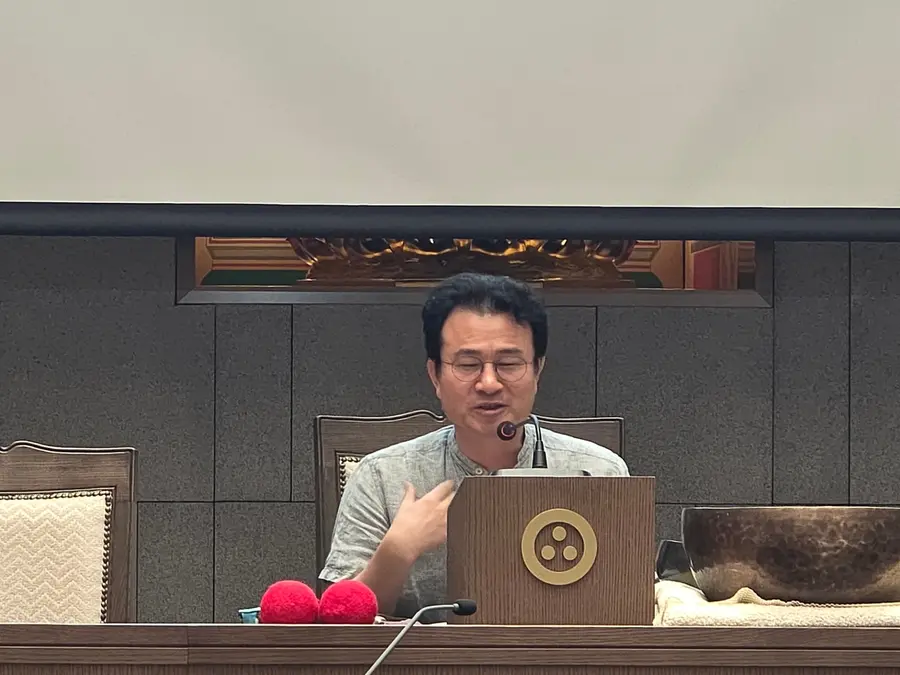
Park Hee-seung, director of the Seonmyeongsang Healing Center, presented “Ganhwa Seonmyeongsang—Seonmyeongsang Needed in the AI Era,” introducing the hwadu practice. He argued that because Korean ganhwa Seon harmonizes with a variety of meditation methods while maintaining the distinct features of jikji and don-o Seon, Korea’s Seonmyeongsang is precisely what could be called “K-meditation.”
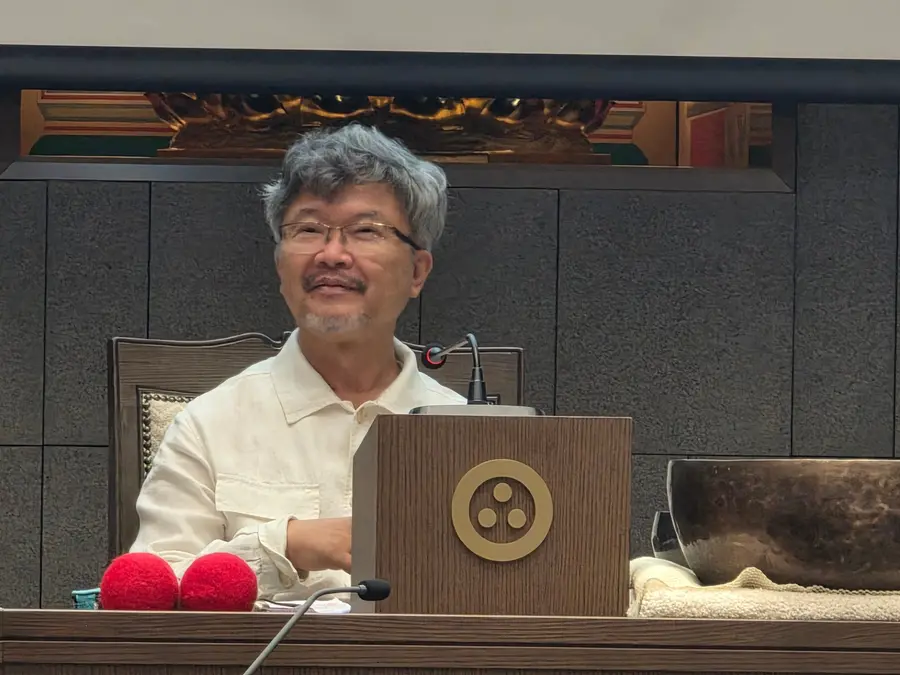
An Hee-young, director of the Korea MBSR Research Institute, explored intersections between Seonmyeongsang and modern mindfulness programs under the theme “A Meeting of Tradition and Modernity, Seonmyeongsang (Seon Meditation).” Ending the presentation, she said that while it is natural that multiple interpretations emerge, people should face up to the causes that create differences and communicate on equal terms, rather than trying to erase those differences by force.
“Seonmyeongsang Is Not a Specific Practice Method, but an Integrated Concept”
In the subsequent comprehensive panel discussion, participants agreed that Seonmyeongsang does not point to a specific sect or a specific practice method. Instead, it is an integrated practice concept that encompasses early Buddhism, Mahayana Buddhism, Sun Buddhism, Tibetan Buddhism, and modern meditation. After that, recommendations followed that along with establishing a system of practice, efforts should also be made to make Seonmyeongsang known to the world through academic research and international exchanges.
The Korean Meditation Instructor Association is an organization launched with the goals of popularizing meditation and fostering a healthy meditation culture. It has already produced more than 1,000 meditation instructors and is carrying out a wide range of activities. As business projects, it has published integrated meditation teaching materials, operated a meditation academy, trained practitioners and meditation instructors, and conducted communication and research into various meditation methods. Cases in which representative figures from different traditions—including loving-kindness meditation, ganhwa Seon, vipassana, and Western-style mindfulness—lead one association together are rare even worldwide. Whether this gathering, where people recognize that each other’s path differs and try to broaden a single horizon, will become a slightly closer road for those seeking meditation remains to be seen.