

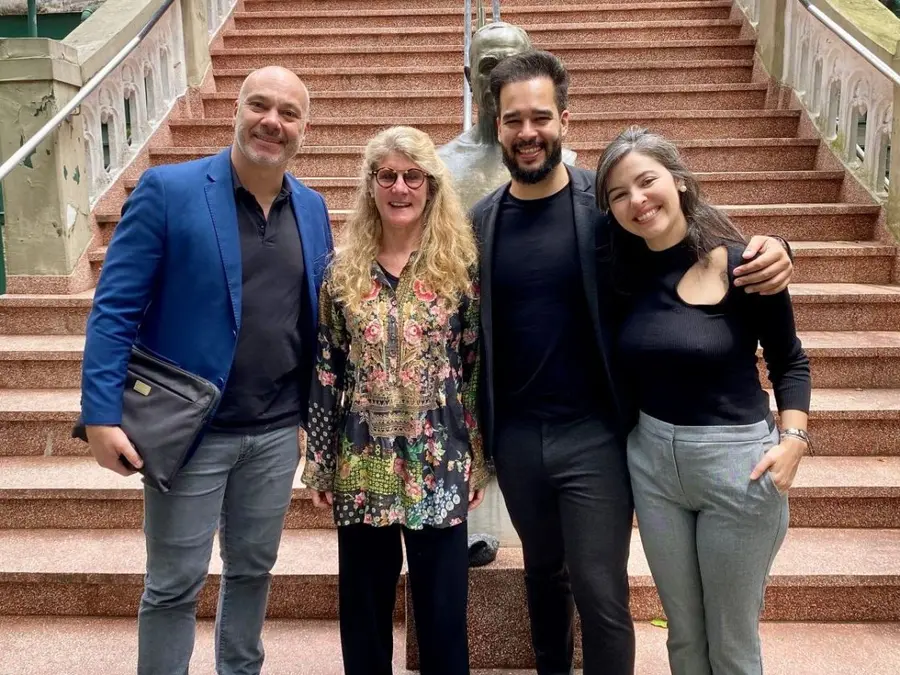
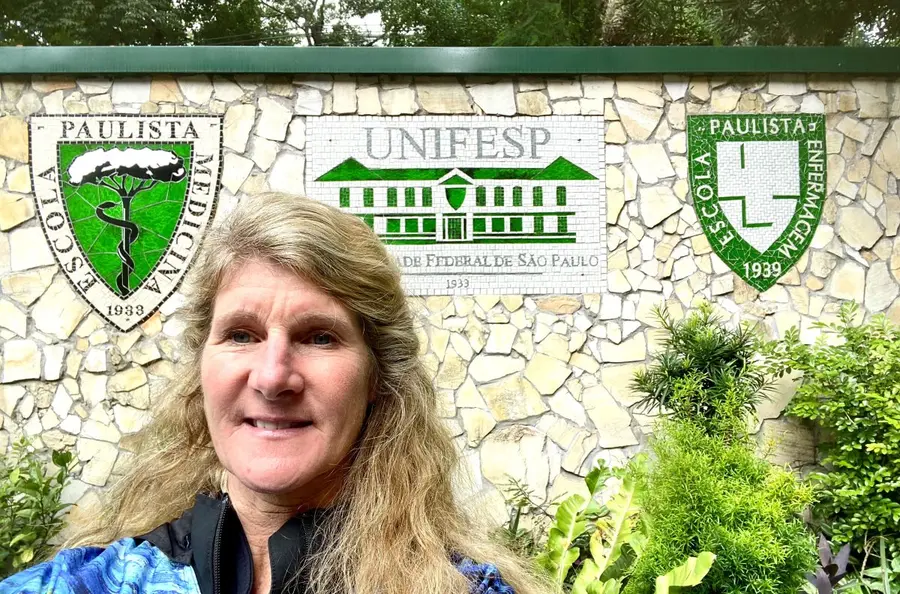
Can a mindfulness meditation program developed in the United States be used as is with people in other countries? Dessa Bergen-Cico, a professor of public health at Syracuse University’s Maxwell School, went to São Paulo, Brazil, to explore that question. Syracuse University reported in a campus news story on the 12th that Bergen-Cico would spend three weeks in São Paulo as a Fulbright Specialist, continuing her research on mindfulness tailored to Brazilian communities.
Research begins by asking about Indigenous communities’ meditation traditions
Bergen-Cico has spent more than 15 years studying the use of mindfulness meditation to address mental health and addiction. She has worked with Native American communities and led programs for veterans experiencing post-traumatic stress at the Syracuse VA Medical Center. This is her third Fulbright appointment; she previously conducted research and taught in Georgia (2015–2016) and Thailand (2020).
In São Paulo, she will teach a weeklong graduate course with Marcelo Demarzo, a professor in the graduate public health program, advise master’s and doctoral students, and give a public lecture. The research centers on Brazil’s diverse communities. Indigenous and Afro-Brazilian communities each have long-standing traditions of meditation and contemplation. Bergen-Cico aims to adapt mindfulness programs to these traditions and find ways to compare their effectiveness fairly across culturally distinct groups.
Why measure the body’s stress response instead of using questionnaires
A common way to measure meditation’s effects is through questionnaires answered by participants. The challenge is that people from different cultures may interpret the same questions differently. Bergen-Cico is therefore focusing on biological markers that reflect the body’s stress response. The university said these markers may be less affected by culture than questionnaires, helping researchers determine whether meditation programs benefit different communities equally—and, if not, how they should be adapted.
During her visit, Bergen-Cico plans to share research methods, co-author papers and lay the groundwork for continued faculty and student exchanges between Syracuse University and São Paulo.
One thing K-meditation should keep in mind as it goes global
The question this news raises for Korean readers is clear: Meditation is not a product exported in a one-size-fits-all package. It takes root when adapted to people’s bodies, language and traditions. Just as Western mindfulness programs are being reworked in light of the traditions of Brazilian communities, Korean meditation, too, needs to begin by asking about the culture it enters when it goes global.
The reverse is also true. Adapting mindfulness programs from abroad to the daily lives and sensibilities of people in Korea, and efforts by the country’s Buddhist community to introduce Seon meditation to the public and make traditions learned through the body—such as walking, tea and temple practice—an entry point to meditation, are part of the same trend. The better we understand our own practice traditions, the more K-meditation can speak to people in other countries in a language that feels familiar.
The same message applies to readers. There is no need to give up meditation just because a method prescribed by someone else doesn’t suit you. Finding a practice that fits the culture you grew up in, the movements your body knows and the rhythm that feels comfortable is the starting point for sustaining meditation over time.
Inquiries: fare3041@naver.com