

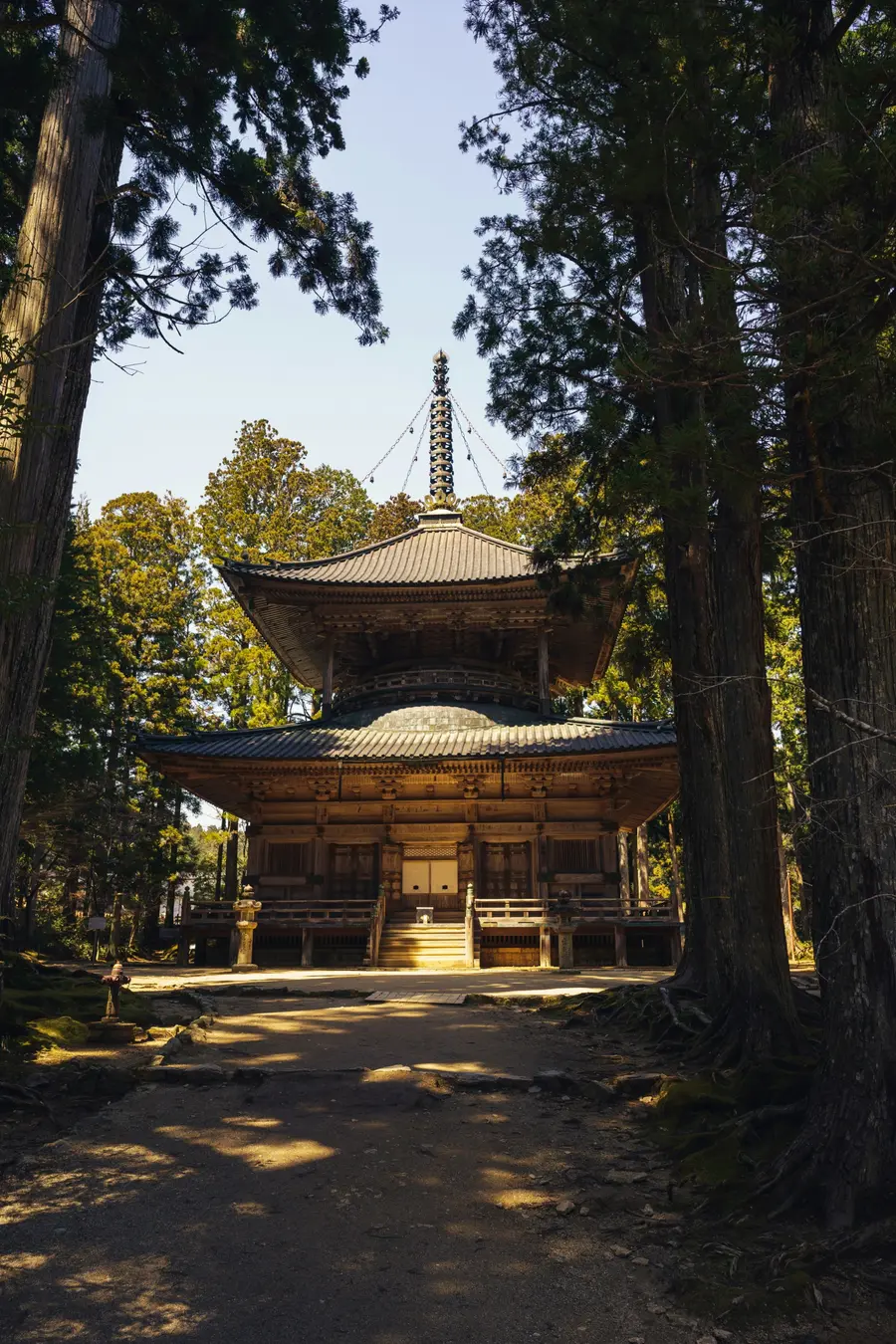
The air changes first when you get off the cable car climbing up the mountain. Koyasan in Wakayama Prefecture sits in a basin about 800 meters above sea level, where more than 100 temple compounds gather. Before it became a tourist destination, it was a training site that has continued for more than 1,200 years. And the gates of this training site are open to travelers, too.
The Mountain Sanctuary Kūkai Established
Koyasan is the central hub of Shingon Buddhism founded by the monk Kūkai, known as Kōbō Daishi, in 805. It was this mountain where he learned esoteric Buddhism in Tang China and returned to make it a place for training. Since then, for 1,200 years, temples have been built across the mountain, and today more than 100 temples still stand in their places.
There are three places you are required to visit within the mountain. Oku-no-in, the site of Kūkai’s mausoleum; Danjō Garan, the central temple grounds where Kūkai began construction in 826; and Kongōbu-ji, the head temple of Shingon Buddhism. In particular, the approach path to Oku-no-in passes between centuries-old cedar trees and gravestones said to number more than 200,000. Walking that road, even in the daytime when light falls sparsely, makes the act itself feel like a form of training.
Sleeping at the Temple: Shukubo
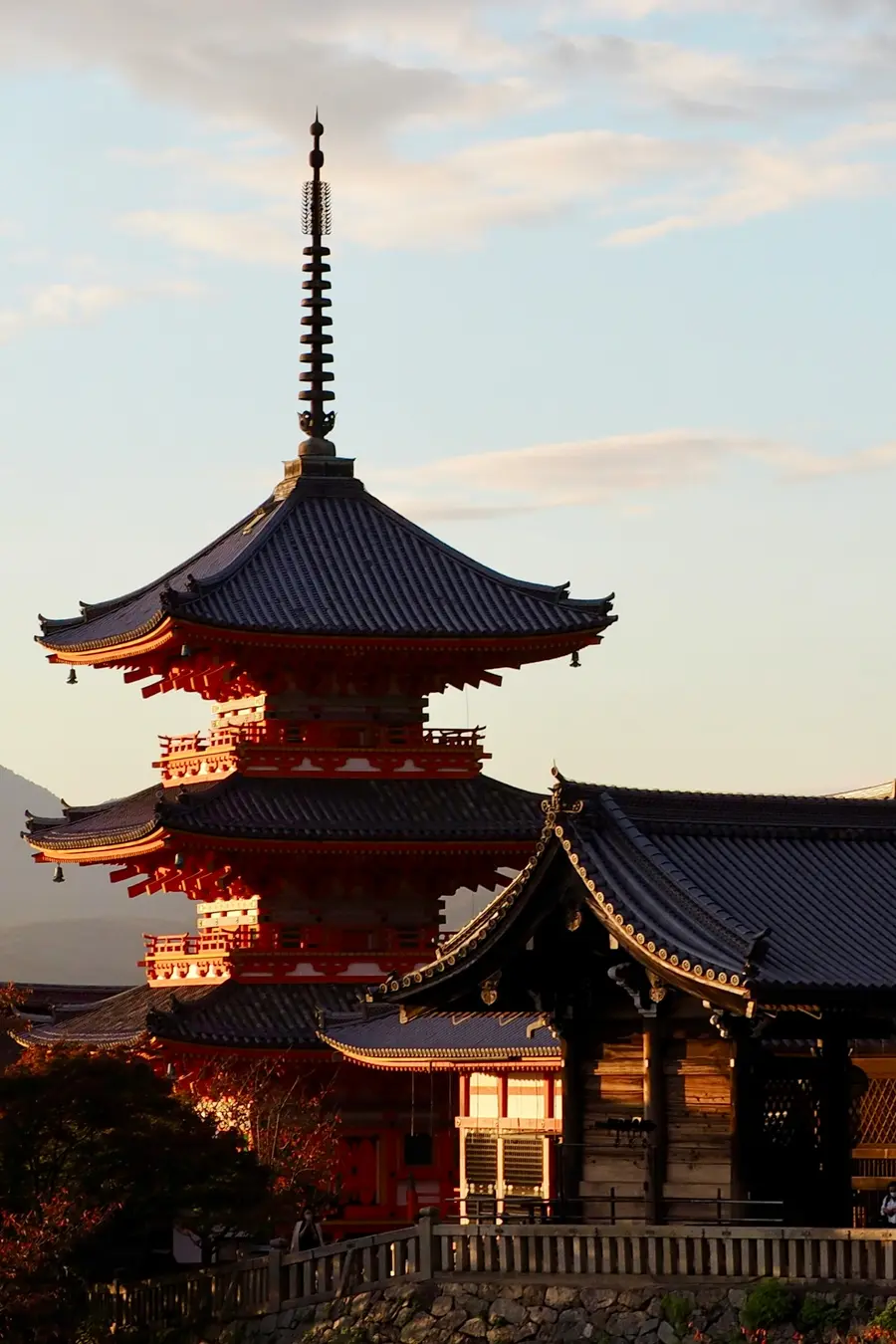
What makes Koyasan special is the shukubo (temple lodging). Temples themselves operate the accommodations, and more than 50 temples in Koyasan welcome travelers. Guests move into the spaces where monks live and spend one night there.
Lodging prices range from 10,000 yen to 40,000 yen per person, including dinner and breakfast. Variations can be significant depending on the temple and room category, as well as the season. Many places accept cash only for payment, so it’s safer to prepare in advance.
For reservations, the most reliable route is through the official Koyasan Shukubo Association website (koyasan-shukubo.net). You can submit reservations by email or fax to the association, and there are also temples that can be booked through accommodation booking sites such as Booking.com or Agoda.
Arrival time also comes with rules. Evening gongyo, typically starting between 5:30 p.m. and 6:00 p.m., means you need a schedule that gets you to the temple before 5:00 p.m. Taking into account the time it takes to travel up from below the mountain, it’s best to depart no later than early afternoon from Osaka.
Shōjin Ryōri: Dinner Prepared as a Vegetarian Meal
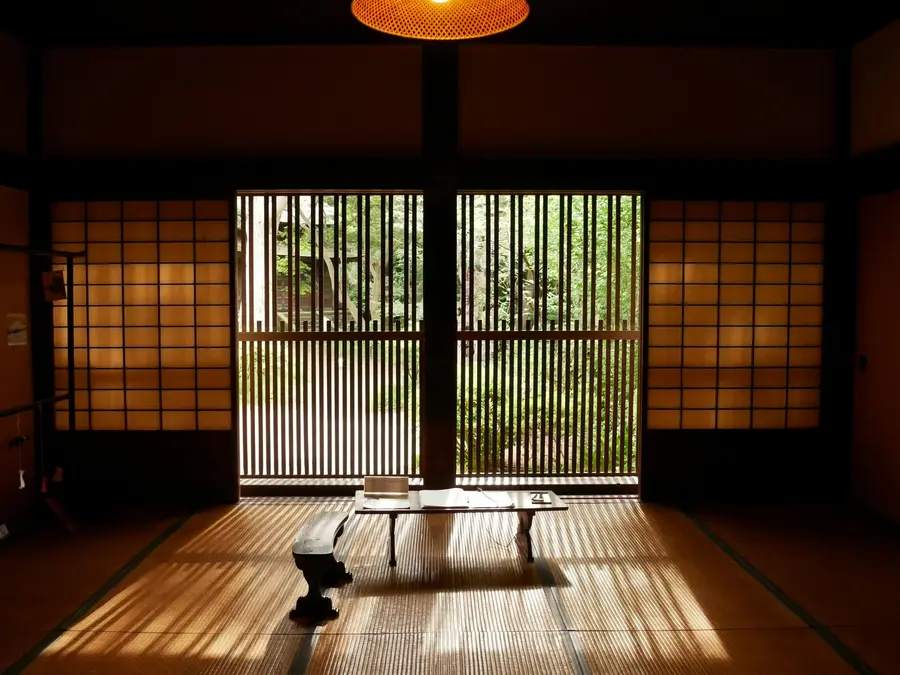
Dinner at a shukubo is served as shōjin ryōri (ascetic cuisine). It is temple food that, according to Buddhist precepts, does not use meat or fish. Konnyaku, yuba (tofu skin), and Koyasan tofu are among the representative ingredients. Koyasan tofu is freeze-dried tofu named after this mountain; it is said to have originated from the older practice of freezing tofu in winter cold and then drying it.
The dishes are simple, but the composition is dense. Soup and rice, pickles, simmered dishes, and tempura are divided into small bowls. Because the cooking method doesn’t hit the palate with strong flavor, it may feel bland at first. But after walking all day, that mildness comes across differently.
Morning Gongyo and Ajikan Meditation
Half of the reason people stay at a shukubo is in the morning. The temple’s morning gongyo typically begins around 6:00 a.m. and lasts about 30 to 45 minutes. Lodging guests join the ceremony in which the head priest and monks recite sutras and burn incense together. When gongyo ends, breakfast is served around 7:00 a.m.
If you want to try a meditation experience, Ajikan (Ajikān) is worth a close look. It is a meditation method in Shingon Buddhism in which practitioners contemplate becoming one with the Buddha, and it focuses on the Sanskrit character “A” (阿). It is often held late in the afternoon, and not every temple offers it, so when you book you should confirm whether Ajikan is provided.
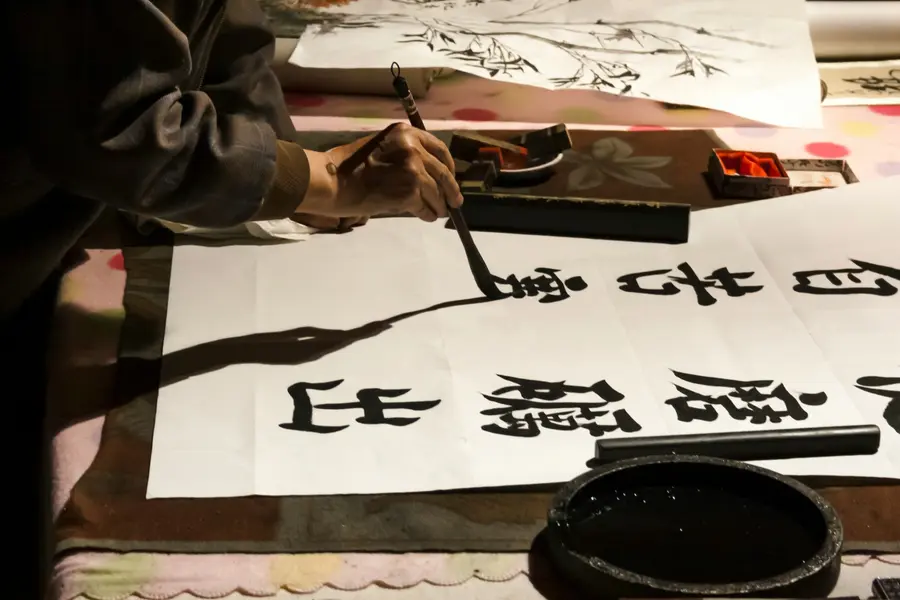
Also widely available is shakyō (writing sutras), an activity where you copy the Heart Sutra by hand. You can inquire and participate at the Daishi Kyōkai Center. Because your breathing naturally slows while you move the brush stroke by stroke, it is also easy for those who find sitting meditation difficult.
In addition, an initiation ritual called Kechennkanjō is offered in spring and fall. In spring, it runs from May 3 to May 5, and in autumn, from Oct. 1 to Oct. 3. The participation fee is 3,000 yen per session. It’s a rare opportunity for ordinary people to experience a traditional Shingon ritual.
How to Get There, What to Bring, and What to Wear
The most common route to get to Koyasan is the Nankai Railway Koyasan Line starting from Osaka. Take the train from Namba Station to Kōrakukubashi Station, the terminal, then transfer to the cable car to board at Koyasan Station. From there, take another bus to enter the center of the town. A “Koyasan World Heritage Ticket,” which bundles the train, cable car, and bus, is also sold.
Travel time by segment, fares, and ticket prices vary depending on the period and the type of train (limited express or rapid express). It’s most accurate to check the timetable and fares on the departure-day schedule using Nankai Railway’s official guidance.
When it comes to what to bring, clothing is something many people can overlook. Because Koyasan is a mountain basin, temperatures run lower than in central Osaka. Even in summer, it feels cool during the dawn gongyo time slot, and from late fall through early spring it can get quite cold. No matter the season, it’s a good idea to pack an extra outer layer.
ha
Koyasan as a Destination for a Meditation Trip
Koyasan’s strength as a meditation travel destination is that it does not rely on separate activities arranged for the experience. The morning gongyo that travelers participate in is not an event created for tourists—it is the temple’s daily routine. Shōjin ryōri served for dinner is also the same food that monks eat. If you set your day to the temple’s schedule, you naturally fall into the rhythm of the training community without special programming.
Accessibility is also not bad for Korean travelers. You can travel from Osaka on the same day, making it easy to plan by adding one or two days to a Kansai-area itinerary. For people who have experienced temple stays in South Korea, there is also the appeal of comparing the training culture of mountain temples in the two countries.
When planning your schedule, remember just one thing. Koyasan isn’t a place to rush through. You head up in the afternoon, slowly walk the approach path to Oku-no-in, receive your evening meal, go to bed early, and open your eyes amid the dawn incense smoke. What this mountain offers travelers is that single circuit.
- Official reservation site for Koyasan shukubo — https://koyasan-shukubo.net/en/