

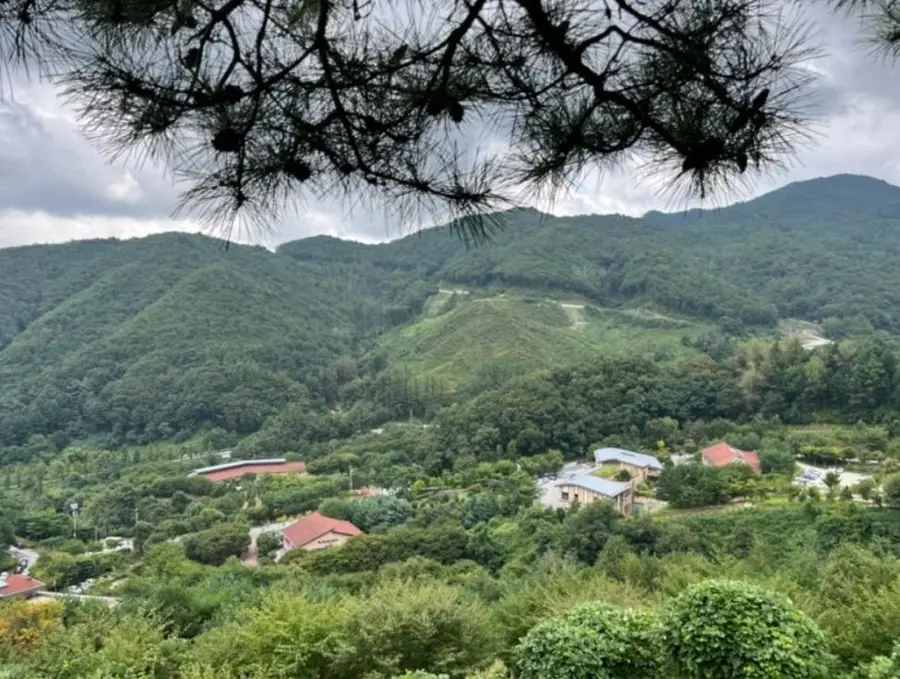
A morning in Yeongju arrives first with the forest’s breath. Before the sun clears the ridge of Sobaeksan, damp air settles between the leaves of oaks and gulleam oak trees, carrying a faint scent of grass. People from the city pause in front of that smell—not because they don’t know what to do, but because the breathing rhythm they have long forgotten slows down on its own. In this place where the backbone of the Baekdudaegan passes through, there is a healing village carefully planned by the country, in a 2,889-hectare forest spanning Yeongju and Yechon in North Gyeongsang Province. Its name is Dasrim. It means to govern the mind and body, and it also captures how the forest soothes people.
A Forest Designed by the Nation, and the Meaning Behind the Name Dasrim
The National Forest Therapy Center is a forest welfare complex operated by the Korea Forest Welfare Promotion Institute, established to look after the nation’s health by using the abundant forest resources of the Baekdudaegan. The total area is 2,889 hectares, and the central facility zone alone reaches 152 hectares. The institute introduces the site as the world’s largest-scale integrated forest therapy facility. It is designed not only to provide healing services, but also to handle all of it in one place—from training professional staff and developing healing products to spreading forest therapy culture.
What clearly distinguishes Dasrim from other recreation forests is straightforward. Here, it is a place that heals before it is a place that rests. Forest therapy refers to activities that boost the human body’s immunity and help people recover their physical and mental health by using the forest’s various elements—phytoncides and negative ions, sunlight and sounds, and scenery. At Dasrim, certified forest therapy guides lead the programs, and visitors form a relationship with the forest through their bodies, rather than simply watching it.
A 152-Hectare Space Wrapped by Sobaeksan
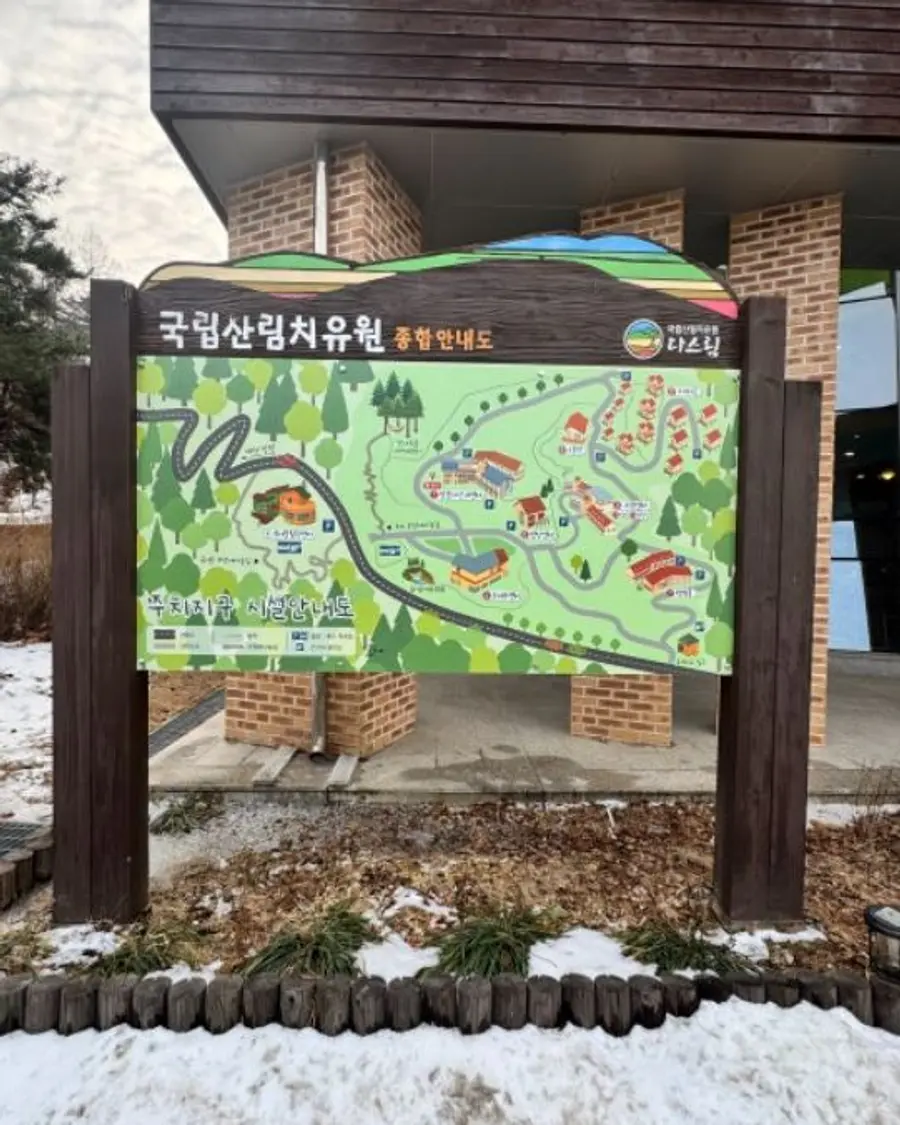
The central facility zone nestles into the foothills of Sobaeksan. A forest layered with cork oak trees, pine trees, and gulleam oak trees changes its look with every season. Inside the complex are scattered a health promotion center, a water (water-therapy) center, a training center, a medicinal herb garden, a healing garden, a healing forest trail, and a meditation center. Visitors spend the day in a loop: they walk, sit down in the garden, immerse their bodies in the water, and then step back onto the forest trail.
The healing forest trail is the backbone of Dasrim. Gentle deck roads and dirt paths run along the ridgeline, and because the grade is not steep, older people and patients in recovery can walk without difficulty. In the sections designed for walking barefoot, visitors can read the texture of the soil and the grain of the trees directly with their soles. The medicinal herb garden and the healing garden are spaces for the eyes and nose. Seasonal plants and medicinal plants take root there, so that while walking, the scent seeps into the body.
A Day Guided by the Forest: Programs of Water, Warmth, and Breathing
Dasrim’s programs are built around the way they introduce the forest’s senses one by one into the body. A representative example is water therapy. At the water-therapy center, the temperature of the water, buoyancy, and flow are used to loosen muscle tension and help circulation. Warmth therapy raises body temperature with far-infrared rays and pairs them with hand massages to support blood circulation and strengthen immunity. Many people seek it out especially during winter or recovery periods.
The tone of the programs carried out inside the forest is even more quiet. Slowd therapy leads into stretching and walking meditation, breathing meditation that involves inhaling phytoncides, and a stroll along the forest trails. As visitors slow their walking pace and focus on their feet and breath, the noise that once filled their minds peels away layer by layer. Visitors also gravitate toward “forest mang” rest—lying back in a hammock and gazing at the sky between leaves—and singing bowl meditation that lets people surrender their minds to the resonance of sound. Barefoot therapy involves walking the barefoot healing forest trail and finishing with foot pressure and oil massage.
Program fees vary by type. Hammock rest costs 12,000 won, while singing bowl meditation costs around 11,000 won; compared with the depth of the forest, the barrier is not high. Because certified forest therapy guides lead the sessions, even people who are new to meditation or yoga move naturally following the guidance.
The Table Set by the Mountain—and the Village Where You Stay
A day at Dasrim continues into a meal set by the mountain. The on-site dining hall offers breakfast, lunch, and dinner at set times. Meal costs are 8,000 won for adults aged 13 and over and 5,500 won for children from age 7 to under 13. Meals must be reserved at least four nights in advance based on the date you plan to start using the services. Cooking on-site, barbecuing, drinking alcohol, and smoking are restricted within the complex, a principle that closely resembles the rules aimed at preserving the quiet and air of the healing space.
Lodging is divided into three villages. There is the Jungchi Village for individuals and families, the Training Center designed for group use, and the Munpil Village for long-term stays. For people who plan to stay for several days and tune their bodies to the forest’s rhythm, Munpil Village fits well. For those who want to make a short trip with their families on weekends, Jungchi Village is a better match. Lodging fees range, depending on room type: standalone rooms are from 58,000 won to 280,000 won, and group-type rooms are from 56,000 won to 162,000 won.
How to Get There, Reservations, and Things Worth Knowing
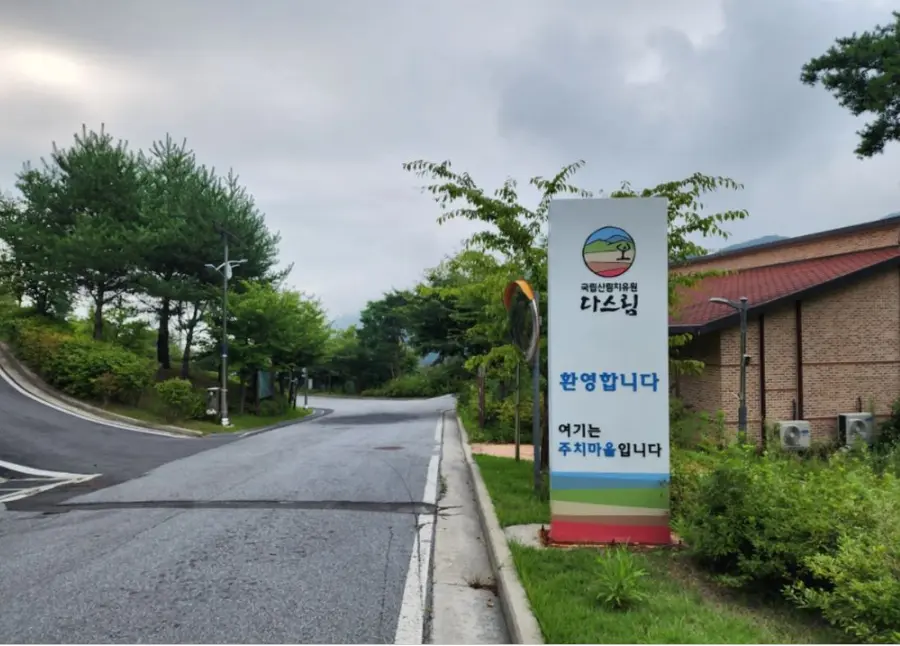
Dasrim is located at 209, Terapyi-ro, Bonghyeon-myeon, Yeongju, North Gyeongsang Province. Because the forest of the complex spans two areas—Yeongju and Yechon—whether you approach from inside Yeongju city or from the Yechon direction, you encounter another side of Sobaeksan.
From the 수도권 (Seoul Capital Area), trains are convenient. Taking the KTX-Eum from Seoul reaches Yeongju Station in about an hour and a half. From Yeongju Station to the complex, travelers move by private car or taxi. Because public transportation options are limited, private car use is recommended. The complex also has ample parking space. If you visit without a car, it is safer to check in advance—before reserving—how to get from Yeongju Station or the intercity bus terminal.
Reservations are made through the Forest Service’s integrated reservation system, Soopnauldeul (foresttrip.go.kr), and the National Forest Therapy Center website (daslim.fowi.or.kr). Lodging and programs open all at once for the following month’s full month on the 15th of every month at 9:00 a.m., and popular dates sell out quickly right after opening. So if you have a schedule you want, it is best to log on at the opening time. Check-in is between 3 p.m. and 9 p.m., and check-out is by 11 a.m. the next day. Personal toiletries such as towels and toothbrushes must be brought by visitors. For facility guides and fee consultations, call the main number 054-639-3400, available on weekdays from 9:00 a.m. to 6:00 p.m. (excluding lunch time from 12:00 p.m. to 1:00 p.m.).
If you are a foreign visitor, you need a bit more preparation in advance. Since the reservation system and guidance are run mainly in Korean, it is a good idea to call and ask individually beforehand to confirm whether you can participate in the programs and whether interpretation is available. If you visit as a group through a travel agency or a wellness tour, you can arrange the certified forest therapy guide program to match your schedule through advance coordination.
When Should You Go? The Face of the Forest Changing by Season
Dasrim’s forest delivers a different kind of healing throughout the four seasons. The most recommended time is early summer when fresh green foliage surges. During this period, when leaves are at their deepest and softest, the forest air fills with density. In autumn, cork oaks and gulleam oak trees color the ridgelines, letting you enjoy the seasonal treat where walking meditation and fall foliage overlap. In winter, water therapy and warmth therapy warm the body, while the quiet of snow-covered Sobaeksan deepens meditation. Regular closures and program schedules can vary by season, so it is best to check the official website before visiting.
A Milestone for Korean-Style Wellness Travel
The reason Dasrim is special is not its scale or the flashiness of its facilities. It is valuable because it is a national-level initiative that designed forest therapy not as an individual hobby, but as a public health asset. Forest, water, warmth, and breathing are woven into a single program, professional staff guide that process, and a village where you can stay for several days completes the structure—making it no less comparable to wellness resorts overseas. The difference is that it is not a commercial resort; it is a public facility that anyone can approach with a low barrier.
For travelers visiting Korea, if temple stays provide a hush of the mind, then Dasrim designs the recovery of the body as well. This healing village with the Baekdudaegan forest as its stage is another face of wellness travel that Korea can offer. When the Korea Tourism Organization and the travel industry choose destinations for meditation and wellness travel, Dasrim in the foothills of Sobaeksan becomes a landmark worth keeping close for a long time.
For details, check the forest welfare integrated platform below.
https://www.sooperang.go.kr/main.do
Healing News publisher O Hye-seon
Inquiries and article tips: fare3041@naver.com