

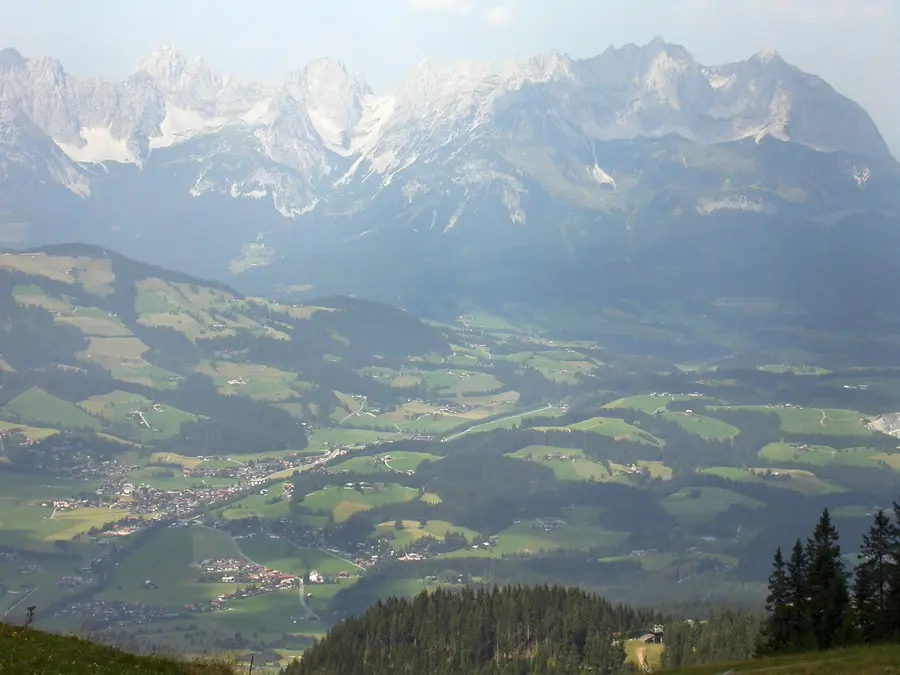
Reith bei Kitzbühel, Tyrol, Austria. Not far from the renowned ski resort of Kitzbühel, a yoga retreat house stands on a mountain slope. This is not a hotel that has added yoga to its offerings. It is a retreat center run by the Sivananda Yoga organization, founded by Swami Vishnudevananda in 1957. Guest rooms have no televisions or Wi-Fi, and meals are vegetarian, served twice a day. Guests don’t plan their own days here. The schedule is already set.
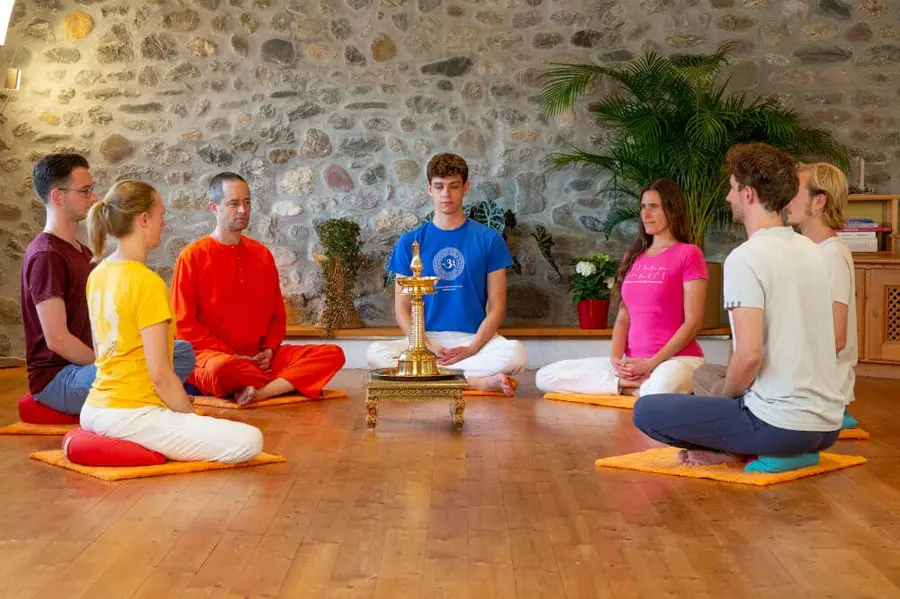
Experience a day that begins with meditation at 6 a.m. and ends with evening satsang
Here’s the daily schedule posted on the official website. Morning meditation runs from 6 to 7:30 a.m., with mantra chanting and a short lecture. From 8 to 9:30 a.m., the first yoga class features asanas, pranayama and deep relaxation. The middle of the day is left open. A second yoga class runs from 4 to 5:30 p.m. From 8 to 9:30 p.m., it’s time for satsang: meditation, mantra chanting and a lecture, followed by arati, a ritual of light.
During weeks with good weather, some scheduled activities are replaced by silent walking meditation. The official website says this takes place several times a week. Time spent walking in silence along Alpine meadows and forest trails takes the place of an indoor meditation session. This daily framework, with two meditations and two asana classes, runs year-round at the retreat house in Reith.
The practice is based on the five principles of Sivananda Yoga: proper exercise, proper breathing, proper relaxation, proper diet, and positive thinking and meditation. That’s why asanas, pranayama, relaxation, vegetarian meals and meditation all fit into the daily routine. Classes are led by instructors who have completed the internationally recognized Sivananda Yoga teachers’ training course. The lineage traces back to Swami Sivananda (1887–1963) and his disciple Swami Vishnudevananda (1927–1993).
The official website lists five elements in the daily program: asanas and pranayama, meditation, deep relaxation, mantra, and the study of yoga philosophy. That’s why short lectures are included in the morning and evening sessions. Rather than simply repeating the practice, participants also hear where it comes from and what it aims to achieve. Those who have experienced yoga only as exercise may find that this offers a different perspective.
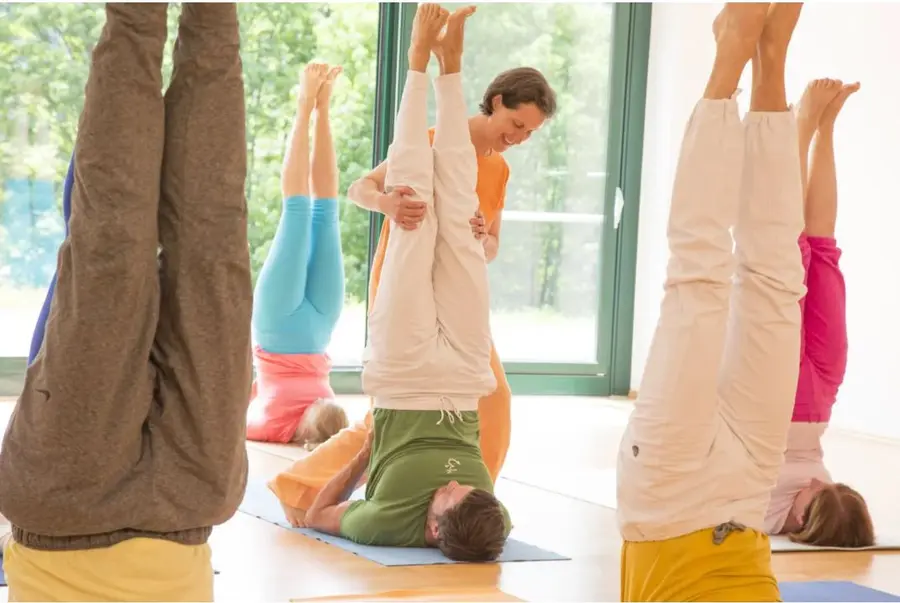
Can someone who has never tried yoga stay here?
Yes. The official website says participants are grouped as beginners, experienced practitioners and advanced practitioners, with instruction tailored to each level. The weekly themes include a separate beginners’ course, and the introductory yoga workshop offers gentle yoga and meditation for newcomers. The minimum stay is two nights. The program starts with a yoga class at 4 p.m. on arrival day.
Nearly 20 weekly themes rotate through the program. They include meditation experiences, breathing practices, expanding asana practice, spinal health, positive thinking, a yoga lifestyle, yoga and mountain hiking, and winter sports and yoga. Seasonal events include kirtan retreats, an All Saints’ retreat, Christmas and New Year retreats, and spiritual retreats. A meditation retreat was recently added, giving those who want to explore meditation in greater depth another option.
The packing list also gives a sense of the retreat’s approach. Guests are asked to bring a nonslip yoga mat or wool mat, a blanket, a meditation cushion and a meditation shawl. Participants are also asked to avoid coffee and black tea, meat and fish, eggs, onions and garlic, alcohol, and tobacco during their stay. These requirements reflect yoga’s dietary principles. They may feel restrictive to someone looking for a few relaxed days on a trip, but could be a helpful framework for anyone looking to change their routine for a week.
The retreat house also serves as a hub for teacher training, offering a sense of how intensive the practice can be. Its official website lists yoga teacher training and advanced courses, a sadhana intensive, continuing education and an academy. That means the retreats for travelers and the training for aspiring teachers take place in the same building. For those who want to get a feel for the routine before leaving home, online programs include live drop-in classes, group meditation and pranayama courses.
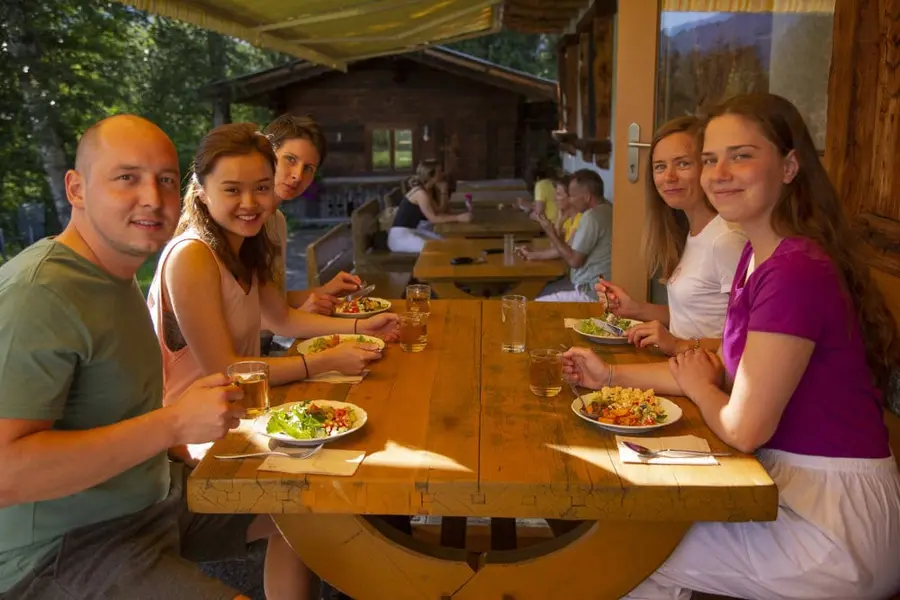
Stay in a low-EMF room, enjoy a small sauna and dine at an organic hotel across the street
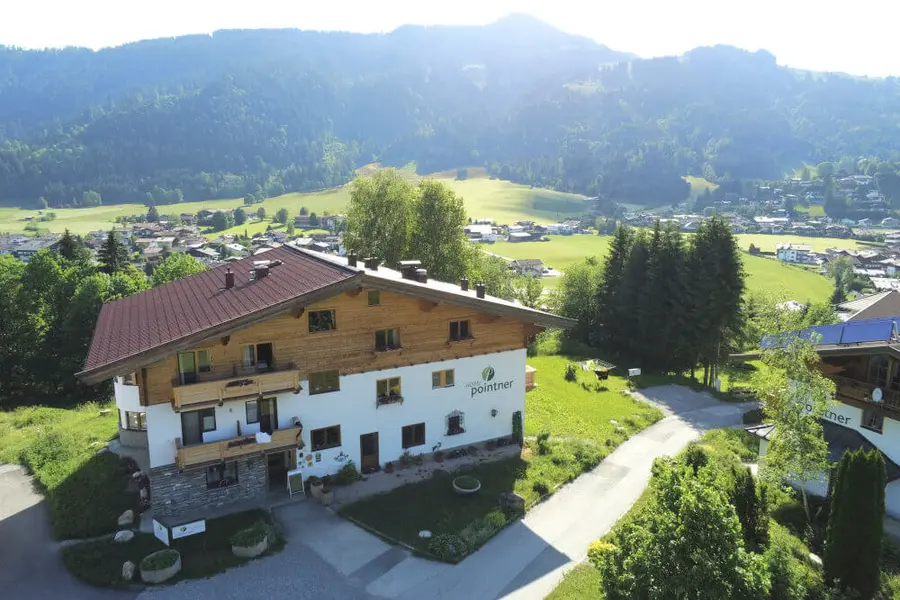
A partner hotel across the street handles accommodations and meals. It holds organic certification, the EU Ecolabel and an Austrian certification for gastronomy. Guest rooms have solid-wood floors, healthy mattresses and, in most cases, balconies. The hotel has no televisions or Wi-Fi in any of its rooms; according to its official information, this is a deliberate choice to reduce exposure to electromagnetic fields. Along with single and double rooms, there are shared rooms for eight guests each, separated by gender, as well as a women-only dormitory. There is no men’s dormitory. If the hotel is full, guests stay at a nearby guesthouse and use the main building for meals, the yoga hall and the sauna.
There are three yoga halls. The small wellness area has a Finnish sauna and a low-temperature sauna. The hotel uses green electricity, pellet heating and a solar hot-water system. Meals are based on ingredients from organic farms, as well as fruit and berries grown on the hotel grounds. Vegan and gluten-free alternatives are available, but gluten-free bread is not served, and the hotel warns that cross-contamination is possible. It also notes that it can’t accommodate every individual dietary preference.
Visit in autumn and the view from the windows changes. The official website gives special attention to the Tyrolean Alps in this season, when meadow colors shift and the first snow settles on the ridgelines. In winter, themed weeks combine yoga with winter sports, making it possible to spend the day walking through snow or skiing, then meditate in the morning and evening.
For a late-November course on a mountain 1,334 meters above sea level
The organization also offers courses in several places beyond Tyrol. Its 2026 schedule lists a course in Mittersill, in the Hohe Tauern, from October 26 to November 8, and another in Pill, Tyrol, from November 22 to December 3. Courses are also scheduled in Málaga, Spain, from December 4 to 8, and in Rudraprayag in the Indian Himalayas from October 21 to November 19.
The setting for the course in Pill is distinctive. It takes place at an eco-friendly mountain hotel 1,334 meters above sea level, overlooking the Inn Valley, the Karwendel Mountains and the Zillertal Glacier. The daily schedule goes like this: the day begins at 6 a.m., followed at 6:30 by silent meditation and mantra. Asana and breathing exercises run from 8:30 to 10 a.m. An organic vegetarian brunch is served at 10:30. From 11:30 a.m. to 4 p.m., free time includes walks, occasional lectures, the sauna and treatments. Asana and breathing exercises resume from 4 to 5:30 p.m. A vegetarian buffet dinner is served at 6. At 7:30, there is silent meditation, mantra and reading. Silence begins at 10 p.m. Meditation and asana sessions are mandatory; the afternoon lecture is optional. Guest rooms have no televisions or wireless internet, and smoking is prohibited throughout the property.
The organization’s activities extend beyond Tyrol. Its official website lists the Yoga Yatra in India, retreats in India and an event commemorating the 100th birth anniversary of Swami Vishnudevananda. In Austria, it also offers courses in Bad Hofgastein. For anyone wondering where to go after spending a week in Tyrol, options are already on the calendar.
Let go of planning and settle into the rhythm of a practice community
This place is well suited to travelers looking to set aside a week to bring their body, breathing and meals into balance all at once. It may also appeal to those who find a set schedule easier to follow, or who are drawn to walking in silence along Alpine trails. Rather than offering the full-service hotel experience, it invites guests to settle into the rhythm of a practice community.
As autumn deepens on Tyrol’s mountain slopes, the day begins with meditation at 6 a.m. and unfolds with silent walks through Alpine meadows. If you’re heading to the Alps anyway, wouldn’t it stay with you longer to match your day to the mountains’ rhythm, rather than simply admire the view?
Article inquiries: fare3041@naver.com