

Meditation is moving beyond a personal pastime and into public institutions. In Japan, mindfulness centred on yoga and meditation is gaining ground in correctional education at juvenile training schools and prisons. In Thailand, a national university and a Buddhist university have joined forces to study mindfulness through neuroscience. One is a frontline setting focused on helping people return to society; the other is a research setting translating meditation into the language of science.
On the juvenile training school’s evening schedule, mindfulness follows the news
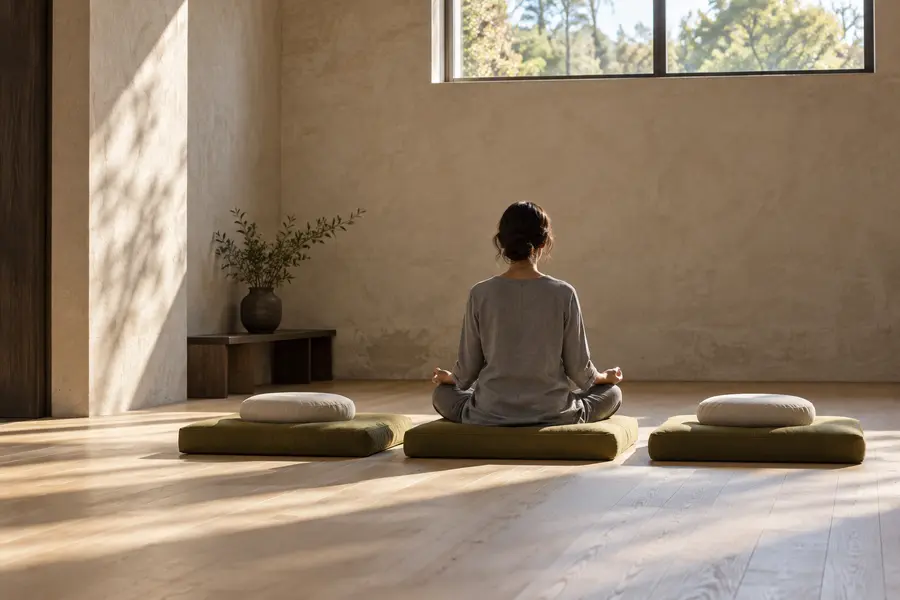
A guide to Okinawa Juvenile Training School published by Japan’s Ministry of Justice sets out the daily schedule in chronological order. After the evening meal come diary-writing, independent study and reading, followed by watching the news. The next item is mindfulness, then leisure time and bed. In other words, time to sit quietly and settle the mind has been built into the routine before the day ends.
Mindfulness also appears in the same guide’s section on guidance in daily life. It is listed alongside violence prevention, family relationships, assertiveness training, social skills training (SST) and activities to develop self-awareness. This means meditation is treated not as a special event, but as one strand of education aimed at rebuilding everyday life.
Prison sentences combined, as the system shifts from punishment to rehabilitation
This trend is not confined to juvenile training schools. On 16 October, Japanese media reported that efforts to introduce calming mindfulness practices into correctional education at juvenile training schools and prisons were growing, with hopes that they could help prevent reoffending. An earlier report, published on 1 October, featured Associate Professor Takuro Tanimoto of Bukkyo University teaching mindfulness to prisoners in Okazaki, Aichi Prefecture.
The backdrop is a change in the penal system. On 1 June 2025, Japan brought into force a revised Penal Code combining imprisonment with and without work into a single custodial sentence. The revised provision states that work or guidance may be provided as necessary to help prisoners improve and rehabilitate. Whereas imprisonment with work previously required prisoners to perform prescribed tasks, the emphasis has now shifted towards choosing guidance programmes suited to each individual. This has widened the scope for education that addresses the mind.
Researchers urge caution: no programme yet tailored to young offenders
Researchers observing these developments take a measured view. A Japan Society for the Promotion of Science research grant project (2022–2026), led by Associate Professor Tanimoto as principal investigator, notes that mindfulness is being promoted in correctional facilities such as juvenile training schools to reduce reoffending in Japan, but that the programmes currently used are mostly designed for adolescents and adults in general. No specialist programme tailored to young offenders has yet been developed.
The project outline also includes a warning. If the focus is solely on self-acceptance and consideration for others is downplayed, mindfulness could exacerbate problems such as depression or aggression rather than ease them. A 2024 report said the team was exploring ways to run the programme while respecting security principles at juvenile training schools, and listed testing its effectiveness in juvenile training schools and other correctional facilities as a plan for 2025.
High hopes of reducing reoffending do not mean that effectiveness has been established. Japan’s experience shows that introducing meditation into an institution and verifying which approaches work, and for whom, are separate tasks.
Thai national and Buddhist universities to study mindfulness through neuroscience
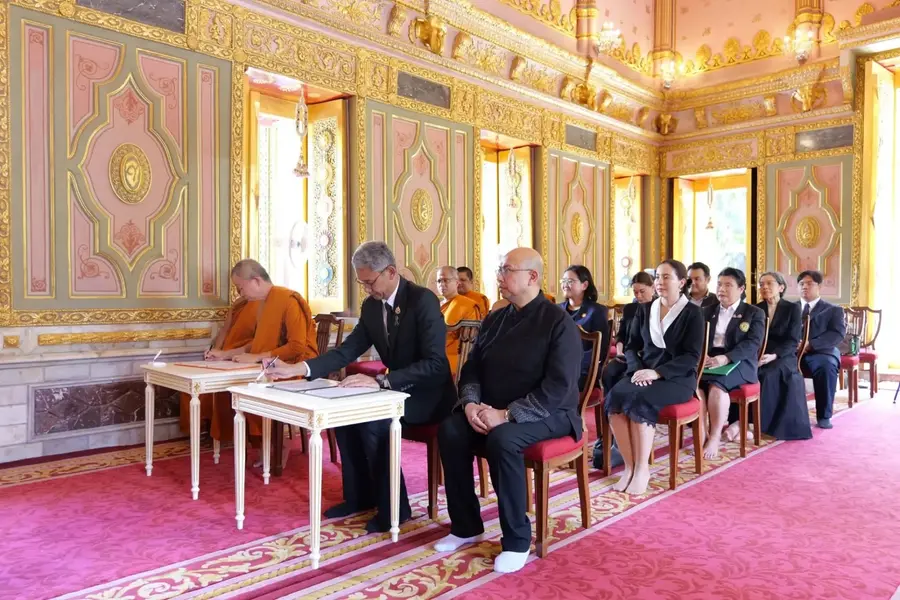
In Thailand, universities have taken the initiative. On 19 October, Kasetsart University and Mahamakut Buddhist University signed a memorandum of understanding (MOU) on academic cooperation in mindfulness, meditation and neuroscience for lifelong well-being. Kasetsart University International College announced the agreement on its official website on 20 October.
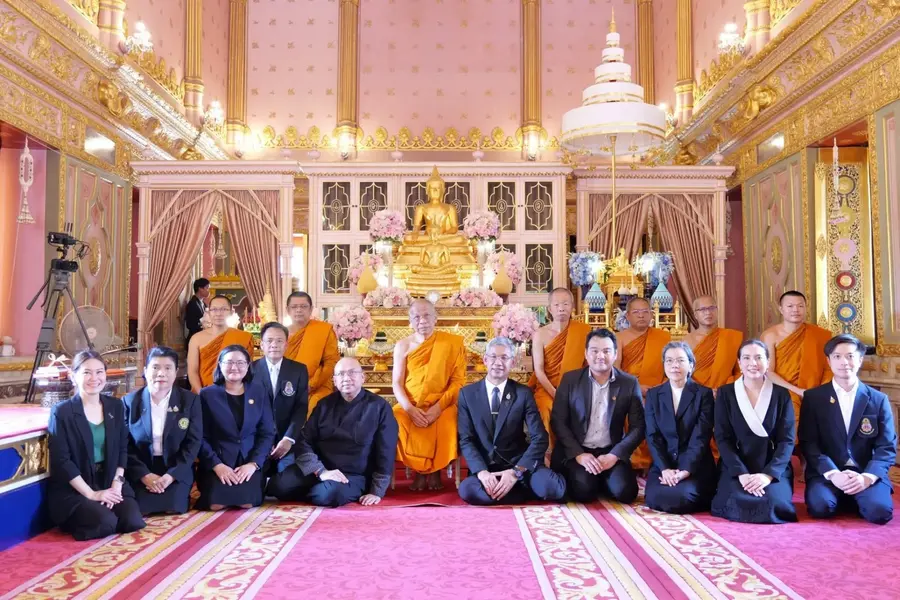
The agreement was signed by Associate Professor Phra Brahma Vajiramedhapon, President of Mahamakut Buddhist University, and Assistant Professor Kongsak Thianthum, President of Kasetsart University. Somdet Phra Maha Weerawong, Vice-Chairman of the Mahamakut Buddhist University Council, presided over the ceremony and attended as a witness. Official photographs show the signing taking place inside a temple hall adorned with gold. The monks and academics seated in a row capture the nature of the agreement.
It is notable that a university rooted in Buddhist practice and a national university devoted to scientific research have come together at the same table. However, specific plans for joint research topics, courses or schedules have yet to be announced. Whether the agreement leads to actual research and programmes remains to be seen.
A question for South Korea’s meditation community: where is meditation being documented?
The news from the two countries differs in character, but points in the same direction. Meditation is moving beyond temples and retreat centres, appearing on the schedules of correctional facilities and in university research agreements. It is also worth noting that Japan’s correctional facilities combine seated meditation with physical practices such as yoga. For people who find it difficult to sit still, movement can be a way into meditation.
The news also raises questions for South Korea’s meditation community. What role does meditation play in schools, hospitals, correctional settings and social welfare, and who sets the standards for those programmes and evaluates them? As Japanese researchers have cautioned against simply transferring programmes designed for general use, tailored programmes need to go hand in hand with sustained evaluation if meditation is to earn trust within institutions. As that evidence builds, K-meditation too will be able to present South Korea’s traditions of practice to the world with greater credibility.
Enquiries: fare3041@naver.com