

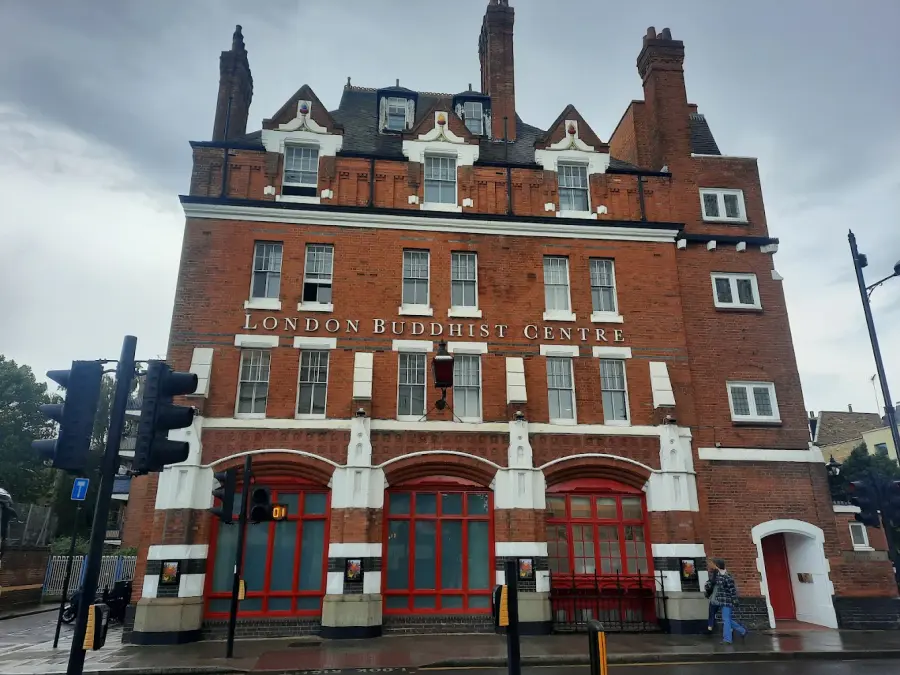
Walking along Roman Road in Bethnal Green, east London, visitors come across an ornate red-brick building. Completed in 1888, it served as a fire station operated by the London Fire Brigade until 1969. Today, people enter the building every day at 1 p.m. to meditate for an hour. There is no reservation or admission fee. This has been the scene at the London Buddhist Centre since it opened in 1978.
When people think of meditation centers, they often picture mountains or the coast. This center is in the opposite setting: the heart of London's East End, surrounded by subway stations, markets and cafes. The center's standard routine is to walk out of work, meditate during lunch and return to the office.
From Fire Station to Meditation Hall: Two Transformations
The building's history took two major turns. The first came in 1969, when it ceased operating as a fire station. It was damaged by fire in the 1970s and left vacant for a time. The second came when volunteers bought the building and renovated it themselves. They effectively rebuilt the fire-damaged station. The center opened in 1978.
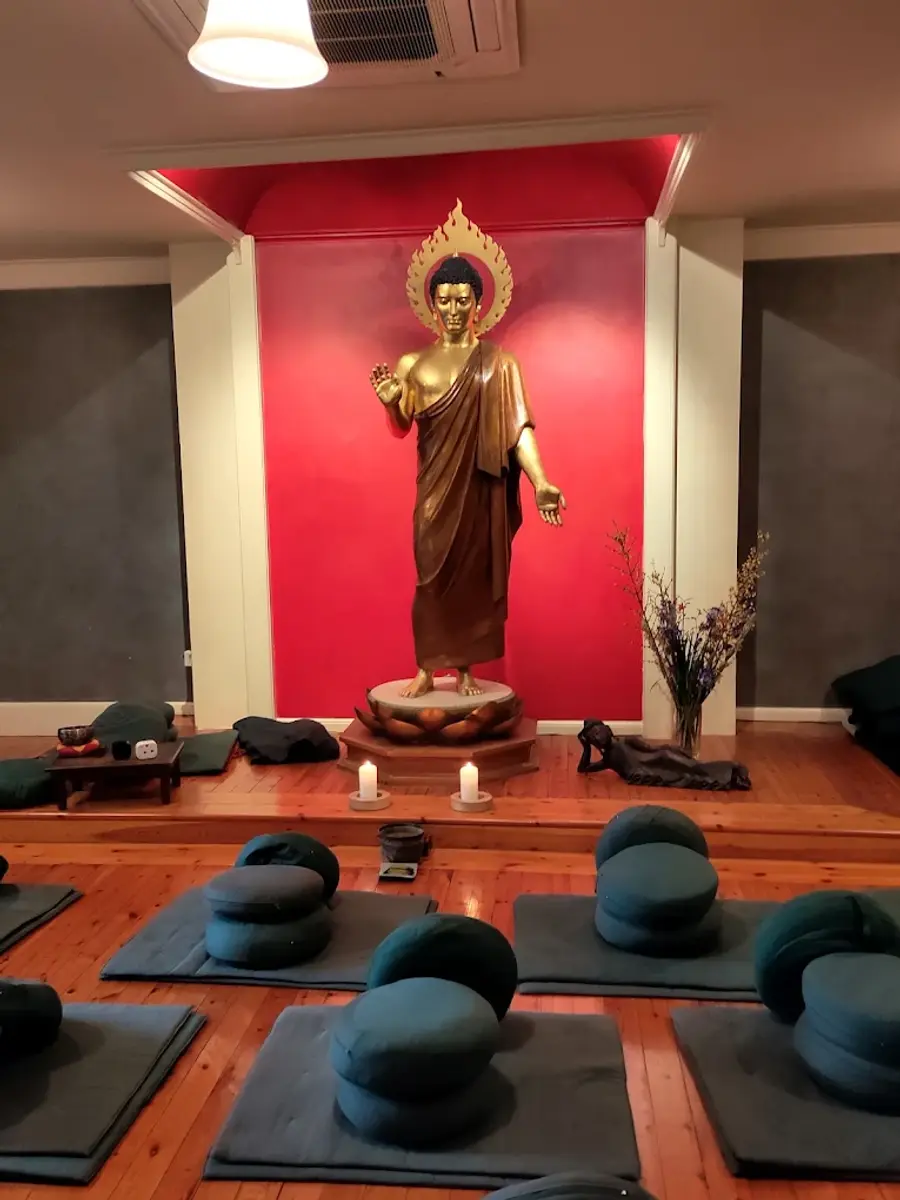
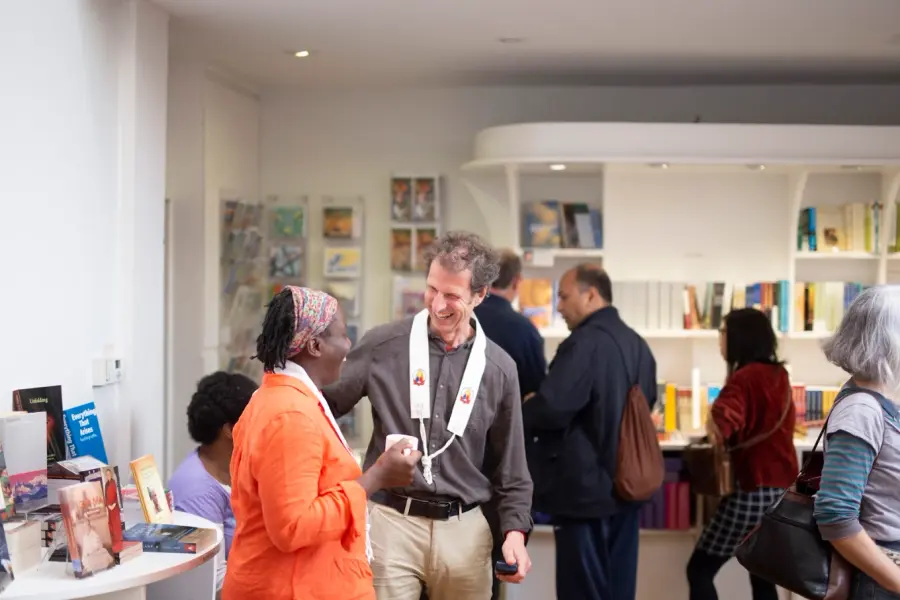
The building underwent a major renovation in 2009. The work added Breathing Space, a basement area dedicated to meditation and classes. Today, the building contains meditation rooms, two shrine rooms with Buddhist statues, a library, a bookstore and living quarters for residents.
The center is registered as a charity in England and Wales. Its registration number is 255420. In addition to meditation and Buddhist education, it offers mindfulness-based cognitive therapy (MBCT) programs.
Triratna: A Modern Buddhist Movement Beyond Sectarian Lines
The London Buddhist Centre is the London base of the Triratna Buddhist Community. The community was founded in London in 1967 by Sangharakshita, whose birth name was Dennis Philip Edward Lingwood, under the name Friends of the Western Buddhist Order (FWBO). It adopted its current name in spring 2010.
Triratna does not belong to a specific Buddhist school. It draws on the traditions of Theravada, Mahayana and Vajrayana Buddhism and teaches them in forms suited to modern life. It is considered one strand of Buddhist modernism in the English-speaking world.
Its network is substantial. As of mid-2008, it had about 1,500 formal members in roughly 20 countries, while more than 100 affiliated groups operated mainly across North America, Europe and Oceania. Its largest base is in India. The latest membership figures have not been made public.
Two Practices Form the Foundation
The center's core practices can be distilled into two: Mindfulness of Breathing, or Anapanasati, and Metta Bhavana, or loving-kindness meditation.
The first practice focuses attention on the flow of the breath in and out. The second means cultivating loving-kindness in Pali. Practitioners begin with themselves and gradually extend their focus to close friends, neutral people and difficult people, cultivating a friendly state of mind. The center uses these two practices as a common foundation, from beginner classes to groups for people with many years of experience.
What is notable is that the center offers a separate course devoted directly to loving-kindness meditation. Held every Tuesday from Sept. 29 through Nov. 3, 2026, the course is titled 'Who Hates the Metta Bhavana?' Its title openly reflects practitioners' candid reaction that loving-kindness meditation can feel awkward and forced when they first try it.
Free Classes With No Reservation Required
Most weekly programs require no reservation and have no admission fee. As of Oct. 1, 2026, according to the center's official website, the schedule is as follows.
Lunchtime meditation runs from 1 to 2 p.m. Monday through Saturday. It is open to all levels and free, though donations are accepted. In the evening, meditation groups meet from 7:15 to 9:15 p.m. Tuesday and from 7:15 to 9:30 p.m. Wednesday. On Saturdays, there are two sessions: from 10:30 a.m. to 12:30 p.m. and from 1 to 2 p.m.
Programs beyond meditation are also divided by day. A Dharma class is held Monday evening, with an £11 donation suggested. A similar class is offered Wednesday morning. From 5:30 to 6:30 p.m. Wednesday, the center holds a mantra-chanting session and suggests a £7 donation. Thursday evening features a group combining meditation and discussion, while Friday evening focuses on talks and ritual.
Six-Week Introductory Courses and Retreats
The center also offers mult week courses for those who want a more structured introduction. The main option is 'Introduction to Buddhism and Meditation,' held Mondays from 7:15 to 9:45 p.m. for six weeks. Tuition is £130, reduced to £85 for people on low incomes and £65 for those ages 18 to 25. The sliding scale sets different prices based on income.
The beginner-focused 'Foundations of Meditation' course runs from Oct. 10 through 31, 2026. The loving-kindness meditation course mentioned earlier costs £130 for in-person participation and £70 online, with the price varying by format. The availability of online participation also makes the course accessible to people interested from South Korea.
The center also runs programs that require setting aside several full days. A women's intensive retreat is scheduled for Oct. 15-18, 2026, followed by a yoga retreat for meditation from Oct. 30 through Nov. 4. A winter retreat will run from Dec. 22 through Jan. 1 of the following year. The urban retreat held from Sept. 16 through 23 has already ended.
The urban retreat turns the center's location in the city into part of the program. Participants remain in their own communities rather than traveling far away and follow a set practice schedule for a defined period.
Directions and Contact Information
The center is located at 51 Roman Road, London E2 0HU. It is within walking distance of Bethnal Green Underground station. The phone number is +44 (0)20 8981 1225, and the email address is contact@lbc.org.uk.
The official website is londonbuddhistcentre.com. Visiting the former address, lbc.org.uk, redirects to the site. Weekly classes, courses and retreats can be filtered by type on the site's program information page. Visitors can attend free classes without registering, while paid courses and retreats require advance registration.
For South Korean travelers visiting Britain, the center's appeal is clear: no need to set aside several days. While staying in central London, visitors can spend an hour at lunchtime or two hours in the evening meditating alongside local practitioners. The experience of finding a moment of stillness in an unfamiliar city, inside the brick walls of a former fire station, becomes a travel memory in its own right.