

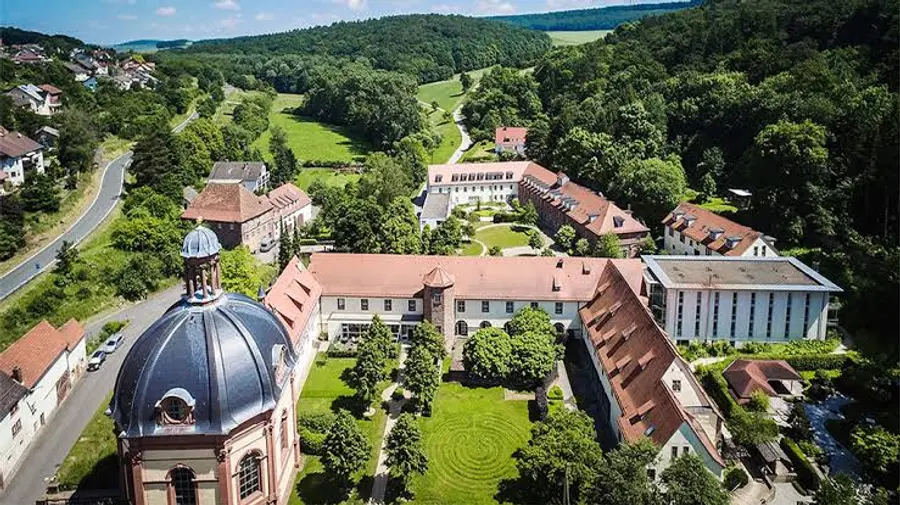
In central Germany’s AaUbach valley, there was a Benedictine monastery built around the turn of the eighth century. It reached its height in the 12th century and shut its doors in 1552 amid the waves of the Reformation. It revived on several occasions, but after secularisation in 1802 it closed again; it was then used as a farm and for accommodation, and from 1995 it stood empty.
The site reopened in 2002. Businesswoman Gertraud Gruber bought the property and handed it over to the spiritual leader Willigis Jäger, starting a meditation centre called Benediktushof. Jäger, who taught Christian contemplative prayer and Zen side by side, died in 2020, and Gruber followed in 2022. The current spiritual leadership is handled by Alexander Poraj, Fernand Braun and Maria Kolek Braun.
A meditation centre that does not ask about religion
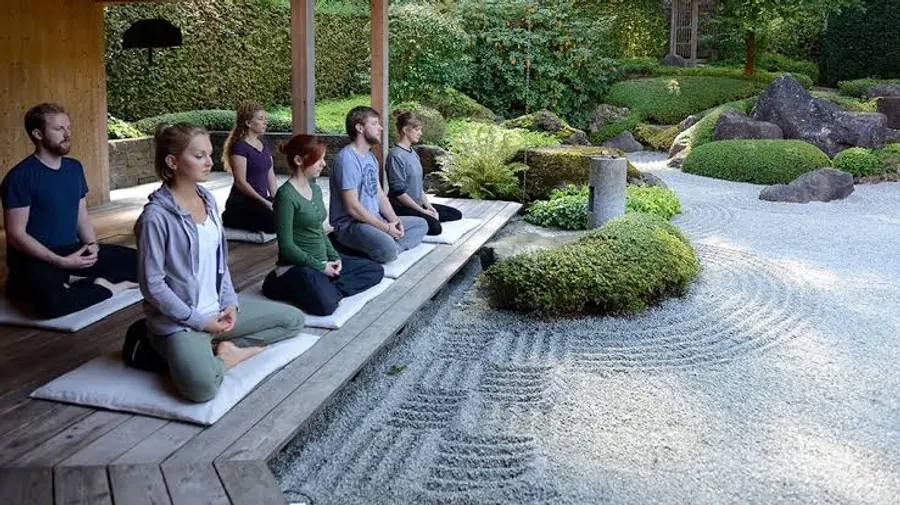
The centre’s principle is clear. Meditation and mindfulness, it says, are not tied to culture or religion. While it began in monastery buildings, it does not assume any particular denomination of believer. Instead, it teaches Christian contemplative prayer and Zen practice alongside each other in the same space.
Having the Eastern tradition of seated Zen practice and the Western monastic tradition of silence under one roof is uncommon even in Europe. The centre’s character comes from the way sitting on cushions and keeping prayer’s language aside—staying in that way—do not push each other away, but run in parallel.
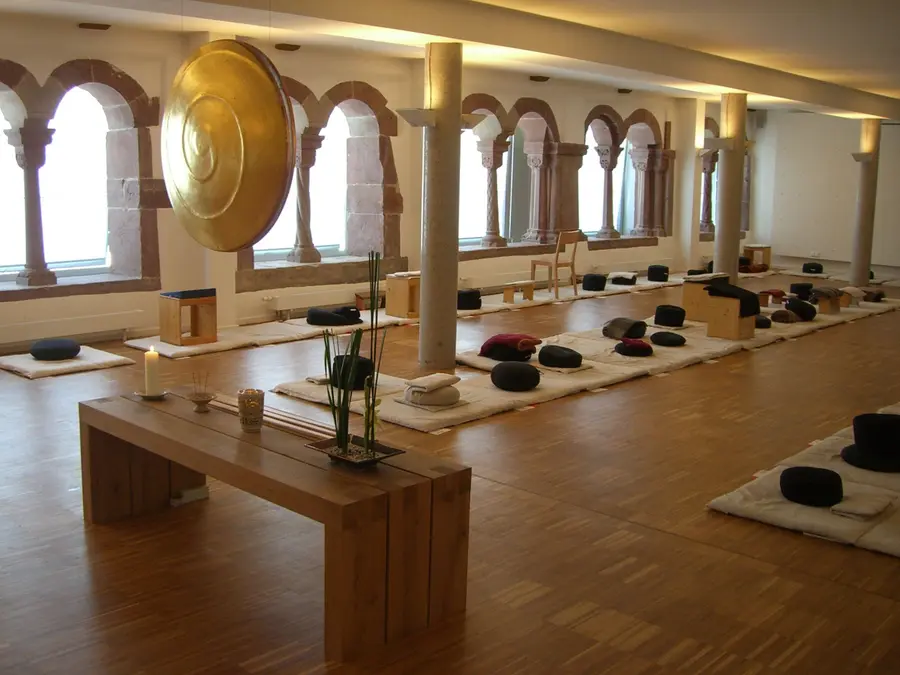
The cloister, the Zen garden and the labyrinth garden
Remains of the old monastery cloister still stand on the grounds, and a meditation hall set-up for seated practice, a Zen garden and a labyrinth garden for walking slowly to calm the mind have been laid out. Between 2012 and 2013, the east wing was expanded to increase seminar spaces and accommodation.
Amenities are also available for those staying there. There is a bistro Troand where people gather in the evening, as well as a bookshop and café, and a farm shop selling produce on the site.
What you learn
The programme is built around Zen practice, contemplative prayer and mindfulness. It also includes an MBSR course—mindfulness-based stress reduction—as well as yoga and self-improvement seminars, and there are sessions dealing with leadership and communication skills.
There are various formats, from intensive retreats that keep you in silence for several days to short courses organised on a weekend basis. The centre splits offerings into an introductory course for people meeting meditation for the first time, and a deeper course for those who have practised for a long time—so participants can choose according to their experience level. Detailed schedules, facilitators and participation fees are released each year through programme guides.
The address is Klosterstraße 10, 97292 Holzkirchen/Unterfranken. It lies in the southern Franconia region, between Frankfurt and Würzburg.
If travelling by train, Würzburg Hbf is the starting point. From there, you change to a local bus; the routes and timetables can be checked at the Bavarian transport guide (bayern-fahrplan.de). The centre’s reception desk helps with directions for individual routes, and it also supports connections with partner taxi companies.
By car, take the B8 road from the Helmstadt exit on the Autobahn A3, head towards MarktHeidenfeld, and then turn left at the exit for the village of Uettingen—at that point it is 4km to Holzkirchen. From Frankfurt towards, use the Wertheim/Rengfurt exit on the A3; if you use the A7, switch to the A3 at the Bibelieder junction and then take the Helmstadt exit. A programme that links car shares between participants is also run as part of the registration process.
Enquiries can be made by phone on 09369-9838-0 or by email at info@benediktushof-holzkirchen.de. The official website is available in German and English.
Staying with silence at the forefront
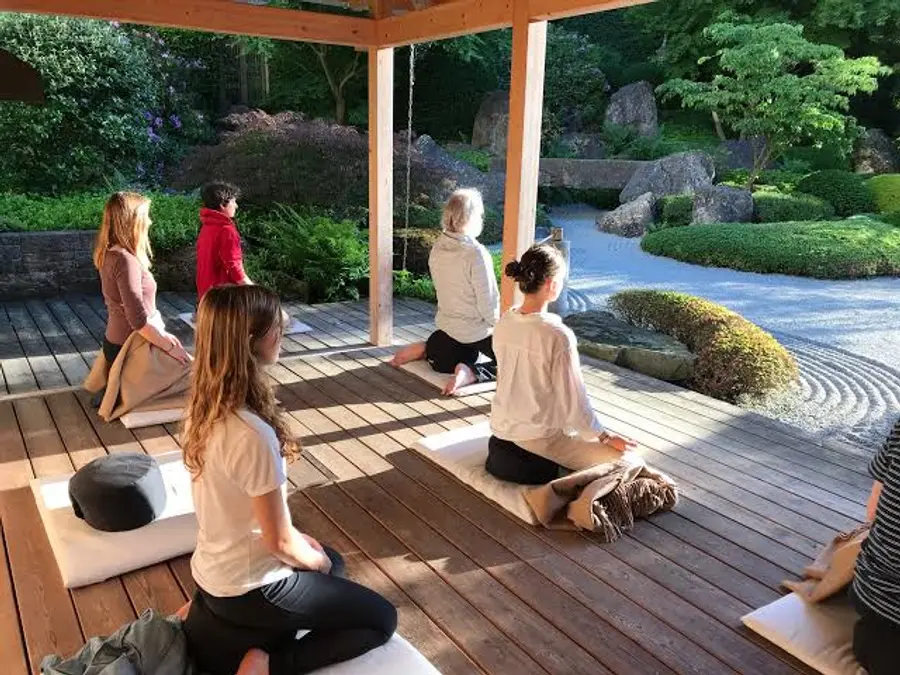
The biggest thing newcomers to this kind of centre find strange is the environment itself, where people speak less. In retreats stretching over several days, it is common to reduce conversation not only during meals but also during travel time. These arrangements are meant to create conditions that do not disturb others, and participants often say it takes a day or two to get used to it.
Most of the timetable is made up of seated periods and walking periods, as well as meals and rest. The fact that the cloister, the Zen garden and the labyrinth garden are all on the grounds ties into this. In effect, the spaces are laid out so that you can move your body intermittently while sitting and remain in the same state.
A branch of European meditation travel
In Europe, meditation trips tend to lean towards wellness resorts centred on spas and thermal baths. Benediktushof differs in tone and emphasis. Rather than selling comfort, it puts time spent bearing silence first, and it uses the monastery’s long-standing structure as it is, placing seated Zen practice inside it.
For travellers who have experienced temple stays in South Korea, it will feel familiar and yet different. Instead of dawn services in a temple, there is silence in the cloister, and instead of a Zen hall’s wooden gavel, the language of contemplative prayer is set alongside it. For those wanting to spend a few days quietly during a European itinerary, it is a choice worth considering.
What to prepare before you visit
Because bookings are made per course, the order is to check the programme schedule first and then apply. It is also a good idea to confirm before applying whether accommodation and meals are included in the course or settled separately.
If you are travelling across the European continent, a route that starts from Frankfurt is a safe bet. Würzburg is also known as the starting point of the Romantic Road, so it is possible to attach an extra day to your plan around the retreat—spending time sightseeing around the city. If you are worried about language, it is safest to ask in advance whether sessions are run in English before you apply.